AWS for M&E Blog
Category: Uncategorized
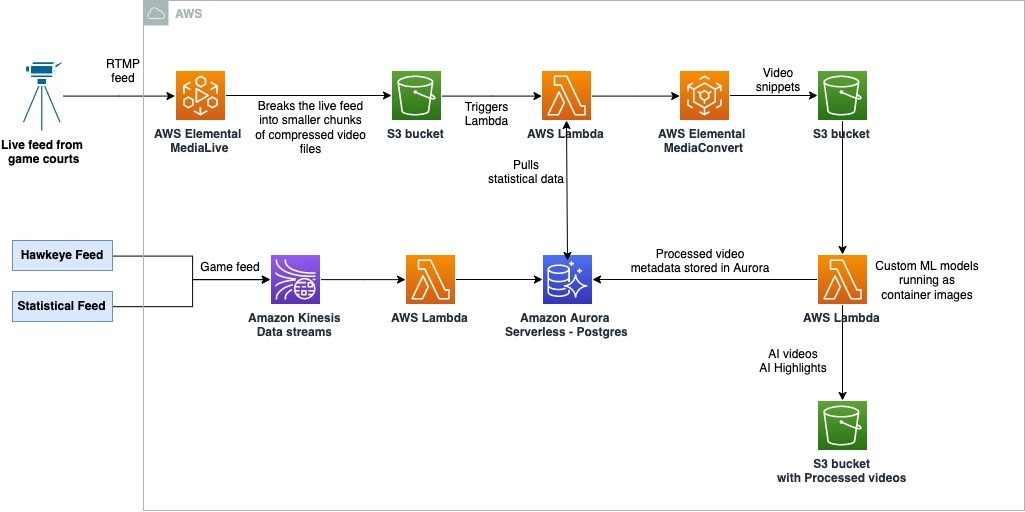
How Infosys reimagines the game of tennis using AWS
This post has been co-authored by Rohit Agnihotri, Chief Architect of Infosys Tennis Platform, and Satheesh Kumar, Principal Solutions Architect at AWS Infosys is a global leader in next-generation digital services and has developed innovative solutions to engage stakeholders in the sports ecosystem. Infosys is the official digital innovation partner for major tennis events like the […]

Economia migrates to AWS for accelerated development
Economia is one of the largest media houses in the Czech Republic. Although news is its main focus, the company also maintains a large online portal that receives more than five million visitors each month. As a traditional media house, the company had a sizable on-premises infrastructure for operations, which slowed hardware provisioning and made […]

The dynamic tech lineup behind Bundesliga’s award-winning Interactive Feed
Delivering standout content that entices and engages viewers is a continuous challenge for modern content providers, especially in capturing the fast-paced action of live sport. Recognizing that personalization is paramount to audience engagement, at the start of the 21/22 season, DFL Deutsche Fußball Liga GmbH launched several fan-first offerings, many of which use technologies from […]

AWS for M&E Video Tutorials: Monitoring and Key Metrics for Amazon Interactive Video Service
AWS for Media & Entertainment Video Tutorials are a series of short videos that cover best practices and actionable tips to build media workflows on AWS. In these on-demand videos, AWS media and entertainment experts answer common questions from customers and offer valuable insight about how to architect, deploy, and optimize your media workflows. In […]

AWS holds second CDI interoperability workshop for highest-quality live video production
AWS Media & Entertainment (M&E) customers continue to seek ways to re-invent their businesses to be more flexible and efficient in a rapidly changing media environment. Cloud processing and distribution of file-based media are now mature workloads; however, the cloud-based production of the highest value live content is a relatively new concept. Many large broadcast […]

How to use IMDb data in search and machine learning applications
Introduction The IMDb Essential Metadata for Movies/TV/OTT licensed data package provides metadata for more than 8 million movies, TV shows and video games. Many AWS media and entertainment customers license this data through AWS Data Exchange (ADX) to improve content discovery and increase customer engagement and retention. This blog post explains how to transform and […]

Happs lets creators scale their audiences with Amazon IVS
Operating as an all-in-one user generated content platform, Happs allows creators to broadcast live to their community along with simultaneous streaming to Facebook, YouTube, Twitter, Twitch, and more. Happs provides built-in studio tools and the ability to monetize viewer engagement through financial awards and monthly sponsorships. Founded three years ago as a media-focused company catering […]

Amazon Nimble Studio: The story so far
AWS invested in content creators in a big way in 2021 when it launched Amazon Nimble Studio, a new service that empowers creative studios to produce visual effects, animation, and interactive content from storyboard sketch to final deliverable, entirely in the cloud. With over 50 AWS services under the hood, Nimble Studio helps content creation professionals […]

Real-Time Streaming Protocol now supported in AWS Elemental Live
Streaming media updates Like many technologies, video streaming protocols have evolved over decades to provide greater performance, reliability, and efficiency. Modern video technology plays an important part in elevating the viewing experience, and the same can be said about how a video architecture is designed and implemented. In some cases, legacy protocols can be adapted […]

AWS Elemental Live introduces JPEG XS for low-latency, visually lossless contribution to the cloud
An introduction to JPEG XS As video consumption increases and content providers move toward higher quality content, bandwidth capacity becomes ever more important. Broadcasters transitioning from traditional serial digital interface (SDI) infrastructure to internet protocol (IP) technology for uncompressed video transport within the broadcast facility follow Society of Motion Picture and Television Engineers (SMPTE) standards […]