
Sold by: TigerGraph
Deployed on AWS
TigerGraph Cloud is the industry's first and only distributed, native graph database-as-a-service - built for innovators who would rather focus on building breakthrough applications than managing infrastructure. Designed to power both real-time analytics and transactional workloads, TigerGraph Cloud helps businesses harness the power of connected data at scale.
4.3
Overview
TigerGraph Cloud is the industry's first and only distributed, native graph database-as-a-service - built for innovators who would rather focus on building breakthrough applications than managing infrastructure. Designed to power both real-time analytics and transactional workloads, TigerGraph Cloud helps businesses harness the power of connected data at scale.
Users can launch in minutes, build proof-of-concepts in hours, and deploy production solutions in days - without the burden of configuring servers, managing backups, or addressing security patches. The platform scales effortlessly to support tens of terabytes and over 100,000 real-time deep link queries per second on a single machine, all while benefiting from elastic, pay-as-you-go pricing and a low total cost of ownership.
Now Available: TigerGraph Savanna (https://aws.amazon.com/marketplace/pp/prodview-txouq7rtexndc )
For organizations seeking next-gen cloud-native architecture and greater control over their data infrastructure, TigerGraph Savanna is our latest evolution in graph technology. Built for cloud-native scale, real-time performance, and AI-powered insights, Savanna introduces:
- Native storage-compute separation for elastic scalability and cost efficiency.
- API-first architecture for DevOps and data pipeline integration.
- Kubernetes orchestration and support for GSQL, GQL, and openCypher.
- Pre-built Solution Kits for fraud detection, customer intelligence, cybersecurity, and more.
- Flexible deployment models: fully managed or Bring Your Own Cloud (BYOC).
Whether you're scaling enterprise AI initiatives or modernizing your analytics stack, TigerGraph Savanna delivers the fastest, most flexible way to turn connected data into real-time decisions.
Highlights
- Fully managed cloud graph database: deploy a production-ready, distributed graph database in minutes with no infrastructure setup or maintenance required.
- Highly scalable & performant: scale to over 100 TB and execute 100,000+ deep link queries per second on a single machine for real-time insights.
- Accelerated time to value with Starter Kits: quickly build graph solutions using pre-built Starter Kits with ready-to-use schemas, queries, and dashboards for common use cases.
Details
New
Introducing multi-product solutions
You can now purchase comprehensive solutions tailored to use cases and industries.

Features and programs
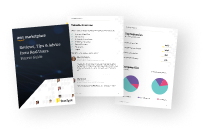
Buyer guide
Gain valuable insights from real users who purchased this product, powered by PeerSpot.
Financing for AWS Marketplace purchases
AWS Marketplace now accepts line of credit payments through the PNC Vendor Finance program. This program is available to select AWS customers in the US, excluding NV, NC, ND, TN, & VT.

Pricing
Pricing is based on actual usage, with charges varying according to how much you consume. Subscriptions have no end date and may be canceled any time.
Additional AWS infrastructure costs may apply. Use the AWS Pricing Calculator to estimate your infrastructure costs.
Dimension | Cost/unit |
|---|---|
gigabytes of ram per hour | $0.075 |
terabytes of disk per hour | $0.002 |
terabytes of backup disk per hour | $0.02 |
gigabytes of transfer | $0.15 |
TigerGraph Service Units | $0.01 |
Dimensions summary
You pay for this fully managed graph database by actual usage, with no upfront commitment. Five separate meters bill independently based on what you consume. You pay per gigabyte of RAM per hour for compute memory. You pay per terabyte of disk per hour for primary storage and per terabyte of backup disk per hour for backups. You pay per gigabyte for data transfer. TigerGraph Service Units cover platform consumption. Your total combines these meters, so costs rise and fall with the memory, storage, backups, transfer, and service activity you actually use.
Top-of-mind questions for buyers
It meters the compute memory allocated to your running graph workspace, charged for each hour it stays active. Memory scales with the workspace size you provision. When you pause or resume a workspace, charges track only the hours it runs, since the platform bills usage by the minute.
All five meters bill independently and add together on one invoice. RAM per hour usually drives the largest share for active query workloads. Disk and backup disk grow with stored data. Transfer scales with data movement. Service Units track platform activity. Your total reflects each meter's actual consumption.
Compute memory charges track only running hours, so a paused workspace stops accruing RAM-per-hour costs. Storage meters differ: disk and backup disk per hour continue while your data remains stored, since that data persists whether the workspace runs or not. Transfer and Service Units accrue only with actual activity.
www.tigergraph.com+1
Helpful?
Vendor refund policy
All fees are non-cancellable and non-refundable.

Legal
Vendor terms and conditions
Upon subscribing to this product, you must acknowledge and agree to the terms and conditions outlined in the vendor's End User License Agreement (EULA) .
Content disclaimer
Vendors are responsible for their product descriptions and other product content. AWS does not warrant that vendors' product descriptions or other product content are accurate, complete, reliable, current, or error-free.
Delivery details
Software as a Service (SaaS)
SaaS delivers cloud-based software applications directly to customers over the internet. You can access these applications through a subscription model. You will pay recurring monthly usage fees through your AWS bill, while AWS handles deployment and infrastructure management, ensuring scalability, reliability, and seamless integration with other AWS services.
Resources
Vendor resources
Support
Vendor support
- Standard Support: 9 AM - 5 PM EST, business days.
- Premium Support: 24x7x365 with Named Technical Support Engineer.
- Submit Tickets: https://tigergraph.zendesk.com .
- Support Resources: https://www.tigergraph.com/support/ .
- SLA Claims: tigergraph-sla-request@tigergraph.com .
- Sales Questions: cloud_sales@tigergraph.com .
AWS infrastructure support
AWS Support is a one-on-one, fast-response support channel that is staffed 24x7x365 with experienced and technical support engineers. The service helps customers of all sizes and technical abilities to successfully utilize the products and features provided by Amazon Web Services.
Updated weekly
By TigerGraph
By Neo4j

By ArangoDB
Top
50
In Databases, ML Solutions
Top
10
In ML Solutions, Databases, Data Analytics
Top
100
In Databases, Analytic Platforms
Sentiment is AI generated from actual customer reviews on AWS and G2
Functionality
Ease of use
Customer service
Cost effectiveness
Positive reviews
Mixed reviews
Negative reviews
AI generated from product descriptions
Distributed Graph Database Architecture
Native distributed graph database designed to handle both real-time analytics and transactional workloads at scale
Query Performance and Scalability
Capable of executing over 100,000 deep link queries per second on a single machine with support for scaling to tens of terabytes of data
Managed Database Service
Fully managed cloud database service eliminating requirements for server configuration, backup management, and security patch administration
Multi-Query Language Support
Support for GSQL, GQL, and openCypher query languages with API-first architecture for integration with DevOps and data pipelines
Pre-built Solution Templates
Includes pre-built Starter Kits and Solution Kits with ready-to-use schemas, queries, and dashboards for use cases such as fraud detection, customer intelligence, and cybersecurity
Graph Database Architecture
Flexible property graph data model with support for Cypher query language and GraphQL for connected data applications
Security and Access Control
End-to-end data encryption, VPC isolation with dedicated infrastructure, role-based access control with granular database security, GDPR and CCPA compliance
High Availability and Reliability
99.95% uptime SLA with self-healing architecture, multi-AZ distributed cluster, ACID compliance, and fully managed automated backups
Automated Management and Scaling
Zero administration provisioning in minutes, on-demand scaling, automated service upgrades with no maintenance windows
Developer Tools and Visualization
Built-in graph visualization tools, monitoring capabilities, and extensible procedures for functionality enhancement
Graph Database Engine
Powered by ArangoDB graph database with native support for graph, JSON document, search, and machine learning capabilities within a unified query language
Security Features
Private endpoints, single sign-on (SSO), and audit logging for access control and compliance
High Availability and Disaster Recovery
Data replication and cloud backups across multiple regions for fault tolerance and business continuity
Managed Database Service
Fully-managed graph database-as-a-service eliminating infrastructure management overhead
Multi-Model Data Support
Integrated support for graph, document, search, and machine learning analytics within a single platform
Standard contract
No
No
No
Customer reviews
reviewer2873034
Faced persistent reliability and support issues but have detected fraud at large data scale
Reviewed on Jul 15, 2026
Review provided by PeerSpot
What is our primary use case?
Fraud detection is the main use case.
What is most valuable?
At the time that I was working there, which was from the beginning of 2024 to mid-2025, I believe there was no other product able to perform graph database operations on a distributed paradigm, so TigerGraph is something that was heavily advertised for its distributed nature of the product.
I think that is one of the good parts, as the scale at which it can handle data is impressive; we can hold terabytes and petabytes of graph data, and we can analyze it, write queries, and reduce the patterns accordingly.
We had a lot of data, and we wanted a database that could handle it, so at that time, TigerGraph was one of the top options that we had. Scale and distribution made our workflows run in a limited amount of time; without the distributed nature, it would have taken more hours, but now it takes significantly less time.
What needs improvement?
There are several features that I think are missing, as the connectivity through which TigerGraph can connect to different data ecosystems should be improved; currently, the connectivity is very limited.
TigerGraph should create a native Spark connector that works natively and is able to extract data at scale and ingest data at scale, so it should be able to integrate with other data products at any company. I think connectivity is quite underwhelming.
I believe it can be improved, as there are common security features that are missing.
For how long have I used the solution?
I have used TigerGraph for almost fifteen months when I was working with Infosys for the client Bank of America, and we used it for one of the fraud detection projects.
What do I think about the stability of the solution?
That part is actually really important, as TigerGraph is very naive and it is somewhat a beta product. It has always been a beta product, even when they have released so many versions, it was very problematic. We used to have issues every now and then, and we had to raise tickets on their service desk.
There were a lot of issues we had to encounter consistently, and it was quite overwhelming; instead of working on project objectives, we were mostly working on fixing TigerGraph issues, working on updates for TigerGraph, downgrades when the upgrades had problems, going back and forth with the support team, and dealing with the inability of the support team to resolve the tickets in a timely fashion. That really destroyed our timelines, team spirit, and productivity.
What do I think about the scalability of the solution?
TigerGraph was deployed on-premises, which really caused a lot of issues in addition to the TigerGraph issues.
How are customer service and support?
The problem with the service desk and the resolution team was that everyone who joined TigerGraph in that team was not working long at the company, so tickets used to span for months, maybe three months and six months, and in between, we would see two or more employees changing.
It is not different people handling the tickets; it is that the person who has handled the tickets earlier has left the company because I think they were overwhelmed with all the customer requests and they could not do much to get rid of the customer complaints.
Which solution did I use previously and why did I switch?
Before learning about TigerGraph, I wanted to learn about graph databases, and I started learning Neo4j, which looked to be a very good and stable tool, as it was good in terms of stability and the features it provided.
We had some scalability needs that made us choose TigerGraph, but now I think Neo4j has also come up with scalable graphs so that it can scale at a very large petabyte-level data.
Neo4j was on top of the list along with TigerGraph, but at the time of product selection, Neo4j did not support the distribution completely, so we had to choose TigerGraph.
How was the initial setup?
I was not made aware of the licensing cost; the setup was adequate. They shared one package for us to set up in our on-premises servers, and the package had some issues that did not work properly. They had to come and do some things at the time of installation, and that is how the setup was done, which was not very good.
What was our ROI?
I cannot give any numbers, but TigerGraph was one of the key parts of fraud detection for the bank, which was a huge financial aspect, as it helped reduce fraud and save the bank from several fines from regulatory institutions. They were also able to maintain customers' trust.
Which other solutions did I evaluate?
If your data is not at a petabyte scale and is manageable on Neo4j, just go ahead with Neo4j. Otherwise, if there is no particular solution that can cater to your needs, then you do not really have a choice; but TigerGraph should not be at the top of your list, it should be somewhere at the bottom. If you have very specific requirements that match with TigerGraph and if they are able to provide a cost that is reasonable compared to others, then you can go ahead.
What other advice do I have?
I think TigerGraph is reasonably accurate; it all depends on the kind of algorithm that we use and the relevance of the algorithm with respect to graph databases. The use case will also play a role here, but I think it is quite decent; I would not say excellent, but decent. I gave this review a rating of five out of ten.
Sukhmani Kaur
Graph analysis has transformed how we detect crypto fraud patterns and optimize transaction insights
Reviewed on Jul 13, 2026
Review provided by PeerSpot
What is our primary use case?
My main use case for TigerGraph involves finding default patterns in cryptocurrency transactions, where my company received a project that required us to identify those patterns.
A specific example of how I used TigerGraph to find patterns in cryptocurrency transactions was to observe multi-hopping in a limited time frame, where the maximum transaction was happening from one person to multiple people, which is a fraud detection pattern indicating a large amount from one person going to different people in a very small amount of time.
Another use case I had was to observe the amount accumulation with the top five people in a given time frame. As cryptocurrency data is increasing day by day, we took three months of data and inserted it into TigerGraph using CSVs rather than any API to identify the top five people accumulating the most amount, utilizing a heap accumulator in that case.
What is most valuable?
The best features TigerGraph offers in my experience include its ability to handle large data sets, which made client handling much easier as visualizing that data in table form was very tiring and not at all effective. TigerGraph provided a great experience in data visualization.
I appreciated TigerGraph's visualization because it was easy to see when one person accumulates an amount that goes to one hundred or more people, as the edges and vertices displayed relationships in an amazing way, making it very easy to visualize transactions and patterns. We could change colors, names, and icons according to our requirements, which was very helpful.
Regarding additional features, writing queries was also very interesting, as the queries and accumulators used in TigerGraph made changing the requirements from customers very easy because G-SQL is, in my opinion, quite easy to grasp.
TigerGraph has positively impacted my organization by providing better visualization and transaction patterns compared to our original database, BigQuery, which did not meet client expectations in data representation.
Specific outcomes that show how TigerGraph helped our organization include saving time, as BigQuery was costly in terms of data querying. TigerGraph allowed us to write G-SQL queries and filter out data, definitely reducing manual work and helping us with cost optimization.
What needs improvement?
TigerGraph can be improved by providing more tutorials about G-SQL. With experience, I have increased my skills for G-SQL, but I found limited tutorials online, so I would really want to see an improvement in G-SQL tutorials or proper documentation.
For how long have I used the solution?
I have used TigerGraph for about two years.
What do I think about the stability of the solution?
I did not find any fault regarding TigerGraph's stability.
What do I think about the scalability of the solution?
As for scalability, I did not find any slowdowns or challenges. As the dataset increased, it performed better, and I found no inconsistencies.
Which solution did I use previously and why did I switch?
I previously used Google Cloud's BigQuery, and we switched because querying data there was very costly, and its table format did not make sense for the relationships of transactions.
What was our ROI?
I have seen a return on investment with TigerGraph. It is much cheaper than using BigQuery, saving time because we can see patterns right in front of our eyes without needing to go back and change previous queries, thus requiring fewer employees as only a small team worked on TigerGraph.
Which other solutions did I evaluate?
I do not remember the other software that displays vertices and edges as relationships, but the volume of data we had made TigerGraph the best option due to its architecture and other technical aspects, making it much faster.
What other advice do I have?
For those looking into using TigerGraph, I would advise that understanding the G-SQL part is crucial because without that, choosing TigerGraph would not be beneficial. However, once you grasp G-SQL, which I think is easy, you can master TigerGraph as a developer.
Overall, I think it was good to use TigerGraph, and I had a nice experience. I have given this review a rating of eight out of ten.
reviewer2867994
Graph-based modeling has transformed real estate location search and supports secure ML-driven recommendations
Reviewed on Jul 04, 2026
Review from a verified AWS customer
What is our primary use case?
I have been looking at TigerGraph on and off initially. I used it for a proof of concept for our penetration testing, so I have been working with it for close to two years. We have been considering TigerGraph for the last four to five years.
The aim was to try out TigerGraph for the famous real estate use case, which is to search for a house or an office space. Traditional commercial solutions use relational models in the business, and the aim was to try TigerGraph as a graph database. We are helping people to find where they want to stay and how frequently they want to go to a location, or travel from location one to location two.
The aim is to bring in the public transport information also within the graph data model, so that people can quickly locate the most suitable location with public connectivity, where they can travel down to the office location or the rental apartments they live in. They get the place where they have the best connectivity to all the places where they have to go.
What is most valuable?
TigerGraph allows you to specify the schema using SQL, similar to how you would with a relational data model. If you are familiar with any of the SQL or GSQL concepts, it is much easier to program with it. TigerGraph has an exclusive language on its own, and they also have support for GSQL, which is the most widely used programming language. With support for their own exclusive programming language as well as for GSQL, TigerGraph makes it easier for both people who know SQL and people who know GSQL.
For people who have not worked with SQL, bringing them into TigerGraph is very easy, and once they are comfortable with how to solve problems using graph-based databases, it is easy for them to transition to GSQL, which is the graph query language and the most predominant language used for graph databases. That way, we can continue to move from the relational model to the GSQL graph-based model in two steps. Even though the learning curve seems to be in multiple steps, it makes it really much faster.
It is very easy to do mainly because all their machine learning algorithms are available. Once you draw your graph model and load the data, you can experiment faster, and making it GUI-driven makes it very much easier to figure out what would be the best possible choice out of the various algorithms they have. That way, the progress with TigerGraph is much easier.
Normally, once you build the graph, it takes around five to seven days for someone to apply a machine learning algorithm and arrive at the suitable machine learning algorithm. However, with TigerGraph, it is easy to do, especially for recommendations.
What needs improvement?
TigerGraph does not have enough number of experts, and in terms of the usability of the product, they are still evolving.
One thing that they have to improve very quickly is establishing a simple relationship with TigerGraph GUI is hard for anyone who does not have hands-on experience working with the product earlier. Tutorials-wise, TigerGraph is very weak.
I would give TigerGraph a seven rating because whatever the graph data model database for TigerGraph, it definitely works. I am not giving a rating higher than seven or eight because whatever they have on paper definitely works, and they have made it easier for developers. The minus point is that unless one has explored TigerGraph very thoroughly and knows that these functionalities can make things easier, it is very difficult for a group which is totally unknown to TigerGraph to explore all this and come out of it. That way, they could have gotten an even better rating if there were sufficient guiding tutorials. Unfortunately, they do not have them. They have the features in their product, but they have not put the technical documentation appropriately in place.
TigerGraph definitely needs at least one person who knows TigerGraph. Otherwise, even though they have all the functionalities, definite guidance is needed, and at least one person should know the product.
The key point is that they have a lot of functionalities and a user-friendly interface with programming language support, but the UI that they have requires guidance.
For how long have I used the solution?
I have been using TigerGraph for the last 16 years.
What do I think about the stability of the solution?
TigerGraph is certainly stable. In fact, it is more stable than Neo4j. I also want to point out that at this stage, Memgraph and TigerGraph are both equally stable, and in fact, both are far more stable than Neo4j.
What do I think about the scalability of the solution?
I have compared Neo4j, Memgraph, and TigerGraph, and I find Memgraph and TigerGraph to be equally good in terms of scalability, so I cannot claim TigerGraph as a clear winner. I can definitely say both TigerGraph and Memgraph are better than Neo4j.
Which solution did I use previously and why did I switch?
We have used Neo4j before, and while we do not want to completely move out from Neo4j, for this specific use case, it was very easy with TigerGraph because of the ease with which the data import can be done with TigerGraph.
We considered Neo4j, and we also considered Memgraph.
What other advice do I have?
TigerGraph can be validated mainly because of the ease with which you can see the data. It can be definitely validated, and they also have strong, strong, strong security, both in terms of storage as well as in terms of the GUI, mainly because they follow their own ways to access.
I have to put this conditionally here. As long as you have somebody who has worked with TigerGraph earlier, even with a set of people who have no background in graph databases, we can definitely get the project done. However, at least one person should have explored the product in detail. Otherwise, it could be a little expensive.
I am definitely very satisfied with TigerGraph. In fact, both Memgraph and TigerGraph are equally satisfactory, and they are better than Neo4j. I would rate this review a 9 overall.
Which deployment model are you using for this solution?
Public Cloud
If public cloud, private cloud, or hybrid cloud, which cloud provider do you use?
Amazon Web Services (AWS)
reviewer2865897
Graph analytics have transformed fraud detection and compliance-driven metadata classification
Reviewed on Jun 27, 2026
Review provided by PeerSpot
What is our primary use case?
I have been using TigerGraph for roughly seven years, and I was one of the first people in the first batch of cohorts to get certified in TigerGraph.
My main use case for TigerGraph is for fraud detection and for looking at similarities in data sets. In my current job, when I worked within the finance space for certain banks such as Capital One and Washington Mutual Bank, I used TigerGraph for fraud detection. Most currently in my consulting work, I use a mix of graph databases, including TigerGraph, primarily for classification of metadata for models to adhere to compliance policies, such as the European Artificial Intelligence Act.
The main area I use those multi-modal capabilities for is fraud detection, but I also use TigerGraph for metadata and data model cards. Most recently, I worked for a travel company where I used TigerGraph for classifying transactions for hotel data and identifying commonalities for sales data, which helped tailor customized marketing to customers based on their travel destinations.
What is most valuable?
TigerGraph specifically helps me in managing compliance and fraud detection with its flexibility with algorithms, which I really appreciate. The top two graph databases are Neo4j and TigerGraph, and the way it allows for functionality with the algorithms is impressive. For detecting fraud, a main algorithm is Cosine Similarity, which uses vectors to determine similarity between inputs. Even though it is typically a graph database, it has vector functionality, making it multi-modal.
TigerGraph offers great speed, functionality, and adaptation. The team does a great job of adding new features and improving current ones. Their support is tremendous, and being in the first cohort to get certified in TigerGraph reflects positively on my LinkedIn profile. The community around support for certified users is really great if help is needed.
TigerGraph has positively impacted my organization, particularly in speed. While we pay for the license, we see great ROI because we are able to aggregate clients for targeted and specific marketing, increasing revenue and improving the speed with which we can react to customer needs.
What needs improvement?
I cannot really say much about needed improvements for TigerGraph in my current work. I think it has great adaptation with AI. If I had to pick at something, it might be more AI integration, but overall, it is hard to suggest improvements as TigerGraph supports many technologies well.
For how long have I used the solution?
I have been using TigerGraph for roughly seven years, and I was one of the first people in the first batch of cohorts to get certified in TigerGraph.
What do I think about the stability of the solution?
I find TigerGraph to be stable in my experience.
What do I think about the scalability of the solution?
TigerGraph's scalability is tremendous. It is inherently adaptable, allowing for easy addition of data and relationships through its pipeline capabilities.
How are customer service and support?
TigerGraph offers great speed, functionality, and adaptation. The team does a great job of adding new features and improving current ones. Their support is tremendous, and being in the first cohort to get certified in TigerGraph reflects positively on my LinkedIn profile. The community around support for certified users is really great if help is needed.
The customer support and ecosystem around TigerGraph are fantastic.
Which solution did I use previously and why did I switch?
We did not have a previous solution. We developed the current solution based on my expertise and experience with TigerGraph.
How was the initial setup?
Integrating TigerGraph with existing systems was very easy, as it pulls in various data types seamlessly, including text files and PDFs.
What was our ROI?
I track specific metrics such as a reduction in churn, as customers tend to stick with us because of the valuable information we provide. This increased ROI helps expand our customer base and targets effectively, reducing churn significantly.
I have seen a return on investment through time and money saved, even though we did not necessarily need more employees. We have reduced phone time with customers and been able to market to a larger customer base effectively.
What's my experience with pricing, setup cost, and licensing?
Regarding pricing, setup cost, and licensing, I was involved with the licensing part primarily. I recommended the solution, but pricing and setup costs were determined by our financial team.
Which other solutions did I evaluate?
I evaluated other options before choosing TigerGraph, primarily looking at Neo4j and various open-source graph implementations. TigerGraph stood out as the best choice.
What other advice do I have?
The learning curve for new users getting started with TigerGraph can be somewhat challenging. Understanding tree diagrams and graph algorithms is necessary, so it could be tough initially.
TigerGraph handles real-time analytics and streaming data well, but you will need additional add-ons for that, such as streaming add-ons including Pub/Sub.
The documentation and training resources for TigerGraph are phenomenal and incredibly well done on their site.
My advice to others looking into using TigerGraph is to consider the strong support and tutorials available for learning it. For data scientists and engineers, I would recommend looking into TigerGraph alongside other major players such as Neo4j to make a fair comparison, as TigerGraph provides excellent support and licensing options. I give this review a rating of 9 out of 10.
Gayatri Guddad
Graph-based training has empowered rich recommendations and now supports intuitive AI-driven queries
Reviewed on Jun 23, 2026
Review from a verified AWS customer
What is our primary use case?
I mainly use TigerGraph for enabling people on the migration of projects where they are using legacy systems and want to benefit from using a graph database, particularly for establishing recommendation engines for their different product-related information and relationships between the products, allowing them to recommend various products to end users.
We usually conduct sessions specifically like SME connects, where we walk teams through TigerGraph's features, the GSQL query language, various algorithms, and specific use cases that can help them with their projects. This full-fledged training delivery also enables certification and practical application for their individual projects.
We have deployed TigerGraph in the public cloud, specifically using TigerGraph Savana for our application.
What is most valuable?
TigerGraph offers key features including cloud and on-premises deployment, including TigerGraph Cloud DBaaS and self-managed enterprise deployment, which help anyone access TigerGraph. It also has various connectors for pulling data from legacy systems to up-to-date data sources such as Snowflake or Spark, allowing establishment of graphs and visual representation with development tools like Graph Studio that help visualize data concerning graphical schema design and exploration.
The data connectors are particularly important because when pulling data from legacy systems, being able to connect to any data source is essential for building the graph, which is crucial. Being in the NoSQL category, it also supports ACID transactions, something that many NoSQL categories do not promise but TigerGraph guarantees, which adds considerable value.
What needs improvement?
I feel that more enablement could be improved for better understanding, which is an area where I see room for enhancement.
It primarily needs more instructor-led training associated with TigerGraph University to enable broader usage and certifications, allowing more users to utilize its features effectively.
I chose a rating of eight out of ten mainly because documentation, more demos, and improved customer approachability still present opportunities for improvement. Having more projects using TigerGraph or additional use cases could potentially justify a perfect ten.
TigerGraph is well-equipped so far, but there could be enhancements in cost-wise partner enablement initiatives, aiming to reduce costs for implementations through AWS, Azure, or Google Cloud platforms.
For how long have I used the solution?
I have been using TigerGraph for over two years, and it is one of the NoSQL graph databases that is helping me analyze the data with respect to various parts and relationships and how it connects, which is something different from the relational databases I have used.
What do I think about the stability of the solution?
TigerGraph is quite stable, enabling effective project implementation.
What do I think about the scalability of the solution?
Specifically, in terms of scalability, TigerGraph promises us horizontal scalability that accommodates any amount of data. For instance, projects with product data involving countless customers needing to access products and provide billing also utilize recommendation engines, where significant customer demand necessitates robust scalability, which TigerGraph supports and significantly saves time.
TigerGraph supports horizontal scalability, which is crucial for large projects, making it applicable for any big data applications.
How are customer service and support?
Customer support has been good so far, as interactions with the support team yield satisfactory resolutions, making it comfortable to approach them for solutions.
I would rate customer support a nine out of ten, as the support ticket system operates effectively, ensuring timely resolutions. Quicker response times could elevate this to a perfect ten.
Which solution did I use previously and why did I switch?
Prior to TigerGraph, we mainly used legacy systems like Microsoft SQL Server or Oracle, seeking scalability and NoSQL features for recommendation engines, which prompted the transition to TigerGraph.
What about the implementation team?
We purchased TigerGraph through the AWS Marketplace, managed by a separate team in charge of the procurement and enablement process.
What was our ROI?
While we have not made a significant investment yet and are in the enablement phase, we believe that leveraging TigerGraph's features will eventually lead to time and cost savings.
What's my experience with pricing, setup cost, and licensing?
The pricing relies on usage and the amount of data handled through a pay-as-you-go model based on performance. Partner enablement will reduce costs and encourage greater adoption of the application.
Which other solutions did I evaluate?
We considered other options like Neo4j, which is also in the NoSQL category, and ArangoDB, but ultimately found TigerGraph's query language more comfortable for our needs.
What other advice do I have?
Enabling TigerGraph represents a niche skill, and most people initially lack knowledge about it. However, once they understand TigerGraph's features, the exposure to the NoSQL category of graph databases fascinates many, demonstrating how we can visually see and represent data without the rigidity of legacy systems, significantly affecting project acceptance and positively impacting our approach.
Concerning agentic AI, graph RAG, and hybrid graph with vector search capabilities, TigerGraph has made significant advancements that cater to current needs.
My experience with TigerGraph involves establishing agents that automate processes, allowing an agent to convert text to GSQL language, facilitating output in English format. This in-house POC helps us understand leveraging LLMs for interaction with the database, making it accessible even for users without prior knowledge of TigerGraph.
The features and built-in use cases and solutions TigerGraph offers are compelling reasons for anyone to consider its implementations.
I gave this review a rating of eight out of ten overall. My experience with TigerGraph has been exceptional, and I believe more focused enablement and diverse use cases will encourage broader adoption and implementation across various projects.
Which deployment model are you using for this solution?
Public Cloud
If public cloud, private cloud, or hybrid cloud, which cloud provider do you use?
Amazon Web Services (AWS)