
Sold by: Datadog
Deployed on AWS
Quick Launch
Datadog is a SaaS-based unified observability and security platform providing full visibility into the health and performance of each layer of your environment at a glance.
4.4
Overview
Free trial: Click "Continue to Subscribe" and create a new Datadog account to receive a 14-day free trial of all Datadog features. At the end of your free trial, your account will automatically convert to a paid Pay-As-You-Go plan detailed in this listing.
Datadog is a SaaS-based unified observability and security platform providing full visibility into the health and performance of each layer of your environment at a glance. Datadog allows you to customize this insight to your stack by collecting and correlating data from more than 600 vendor-backed technologies and APM libraries, all in a single pane of glass. Monitor your underlying infrastructure, supporting services, applications alongside security data in a single observability platform.
Prices are based on committed use per month over total term of the agreement (the Total Expected Use).
Highlights
- Get started in minutes from AWS Marketplace with our enhanced integration for account creation and setup. Turn-key integrations and easy-to-install agent to start monitoring all of your servers and resources in minutes.
- Quickly deploy modern monitoring and security in one powerful observability platform.
- Create actionable context to speed up, reduce costs, mitigate security threats and avoid downtime at any scale.
Details
New
Introducing multi-product solutions
You can now purchase comprehensive solutions tailored to use cases and industries.

Features and programs
Trust Center

Access real-time vendor security and compliance information through their Trust Center powered by Drata or Vanta. Review certifications and security standards before purchase.
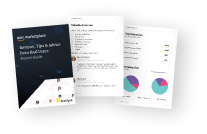
Buyer guide
Gain valuable insights from real users who purchased this product, powered by PeerSpot.
Financing for AWS Marketplace purchases
AWS Marketplace now accepts line of credit payments through the PNC Vendor Finance program. This program is available to select AWS customers in the US, excluding NV, NC, ND, TN, & VT.

Quick Launch
Leverage AWS CloudFormation templates to reduce the time and resources required to configure, deploy, and launch your software.
Pricing
Pricing is based on actual usage, with charges varying according to how much you consume. Subscriptions have no end date and may be canceled any time.
Additional AWS infrastructure costs may apply. Use the AWS Pricing Calculator to estimate your infrastructure costs.
Dimension | Description | Cost/unit |
|---|---|---|
Infra Pro Hosts per hour | Infra Pro Hosts per hour | $0.03 |
Additional Containers per hour | Additional Containers per hour | $0.002 |
Additional Custom Metrics per hour (per 100 Metrics) | Additional Custom Metrics per hour (per 100 Metrics) | $0.008 |
APM Hosts per hour | APM Hosts per hour | $0.06 |
APM Analyzed Spans per hour - 15 Day Retention (Per 1 Million) | APM Analyzed Spans per hour - 15 Day Retention (Per 1 Million) | $2.55 |
Indexed Log Events per hour - 15 Day Retention (Per 1 Million) | Indexed Log Events per hour - 15 Day Retention (Per 1 Million) | $2.55 |
Ingested Logs per hour (Per 1 GB) | Ingested Logs per hour (Per 1 GB) | $0.10 |
Synthetics API Tests per hour (Per 10K test runs) | Synthetics API Tests per hour (Per 10K test runs) | $7.20 |
Synthetics Browser Checks per hour (Per 1K test runs) | Synthetics Browser Checks per hour (Per 1K test runs) | $18.00 |
Serverless Functions per hour (no longer offered) | Serverless Functions per hour (no longer offered) | $0.012 |
Vendor refund policy
Custom pricing options
Request a private offer to receive a custom quote.

Legal
Vendor terms and conditions
Upon subscribing to this product, you must acknowledge and agree to the terms and conditions outlined in the vendor's End User License Agreement (EULA) .
Content disclaimer
Vendors are responsible for their product descriptions and other product content. AWS does not warrant that vendors' product descriptions or other product content are accurate, complete, reliable, current, or error-free.
Delivery details
Software as a Service (SaaS)
SaaS delivers cloud-based software applications directly to customers over the internet. You can access these applications through a subscription model. You will pay recurring monthly usage fees through your AWS bill, while AWS handles deployment and infrastructure management, ensuring scalability, reliability, and seamless integration with other AWS services.
Resources
Vendor resources
Support
Vendor support
Contact our knowledgable Support Engineers via email, live chat, or in-app messages
AWS infrastructure support
AWS Support is a one-on-one, fast-response support channel that is staffed 24x7x365 with experienced and technical support engineers. The service helps customers of all sizes and technical abilities to successfully utilize the products and features provided by Amazon Web Services.
Updated weekly
By LogicMonitor

By Observe, Inc.
Top
25
In Log Analysis
Top
10
In Monitoring and Observability, Migration
Top
10
In Application Performance and UX Monitoring
Sentiment is AI generated from actual customer reviews on AWS and G2
Functionality
Ease of use
Customer service
Cost effectiveness
Positive reviews
Mixed reviews
Negative reviews
AI generated from product descriptions
Multi-Source Data Integration
Collects and correlates data from more than 600 vendor-backed technologies and APM libraries in a single unified interface
Infrastructure and Application Monitoring
Monitors underlying infrastructure, supporting services, applications, and security data simultaneously within a single observability platform
Unified Observability Dashboard
Provides full visibility into the health and performance of each layer of the environment through a single pane of glass
Rapid Deployment and Setup
Enables quick deployment through turn-key integrations and easy-to-install agent for monitoring servers and resources
Security and Threat Mitigation
Integrates security data and threat detection capabilities to identify and mitigate security threats across the monitored environment
Automated Device Discovery and Configuration
Automatic recognition and configuration of 2,000+ technologies with preconfigured alert thresholds and best practices-based setup without manual intervention
Agentless Monitoring Architecture
Agentless Collector deployment enabling hybrid and multi-cloud visibility with reduced operational overhead and no requirement for continuous agent upgrades
Unified Multi-Environment Visibility
Single-pane-of-glass monitoring across on-premises, hybrid, and multi-cloud infrastructures including AWS services with panoramic performance visibility
Flexible Data Collection Mechanism
Capability to pull metrics from virtually any device or API with support for custom graphs, dashboards, and alerts for application status analysis and trend identification
Performance Forecasting and Customizable Dashboards
Built-in performance forecasting capabilities combined with rich, customizable dashboards and full reporting functionality for actionable infrastructure insights
Data Ingestion and Query Performance
Ingests petabytes of telemetry per day with capability to process hundreds of terabytes and execute tens of millions of queries daily without performance degradation
Knowledge Graph Architecture
Utilizes O11y Knowledge Graph to structure and correlate data across logs, metrics, and traces for fast search and correlation capabilities
Natural Language Processing for Incident Analysis
Enables troubleshooting of complex incidents using natural language queries through O11y AI for accelerated root cause analysis
Open Data Lake Foundation
Built on Snowflake data lake architecture providing open data storage without vendor lock-in
Multi-Signal Correlation
Correlates and correlates telemetry signals across logs, metrics, and traces with context-aware analysis for incident resolution
Standard contract
No
Customer reviews
Kavya S
Centralized monitoring has improved cloud observability and reduces manual debugging efforts
Reviewed on Jun 01, 2026
Review from a verified AWS customer
What is our primary use case?
My main use case for Datadog is to monitor the logs and capture metrics like CPU metrics, memory, and traces across different services in a cloud-based monitoring system where I initially worked, specifically to debug failing systems and systems which are slow, mainly for monitoring my servers in AWS .
What is most valuable?
The best features of Datadog for me are the user-friendly real-time dashboard and its ability to easily integrate with AWS , Azure , Kubernetes , Kafka, and provide a centralized log management system, which gives me excellent visibility into the microservice architecture.
Datadog has impacted my organization by providing a centralized monitoring system so that each person can trace what is happening in the VM servers, and it has given us a centralized dashboard view.
Since adopting Datadog, it has reduced the manual effort by around seven to eight hours per week, making the process completely automated.
Datadog has improved the collaboration across the teams and cross-functional teams, making it very fast and allowing us to easily track what is wrong.
What needs improvement?
If I could change one thing about Datadog, it would be the pricing, as it has extraordinary functionality, but the pricing is somewhat expensive, and as we increase the number of servers and monitoring services, the cost increases. A more predictable and flexible pricing structure would be beneficial, along with additional customization options and reporting features.
For how long have I used the solution?
I have been familiar with Datadog for more than two years.
What do I think about the stability of the solution?
I have not yet faced any frustration with Datadog.
Which solution did I use previously and why did I switch?
Before I landed on Datadog, I used to review the CloudWatch logs in AWS, and we initially had the tool Checkmk for monitoring.
How was the initial setup?
When I first implemented Datadog, it took me around thirty to forty minutes for the basic setup because we had a very large application to monitor metrics. After the configuration, the data actually appeared within three to four minutes.
What about the implementation team?
We did not have any formal training on Datadog. Instead, we referred to Google documentation regarding what Datadog is, how to set it up, and what the use cases are, and based on that, we initially set up Datadog.
Which other solutions did I evaluate?
When evaluating options before choosing Datadog, I compared it with tools such as New Relic and Grafana Labs with Prometheus. The main reason I chose Datadog is that it is a single platform where I can see metrics, logs, traces, and alerts, and it easily integrates with Kubernetes and other services such as Kafka.
What other advice do I have?
Our workflow is both team-wide and individual, as we check the end-to-end observability and the monitoring of our end-to-end application, infrastructure, and cloud services individually as well as in a team.
When I open Datadog, the first thing I do is see the home dashboard, which will have the active alerts and the system health status, as well as listing out all the monitored resources, including the servers, virtual machines, Kubernetes pods, and nodes. I will also see the CPU usage and memory usage, including the disk utilization.
Datadog is used by the cloud infrastructure monitoring team and the application team within the company, and everyone uses it on the same level as I do.
I have not experienced any features during implementation of Datadog that I am not really using in practice.
As of now, for my use case, I am satisfied with what Datadog offers, and I do not wish for any specific features that it currently lacks.
My advice to someone considering Datadog who has a similar workflow to mine is to read the entire documentation and work on it. I would rate my overall experience with Datadog as an eight out of ten.
Which deployment model are you using for this solution?
Public Cloud
If public cloud, private cloud, or hybrid cloud, which cloud provider do you use?
Amazon Web Services (AWS)
Auroshikha D.
Granular Insights with Interactive Filters and Time-Saving Search
Reviewed on May 19, 2026
Review provided by G2
What do you like best about the product?
The granularity offered by the platform. The interactive filters are also a big plus. Also the streamlined searching process is highly useful and time-efficient
What do you dislike about the product?
The UI is a little bit overwhelming at first. Also a little bit of training is required to become a skilled user
What problems is the product solving and how is that benefiting you?
the process of finding a needle in a haystack does not seem impossible anymore with datadog. I am very thankful for all features, specifically the filters
Andre M.
One Platform to Unify Heterogeneous Data
Reviewed on May 19, 2026
Review provided by G2
What do you like best about the product?
One platform bringing in heterogenous data.
What do you dislike about the product?
Managing the payment plan - sometimes an admin accidently enables something and then end of the month it will be on the bill. Would have loved the option of hard disabling certain features
What problems is the product solving and how is that benefiting you?
Brings together lots of data that gets indexed and enable us to see the bigger picture, or drill down to zoom into specific issues.
Computer Software
Datadog Excels at Observability and Monitoring
Reviewed on May 19, 2026
Review provided by G2
What do you like best about the product?
Datadog is great for observability and monitoring.
What do you dislike about the product?
Nothing—it's perfect as is, and I have no complaints.
What problems is the product solving and how is that benefiting you?
Datadog solves the problem of tracking our metrics and providing graphs of such metrics, and providing tools for oncalls to take action if metrics go wrong.
Financial Services
Professional, Clean Design That’s Easy to Use
Reviewed on May 15, 2026
Review provided by G2
What do you like best about the product?
Professional layout and clean design and ease of use
What do you dislike about the product?
Limitations and sometimes the complexity of the ui
What problems is the product solving and how is that benefiting you?
reviewing old actions to understand issues better