
Sold by: OPSWAT
Deployed on AWS
Protect your applications from file-borne threats with MetaDefender Cloud Prevention API. Detect malware with 20+ commercial antivirus engines, sanitize files with Content Disarm and Reconstruction (CDR), and identify and redact sensitive information with Proactive DLP. Integrate easily via RESTful API to block malicious files, enforce compliance, and safeguard sensitive data. Trusted by SMBs and enterprises, including Fortune 500 companies, for mission-critical file security with 99.9% uptime SLA. Start securing your files today.
4.4
Overview
MetaDefender Cloud Prevention API provides enterprise-grade protection against malware, ransomware, and malicious file content for your applications. Multiscanning with 20+ commercial antivirus engines achieves detection rates above 99%, significantly outperforming single-engine antivirus solutions. At the same time, award-winning Content Disarm and Reconstruction (CDR) removes threats before they reach your users or infrastructure.
Industry-Leading Zero-Day Protection: Our Deep CDR technology achieved a perfect 100% protection and accuracy score from SE Labs, the only solution to earn this recognition. This "trust no file" approach deconstructs every file and rebuilds it with only safe components, preserving usability while eliminating hidden threats that traditional scanning misses.
Developer-Friendly Integration: Integrate MetaDefender Cloud via a RESTful API for real-time scanning and sanitization of uploaded files, without slowing workflows. Comprehensive documentation and sample code enable rapid deployment across a wide range of file types and sizes, delivering scalable and reliable protection for both SMBs and large enterprises.
Enterprise-Proven Scale: Process millions of files daily with 99.9% uptime SLA. Enterprises of all sizes, including Fortune 500 companies, trust MetaDefender Cloud to secure critical operations. OPSWAT customer EPAM Systems strengthened remote access and file security for 70,000+ devices, while FastTrack Software prevented malicious file uploads, ensuring safe and compliant software distribution.
Additional Protection Layers: Beyond multiscanning and Deep CDR, MetaDefender Cloud Prevention API also supports Proactive Data Loss Prevention (DLP) to detect and redact sensitive data, archive extraction to inspect nested files within compressed archives, and file type verification to flag disguised or mismatched file types; all within the same processing workflow.
Note: This is a contract listing for use with a Private Offer only and cannot be provisioned without acceptance of a Private Offer. Prices reflected in the Pricing Information section of this listing apply only to Public Offers. Please contact our Sales team to get a customized quote for a Private Offer. To inquire about a Private Offer, please contact us at apn-sales@opswat.com
Note: Private offer pricing is based on a per-tier, per # of API calls basis.
Highlights
- Multiscanning and CDR: Detect and remove malware in real time with 20+ commercial antivirus engines and Content Disarm and Reconstruction (CDR), processed together in a single API call. Proactively stop advanced threats before they reach users or infrastructure.
- Seamless RESTful API Integration: Easily integrate scalable file scanning into applications on AWS. Support for a wide range of file types and sizes ensures reliable protection without slowing workflows.
- Enterprise-Proven Security: Trusted by global enterprises to secure file uploads, protect sensitive data, enforce compliance, and maintain operational resilience across AWS deployments.
Details
Sold by
Categories
Delivery method
Deployed on AWS
New
Introducing multi-product solutions
You can now purchase comprehensive solutions tailored to use cases and industries.

Features and programs
Trust Center

Access real-time vendor security and compliance information through their Trust Center powered by Drata or Vanta. Review certifications and security standards before purchase.
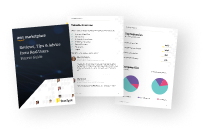
Buyer guide
Gain valuable insights from real users who purchased this product, powered by PeerSpot.
Financing for AWS Marketplace purchases
AWS Marketplace now accepts line of credit payments through the PNC Vendor Finance program. This program is available to select AWS customers in the US, excluding NV, NC, ND, TN, & VT.

Pricing
Pricing is based on the duration and terms of your contract with the vendor. This entitles you to a specified quantity of use for the contract duration. If you choose not to renew or replace your contract before it ends, access to these entitlements will expire.
Additional AWS infrastructure costs may apply. Use the AWS Pricing Calculator to estimate your infrastructure costs.
Dimension | Description | Cost/12 months |
|---|---|---|
MD Cloud Prevention API - Enterprise | MetaDefender Cloud Prevention API - Enterprise. 30,000 requests/month. Annual subscription. CDR and AV multiscanning are processed together in a single Prevention API call, so using both technologies on the same file consumes only 1 API request from the allowance. | $55,000.00 |
Dimensions summary
This listing offers one pricing option: the MetaDefender Cloud Prevention API Enterprise tier. You buy it as an annual subscription that includes an allowance of 30,000 requests per month. Pricing is based on request volume over a fixed yearly term, not per-file or per-engine. Content Disarm and Reconstruction (CDR) and antivirus multiscanning run together in a single Prevention API call. So applying both technologies to one file counts as only 1 request against your monthly allowance. This keeps request counting simple regardless of how many detection methods you apply.
Top-of-mind questions for buyers
One request is a single Prevention API call on one file. Running antivirus multiscanning and Content Disarm and Reconstruction together on the same file still counts as 1 request. The number of detection engines or sanitization steps applied does not increase the count.
The Enterprise tier includes a buffer that allows some usage over the 30,000 monthly allowance without an added fee. For usage beyond that buffer, contact the vendor to confirm how extra requests are handled under your annual subscription.
The allowance is counted per month at 30,000 requests, within an annual subscription term. The monthly structure means requests are measured on a monthly cycle. For specifics on whether unused requests carry over between months, contact the vendor to confirm.
www.opswat.com
Helpful?

Legal
Vendor terms and conditions
Upon subscribing to this product, you must acknowledge and agree to the terms and conditions outlined in the vendor's End User License Agreement (EULA) .
Content disclaimer
Vendors are responsible for their product descriptions and other product content. AWS does not warrant that vendors' product descriptions or other product content are accurate, complete, reliable, current, or error-free.
Delivery details
Software as a Service (SaaS)
SaaS delivers cloud-based software applications directly to customers over the internet. You can access these applications through a subscription model. You will pay recurring monthly usage fees through your AWS bill, while AWS handles deployment and infrastructure management, ensuring scalability, reliability, and seamless integration with other AWS services.
Resources
Support
Vendor support
A license key will be provided by your OPSWAT Sales representative. To obtain the software and related modules, or to receive support, please sign in or create an account at https://my.opswat.com . For sales inquiries, please contact OPSWAT at apn-sales@opswat.com . Visit https://www.opswat.com/support/contact-support for more contact options.
AWS infrastructure support
AWS Support is a one-on-one, fast-response support channel that is staffed 24x7x365 with experienced and technical support engineers. The service helps customers of all sizes and technical abilities to successfully utilize the products and features provided by Amazon Web Services.
Similar products
Easily scan incoming files for malicious code when exchanging data using AWS Transfer Family. Scan up to 500 GB for free during your trial. Additional data scanning will result in PAYG charges.
Prevent malware from infiltrating Amazon EFS and scan all volumes to identify sensitive data. Scan up to 100 GB for free during your trial. Scanning more than 100 GB during your 30 day trial will result in pay as you go (PAYG) charges.

Cyber Security Cloud Managed Rules are designed to mitigate and minimize vulnerabilities, including all those on OWASP API Security Top 10 Threats list. By using our rulesets, you can start protecting your API Gateway right away with a low false-positive rate and a higher defense capability.
In-tenant malware scanning for Amazon S3, EBS, EFS, and FSx. Scan files on upload, at rest, or via API with multi-engine detection, automated quarantine, and large multi TB file support.
Customer reviews
M Kopeichikov
Automated file scanning has protected chat workflows and strengthened daily security checks
Reviewed on Oct 19, 2026
Review provided by PeerSpot
What is our primary use case?
My main use case for MetaDefender is to scan files from chats on a day-to-day basis, because sometimes most of the people are sending something possibly malicious via web chats, and I need to be sure that everything that comes in and comes out of that chat is legitimate and won't affect our company's computer servers.
MetaDefender fits into my workflow for scanning files automatically. We have two MetaDefender Cores working together, and the scanning is working automatically, fast, and smoothly, while we can manually take some files from the quarantine if needed. Everything is automated with the API, so that is how we actually use it.
During my studies, I don't really trust files from the outside, even from my professors or the internet, so I constantly scan them in MetaDefender Core and I appreciate the results. I appreciate how fast it works, and it is easy to manage, implement, and work with.
How has it helped my organization?
MetaDefender has impacted my organization positively because we hear from our customers that everything works fine. I don't have a lot of support tickets about things being broken or working poorly and don't need to upgrade the whole system every week, so everything is great.
The outcomes from using MetaDefender Core include scanning metrics reaching a few milliseconds if you know how to configure it right. This year, I received a few tickets about configuration requests, but none regarding something being broken. Everything worked well and smoothly.
What is most valuable?
The best features MetaDefender offers in my experience include how easily it installs and the great GUI that I find excellent, even though I feel quite confused with the new version. I appreciate how everything connects smoothly, which allows my workflow to cover more directions in my company.
I find the new GUI confusing only because I am used to the previous one. While it is common to need time to adjust to a refreshed GUI, overall, the GUI is still one of the best I have ever seen. Connecting different modules is easy to do, just as installing on your Linux or Windows system and configuring it to work out of the box is straightforward.
I have a great impression of the detection rates provided by MetaScan multi-scanning. It is one of the best I have ever seen.
I assess the effectiveness of Deep CDR in reconstructing files safely and without signatures as a ten out of ten, as I really appreciate how it is done.
The file-based vulnerability assessment feature is useful for identifying potential security risks before deployment, as it helps to detect vulnerabilities at an early stage and reduces the risk of introducing vulnerable components into production environments.
We use the adaptive sandbox analysis, and I appreciate it because it operates on a separate server, MetaDefender IFR. I appreciate the GUI, the design, and the overall reports it generates.
We are using the enhanced reporting and audit visibility features because the reports are very colorful and everything we need is beautifully presented.
I assess the effectiveness of the solution in blocking or sanitizing content based on policy as a ten out of ten.
What needs improvement?
MetaDefender could be improved by enhancing the Central Management feature because sometimes when I need to make configurations inside MetaDefender Core, it is blocked, which necessitates accessing Central Management. I suggest allowing more settings to be adjustable directly in MetaDefender Core itself.
For how long have I used the solution?
I have been using MetaDefender Core for a year now, and in addition to Core, I also use other solutions such as Email Gateway Security, MetaDefender IFR, and ICAP.
What do I think about the stability of the solution?
MetaDefender is one hundred percent stable.
What do I think about the scalability of the solution?
MetaDefender's scalability is straightforward. You can scale by adding multiple MetaDefender Cores that work as a cluster, but you need an external load balancer for this purpose.
Which solution did I use previously and why did I switch?
We used to use FortiSandbox, but we switched to MetaDefender because it is simply better.
What was our ROI?
I cannot share any relevant metrics about return on investment as we are not counting that information.
What's my experience with pricing, setup cost, and licensing?
My experience with pricing, setup cost, and licensing has been excellent. When I ask for the price, it takes less than an hour to get all the information I need, and everything is fast.
Which other solutions did I evaluate?
Before choosing MetaDefender, I cannot really remember evaluating other options besides FortiSandbox and MetaDefender Core, but we ultimately chose MetaDefender Core because it was better.
What other advice do I have?
I have not used MetaDefender's AI capabilities at all because this is a new feature, and both our customers and I have not utilized AI in MetaDefender.
I think the AI capabilities and accuracy of MetaDefender should be at the top based on my expectations, as the product overall is excellent.
My advice for others looking into using MetaDefender is to install it on either a Linux or Windows system, conduct your tests, explore, and you will see that MetaDefender Core is an excellent product.
I rate MetaDefender a ten out of ten.
Seguntaiwo Tao
Endpoint security has improved and remote control now protects devices with swift threat recovery
Reviewed on Oct 13, 2026
Review from a verified AWS customer
What is our primary use case?
My main use case for MetaDefender involves managing endpoints and malware detection and vulnerability assessment. It is an encompassing platform that performs vulnerability assessment, endpoint protection, and malware detection.
We were tasked to protect some endpoints, and they wanted everything to be reported to a particular dashboard, so we had to deploy the agent on each device. The deployment was very seamless, and as an admin, I could do a whole lot of things, such as disable ports, perform DLP, and use many features including Content Disarm and Reconstruction, which is very effective. We also used it on mobile devices.
The main use case was simply protecting the endpoint and being able to do a whole lot of things remotely on those endpoints because the agent is sitting on them. It is very good for remote working, and you can be assured that your devices are protected with MetaDefender.
How has it helped my organization?
MetaDefender has positively impacted my organization by reducing the number of attacks we receive. Most of the attacks we got before we started using MetaDefender were unpremeditated and unplanned. Now, using MetaDefender, we can rest assured that we have excellent endpoint protection, which is more advanced than regular antivirus. This has helped us reduce our expenditures, and our users can work freely without the risk of getting attacked.
The mean time to restore has really gone down. Before MetaDefender, it could take more than an hour depending on the kind of impact, but now, in less than ten minutes, we are back up, which is very good.
What is most valuable?
The best feature MetaDefender offers is Content Disarm and Reconstruction because if there is malware in a particular file and the agent is sitting on it with Content Disarm and Reconstruction enabled, it is going to remove the malware and give you the exact file you need without you even being aware, which is a very good technology.
One of my experiences with Content Disarm and Reconstruction is that I intentionally wrapped a payload into a file and sent it to a particular device on the network to see if this really works. Upon the user clicking it, it was supposed to ransom the user's computer, but it was able to tell the user that this is a malicious file and it would undergo Content Disarm and Reconstruction. Upon clicking, it removed the payload and gave the user the real file beneath the wrapped malware.
Regarding my main use case and how I use MetaDefender, the use of DLP is very important because I work in a setting where you do not want users to exfiltrate your data. Some ports have been shut down, such as USB, and we do not allow external USB devices. DLP helps us to make sure that the USB port will be disabled, and you can also shut down the device if it is stolen. You can run malware detection periodically, and you can configure a lot of policies, which I was able to do using MetaDefender on those devices.
Regarding MetaDefender's AI capabilities, I think the governance and security are good. It is compliant and gives you an overall score of your device to see if it is compliant.
MetaDefender has been dependable for me because if I come into contact with a roadblock, I can ask the AI, and it really helps me twenty-four hours a day, seven days a week.
My impression of the detection rates provided by MetaScan multiscanning is that they are very reliable and can be trusted. While using it, I switched off my Windows Security to see if it would detect threats, and it did, providing recommendations that help you manage your security effectively.
I use adaptive sandbox analysis, which places the file into a sandbox to see its behavior, and it gives me the metric for it. Regarding file-based vulnerability assessment before deployment, it performed a vulnerability scan and provided patches without me having to look for them, and all patches were easily applied from the console screen.
What needs improvement?
I hope that MetaDefender could improve by integrating more advanced features that are not currently available. I understand it is still OPSWAT, but I wish it could be more encompassing.
I would like to see specific advanced features, such as Kiosk, which I have not reviewed but I know OPSWAT has different features apart from MetaDefender that might be more advanced. However, MetaDefender is very good for SMBs and medium-level businesses.
The effectiveness of Deep CDR in reconstructing files safely and without signatures works, but for bigger files, it takes a long time. Sometimes, I have to strike a balance between scanning the file and a user needing it, but I know it does work, especially when using behavioral analysis and sandboxing.
For how long have I used the solution?
I came across MetaDefender during one of my projects where we had to secure some endpoints and needed endpoint protection. It has been about several months ago, and it has been really great so far.
What do I think about the stability of the solution?
MetaDefender is stable and reliable during use. It is very easy to uninstall and off-board, and it protects mobile devices, an area where most other solutions have not been able to perform well.
What do I think about the scalability of the solution?
The scalability of MetaDefender is very good. It scales well as my organization grows, allowing for adjustments as needed, and it does not have a pay-as-you-go pricing plan.
How are customer service and support?
Customer support is very responsive, reaching out to me back in less than ten minutes during their work hours. There is also an AI chatbot that can provide solutions or escalate to the support team if needed. I give their customer support a perfect score of ten out of ten.
Which solution did I use previously and why did I switch?
Previously, we used different solutions such as Qualys and Nessus, and we are currently using ManageEngine to see the features of these products and make a decision. Not that either solution is bad, but we need to choose what is best by trying each of them.
How was the initial setup?
Nothing much is needed for improvements since it was linked with Active Directory, allowing all our computers online to receive the agents. We also used startup scripts to automatically start the deployment when all devices come up, so the deployment was great.
What was our ROI?
I cannot assess the return on investment with MetaDefender since we never invested in it. We only used the trial, and I can answer that once we make a decision on whether to proceed with it.
What's my experience with pricing, setup cost, and licensing?
I started with a thirty-day trial for pricing and setup costs. Right now, we are in the process of comparing ManageEngine and MetaDefender because we are currently using ManageEngine Endpoint Central.
Which other solutions did I evaluate?
Before choosing MetaDefender, I evaluated it against Nessus and Qualys, and now we are using ManageEngine Endpoint Central.
What other advice do I have?
I rate MetaDefender a nine out of ten. I chose nine out of ten because it loses that one point due to the advanced features that are probably not there and also the pricing. We used the trial method first to test the product, and for the job I needed it to cover for the SMEs, it was able to cover all the endpoints and do the job well.
Honestly, I have not reviewed the enhanced reporting and audit visibility features, nor have I tried automating it, but it is something I am planning to do to ease my job as an administrator.
My advice for others looking into using MetaDefender is that it is a great product with a lot of features your organization would need. The policies are easy to control, and navigation is not hard at all. Additionally, it does not take much CPU. My overall rating for MetaDefender is nine out of ten.
Which deployment model are you using for this solution?
Public Cloud
If public cloud, private cloud, or hybrid cloud, which cloud provider do you use?
Amazon Web Services (AWS)
Sandeep Parmar
File security has improved as we scan uploads pre-server and block corrupted content
Reviewed on Oct 11, 2026
Review provided by PeerSpot
What is our primary use case?
The main use case for MetaDefender in the project with B****** is to ensure that files are scanned before sending them to the server, where I created a Java-based service that checks for viruses.
In the project with B******, my main use case for MetaDefender is to scan files that use Excel uploads and basic file uploads to prevent any virus infections, so I send the file bytes to MetaDefender APIs and check for viruses.
I do not know much about Deep CDR, as my integration is mostly for scanning viruses, and we just block files that are corrupted or harmful without reconstructing them.
How has it helped my organization?
MetaDefender has positively impacted B****** organization, as their security has increased significantly by scanning all the files in their environment before sending them to the servers.
I cannot share any specific outcomes or benefits that B****** has seen, as that is an internal organization matter.
What is most valuable?
In my experience, the best feature that MetaDefender offers is its perfect documentation, which is critical for API integrations to ensure files are not corrupted or infected with viruses.
I would add that for the dashboard, while I have used it, I am more fascinated about the API. It is good that we can manage users from one console, and I can see the history of uploads and whether the files are corrupted or not.
I think the detection rates provided by MetaDefender through multi-scanning are good, as it stops almost all of the virus files I have uploaded.
MetaDefender effectively blocks the harmful content based on our policies, as this is working perfectly fine for me, though I cannot share specific policies.
What needs improvement?
In my opinion, MetaDefender could improve its async version of their APIs, as the documentation is not that good for the async APIs and can be a bit complex to navigate for integrations.
Regarding needed improvements for MetaDefender, I think the dashboard could benefit from features that allow tracking IPs from where files are coming, which would enable blocking potential attackers.
I reported this issue, and while it is not directly MetaDefender's fault, it highlights a potential area where they could prevent misconfigurations.
For how long have I used the solution?
I have been using MetaDefender for a project with an Indian client named B******, which is a big client, and they have requested us to integrate MetaDefender with their current flow.
What do I think about the stability of the solution?
I think MetaDefender works as expected without major issues, and I faced one, but it was due to the integration provider, OPSWAT.
There was an incident regarding the sending of hardcoded API keys, which caused me to receive unauthorized errors due to the overriding API key issue from OPSWAT.
In my experience, MetaDefender has been stable, as I have not noticed any downtime while my application uses it 24/7.
What do I think about the scalability of the solution?
I do have concerns about scanning larger file sizes, like 400 MB, since we have set a maximum limit of 65 MB, and I would be worried if we were to increase this limit.
How are customer service and support?
I have not had to reach out to MetaDefender for customer support.
Which solution did I use previously and why did I switch?
I did not use a different solution before MetaDefender, as there was no prior solution.
How was the initial setup?
I think my use case with MetaDefender fits into my workflow well, as it is quite easy to integrate, thanks to the thorough documentation, and we took about two or three days to integrate all of MetaDefender's APIs.
What was our ROI?
I have not seen a return on investment regarding time or money, but the implementation of MetaDefender provides an essential security layer that blocks potential threats.
What's my experience with pricing, setup cost, and licensing?
Regarding pricing, setup cost, and licensing, I cannot provide specifics since it falls under B****** and OPSWAT's management, but from my perspective, the per API hit cost is a factor.
Which other solutions did I evaluate?
Before choosing MetaDefender, I did not evaluate other options, as it was a decision made by the higher management, and my role was to integrate it.
What other advice do I have?
I would rate MetaDefender around seven to eight because I have used their file scan feature, though I have not fully explored all their capabilities. I would give it a seven or eight because I have not used all the functionalities provided, and I deduct a point for the async API documentation which could be better.
Regarding MetaDefender's AI capabilities, I believe they manage governance and security policies quite well, especially since B***** is a large and reputable firm.
MetaDefender is deployed on-premises in the organization, and there is also a trial version available on the cloud, but we are currently only using on-premises.
My advice to others looking into using MetaDefender is to read the documentation first before implementing anything. I would rate MetaDefender an eight out of ten overall.
Pradeep Dubey
Centralized endpoint checks have secured global access to sensitive corporate resources
Reviewed on Oct 05, 2026
Review provided by PeerSpot
What is our primary use case?
Before accessing the company's protected resources, it is being scanned through MetaDefender Endpoint, which scans the local operating system and machine before the request actually hits the company's protected resources.
MetaDefender Endpoint has been installed in the Windows operating system machine, and before accessing any protected resource of the company, MetaDefender scans the request and the resources, and it even scans the local machine. If there is any vulnerability or any kind of malware, then it immediately blocks the resource and does not allow access to the protected resource for the company. In this case, it is the company's protected resource, so access is not allowed. It checks the software and checks the various software that is installed in the machine, and if all are acceptable, then only MetaDefender is allowed to access the protected resources.
For companies that are widely distributed and have resources with company employees widely located across the world, it provides a centralized, secure platform before accessing any protected resource. This is a mandatory software that everyone should install in their machine and ensure that it passes all the quality checks, making it a strong platform in terms of security and securing protected resources.
How has it helped my organization?
MetaDefender is fundamentally a security platform. All resources that are company proprietary resources are secured with MetaDefender Endpoint, and this is what was desired at the company level. It is mandatory for each and every resource in the company located across the globe to be scanned by MetaDefender Endpoint before accessing these protected resources.
All employees in the organization are keeping their machines up to date; all software is regularly upgraded. For example, browser versions or other software such as Notepad++ are being upgraded. They are also conducting full Windows scans, meaning they are doing complete security full scans on their machines on a monthly basis because this is set at the organization security policy where it is mandatory to scan the machine once a month. These security policies are implemented, and MetaDefender is valuing these policies and ensuring that all employees are aligning with the security policy.
What is most valuable?
MetaDefender checks all the software and its latest version, and whether the local software that is installed is aligned with the organization policy that is set by the organization security administrator. MetaDefender passes all this information and checks against those policies that are being set and determines whether the installed software is aligned with the organization policy or not. For example, if any deprecated software or any software that has any kind of malware is in the machine, then it immediately highlights and stops accessing those protected resources.
MetaDefender is always on at startup; it must be enabled during startup of the operating system, and when accessing any protected resource, after authorization and authentication, it immediately checks whether the resource being accessed is allowed for access, and it scans all the software. Whether it is a browser version such as Chrome browser, or if it is having a deprecated or older version, or any operating system software such as WinRAR or Notepad++, any software that is deprecated or has an older version, it will immediately flag that as an error and will not allow access to the protected resources.
This is quite helpful in terms of securing resources; it immediately brings those vulnerabilities or incompatibilities in the system to attention. It also provides the feature to check the status of the operating system or machine status immediately. There is an icon at the taskbar; clicking and rechecking the status of MetaDefender Endpoint shows the current status. If all are acceptable, then it will confirm that all is well, and access to the protected resources can proceed. If there is any issue, it will flag that on the screen when rechecking the status.
MetaDefender highlights all the vulnerabilities the moment of accessing the protected resources, so it scans all the files in the system and brings those issues when clicking the recheck button.
It does the auditing of the local machine and maintains awareness of what is occurring on the machine, specifically from the security perspective. If there is any vulnerability or any kind of malware being deployed in the machine, it immediately stops access to those protected resources.
What needs improvement?
If there is any major vulnerability, then it is understood that it should not allow access to the protected resource. However, if the vulnerabilities are not serious and are at the information or warning level, then MetaDefender should allow access to those protected resources. For example, if using an older Chrome browser version, it should not be a significant security issue. Similarly, older version Notepad++ represents low priority issues that MetaDefender could still allow employees to access the protected resources, but currently, MetaDefender treats these small issues as high priority.
MetaDefender will not automatically open the screen and display vulnerabilities unless the recheck button is clicked, which is something that could be improved. The moment the operating system or machine is opened, it should highlight any issues if there are vulnerabilities rather than waiting for the recheck button to be clicked.
The recheck button needs to be clicked every time. Additionally, low priority issues are taken very seriously and considered blockers. For example, outdated browser versions or any software in the machine that does not have the latest version could be considered low priority if the software is not critical.
The full scan takes considerable time; a complete Windows full scan takes almost 12 hours because it has billions of files. The full scan is time-consuming, and if MetaDefender could scan it more quickly and provide results faster, that would be an improvement.
Regarding improvements, low priority software that is highlighted as a blocker could be reworked to still allow the user to access the protected resources. Additionally, MetaDefender could introduce some kind of workflow or user interface which highlights all issues or vulnerabilities in one place rather than requiring clicking the recheck button and navigating through the browser.
For how long have I used the solution?
This product has been in use for two years.
What do I think about the stability of the solution?
MetaDefender is stable, but it brings or highlights items which are low priority, and software upgrades need to occur very frequently because it checks all the minute details in the operating system and system and brings them forward, necessitating software upgrades.
What do I think about the scalability of the solution?
MetaDefender handles the scale well. There are quite a lot of employees, more than 50,000 employees, and all are using it, making it a quite scalable platform.
How are customer service and support?
Customer service has not been contacted yet because it is a quite stable environment and a stable platform. MetaDefender highlights all the issues and even guides how to resolve vulnerabilities, for example, by installing upgraded software or conducting a full scan. It is quite comprehensive in explaining the issues that are currently encountered.
What was our ROI?
MetaDefender Endpoint has provided benefit from its use. The company's resources are fully protected and secured; no unauthorized access can reach the protected resources. All resources are now secured, and MetaDefender Endpoint can be trusted in this area.
What's my experience with pricing, setup cost, and licensing?
The setup and pricing are managed at the organization level, and the security department or the infrastructure department would have better knowledge of costing and pricing.
Which other solutions did I evaluate?
Previously, the authentication and authorization method was using Azure Active Directory, or Azure Entra ID, and now MetaDefender is also used along with Azure AD.
What other advice do I have?
From the security perspective, I would rate it an eight. MetaDefender is on-premises and managed by the company's platform. For any company where resources are widely located across the globe, MetaDefender Endpoint should be considered as one of the security platforms that ensure all protected resources are very much secure.
Sriparna Banerjee
Advanced file sanitization has strengthened threat detection and protects daily content workflows
Reviewed on Oct 04, 2026
Review provided by PeerSpot
What is our primary use case?
My main use case for MetaDefender is for security purposes, as we are a cybersecurity team, and currently we are using it for purposes such as antivirus scanning and other security measures.
In my day-to-day work, we are working with a company called Opswat, and we have devices, so to keep everything clean and clear, we are using MetaDefender as an antivirus firewall. We are inserting this MetaDefender chip for scanning purposes and using it as a firewall as well, but I do not have much knowledge about it because I am in a non-technical role right now.
In terms of using MetaDefender, we are utilizing it for threat detection, multi-scanning, and enterprise security.
How has it helped my organization?
MetaDefender has impacted my organization positively by adding an extra layer of security to our file and content handling process, and through its CDR, it ensures that files are sanitized before they reach our environment, which has improved our security posture.
I have noticed that the confidence and security of file processing have improved, with multi-engine scanning providing threat detection, and the security checks help us identify malicious files before they enter our environment, although I have not yet observed a specific, quantified business impact.
What is most valuable?
In my experience, MetaDefender offers a Deep CDR, and other major strengths include multi-scanning, Tri-tech AI, Adaptive Sandbox, Proactive DLP, and file vulnerability assessment.
Out of those features, I find myself relying on Deep CDR the most because it is one of MetaDefender's key differentiators; it does not depend only on detecting known malware but sanitizes and reconstructs files to prevent potentially malicious content, including zero-day threats, from reaching the environment.
Regarding MetaDefender's AI features, I think it handles data responsibly and keeps things secure by providing protection in multiple layers through malware scanning, threat detection, and content sanitization, which helps organizations manage security risks while maintaining a good balance between security, control, and compliance.
I find MetaDefender's AI capabilities to be reliable and useful as an additional layer of threat detection, with results that have been generally consistent and provide useful insights when analyzing files, though I have not used the AI capabilities long enough to independently measure accuracy.
My impression of the detection rates from MetaDefender's Metascan Multi-scanning has been positive; using multiple scanning engines provides broader coverage and greater confidence that potential threats will not be missed, and while I have not independently measured the detection rate, the results I have seen are consistent and useful for identifying potential malicious files.
I assess Deep CDR as highly effective in reconstructing files safely and without signatures because it focuses on safely reconstructing files rather than relying only on traditional malware signatures, which is particularly valuable for handling unknown or potentially zero-day threats while keeping reconstructed files usable.
I think the file-based vulnerability assessment feature is valuable because it helps identify potential vulnerabilities before files or applications are deployed, providing an additional preventive security layer that helps organizations address risk earlier rather than discovering them post-deployment.
We are using the reporting and audit visibility features to gain better visibility into scanning activities and results, which help provide a clearer record of what has been scanned and the outcomes, aiding in tracking and audit purposes from an operational perspective.
What needs improvement?
One area where MetaDefender could improve is by making the user experience more intuitive, especially for new users, with clear guidance, simpler navigation, and a more detailed explanation of scan results and outcomes, which would enhance the effectiveness for users, while better onboarding and learning resources would help users get familiar with the different features more quickly.
The usability and onboarding are my main concerns, as I do not have much overview on the technical aspects.
For how long have I used the solution?
I have been using MetaDefender for two to three months.
What other advice do I have?
MetaDefender offers strong security capabilities and multiple layers of threat detection, but since I am still relatively new to this platform, I would explore more of its features before giving it a higher rating. Even though MetaDefender provides a strong, multilayered security and is quite useful and comprehensive, the user experience on onboarding and the clarity of scan results could be simpler, especially for new users.
My advice to organizations looking into using MetaDefender is to seek an additional layer of security around file and content handling, as it is a great choice with multi-engine scanning, CDR, and vulnerability assessment capabilities providing good overall coverage. It is important to clearly understand your organization's security requirements and take time to explore the different features and integrations to get the most value from the platform.
I would rate MetaDefender as an eight out of ten.