
Sold by: Snowflake
Deployed on AWS
Free Trial
Snowflake powers the end-to-end data lifecycle, from ingesting and processing data to analyzing and modeling it, to building and sharing data and AI applications, helping engineers, analysts and leaders innovate faster and achieve more with their data, all within a unified platform and connected ecosystem. Get started today with a 30 day free trial which includes $400 worth of free usage.
4.6
Overview

Snowflake is the platform for the AI era, making it easy for enterprises to innovate faster and get more value from data. The largest companies in the world use the Snowflake AI Data Cloud to build, use and share data, applications and AI.
Get started today with up to $400 in usage credits during your 30-day free trial. Trial ends the earlier of when credits are consumed or the 30-day period expires. After your trial ends, you will be automatically enrolled into a Snowflake pay-as-you-go plan using the payment method associated with your AWS Marketplace account. You will pay only for what you use and can cancel anytime.
Learn more at snowflake.com (NYSE: SNOW)
Highlights
- EASY: From effortless onboarding and operations, to low maintenance management, to easy-to-optimize savings, Snowflake provides a single, fully-managed platform to enable what is possible with data, apps and AI.
- CONNECTED: Do not sink time building and maintaining pipelines. Share data at speed instead. With a platform that is interoperable out of the box, sharing across clouds is lightning fast.
- TRUSTED: Stay safe, compliant and in control with built-in governance and always-on security. The Snowflake AI Data Cloud services and accounts are designed for security, lowering the risk of vulnerabilities and breaches with features that help customers configure comprehensive levels of security for their data and users.
Details
Sold by
Categories
Delivery method
Deployed on AWS
New
Introducing multi-product solutions
You can now purchase comprehensive solutions tailored to use cases and industries.

Features and programs
Trust Center

Access real-time vendor security and compliance information through their Trust Center powered by Drata or Vanta. Review certifications and security standards before purchase.
Buyer guide
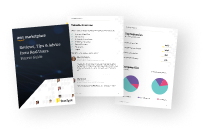
Gain valuable insights from real users who purchased this product, powered by PeerSpot.
Financing for AWS Marketplace purchases
AWS Marketplace now accepts line of credit payments through the PNC Vendor Finance program. This program is available to select AWS customers in the US, excluding NV, NC, ND, TN, & VT.

Pricing
Free trial
Try this product free according to the free trial terms set by the vendor.
Pricing is based on actual usage, with charges varying according to how much you consume. Subscriptions have no end date and may be canceled any time.
Additional AWS infrastructure costs may apply. Use the AWS Pricing Calculator to estimate your infrastructure costs.
Dimension | Cost/unit |
|---|---|
Snowflake Usage ( Each unit is 1 cent of usage) | $0.01 |
Dimensions summary
This listing uses a single usage-based dimension. Each unit equals one cent of usage, so your bill tracks what you actually consume. There are no fixed tiers or instance sizes to pick. Snowflake measures usage across two main drivers: compute, billed on a consumption basis, and storage, billed by the amount of data stored per month. Your total cost rises and falls with activity. You pay only for what you use, with no upfront commitment built into this dimension.
Top-of-mind questions for buyers
Each unit equals one cent of usage. The platform meters your actual activity, then converts it into these cent-sized units. You are not buying seats, instances, or fixed sizes. Your unit count simply reflects the compute you run and the data you store, totaled from your real consumption.
Two drivers combine on one bill. Compute is billed on a consumption basis, rising when you run queries and workloads. Storage is billed by the amount of data held per month, after compression. Compute usually dominates for active query workloads. Storage dominates for large datasets with low activity. Both accrue together.
Compute charges track activity, so they fall when queries and workloads stop running. Storage charges continue as long as your data stays stored, since they are based on data held per month. You keep paying for stored data even during idle periods, but active compute billing eases off.
www.snowflake.com+1
Helpful?
Vendor refund policy
Please see seller website for refund details.
Custom pricing options
Request a private offer to receive a custom quote.

Legal
Vendor terms and conditions
Upon subscribing to this product, you must acknowledge and agree to the terms and conditions outlined in the vendor's End User License Agreement (EULA) .
Content disclaimer
Vendors are responsible for their product descriptions and other product content. AWS does not warrant that vendors' product descriptions or other product content are accurate, complete, reliable, current, or error-free.
Delivery details
Software as a Service (SaaS)
SaaS delivers cloud-based software applications directly to customers over the internet. You can access these applications through a subscription model. You will pay recurring monthly usage fees through your AWS bill, while AWS handles deployment and infrastructure management, ensuring scalability, reliability, and seamless integration with other AWS services.
Resources
Vendor resources
Support
Vendor support
For Snowflake On Demand - Enterprise, 24x365 support is available and with one hour (1 hour response).
AWS infrastructure support
AWS Support is a one-on-one, fast-response support channel that is staffed 24x7x365 with experienced and technical support engineers. The service helps customers of all sizes and technical abilities to successfully utilize the products and features provided by Amazon Web Services.
Updated weekly
By Snowflake

By Databricks, Inc.
By Cloudera
Top
10
In Embeddings, Software Development
Top
10
In Databases & Analytics Platforms, ML Solutions, Data Analytics
Top
10
In Data Analysis
Sentiment is AI generated from actual customer reviews on AWS and G2
Functionality
Ease of use
Customer service
Cost effectiveness
Positive reviews
Mixed reviews
Negative reviews
AI generated from product descriptions
Unified Data Platform
End-to-end data lifecycle management including data ingestion, processing, analysis, modeling, and application building within a single integrated platform
Cross-Cloud Data Sharing
Interoperable architecture enabling rapid data sharing across multiple cloud providers without requiring custom pipeline development and maintenance
Built-in Security and Governance
Comprehensive security features including always-on security, built-in governance controls, and configurable security levels for data and user access management
Fully Managed Infrastructure
Fully-managed platform with automated operations, low-maintenance management, and built-in optimization capabilities for resource efficiency
AI and Machine Learning Capabilities
Native support for building, deploying, and sharing AI applications and models integrated within the data platform ecosystem
Lakehouse Architecture
Unified data foundation built on lakehouse architecture providing open, unified foundation for data and governance with support for open standards and formats
Data Intelligence Engine
Powered by Data Intelligence Engine that enables organization-wide access to data and insights across all users and roles
Multi-Workload Unification
Consolidates data engineering, analytics, business intelligence, data science and machine learning workloads on a single common platform
Open Source Foundation
Built on open source data projects and open standards to maximize flexibility and interoperability across data ecosystem
Collaborative Capabilities
Native collaboration features enabling unified data teams to collaborate across entire data and AI workflow
Auto-scaling Capability
Intelligently autoscales workloads up and down across hybrid and public cloud environments for optimized cloud infrastructure utilization.
Multi-function Analytics Platform
Provides integrated data warehouse, machine learning, and custom analytics services with standardized user experience for ingesting, transforming, querying, optimizing, and making predictions from data.
Unified Security and Governance Framework
Implements Shared Data Experience (SDX) technology that sets security and governance policies once and applies them consistently across all data and workloads regardless of infrastructure.
Cross-infrastructure Policy Portability
Maintains security and governance policies with data as it moves across multiple public clouds, private cloud, and hybrid cloud environments.
Centralized Data Management and Discovery
Provides unified metadata management enabling efficient data curation, discovery, and sharing while eliminating data silos and redundant data copies.
Standard contract
No
No
No
Customer reviews
Information Technology and Services
Easy-to-Use Data Warehouse with Powerful Cortex and Snowsight
Reviewed on Oct 01, 2026
Review provided by G2
What do you like best about the product?
Snowflake is our datawarehouse that hosts all of our data from several sources that we ingest from. The UI is amazingly easy to use. Features like Cortex and Snowsight are super useful for stakeholders and users who are not very technical.
What do you dislike about the product?
The cost has been on the higher side, it is definitely related to the huge volumes of data we have.
What problems is the product solving and how is that benefiting you?
Snowflake is solving the problem of fragmented data and inconsistent reporting by centralizing data from many sources into GitLab’s Enterprise Data Warehouse, which serves as a common source for KPIs, analytics, dashboards, and reporting.
For me, that means:
Faster access to trusted, governed data.
More consistent metric definitions and business logic.
Easier reconciliation across systems such as Salesforce and Zuora.
Less manual data extraction and file-based analysis.
Better support for self-service analytics through Tableau and AI-enabled data exploration.
Overall, Snowflake lets me spend less time assembling data and more time improving data quality, governance, and decision-making.
For me, that means:
Faster access to trusted, governed data.
More consistent metric definitions and business logic.
Easier reconciliation across systems such as Salesforce and Zuora.
Less manual data extraction and file-based analysis.
Better support for self-service analytics through Tableau and AI-enabled data exploration.
Overall, Snowflake lets me spend less time assembling data and more time improving data quality, governance, and decision-making.
SunilKumar18
Role-based data access has secured financial dashboards and supported strategic planning
Reviewed on Sep 30, 2026
Review from a verified AWS customer
What is our primary use case?
We provide permissions to the roles and schemas, and based on that, we provide a group to the application team. They sign up for those groups and are able to access the tables and views. This is how the process that I worked on.
Our major use case for Snowflake Data Cloud is finance-related. We were uploading SQL files to Snowflake, and from there, the end users were able to see the figures inside the Snowflake dashboards.
I am using Snowflake Data Cloud for data enrichment, basically to deploy some SQL files to check the availability of data inside Snowflake.
How has it helped my organization?
It helps to improve strategic planning with this data enrichment.
What is most valuable?
The biggest advantage of Snowflake Data Cloud is that we can use it for querying, and it is serverless. This makes it less costly compared with others.
The Data Sharing feature in Snowflake Data Cloud does help with our data accessibility, and it includes data masking.
The benefit of data sharing is that people cannot see the masked data, so we need to provide some ownership-related privileges. It provides a secure way that we can store our data.
Regarding the security part, it significantly impacts our data protection. The security impact is that we provide separate groups to the users who sign up for that particular role within that group. Using that IAM role, they can integrate and execute security-related SQL tasks. From a security perspective, we are not giving direct access to the users.
What needs improvement?
I have not noticed any disadvantages for Snowflake Data Cloud, but if I do, I will let you know.
The connection requires time, and the integration part support would be a six. The documentation might not be very straightforward; these are all the negative parts that we can see.
For how long have I used the solution?
I started using Snowflake Data Cloud three years ago.
What do I think about the stability of the solution?
Snowflake Data Cloud is about 99% stable and reliable.
What do I think about the scalability of the solution?
In terms of scalability, we are able to scale easily.
How are customer service and support?
The support for concurrent users and workloads in Snowflake Data Cloud is important for us. If we face any related dashboard configuration issues or warehouse creation-related issues, we contact the Snowflake team directly, raise a request, and get the information from them on what exactly we need to focus on and how to resolve the issues. Additionally, if there is anything related to permissions, such as ownership and masking-related policy permissions, we can reach out to them directly.
For technical support, I give it six points out of ten, where ten is the best.
I give it six points because sometimes the documentation is not very good, so we need to wait to connect with them. After that, their answers are okay and good, but the call waiting time is really high.
How was the initial setup?
The installation of Snowflake Data Cloud requires following the documentation provided by the Snowflake team. It is fine, medium level—it is not very high level or something.
The most difficult part with installation is managing credentials. We need to create accounts and sign up for those things; it takes a lot of time and causes confusion when making a connection between Snowflake Data Cloud and other integration tools.
What was our ROI?
I see value for money here because it saves our time and money, though I am not a budget manager.
We experience savings of about 15%.
What's my experience with pricing, setup cost, and licensing?
The price for Snowflake Data Cloud is reasonable and not very expensive.
Which other solutions did I evaluate?
I hear that in the coming months and years, there is a tool that is emerging, but I am not sure of the name. Compared to Snowflake Data Cloud, that tool stack is very good for my upcoming project. They are discussing that point, but I am not recalling the name.
What other advice do I have?
In terms of features, I am part of the enablement team, so I can provide access. The development will take care of all these things. I am not the administrator for that.
Regarding the machine learning part, machine learning is a different approach, so the MLOps team will use that particular aspect to deploy their Step Functions related tasks. For their machine learning, it involves Step Function and Lambda related tasks, as well as SageMaker related tasks. I am from the operations team, and this MLOps team will use SageMaker. What we do is create a role and policy, and we provide some permissions to them. Also, if they want to use SageMaker tools, we will whitelist at the policy level and give some enablement to them so they can use that particular tool stack to deploy their pipelines from the MLOps perspective.
Snowflake Data Cloud is one of the best for me because I am using it. In summary, I would give Snowflake Data Cloud around eight points on the scale from zero to ten, where ten is the best.
Which deployment model are you using for this solution?
Public Cloud
If public cloud, private cloud, or hybrid cloud, which cloud provider do you use?
Amazon Web Services (AWS)
reviewer2900133
Experience has exposed gaps in data ingestion, search, and analytics promised for our workflows
Reviewed on Sep 24, 2026
Review from a verified AWS customer
What is our primary use case?
Our main use case for Snowflake was to ingest data, use it for search, analytics, and data sharing with our customers; however, in reality, those use cases did not work.
When it came to our challenges with those use cases, Snowflake oversold their capabilities dramatically and told us we could simplify our Databricks implementation. In the end, this was confirmed by Snowflake architects that Snowflake ingestion would not work for our use case because Snowflake is not sophisticated enough. This resulted in us losing significant time, spending considerable money, and ended up with a product that was not a good fit for us after making a substantial financial commitment. When it came to search, we thought we could use it based on the initial conversations with the sales representatives, but after we purchased the product and made the capacity commitment, we were told that capability was not available. The end result was that we have a very expensive data lake that does not support things like Iceberg as it should.
What is most valuable?
Snowflake's data sharing capability with other enterprises is the best feature they offer, which is excellent for us as a software company. Everything else they offer can be done better with other platforms at a cheaper rate. Snowflake's data sharing capability stands out compared to other platforms because it is native to Snowflake. If your customer has Snowflake, it is valuable. You can send your data into Snowflake and then the customer receives it automatically.
However, Snowflake has been the biggest mistake we have made since we started the company. It was a drain on the team from a technical perspective and almost from an emotional perspective. A specific example of how it was a drain on the team includes that we were promised a significant amount of things pre-sale around access to solution architects, support to get us on the project, and technical abilities to simplify our infrastructure. All of these technical abilities were significantly oversold. When it came to setting up meetings and getting help, it took months to get meetings with people who could actually assist us. In the end, when we got the meeting with someone who actually had the technical ability to do the work, he confirmed that they could not actually help us. Since then, Snowflake has only held our feet to the fire for the capacity commitments we made on the commitments that they made to us pre-sale.
What needs improvement?
Lessons learned about our main use case or how Snowflake performed in those areas include that the sales representatives do not really understand the product, and that the solutions consultants basically read internal marketing materials and internal AI to tell you what to do without really knowing how the things work. A specific example is when they told us they fully support Iceberg, and then they have over three thousand words of bullet point text with a link to reference articles with all the limitations of their Iceberg support. This resulted in us having to build almost significant modifications in order to use Iceberg.
Snowflake can only be a data lake to share data with external people and external companies. Beyond that, I believe you are wasting time and money.
For how long have I used the solution?
We have used Snowflake for three years.
What do I think about the stability of the solution?
Snowflake is stable.
What do I think about the scalability of the solution?
Snowflake's scalability is such that customer support is an atrocious experience, filled with many challenges, whether it is getting a meeting to fulfill the promises they made, getting them to prepare for that meeting, or getting them to actually help or have the technical abilities to assist. We receive a lot of corporate marketing sent to us, for instance, claims that they fully support Iceberg, but ignoring the three thousand words of limitations that they do not actually support Iceberg. It was always a challenge to figure out what they really could do versus what they told us we could do. The process to use their technology was always one that was solely driven by sales and not by Snowflake's actual ability to deliver. We have encountered this repeatedly over the last three years.
How are customer service and support?
Customer support is an atrocious experience, filled with many challenges, whether it is getting a meeting to fulfill the promises they made, getting them to prepare for that meeting, or getting them to actually help or have the technical abilities to assist.
Which solution did I use previously and why did I switch?
We did evaluate a couple of other databases and data lakes before choosing Snowflake. I cannot remember what they were, but this was back when we were on Azure as well.
How was the initial setup?
Deploying Snowflake in my environment is really easy to set up. If you want it to do sophisticated things for a SaaS company, it does not do them.
Snowflake's configuration process is straightforward and very easy.
What was our ROI?
In the end, Snowflake cost us more money. One of the things they said they could automate or improve for us was the ingestion of data and eliminate our Databricks requirements. In the end, we did not move to Snowflake to do ingestion, but they admitted that they could not actually eliminate any steps and would actually add steps to the process and add costs to the project. Snowflake undoubtedly cost us more money and provided almost no value to us.
What's my experience with pricing, setup cost, and licensing?
We find the metering and billing experience for Snowflake to be expensive because there are many limitations to what it can do. When we compared performance-wise and cost-wise to Bedrock for some of the AI work we are trying to do, Bedrock was much more performant and better priced.
Which other solutions did I evaluate?
We found Snowflake's Cortex tools and some of their AI tools to be not as good as Bedrock and much more expensive and slower.
My advice to others looking into using Snowflake is to look at DuckLabs and other tools. I would not recommend Snowflake on any level.
What other advice do I have?
I purchased Snowflake through the AWS Marketplace. I have given this review a rating of one out of ten.
Which deployment model are you using for this solution?
Public Cloud
If public cloud, private cloud, or hybrid cloud, which cloud provider do you use?
Amazon Web Services (AWS)
Matthew G.
Simple UI and Easy Integration That Just Works
Reviewed on Aug 21, 2026
Review provided by G2
What do you like best about the product?
Ease of use, simple UI, simple integration.
What do you dislike about the product?
Sometimes queries can take a very long time in larger databases.
What problems is the product solving and how is that benefiting you?
Centralized database, integrating with systems that run on old integration architecture.
Computer Software
Snowflake Lets Me Answer RevOps Questions Fast—No Waiting on the Data Team
Reviewed on Aug 08, 2026
Review provided by G2
What do you like best about the product?
I'm in RevOps, so not 100% your typical user. I mostly use Snowflake to pull datasets and stitch things together in SQL: pipeline questions, customer data, whatever came up that week.
The main thing I like is that I can just do it myself. Write the query, share them, look at what comes back, access them via CLI, drop a quick chart on it in the worksheet to see if the trend is actually there. Before, that meant exporting to a spreadsheet or asking someone on the data team, which usually meant waiting a few days for an answer I needed that afternoon.
I don't need anyone else for the everyday questions anymore. For me that's the whole value.
The main thing I like is that I can just do it myself. Write the query, share them, look at what comes back, access them via CLI, drop a quick chart on it in the worksheet to see if the trend is actually there. Before, that meant exporting to a spreadsheet or asking someone on the data team, which usually meant waiting a few days for an answer I needed that afternoon.
I don't need anyone else for the everyday questions anymore. For me that's the whole value.
What do you dislike about the product?
Nothing really, I struggled a bit with the new worksheet structure but I got the hang of it now
What problems is the product solving and how is that benefiting you?
Answered that in the first q: clear, structured, sharable, easy to use data access to revenue data, customer, product data etc.