
Sold by: Palantir Technologies
Deployed on AWS
Palantir Platform empowers organizations to effectively integrate their data, decisions, and operations.
4
Overview
Palantir Platform is accessible via private pricing only. The public price for Palantir Platform is a placeholder and actual payment may be different than the listed amount, depending on many factors. If you are interested in purchasing Palantir Platform and not already in contact with a sales representative, please get in touch with us at https://www.palantir.com/contact/get-started/
Palantir Platform empowers organizations to effectively integrate their data, decisions, and operations. This technology, forged through years of direct experience with complex institutional data challenges, re-unifies companies around their central mission. It enables them to become fully digital connected companies.
Highlights
- Data Operationalization
- Multi-System Connectivity
Details
Sold by
Categories
Delivery method
Deployed on AWS
New
Introducing multi-product solutions
You can now purchase comprehensive solutions tailored to use cases and industries.

Features and programs
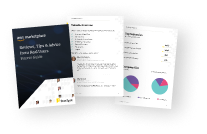
Buyer guide
Gain valuable insights from real users who purchased this product, powered by PeerSpot.
Financing for AWS Marketplace purchases
AWS Marketplace now accepts line of credit payments through the PNC Vendor Finance program. This program is available to select AWS customers in the US, excluding NV, NC, ND, TN, & VT.

Pricing
Pricing is based on the duration and terms of your contract with the vendor, and additional usage. You pay upfront or in installments according to your contract terms with the vendor. This entitles you to a specified quantity of use for the contract duration. Usage-based pricing is in effect for overages or additional usage not covered in the contract. These charges are applied on top of the contract price. If you choose not to renew or replace your contract before the contract end date, access to your entitlements will expire.
Additional AWS infrastructure costs may apply. Use the AWS Pricing Calculator to estimate your infrastructure costs.
Dimension | Description | Cost/month | Overage cost |
|---|---|---|---|
Foundry Unit | Foundry Subscription Unit | $100,000.00 |
Vendor refund policy
Refund Policies are subject to direct agreements between the customer and Palantir

Legal
Vendor terms and conditions
Upon subscribing to this product, you must acknowledge and agree to the terms and conditions outlined in the vendor's End User License Agreement (EULA) .
Content disclaimer
Vendors are responsible for their product descriptions and other product content. AWS does not warrant that vendors' product descriptions or other product content are accurate, complete, reliable, current, or error-free.
Delivery details
Software as a Service (SaaS)
SaaS delivers cloud-based software applications directly to customers over the internet. You can access these applications through a subscription model. You will pay recurring monthly usage fees through your AWS bill, while AWS handles deployment and infrastructure management, ensuring scalability, reliability, and seamless integration with other AWS services.
Resources
Vendor resources
Support
Vendor support
Please contact your Palantir representative for additional assistance.
AWS infrastructure support
AWS Support is a one-on-one, fast-response support channel that is staffed 24x7x365 with experienced and technical support engineers. The service helps customers of all sizes and technical abilities to successfully utilize the products and features provided by Amazon Web Services.
Updated weekly
By Palantir Technologies
By Cloudera
By Collibra
Sentiment is AI generated from actual customer reviews on AWS and G2
Functionality
Ease of use
Customer service
Cost effectiveness
Positive reviews
Mixed reviews
Negative reviews
AI generated from product descriptions
Data Integration and Operationalization
Enables integration of organizational data across multiple systems and operationalizes data for decision-making and operational processes
Multi-System Connectivity
Provides connectivity across multiple disparate systems to create unified data access and operations
Enterprise Data Unification
Re-unifies organizational data and operations around central mission objectives through integrated platform architecture
Digital Transformation Enablement
Supports transformation of organizations into fully digital connected entities through integrated data, decisions, and operations
Complex Institutional Data Management
Handles complex institutional data challenges through purpose-built technology designed for enterprise-scale data environments
Workload Auto-scaling
Intelligently autoscales workloads up and down across hybrid and public cloud environments for optimized cloud infrastructure utilization.
Multi-function Analytics Platform
Provides integrated data warehouse, machine learning, and custom analytics capabilities with unified analytic functions to eliminate data silos.
Shared Data Experience (SDX)
Implements security and governance policies that are set once and applied consistently across all data and workloads, with portability across supported infrastructures.
Data Lifecycle Management
Manages complete data lifecycle functions including ingestion, transformation, querying, optimization, and predictive analytics across multiple cloud environments.
Unified Security and Governance
Ensures all workloads share common security, governance, and metadata with capabilities for data discovery, curation, and self-service access controls.
AI Governance Framework
Active metadata-based governance with rules, processes and responsibilities to ensure ethical AI practices, mitigate risk, adhere to legal requirements, and protect privacy
Automated Data Lineage
End-to-end lineage tracking providing transparency into data transformation and flow across systems, including both summary-level business lineage and detailed technical lineage
Unified Data Catalog
Multi-cloud and hybrid environment data discovery with business context including data origin, ownership, usage patterns, and access to reports, AI models and data products
Data Quality Automation
Automated monitoring and rule management system for enterprise-wide data quality management replacing manual processes
Privacy and Compliance Workflow
Centralized automation of privacy workflows to operationalize privacy requirements and address global regulatory compliance
Standard contract
No
No
No
Customer reviews
Sai Arun Bandhakavi
Unified data workflows have empowered collaborative analytics and streamlined AI development
Reviewed on Mar 18, 2026
Review provided by PeerSpot
What is our primary use case?
There are several use cases that we are working on with Palantir Foundry . The first thing is for data model creation for all our data engineering pipelines. That is one use case. Palantir Foundry also has an ontology, more of a semantic layer, so that we can directly hand over the data model to the end users. That is another use case that we have, creating the semantic layer ontology. Recently, we have started working on some AI use cases as well. Palantir Foundry has very good wrappers such as AIP Agent Studio and AIP Logic, where you can choose any model and build your own chatbot or any AI function or generative AI function. These are a few use cases we are working on.
I work with different types of data in Palantir Foundry, including structured and unstructured data. We process PDFs and Word documents, but I have not worked on any use case with video and audio, although there are a few teams in our company that actually process video and audio as well. When it comes to textual information, I have worked on several use cases, and Palantir Foundry has made it very simple. There are some built-in functions, and you can also use Python libraries if you want. Additionally, there are no-code tools to parse unstructured information.
What is most valuable?
Based on my huge experience with Palantir Foundry, I find that starting from the data connection to the end user application, there is a tool for everyone. For example, I do a little bit of coding, and even for me, if I wanted to do some enhancements, I can do it and build specialized applications on it. If there is a person who is from a non-coding background, such as a business analyst, they will have some application to do that as well. For example, I have to build some pipelines on Spark, which needs to use several rows of huge data. There are also no-code tools available which are as good as Spark, not in terms of data management, but at least in terms of learning and ease of use. A business analyst can use that and prepare the same type of pipeline. For everyone, there is a tool or application in the platform.
We use collaborative functionality in Palantir Foundry. Initially, when I started, the collaboration function was not as matured as working on a general open-source application or something else outside the platform. Now it has matured a lot. Starting from the initial dataset, you can create branches up to the application level as well. This is a very good enhancement that Palantir Foundry has made in the last year or so.
The main benefits that Palantir Foundry provides for me as an end user are that everything is in one place. You can use multiple tools, and initially, there may be a little learning curve, but after you get started with it, you will find many advantages. I feel the advantages are on an organizational level. The main advantage is you can decentralize the analytics, and you will have everything in one place, so that you do not need to rely on multiple departments working on different tools. If your organization adapts to Palantir Foundry, then it is a totally different thing, because I see that advantage. I work in an internal audit team as a data engineer and data analyst, and sometimes we need data from different departments to do analysis. It became much easier for our organization because all the data is in Palantir Foundry. That is the main advantage that I see.
What needs improvement?
Regarding points for improvement for Palantir Foundry, I see that they are improving day by day. In the last one to two years, I have seen many improvements compared to the two years that I have worked on Palantir Foundry. There are many things that come up, but a few things are not intuitive enough. Now that we are in this AI phase, Palantir Foundry has created some wrappers around the models, allowing us to create using a no-code application, chatbots, and LLM functions. The problem is that interaction with outside applications can be difficult with the current setup that Palantir Foundry has. There are ways to do that, but it is not that intuitive, which is what I feel.
For how long have I used the solution?
I have been working with Palantir Foundry for four years now.
What do I think about the stability of the solution?
For stability, I would rate it nine out of ten.
What do I think about the scalability of the solution?
How are customer service and support?
I am not sure in general about the technical support, but at least for our company, it is very fluid. Whenever Palantir Foundry introduces a new product, the Palantir people come and train us on new applications, so I would rate that at least a nine or ten.
How was the initial setup?
The setup process for Palantir Foundry is not complex at all. It is very simple. For me, the organization has already adopted Palantir Foundry, so I just need to deal with security policies that are already set up. I can directly start with sourcing the data and get started with the transformation. It is very easy for me, but at the organization level, I am not sure how difficult it is. Since we are in an insurance company, we have a lot of regulations, and I think there are many security policies in place, so all that setup is managed centrally for everyone in the organization.
What's my experience with pricing, setup cost, and licensing?
Regarding pricing for Palantir Foundry, I am not entirely sure about the exact pricing because it is centrally managed by the organization.
Which other solutions did I evaluate?
When comparing Palantir Foundry with its main competitors on the market, I would say Azure and AWS are competitors because they offer several functionalities. However, Palantir primarily supports data management. I feel they are at the same level as those other cloud providers. I have also seen Microsoft Fabric , which has good pipeline building capabilities, but I am not sure about its AI capabilities since it is connected to Azure.
What other advice do I have?
The visualization part in Palantir Foundry works for me at least if I want to see how the data is structured and for an initial analysis, but I would say it is not as matured as Power BI or Tableau in the market. Compared to Power BI and Tableau, it is not that mature. You can do a lot of things, but UI-wise, I feel Power BI and Tableau take precedence over what Palantir Foundry has. Palantir Foundry has it, but it is not as mature as those applications.
I am using some data integration features, including the in-built data integration feature in Palantir Foundry. We have several external sources apart from Palantir Foundry, so our application data is stored there. We use the data connection application and bring in all the data there.
I am not entirely sure about my level of satisfaction with the functionality of Palantir Foundry, but I think it is good. My overall review rating for Palantir Foundry is eight out of ten.
Computer Software
Palantir Foundry: Seamlessly Integrating AI Workflows into Our Data Ecosystem
Reviewed on Jan 21, 2026
Review provided by G2
What do you like best about the product?
Palantir Foundry has allowed us to incorporate AI workflows into our tech stack and data ecosystem.
What do you dislike about the product?
It's not cheap - but at least you get what you pay for!
What problems is the product solving and how is that benefiting you?
It helps us manage our data ecosystem while also connecting it to AI, helping us identify insights in our data that we can turn into actions for our business.
Pharmaceuticals
Powerful End-to-End Data Pipeline Tools, but Limited Customization.
Reviewed on Jan 18, 2026
Review provided by G2
What do you like best about the product?
Palantir Foundry offers a diverse set of tools that support an end-to-end data pipeline, covering everything from data ingestion and processing to pipeline building and monitoring, and finally to creating analytics dashboards.
What do you dislike about the product?
There aren’t many options available to tinker with the product. In other words, the platform offers minimal to almost zero customization, especially compared with other open-source alternatives.
What problems is the product solving and how is that benefiting you?
Palantir Foundry gives an organization the option to quickly set up data pipelines. It provides multiple tools for analysts who may not have a strong technical background, allowing them to analyze data using a variety of no-code tools. For developers, it also offers a solid UI for managing pipelines and monitoring them. Overall, teams don’t have to worry as much about resources when setting up transformation jobs, which makes the process smoother.
SRINIVAS RATHOD
Finds security and customization features impressive, although cost concerns persist
Reviewed on Jun 12, 2025
Review provided by PeerSpot
What is our primary use case?
One of the leading European manufacturing plants uses Palantir Foundry for manufacturing interior parts of various car brands such as Honda, Hyundai, Ford, Mercedes-Benz, and BMW. This involves highly secured information that is not supposed to be shared with any competitors.
What is most valuable?
My experience with Palantir Foundry and Azure has been good. Palantir Foundry is costly, but Azure is open, which allows for easier experimentation. Being a closed product, Palantir Foundry is difficult to practice offline unless we have an enterprise edition. However, it is very secure compared to other platforms.
Palantir Foundry's best features include security, built-in features, low-code, no-code platform, and ease of use.
The collaborative workspaces within Palantir Foundry contribute to team efficiency and project outcomes through seamless operation. The ease of customization is particularly notable.
I have worked with the data lineage feature in Palantir Foundry, which comes by default. We simply need to tick the checkbox and make necessary configuration changes within the system itself. We do not need to procure another lineage platform as Palantir Foundry has its own built-in features for data lineage, data governance, and data security.
The lineage feature helps enhance our data management practices by allowing us to understand the origin of data, track all activities happening on the data, identify users and consumers, and monitor how it flows across the system. This makes it easier to generate reports based on the lineage database.
The predictive analytics capability within Palantir Foundry impacts financial forecasting strategies through its AIP functionality, which includes numerous pre-built models, LLMs, and data science application libraries. Using the AIP library within Palantir Foundry helps us develop quick resolutions for predictive models and analytics.
What needs improvement?
Apart from the pricing and offline availability issues, improvements are needed in Palantir Foundry's costing factor. Cost-wise, it is not open for everybody, and they are not exposing anything outside of the box.
The major hindrance with Palantir Foundry is that being a very closed product, the cost optimization and costing are not exposed to the end users. Apart from that, it is a very good tool and product.
What do I think about the stability of the solution?
In terms of stability and scalability, I have not faced any challenges. The scalability and scheduling capabilities are very good. Regarding performance, I have not experienced any stability, performance, or security issues.
How are customer service and support?
I haven't had the opportunity to discuss with Palantir Foundry technical support, but we were able to manage on our own. The documentation and technical support are very good.
What other advice do I have?
Palantir Foundry is an excellent product for data engineering. On a scale of one to 10, I would rate Palantir Foundry a 9.
Fred_Lee
Integrating business models with digital twin capabilities enables effective decision-making and user-driven app development
Reviewed on Apr 04, 2025
Review provided by PeerSpot
What is our primary use case?
I am getting into the ontology space using Palantir Foundry . The primary use case is for developing a common business model that includes data, people, and processes, essentially describing how businesses operate. We are applying this model in the utilities sector.
What is most valuable?
Palantir Foundry offers the core capabilities of a digital twin enterprise. The digital twins concept allows bi-directional data and process integration between virtual and physical worlds. This integration enables what-if analysis, such as simulating tariff changes to plan responses. The low-code app development platform empowers any user to build applications using preferred visualization tools, while the AI platform allows for diverse model integration. Furthermore, Palantir Foundry is not limited to one LLM model, offering flexibility to build personalized models.
What needs improvement?
Palantir Foundry is missing marketing, which could help it grow. Additionally, the startup pricing is high, causing concern despite being cost-effective in terms of total cost of ownership. Palantir Foundry also needs to change the traditional data management approach from one-directional to bi-directional, near real-time data flow everywhere, which they address through data virtualization.
How are customer service and support?
Palantir Foundry's customer service is excellent. I would rate it ten out of ten. They are knowledgeable, and their boot camps demonstrate solutions in just three days, which typically takes months or years. This speed of delivery was a key driver for choosing Palantir Foundry.
How was the initial setup?
Palantir Foundry's initial setup is affected by high startup pricing, which might scare some people off. However, it is cost-effective in the long run, as it reduces the need for developers.
What's my experience with pricing, setup cost, and licensing?
Palantir Foundry is expensive to start, but not costly in terms of total cost of ownership. Its high initial pricing can be intimidating, but it becomes cost-effective as it reduces the need for a development team. Traditional data management is being transformed to bi-directional, near real-time data flow using data virtualization.
Which other solutions did I evaluate?
I have heard about a partnership between Databricks and Palantir Foundry. Databricks has similar concepts focused on data.
What other advice do I have?
I rate Palantir Foundry a ten out of ten. Overall, it's an excellent solution, and I recommend it. While I am building a business case to adopt Palantir Foundry, it's worth noting its partnership with Databricks. Our organization already has Databricks, and I hope we will get Palantir Foundry as well.