
Sold by: Loadbalancer.org
Deployed on AWS
Free Trial
AWS Free Tier
A fully featured Application Delivery Controller (ADC) / Load Balancer. Perfect for high-performance hybrid and multi-cloud environments where a single technology and interface across all environments is desired. Rock-solid performance and availability, simple and intuitive management, and unlimited 24/7 access to technical support are all offered as standard.
4.7
Overview
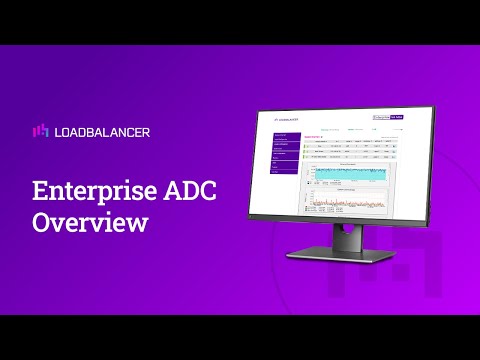
The Load Balancer Enterprise ADC for AWS provides advanced Layer 4/7 load balancing, automatically distributing incoming application traffic across EC2 instances either in a single Availability Zone, or across multiple Zones. Traffic can be distributed on the internal Amazon network (reducing bandwidth costs), or to any accessible internet address.
Dual AZ mode enables an HA pair of load balancer instances to be split between different AZ's, further increasing system resilience. Full support for Service Discovery, including integration with AWS Auto Scaling which ensures that servers or containers are automatically added to the load balanced cluster as backend capacity is increased to meet inbound traffic demands.
Support for TCP and UDP enables load balancing of virtually any protocol. SSL termination and re-encryption - coupled with a built-in, OWASP top 10 compliant WAF - enables you to create a secure, robust interface for your infrastructure. URL re-writing / content switching can be used to direct traffic based on defined rules.
Advanced, customizable health checks ensure detection of unhealthy instances within a pool and automatically reroutes traffic to healthy instances. This great product comes fully-featured with a totally unrestricted license enabling all features and full scalability.
Highlights
- Advanced Layer 4/7 load balancing - with integrated Auto Scaling, GSLB, multi-AZ resilience, SSL/TLS offloading and OWASP top 10 compliant WAF. Full API support enables integration with automation platforms.
- Ease of use and extensive support - simple management interface, simplified and accelerated cloud migration, and unlimited 24/7 access to the Loadbalancer.org technical support services.
- Totally unrestricted freedom license - this product offers no feature restrictions. Our freedom license enables customers to move licenses between clouds and data centers at no additional cost - and with free migration assistance.
Details
Sold by
Delivery method
Delivery option
64-bit (x86) Amazon Machine Image (AMI)
Latest version
Operating system
OtherLinux LBOS-7
Deployed on AWS
New
Introducing multi-product solutions
You can now purchase comprehensive solutions tailored to use cases and industries.

Features and programs
Buyer guide
Gain valuable insights from real users who purchased this product, powered by PeerSpot.

Financing for AWS Marketplace purchases
AWS Marketplace now accepts line of credit payments through the PNC Vendor Finance program. This program is available to select AWS customers in the US, excluding NV, NC, ND, TN, & VT.

Pricing
Free trial
Try this product free for 30 days according to the free trial terms set by the vendor. Usage-based pricing is in effect for usage beyond the free trial terms. Your free trial gets automatically converted to a paid subscription when the trial ends, but may be canceled any time before that.
Pricing is based on actual usage, with charges varying according to how much you consume. Subscriptions have no end date and may be canceled any time. Alternatively, you can pay upfront for a contract, which typically covers your anticipated usage for the contract duration. Any usage beyond contract will incur additional usage-based costs.
Additional AWS infrastructure costs may apply. Use the AWS Pricing Calculator to estimate your infrastructure costs.
If you are an AWS Free Tier customer with a free plan, you are eligible to subscribe to this offer. You can use free credits to cover the cost of eligible AWS infrastructure. See AWS Free Tier for more details. If you created an AWS account before July 15th, 2025, and qualify for the Legacy AWS Free Tier, Amazon EC2 charges for Micro instances are free for up to 750 hours per month. See Legacy AWS Free Tier for more details.
Dimension | Cost/hour |
|---|---|
m5n.xlarge Recommended | $0.72 |
t3.micro | $0.20 |
m5n.16xlarge | $1.24 |
c5.2xlarge | $0.72 |
c5.24xlarge | $1.24 |
c5.12xlarge | $0.72 |
t3.medium | $0.30 |
m5n.24xlarge | $1.24 |
m5n.12xlarge | $1.24 |
Dimensions summary
You pay by the hour based on the AWS EC2 instance size you run. The nine options are all instance types, not feature tiers. The t3.micro and t3.medium give you smaller compute for lighter workloads. The c5 family (2xlarge, 12xlarge, 24xlarge) is compute-focused. The m5n family (xlarge, 12xlarge, 16xlarge, 24xlarge) offers memory and network capacity. Pricing scales with the size of the instance you select. You are billed only for the hours each instance runs, with no upfront commitment.
Top-of-mind questions for buyers
You pay by the hour for each running instance. When an instance is stopped, the hourly software charge stops too. You are billed only for the hours each instance actually runs. Note that underlying AWS storage tied to a stopped instance may still incur separate AWS fees.
Your rate is tied to the EC2 instance type you launch, not to a feature tier. Larger instances with more compute, memory, or network capacity cost more per hour. The t3 sizes are smaller, the c5 sizes focus on compute, and the m5n sizes add memory and network throughput.
The software license is unrestricted, so throughput is not artificially throttled. Actual throughput depends on the instance you pick, since the network interface capacity of the chosen EC2 size sets the ceiling. Larger m5n and c5 instances handle more traffic than the t3 sizes.
www.loadbalancer.org
Helpful?
Vendor refund policy
If you are unhappy with your Loadbalancer.org Load Balancer for any reason we will refund the software costs for up to 30 days prior to cancellation.

Legal
Vendor terms and conditions
Upon subscribing to this product, you must acknowledge and agree to the terms and conditions outlined in the vendor's End User License Agreement (EULA) .
Content disclaimer
Vendors are responsible for their product descriptions and other product content. AWS does not warrant that vendors' product descriptions or other product content are accurate, complete, reliable, current, or error-free.
Delivery details
64-bit (x86) Amazon Machine Image (AMI)
Amazon Machine Image (AMI)
An AMI is a virtual image that provides the information required to launch an instance. Amazon EC2 (Elastic Compute Cloud) instances are virtual servers on which you can run your applications and workloads, offering varying combinations of CPU, memory, storage, and networking resources. You can launch as many instances from as many different AMIs as you need.
Version release notes
Security
- Linux Kernel: Mitigation for Dirty Frag and Frag- nesia (vulnerabilities fixed are not exploitable on our appliances).
- HSTS: Added granular control of subdomains & preload, and sensible defaults to avoid accidental lockouts.
New Features
- GSLB: Add support for wildcard subdomains.
- GSLB: Allow more than two parameters for the external health check.
- GSLB: Remove unnecessary case sensitivity for domain names.
- ADC Portal: Several enhancements to the adoption page, including support for token authentication.
Bug Fixes
- Networking: Prevent deletion of network interfaces if they are bound to existing services.
- System Overview: Fixed an issue where layer 4 servers would sometimes report an incorrect status.
- Command Line Interface: Fixed an issue with editing Floating IPs from the CLI.
- TProxy: Fixed an issue where restoring a backup might not activate Transparent Proxy settings.
- Monitoring: Updated the OS version to ensure it is reported correctly to external monitoring solutions.
- Cookies: Remove excessive warnings about matching cookie names.
- SSL: Fixed an issue with replicating Let's Encrypt certificates.
- Floating IPs: Fixed an issue where modifying multiple disabled Floating IPs could cause unexpected removal.
- Google Cloud Platform: Fixed a configuration issue that could disable STunnel on GCP.
- High Availability: Fixed an issue where certain complex passwords could prevent pairing.
- Policy-Based Routing (PBR): Fixed an issue with VLANs and bonded interfaces using local-only mode.
- ADC Portal: Removed unnecessary update checks and errors for external repositories.
- ADC Portal: Fixed several issues with the automatic update, availability, excessive logging and stability of the Shuttle & Gateway.
Additional details
Usage instructions
To access this product, use a browser to view the administration page at https://<instance IP address>:9443 replacing the <instance IP address> with the actual IP address of the running EC2 instance. Your username is 'loadbalancer' and the password is the instance ID. To access this product via the CLI, using your prefered SSH client you can authenticate using the username 'lbuser' and the SSH key specified in the AWS console during the deployment.
For full functionality, the load balancer should be launched with an IAM role configured. Please see our quick start guide (https://pdfs.loadbalancer.org/quickstartguideEntAWSv8.pdf ) for more information or launch using the cloud formation template.
Resources
Support
Vendor support
All Load Balancer Enterprise ADC for AWS Instances include unlimited 24/7 support via email, telephone and remote assistance
AWS infrastructure support
AWS Support is a one-on-one, fast-response support channel that is staffed 24x7x365 with experienced and technical support engineers. The service helps customers of all sizes and technical abilities to successfully utilize the products and features provided by Amazon Web Services.
Updated weekly
By Loadbalancer.org
By Progress Kemp Technologies

By A10 Networks
Sentiment is AI generated from actual customer reviews on AWS and G2
Functionality
Ease of use
Customer service
Cost effectiveness
Positive reviews
Mixed reviews
Negative reviews
AI generated from product descriptions
Layer 4/7 Load Balancing
Advanced load balancing at Layer 4 and Layer 7 with automatic traffic distribution across EC2 instances within single or multiple Availability Zones
SSL/TLS Offloading and WAF
SSL termination and re-encryption capabilities coupled with OWASP top 10 compliant Web Application Firewall for secure traffic handling
Multi-AZ High Availability
Dual Availability Zone mode supporting HA pair deployment across different AZs with automatic failover and traffic rerouting to healthy instances
Service Discovery and Auto Scaling Integration
Full support for Service Discovery with native integration to AWS Auto Scaling for automatic addition of servers or containers to load balanced clusters
Protocol Support and Traffic Management
Support for TCP and UDP protocols with URL rewriting and content switching capabilities to direct traffic based on defined rules
Load Balancing Algorithms
Flexible load balancing algorithms and persistence options with rule-based traffic steering for reliable application delivery
Web Application Firewall
Integrated Web Application Firewall with ongoing rule updates, IP-based country blocking, and CAPTCHA protection against bot-based attacks
Global Server Load Balancing
Integrated GSLB (DNS-based Load Balancing) for multi-zone and multi-site resilience
Authentication and Access Control
Pre-authentication of user access, Zero Trust Network Access (ZTNA) policies, dual-factor authentication schemes, and integration with leading authentication services and protocols
API Gateway and Kubernetes Integration
API Gateway functionality to consolidate and secure multiple services with integrated Kubernetes controller support
Layer 4-7 Load Balancing
Advanced load balancing capabilities across Layer 4-7 services optimized for AWS hosted workloads with traffic distribution and server load balancing functionality.
Global Server Load Balancing
Global server load balancing (GSLB) with disaster recovery, failover capabilities, and multi-site traffic optimization during maintenance or outages.
DDoS Protection and TLS/SSL Offload
DDoS protection mechanisms combined with TLS/SSL offload and authentication services for application security.
Application Scripting and Acceleration
Advanced application scripting with aFleX and network acceleration capabilities to enable faster cloud deployments and overcome operational scenarios.
High Availability and Health Monitoring
Native high availability support with server health monitoring, persistence mechanisms, and automated failover for mission-critical applications.
Standard contract
No
No
No
Customer reviews
Saud Mustafa
High availability and strong security have supported our apps but advanced traffic control still improves
Reviewed on Aug 06, 2026
Review provided by PeerSpot
What is our primary use case?
My main use for LoadBalancer Enterprise is to provide high availability for the application and to provide WAF services for the inbound traffic that is coming from the internet. Beyond this, we are performing SSL and TLS offloading on the load balancer, layer seven intelligent traffic steering, and applying OWASP Top 10 security policies for application security. We are also using it for global server load balancing. It is basically used to increase the application performance and to perform caching, compression, TCP optimization, and connection multiplexing.
What is most valuable?
LoadBalancer Enterprise provides its strongest features through its dual layer four and layer seven engine in a single box. It provides high availability for the applications and application security features for WAF as a web service. The support level is outstanding, and the WAF features and the GSLB features, which are DNS-based, are very good and provide high availability without any downtime.
LoadBalancer Enterprise has positively impacted our organization because it includes everything, such as licensing cuts and total cost of ownership, which makes budgeting predictable. There are no per-module surprises when scaling, and application-specific deployment guides in a simple interface allow correctly tuned load balancers to go live in under an hour. Both senior engineers and junior engineers can work on it. The clustered HA and health-aware steering and GSLB help significantly for mission-critical applications that are online through server and site failures. This helps us to protect the SLAs. The bundled WAF security module provides high security for the application. The consistently responsive support reduces operational risk and builds lasting internal confidence in the platform.
What needs improvement?
LoadBalancer Enterprise can be improved because the layer seven programmability is not as powerful as it could be. We cannot write code and programming on it. Additionally, access management and identity options are not available here like they are in F5 VPN. The WAF depth and analytics, such as in-depth logs and the WAF learning option that we have in other load balancers, are much easier to configure and to harden the policies and polish them. That option is not here. Fine-tuning is a bit difficult compared to other solutions.
The automation and API maturity does not appear to be at the level of other load balancers. The main limitation is that there is nothing here with regards to F5 APM. There is no iRules option or policy option to manipulate the traffic according to requirements, which is a bit difficult. If an organization is basic and does not want very advanced features, then it is acceptable. However, if advanced features such as iRules are required, and complete detailed WAF monitoring is desired along with policies that can be learned and then implemented afterwards as you have in F5, then LoadBalancer Enterprise lacks these capabilities.
For how long have I used the solution?
I have been using LoadBalancer Enterprise for seven to eight years.
What do I think about the stability of the solution?
LoadBalancer Enterprise is stable. For normal enterprise, mid-level to small environments, it is fine. I have not used it in very large environments yet, so I cannot comment on that.
What do I think about the scalability of the solution?
LoadBalancer Enterprise's scalability works fine in small and mid-level enterprise environments. In a large environment, I have not used it yet, so I cannot comment on it. However, I do not see that it would have any issues, but I cannot comment on very large environments.
How are customer service and support?
Customer support for LoadBalancer Enterprise is very good. I would rate LoadBalancer Enterprise's customer support at nine out of ten.
Which solution did I use previously and why did I switch?
We have used multiple load balancers, including F5, Citrix, and Avi. We are now using LoadBalancer Enterprise as an additional option. We have not switched from our previous solutions; this is one option that we have added.
How was the initial setup?
LoadBalancer Enterprise was provided to us by the sales team.
What's my experience with pricing, setup cost, and licensing?
The cost of LoadBalancer Enterprise is better and a bit cheaper compared to other products. The support level is also very good, and the maintenance cost is less than other products. The deployment flexibility is also quite better than other load balancers we have seen in the market. The cost spent on licensing and renewal for other products is significantly different from this one. Time is saved because junior engineers can also configure it, and the uptime with the cluster HA and with automatic failover configured with GSLB is 99.9% to 99%. The SLAs are in our control.
What other advice do I have?
If you are looking for a load balancer for your applications and you do not have any specific advanced requirements and you want a cost-effective load balancer with a good support level and easy deployment, then you can consider LoadBalancer Enterprise. If you have very advanced requirements and your environment is very large, then I would recommend other products at this time. However, if the improvements that I have suggested are added in the future, then LoadBalancer Enterprise can be reconsidered.
If you have a mid to normal or small enterprise, you can consider this option. You should compare other load balancers in the market, such as F5, Avi, Citrix, and Kemp, and then make a final decision. If you are a normal enterprise with fewer than 50 virtual server requirements, then LoadBalancer Enterprise can be suitable for you. However, if you are in a large environment where you have very advanced load balancing requirements along with web application security features, and you want very granular visibility and detailed WAF monitoring, then I think other mature products would be better.
I have not had any experience with the accuracy and reliability of AI output on LoadBalancer Enterprise. I do not have any experience with AI on ADCs in general, not on this load balancer and not on other load balancers, so I cannot comment on that. However, I think for normal use, it would be good, and you would not face any issues. I would rate this review a seven out of ten overall.
reviewer2882613
High availability has supported critical customer services and improves my skills in load balancing
Reviewed on Aug 01, 2026
Review provided by PeerSpot
What is our primary use case?
Since I started as a network engineer, I have worked on LoadBalancer Enterprise. Whether it is F5 or HAProxy, I have worked more with F5 recently since joining Swisscom.
LoadBalancer Enterprise is used to host critical applications for several of our customers. We manage the network infrastructures of several clients, and for quite a few of them, those infrastructures have load balancers.
We typically find all kinds of services that can be exposed on the internet via LoadBalancer Enterprise. This can include Exchange messaging and websites that need to be exposed and are placed behind the load balancer.
How has it helped my organization?
LoadBalancer Enterprise has had a positive impact on my organization by allowing me, on a personal level, to train myself further on solutions related to load balancers. I see all the different uses that companies can have, which is an opportunity I have working in a B2B environment where I can work on multiple infrastructures and multiple different clients.
What is most valuable?
In my opinion, the best features offered by LoadBalancer Enterprise are high availability, performance, and resilience.
High availability, performance, and resilience concretely show up in my daily work with LoadBalancer Enterprise as it operates in a cluster, allowing us to have high availability in case of an outage on one of the two load balancers. It is important for critical services to always be available, and for performance, they are better able to handle a high volume of simultaneous connections on the servers in question.
For example, in the event of an issue on one of the servers hosting a critical application, thanks to LoadBalancer Enterprise, that server was able to be removed from the server pool and the other servers that were in this pool were able to take over, allowing us to significantly reduce the impact.
What needs improvement?
LoadBalancer Enterprise could be improved by increasing performance and always being able to handle more simultaneous connections. Demand today is only growing, as any company that uses a load balancer has more and more services that are hosted on it, and many more clients that query these services.
For how long have I used the solution?
I have been working in my current field for more than six years, seven years as a network engineer. I joined Swisscom about one and a half to two years ago.
What do I think about the stability of the solution?
LoadBalancer Enterprise is very stable in my experience.
What do I think about the scalability of the solution?
I rate the scalability of LoadBalancer Enterprise as excellent since it adapts perfectly to increased traffic volume or the addition of new applications. We can always increase the instances and add more load balancers if there is a need.
How are customer service and support?
Customer support for LoadBalancer Enterprise is fairly responsive depending on how critical the issue is and what we need. They can respond more or less effectively to our requests depending on these factors.
Which solution did I use previously and why did I switch?
Before using LoadBalancer Enterprise, I used HAProxy at the start when I began working as a network engineer.
I decided to move from HAProxy to LoadBalancer Enterprise because HAProxy is available on Linux and it is not necessarily the easiest solution to get to grips with. It can be effective but much less effective than the best-known load-balancing solutions.
How was the initial setup?
LoadBalancer Enterprise is quite easy to deploy. You must of course follow the best recommendations from the vendor. You should have a cluster and size the equipment according to the needs of the services.
What about the implementation team?
As the large group that we are, we have a business relationship with this vendor as partners.
What was our ROI?
I think there is definitely a benefit that can be provided with LoadBalancer Enterprise. However, I do not work on the financial aspect and the results expressed in figures.
What's my experience with pricing, setup cost, and licensing?
Since I am not pre-sales or sales, I do not handle the financial side related to LoadBalancer Enterprise, including pricing, installation cost, and license management.
Which other solutions did I evaluate?
I do not evaluate other options before choosing LoadBalancer Enterprise as we take over the infrastructures and solutions that are already in place at the clients and we manage them.
What other advice do I have?
I found this interview good and have no suggestions for improvement for the future. I rate this review as an eight out of ten.
MuthukaruppasamyR
Hybrid cloud load balancing has streamlined SSL offloading and proactive performance monitoring
Reviewed on Jul 27, 2026
Review from a verified AWS customer
What is our primary use case?
I am utilizing the cloud version of LoadBalancer Enterprise currently, as I have done the deployment in AWS Cloud, Azure Cloud, and Google Cloud as well. I am using all types of cloud, having done private cloud implementations for our environment and public cloud environments with AWS, Google, and Azure.
What is most valuable?
I utilize LoadBalancer Enterprise's SSL Termination feature, and options are available to do SSL Termination both in the cloud and in the F5. I have successfully used the SSL Termination feature in F5.
The Advanced Health Check feature in LoadBalancer Enterprise is available, and it has helped in maintaining optimal server performance.
Performance-wise with LoadBalancer Enterprise, I haven't seen any issues between on-premises and the cloud. If there are any performance-related issues, I have the option to automatically upgrade and increase the instances, memory, and CPU configurations. I never come across any performance-related issues in the cloud environment.
When evaluating LoadBalancer Enterprise's application level monitoring, it is similar to the on-premises monitoring capabilities. Additionally, the instance level monitoring is taken care of by AWS Cloud, which continuously monitors CPU, memory, and network usage, sending status updates to the operations teams. Compared to on-premises monitoring, I find the AWS Cloud setup beneficial, as it allows for immediate upgrades when alerts are raised for high CPU utilization, which is a significant advantage.
The intuitive interface of LoadBalancer Enterprise assists me with monitoring network traffic, including options to monitor the network queue and throughput effectively.
What needs improvement?
Among the best features in LoadBalancer Enterprise, I note that some features are still not enabled compared to the on-premises environment. For example, if I want to deploy certain web policies, I am unsure if they are currently enabled. There are some parameters and configurations, such as persistent configurations, that were not available. I could only host limited applications like HTTPS and HTTP; some complex applications were not supported, and I faced these issues a few years ago. Recently, I have not done any cloud migrations, but I can see that I am now able to migrate most applications. However, some persistent-related configurations were not working, and I am uncertain whether they have solved that issue. These were the major challenges I have encountered.
For how long have I used the solution?
I have been using LoadBalancer Enterprise in the enterprise environment for almost more than twenty years.
How are customer service and support?
I have communicated with LoadBalancer technical support when facing licensing issues, particularly when needing to move licenses to different instances. When I request the release of the license from the old device, they usually respond appropriately. I can expect a response within fifteen to twenty minutes after I put in a ticket to release the license. While their support is good, the ongoing need to contact F5 for license releases can be a problem from an operational perspective, causing loss of production time, which is a disadvantage I see.
Based on my experience with LoadBalancer Enterprise support, I would rate their responsiveness for releasing licenses a ten. For supporting other aspects, I would give them a rating of six or seven.
How was the initial setup?
I did face challenges when implementing LoadBalancer Enterprise in the cloud environment, as it is not quite easy. There were multiple options available, such as bring your own license and purchasing from the market. I needed to do a deep analysis to determine which option was suitable for the client based on their requirements. Some clients decided to purchase licenses from a vendor, while others chose to use BYOL. For scenarios such as the DR environment, I would only be testing during the DR test period, after which I would shut down these instances. For that need, I chose to go with the marketplace. Some clients wanted continuous production, so I opted for the bring your own license model, as purchasing from the marketplace might cost more. I have faced a couple of ways to choose the license for installation, and initially, the setup and configuration were a bit difficult to handle. After the first device installation, I managed to document what I needed for deployment, making subsequent implementations easier for me.
The approximate timeframes to implement LoadBalancer Enterprise's solution begin with the initial implementations, which can bring up the box in a couple of hours. After that, if there are any migrations or if I'm migrating applications from my own environment to the cloud, that is going to take a lot of time; it cannot be done immediately. I need to work with the backend applications team to bring up those applications, migrate my configurations from on-prem to cloud, verify it, and work with the network team to ensure reachability. During the cutover, I need to shift traffic from on-prem to the cloud, which is a lengthy process. The initial deployment of LoadBalancer Enterprise can be done in a couple of hours, making it live is achievable within that timeframe.
What about the implementation team?
In the deployment of LoadBalancer Enterprise, multiple teams are usually involved for setting up the entire system, as I need an AWS Cloud team, applications team, database team, and security team to facilitate all migrations. However, for deployment purposes, one team is sufficient; in my case, I had three to four engineers. For smaller migrations, I can handle it with one engineer, but for a larger installation of LoadBalancer Enterprise with fifteen to twenty load balancers, one engineer suffices, whereas for migrating one hundred or two hundred, that is when more engineers might be needed.
What's my experience with pricing, setup cost, and licensing?
Regarding the pricing of LoadBalancer Enterprise, I only pay for a license, and whatever license I use doesn't require the same CAPEX investment as physical hardware. I purchase the license depending on my needs. Bring your own license might involve a significant expenditure, whereas the marketplace provides advantages such as the ability to release the license if I'm not using it. When devices are brought back online, I can get the license through the marketplace easily. This system allows me to store snapshots of configuration settings in cloud storage, releasing instances and licenses as needed. Overall, these features highlight the benefits of using LoadBalancer Enterprise compared to on-premises equipment, though I remain unsure of the backend costs associated with the cloud solution.
What other advice do I have?
I do participate in the deployment process of LoadBalancer Enterprise. I would rate this review a nine overall.
Which deployment model are you using for this solution?
Hybrid Cloud
If public cloud, private cloud, or hybrid cloud, which cloud provider do you use?
Amazon Web Services (AWS)
reviewer2879793
Advanced traffic management has optimized content rewriting, SSL offloading, and load sharing
Reviewed on Jul 27, 2026
Review provided by PeerSpot
What is our primary use case?
My main use case for LoadBalancer Enterprise is application load sharing, which involves onboarding applications in the load balancer and distributing traffic while manipulating user requests and responses.
For example, with google.com accessed by multiple people, I may have three to four servers running the google.com service. To achieve traffic load sharing and prevent application performance issues, I implement a load balancer that works as a reverse proxy. This approach ensures I do not reveal my original servers to the client. The load balancer shares the load across all devices based on algorithms that identify which server has the least connections or resources, forwarding traffic accordingly. If one of my application servers goes down, the load balancer detects the service failure and reroutes traffic to available servers, helping us achieve effective load sharing.
Additionally, if users want to access a specific URI path in the application, I can apply restrictions and route traffic from specific sources to a particular server. If users access via HTTP, I can redirect from HTTP to HTTPS. I can also implement host-level redirection where customers only know the URL google.com but can be redirected to gmail.com. This is what I call manipulation of a request.
Regarding SSL offloading, the certificate and key exchange between the user machine and the load balancer can be handled, avoiding this load on the backend server. When I type google.com in the browser, it starts with a TCP handshake followed by an SSL handshake. I do not want to place this load on the backend application server, so the load balancer handles SSL offloading. The SSL transaction is completed at the load balancer, and clear text information is sent to the backend server. The user will not know the real application server, which can be masked using the load balancer.
I can also rewrite HTTP requests and responses using the load balancer. By implementing reverse proxy functionality and making the load balancer a gateway for the servers, I can enable full proxy mode. My main use cases involve load sharing, load balancing, and rewriting HTTP content.
What is most valuable?
The best features LoadBalancer Enterprise offers include HTTP request and response rewrite and SSL termination, also called SSL offloading. I can achieve link-level load balancing where if I have multiple WAN links, I can accomplish load sharing and traffic management. Content rewriting is achievable here. Additionally, I can implement RFC compliance for requests using the HTTP profile. I can also achieve load sharing of UDP traffic, not just TCP, and even handle ICMP traffic where a number of requests can be managed. DNS and ASM can also be integrated with this load balancer.
I find myself using traffic management and content rewriting most often. These are the major features that make the biggest difference in my day-to-day work.
LoadBalancer Enterprise has positively impacted my organization by allowing me to onboard approximately 200 to 300 applications depending on resource availability. This enables high availability and reduces resource utilization on the backend servers. It is useful for routing traffic during maintenance of the backend application servers.
What needs improvement?
LoadBalancer Enterprise can be improved by having additional features, specifically in-depth log and data analysis. Improvements in measuring RTT values from the client to the load balancer and from the load balancer to the server would be beneficial. More security features can also be enabled. For instance, deeper RFC compliance checks and Layer 7 inspections can help improve security aspects.
For how long have I used the solution?
I have been using LoadBalancer Enterprise for about 7-8 years.
What do I think about the stability of the solution?
LoadBalancer Enterprise is stable.
What do I think about the scalability of the solution?
LoadBalancer Enterprise's scalability is good, and I find it to be a scalable product.
How are customer service and support?
The customer support for LoadBalancer Enterprise is good; however, it could be better. They need to improve their customer service and response time.
Which solution did I use previously and why did I switch?
I did not use any different solution before LoadBalancer Enterprise.
Which other solutions did I evaluate?
We did not evaluate other options before choosing LoadBalancer Enterprise and went directly to it.
What other advice do I have?
I chose a rating of 8 out of 10 because LoadBalancer Enterprise has many benefits. Overall, it has features that I can achieve using the load balancer, including content rewriting, load balancing, and using it as a gateway for my servers. It acts as a firewall and enables SSL certificate management. These features are valuable, and I see positive aspects in the basic security function where I can inspect traffic based on whether the packet is RFC compliant or not.
Regarding LoadBalancer Enterprise's AI capabilities, I think its governance and security are not as mature as they could be. I do not see integrated AI features. I think I missed mentioning improvements related to AI where they could develop AI-based capabilities to enhance resource management and performance in the next generation. Furthermore, improvements in Kubernetes integration are necessary, not only from the application server but also from the pod level.
I do not have much information about the accuracy and reliability of LoadBalancer Enterprise's AI outputs. My overall rating for this product is 8 out of 10.
reviewer2879631
High availability across global nodes has ensured continuous access and protected our revenue
Reviewed on Jul 25, 2026
Review provided by PeerSpot
What is our primary use case?
My main use case for LoadBalancer Enterprise is to ensure my servers are available and are accessible to customers around the world.
I have three-node servers around which I set up the load balancer within them. In case one of them goes off, the load balancer can switch over to the next one. The servers use a virtual IP to connect to our application and then it detects the health of each of the servers. Only when they are down does the load balancer switch over to the next available healthy server and services are restored to our users.
What is most valuable?
The best features that LoadBalancer Enterprise offers include Round Robin, where different servers are available, and also the VRRP and the virtual IP as well.
The Round Robin and virtual IP features help me by ensuring that traffic is routed across all the nodes. Whatever is available receives the traffic. There is no queue. Any server that is available takes over the master role and brings that service back to the application so that it continues running.
The major feature of load balancing is to ensure that all services are available around the clock and at any time. Having multiple options is a significant advantage that I enjoy with load balancing.
LoadBalancer Enterprise has impacted my organization positively by making our applications and services available to all users across the globe. Even when we have issues with the firewalls, nodes, or application database, customers do not need to know because on the back end, we are able to access the application through another node with the help of the load balancer.
What needs improvement?
LoadBalancer Enterprise could be improved in terms of cost.
For how long have I used the solution?
I have been using LoadBalancer Enterprise for a little over one year.
What do I think about the stability of the solution?
LoadBalancer Enterprise is stable.
How are customer service and support?
The customer support is very good.
What was our ROI?
With load balancing in place, there has been a high inflow of satisfaction from customers. The company could make more money. Additionally, there are no issues with the availability of applications across the board.
One of the reasons why we went for LoadBalancer Enterprise is because of losing revenue when services are not available. With load balancing, services are available. A customer can make payments and there has been improvement in terms of income.
What other advice do I have?
My advice to others looking into using LoadBalancer Enterprise is that it is a good product and they can be very certain it will work for them as they require. I believe this review has a rating of ten.