Sold by: IBM Software
Deployed on AWS
IBM watsonx.data integration is a data integration tool that offers a unified experience for data teams to seamlessly handle diverse data integration styles.
4.2
Overview
Image
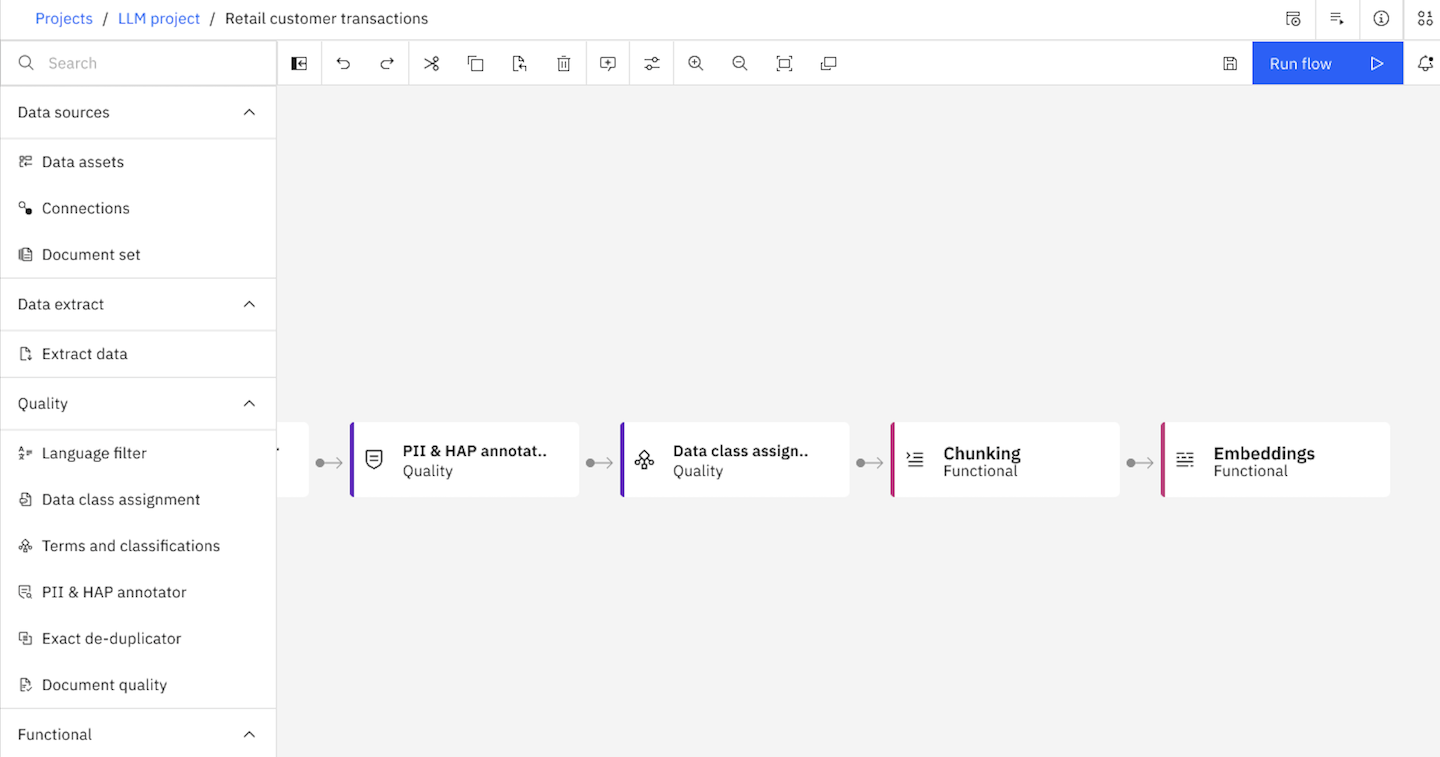
Create an unstructured data flow
Image
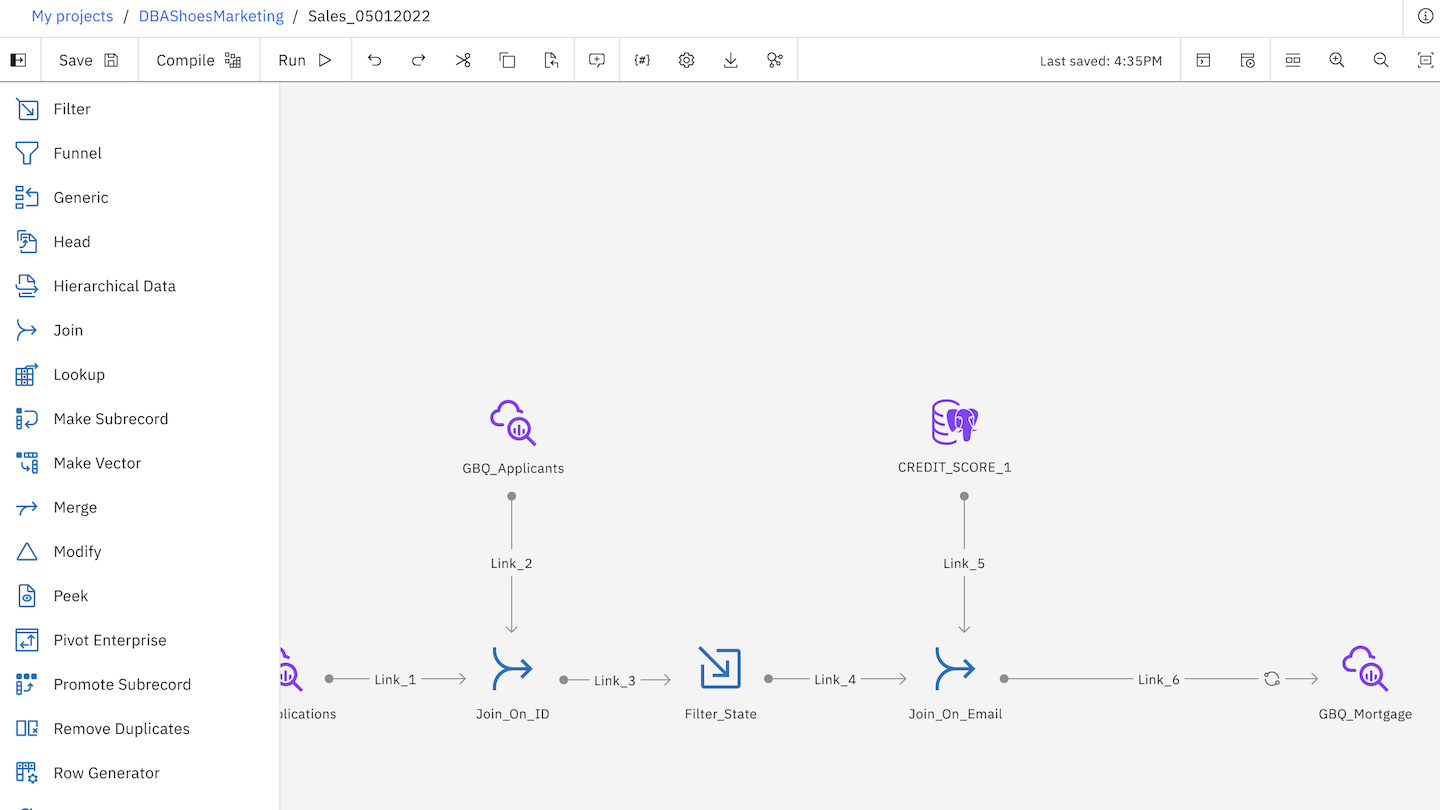
Create a batch data flow
Image
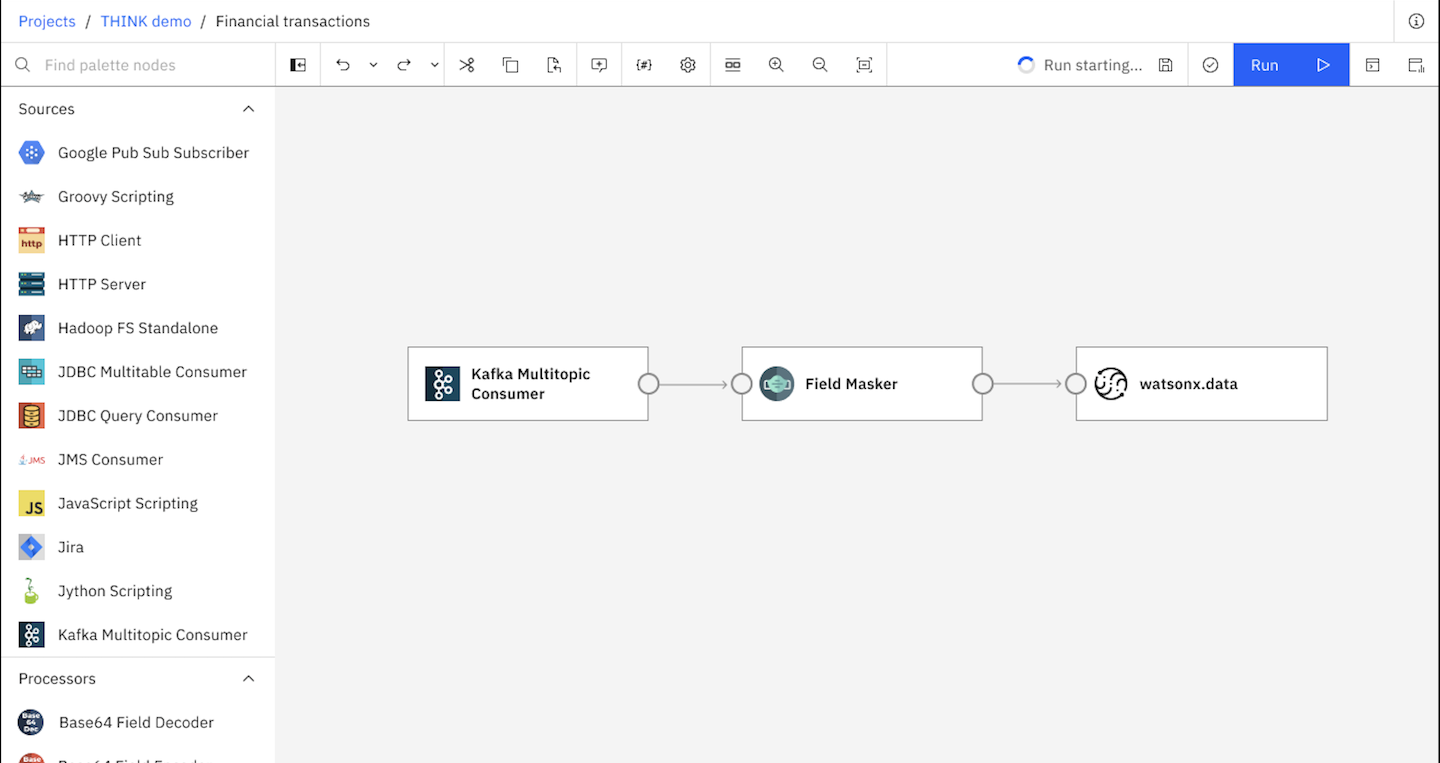
Create a real-time streaming data flow
Image
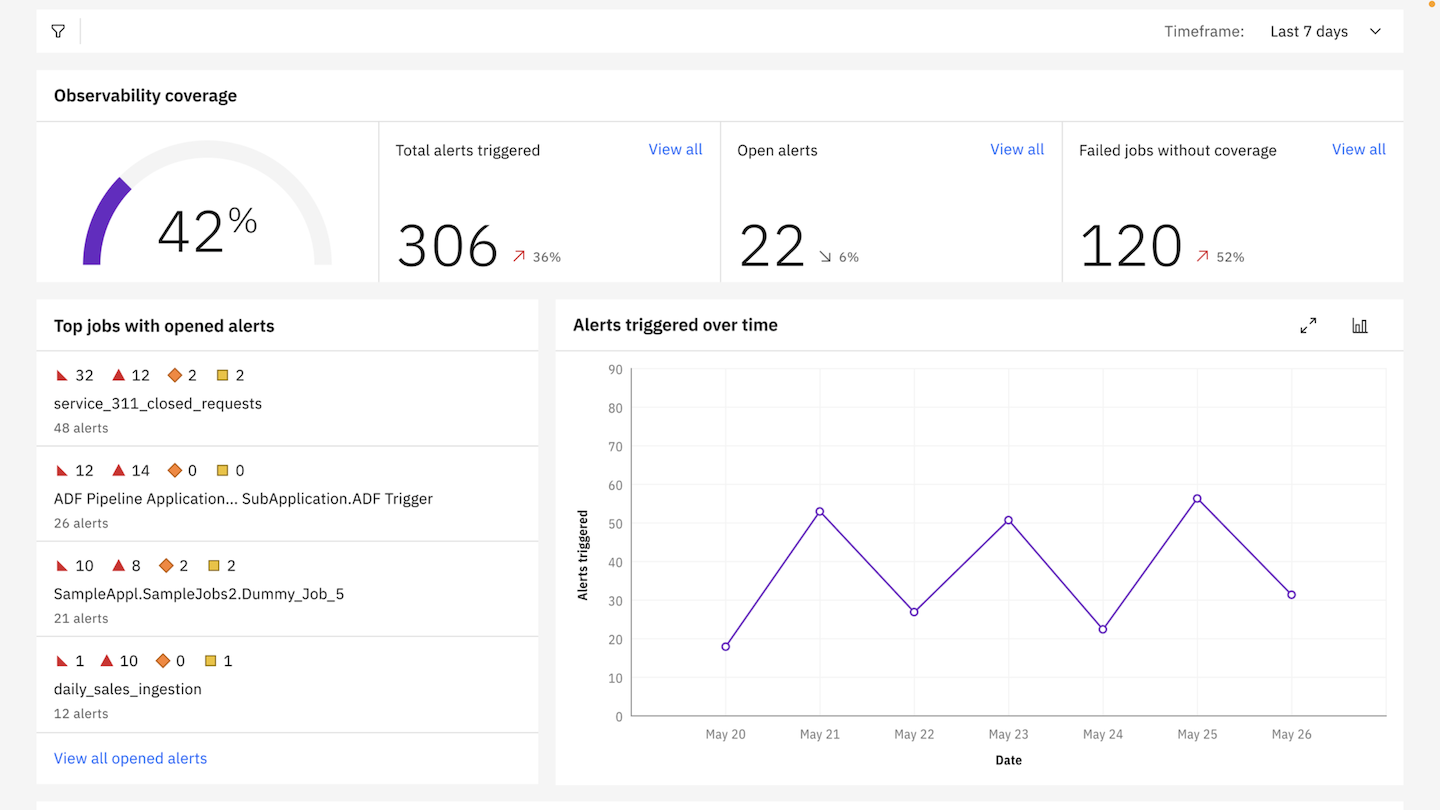
Create alerts and resolve data incidents
For trials and customized pricing, contact your IBM Sales Representative or email us at wxdintegration@ibm.com . To learn more, visit https://www.ibm.com/products/watsonx-data-integration .
Capabilities of IBM watsonx.data integration include:
Bulk/batch ETL/ELT
- You can build reusable, repeatable data flows that can be deployed wherever data resides
Real-time streaming
- You can create streaming data flows with structured, semi-structured, or unstructured data, and insulate the flows from change and unexpected shifts using prebuilt processors designed to automatically identify and adapt to data drift
Data observability
- You can pinpoint unknown data incidents and reduce mean time to detection from days to minutes, while improving mean time to resolution from weeks to hours through incident alerting and real-time routing
Unstructured data integration
- You can ingest unstructured data documents from diverse sources and transform them using pre-built operators. You can then use the transformed data for Retrieval-Augmented Generation (RAG) and agentic workflows
- To enable the unstructured data integration capability, you must separately acquire watsonx.ai Runtime and watsonx.data. You may optionally acquire watsonx.data intelligence for additional unstructured data governance functionality
Capabilities vary by region. For the most current regional capability matrix, refer to "Regional availability of the watsonx.data integration service" within IBM documentation.
IBM InfoSphere QualityStage Address Verification Interface (AVI) is available via private offering
Highlights
- Integrated capabilities: Unified control plane and interface for bulk/batch, real-time streaming, data observability and unstructured data integration
- Personal authoring experience: Eliminate skill compromise by providing multiple pipeline authoring entry points across engineering modalities of no code, low code, or SQL
Details
New
Introducing multi-product solutions
You can now purchase comprehensive solutions tailored to use cases and industries.

Features and programs
Financing for AWS Marketplace purchases
AWS Marketplace now accepts line of credit payments through the PNC Vendor Finance program. This program is available to select AWS customers in the US, excluding NV, NC, ND, TN, & VT.

Pricing
Pricing is based on the duration and terms of your contract with the vendor, and additional usage. You pay upfront or in installments according to your contract terms with the vendor. This entitles you to a specified quantity of use for the contract duration. Usage-based pricing is in effect for overages or additional usage not covered in the contract. These charges are applied on top of the contract price. If you choose not to renew or replace your contract before the contract end date, access to your entitlements will expire.
Additional AWS infrastructure costs may apply. Use the AWS Pricing Calculator to estimate your infrastructure costs.
Dimension | Description | Cost/12 months |
|---|---|---|
Premium | Includes a total of 4,800 Resource Units for 12 months (165 VPCs for bulk/batch, or 114 VPCs for real-time streaming, or 4,800 Observed Assets, or 10 Million Pages for unstructured data) | $127,296.00 |
The following dimensions are not included in the contract terms, which will be charged based on your usage.
Dimension | Cost/unit |
|---|---|
Overage charge for over-consumption of contracted RUs for Annual Subscription | $29.20 |
Overage charge for over-consumption of contracted RUs for Monthly Subscription | $29.20 |
Dimensions summary
Pricing centers on the Premium contract, which gives you 4,800 Resource Units over 12 months. You can spend those units across bulk/batch pipelines, real-time streaming, observed assets, or unstructured data pages, so the same pool covers different integration styles. Two separate overage charges apply when you use more Resource Units than your contract covers. One overage rate applies to Annual Subscriptions, the other to Monthly Subscriptions. These overage charges are usage-based add-ons, billed only when you exceed the contracted amount.
Top-of-mind questions for buyers
A Resource Unit is a shared credit you spend across integration styles. Your 4,800 units can cover about 165 VPCs for bulk/batch, 114 VPCs for real-time streaming, 4,800 observed assets, or 10 million pages for unstructured data. The mix you choose determines how fast the pool depletes.
You are charged an overage rate for units used beyond the contracted 4,800. Two separate overage rates exist: one for Annual Subscriptions and one for Monthly Subscriptions. Overage charges apply only when you exceed your contracted amount, so staying within the pool avoids extra charges.
Yes. The 4,800 Resource Units form one shared pool. You can allocate them across bulk/batch pipelines, real-time streaming, observed assets, or unstructured data pages. The stated figures are single-style maximums, so mixing styles divides the pool proportionally among them.
www.ibm.com
Helpful?
Vendor refund policy
All orders are non-cancellable and all fees and other amounts that you pay are non-refundable. If you have purchased a multi-year subscription, you agree to pay the annual fees due for each year of the multi-year subscription term.
Custom pricing options
Request a private offer to receive a custom quote.

Legal
Vendor terms and conditions
Upon subscribing to this product, you must acknowledge and agree to the terms and conditions outlined in the vendor's End User License Agreement (EULA) .
Content disclaimer
Vendors are responsible for their product descriptions and other product content. AWS does not warrant that vendors' product descriptions or other product content are accurate, complete, reliable, current, or error-free.
Delivery details
Software as a Service (SaaS)
SaaS delivers cloud-based software applications directly to customers over the internet. You can access these applications through a subscription model. You will pay recurring monthly usage fees through your AWS bill, while AWS handles deployment and infrastructure management, ensuring scalability, reliability, and seamless integration with other AWS services.
Resources
Vendor resources
Support
Vendor support
Sign in to open a new case or review existing cases:
AWS infrastructure support
AWS Support is a one-on-one, fast-response support channel that is staffed 24x7x365 with experienced and technical support engineers. The service helps customers of all sizes and technical abilities to successfully utilize the products and features provided by Amazon Web Services.
Similar products

IBM watsonx.data intelligence as a Service is a fully managed SaaS solution that empowers organizations to manage, govern, and share trusted data by unifying data governance, quality, lineage, and data sharing, providing consumers with reliable data products.

IBM watsonx.data is an open, hybrid data lakehouse with built-in data fabric and multi-engine optimization to prepare structured and unstructured data for AI.

IBM watsonx.data integration is self-managed data integration software on AWS that delivers AI-ready data at scale. It provides a unified control plane for batch, streaming, replication, and unstructured data integration pipelines using no-code, low-code, and pro-code experiences. Built-in observability and optimized execution reduce complexity and accelerate analytics and AI workloads.

IBM watsonx.data intelligence is a self-managed software solution that empowers organizations to manage, govern, and share trusted data by unifying data governance, quality, lineage, and data sharing, providing consumers with reliable data products.
Customer reviews
Ignacio C.
Easy to Learn and Use
Reviewed on Oct 28, 2026
Review provided by G2
What do you like best about the product?
how easy it is to learn and use it and implement it
What do you dislike about the product?
maybe if you need customer support it takes some time depending on your plan but it works great
What problems is the product solving and how is that benefiting you?
migrating from physical servers to cloud
Ritesh M.
AI-Assisted Pipelines with Helpful Monitoring, but Tuning Docs Need Work
Reviewed on Oct 28, 2026
Review provided by G2
What do you like best about the product?
I like the AI assistance for creating pipelines and the feature that helps identify disruptions. I also found the initial setup easy.
What do you dislike about the product?
I think performance tuning and documentation could be improved.
What problems is the product solving and how is that benefiting you?
I use IBM watsonx.data integration for multiple integrations.
Ayman S.
Easy Pipeline Building for Data Transfers Across System
Reviewed on Oct 27, 2026
Review provided by G2
What do you like best about the product?
easy to build pipeline for data transfer from different systems
What do you dislike about the product?
the pipeline job has no option to loop the job from properties butt I have to keep creating loops inside the datastage
What problems is the product solving and how is that benefiting you?
all required data integration are in one platform
Melissa I.
Flexible and easy to use
Reviewed on Oct 27, 2026
Review provided by G2
What do you like best about the product?
Because is flexibility and is easy to use
What do you dislike about the product?
When we migrate a cp4d pipelines the routines does not work
What problems is the product solving and how is that benefiting you?
Connect with others data bases
Bryan L.
Quick, Seamless Integrations
Reviewed on Oct 26, 2026
Review provided by G2
What do you like best about the product?
It makes integration quick and reliable!
What do you dislike about the product?
Sometimes is slow and takes time to learn
What problems is the product solving and how is that benefiting you?
Its making our troubleshooting easier