
Sold by: AlgoSec, Inc.
Deployed on AWS
AlgoSec, a global cybersecurity leader, enables organizations to automate security policy management, risk mitigation, and compliance across hybrid and multi-cloud network environments. By providing centralized visibility and control over application connectivity, network security policies, and infrastructure, AlgoSec helps reduce risk, streamline security operations, and automate workflows. With two decades of expertise, over 2,200 of the worlds most complex organizations trust AlgoSec to secure and manage their critical workloads at scale.
4.4
Overview
AlgoSec Horizon is an application-centric security management platform built for the hybrid enterprise, enabling organizations to secure application connectivity across data centers and multi-cloud environments, including AWS. Private Offering only. It automatically discovers and visualizes business applications and their dependencies, providing a unified view of traffic flows, security policies, misconfigurations, and risk exposure. Horizon enables intelligent automation of security policy changes, reduces manual effort, and prioritizes risks based on business context. By enforcing consistent security controls across cloud and on-premises environments, it ensures continuous compliance and operational efficiency at scale.
Highlights
- Application Connectivity & Visibility: Automatically discover business applications, map dependencies, and visualize traffic flows across hybrid and multi-cloud environments for complete visibility into connectivity and risk.
- Intelligent Automation & Policy Orchestration: Automate security policy changes and connectivity processes to reduce manual effort, minimize errors, and accelerate secure application deployment.
- Risk-Based Prioritization & Continuous Compliance: Link risks to business-critical applications, prioritize remediation, and continuously identify and resolve policy and compliance gaps across cloud and data center environments..
Details
Sold by
Delivery method
Deployed on AWS
New
Introducing multi-product solutions
You can now purchase comprehensive solutions tailored to use cases and industries.

Features and programs
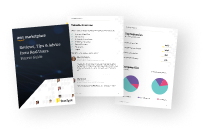
Buyer guide
Gain valuable insights from real users who purchased this product, powered by PeerSpot.
Financing for AWS Marketplace purchases
AWS Marketplace now accepts line of credit payments through the PNC Vendor Finance program. This program is available to select AWS customers in the US, excluding NV, NC, ND, TN, & VT.

Pricing
Pricing is based on the duration and terms of your contract with the vendor. This entitles you to a specified quantity of use for the contract duration. If you choose not to renew or replace your contract before it ends, access to these entitlements will expire.
Additional AWS infrastructure costs may apply. Use the AWS Pricing Calculator to estimate your infrastructure costs.
Dimension | Description | Cost/12 months |
|---|---|---|
ALGOSEC_ACE_SB2 | AlgoSec Cloud Enterprise 100 Workloads package, Monthly Subscription Preferred | $27,000.00 |
Dimensions summary
This listing offers one pricing dimension: the AlgoSec Cloud Enterprise 100 Workloads package. You buy it as a contract with monthly subscription billing under the Preferred rate. Each unit covers 100 workloads, so pricing scales by how many workload packages you purchase. A workload counts virtual machines, container hosts, and serverless functions across your cloud environments. As your workload volume grows, you add more units to match your coverage needs. This is a private offering, so terms are arranged directly with the vendor.
Top-of-mind questions for buyers
A workload is any single virtual machine, container host, or serverless function across your cloud environments. The package covers 100 of these combined. You add together your virtual machines, container hosts, and serverless functions to reach your total workload count.
Each unit covers 100 workloads. To cover more than 100, you add additional units. Coverage scales in blocks of 100 workloads per unit purchased. There is no automatic overage; you match units to your total workload volume as it grows.
This is a contract with monthly subscription billing under the Preferred rate. Charges recur on a monthly cycle for as long as you hold the subscription. Since it is a private offering, exact terms are arranged directly with the vendor.
pages.algosec.com
Helpful?
Vendor refund policy
For cancellation and refund details please refer to: https://www.algosec.com/money-back/

Legal
Vendor terms and conditions
Upon subscribing to this product, you must acknowledge and agree to the terms and conditions outlined in the vendor's End User License Agreement (EULA) .
Content disclaimer
Vendors are responsible for their product descriptions and other product content. AWS does not warrant that vendors' product descriptions or other product content are accurate, complete, reliable, current, or error-free.
Delivery details
Software as a Service (SaaS)
SaaS delivers cloud-based software applications directly to customers over the internet. You can access these applications through a subscription model. You will pay recurring monthly usage fees through your AWS bill, while AWS handles deployment and infrastructure management, ensuring scalability, reliability, and seamless integration with other AWS services.
Support
Vendor support
AlgoSec offers 9am-5pm and 24x7 support. Please refer to the AlgoSec website for additional information
AWS infrastructure support
AWS Support is a one-on-one, fast-response support channel that is staffed 24x7x365 with experienced and technical support engineers. The service helps customers of all sizes and technical abilities to successfully utilize the products and features provided by Amazon Web Services.
Updated weekly
By AlgoSec, Inc.
By Illumio
By Check Point Software Technologies
Top
10
In Operating Systems
Top
50
In Security Observability, Device Security
Top
25
In Network Infrastructure
Sentiment is AI generated from actual customer reviews on AWS and G2
Functionality
Ease of use
Customer service
Cost effectiveness
Positive reviews
Mixed reviews
Negative reviews
AI generated from product descriptions
Application Discovery and Dependency Mapping
Automatically discovers business applications and maps their dependencies across hybrid and multi-cloud environments to provide unified visibility into application connectivity.
Traffic Flow Visualization and Analysis
Visualizes traffic flows, security policies, and misconfigurations across data centers and multi-cloud environments including AWS to identify risk exposure.
Security Policy Automation and Orchestration
Automates security policy changes and connectivity processes across cloud and on-premises environments to reduce manual effort and minimize configuration errors.
Risk-Based Prioritization Engine
Prioritizes security risks based on business context and application criticality to enable targeted remediation efforts.
Continuous Compliance Monitoring
Continuously identifies and resolves policy and compliance gaps across hybrid cloud and data center environments to maintain consistent security controls.
Real-time Traffic Visualization
Comprehensive mapping and visualization of all communication and traffic flows between workloads and devices across hybrid multi-cloud environments and endpoints with real-time telemetry data.
Granular Segmentation Policy Engine
Automated creation and enforcement of granular, context-based segmentation policies that control communication between workloads and devices to allow only necessary and wanted traffic.
Multi-environment Workload Support
Support for diverse workload types including endpoint-to-endpoint, endpoint-to-server, server-to-server communications, cloud workloads, containers, IoT, and OT devices across hybrid architectures.
Dynamic Breach Isolation
Proactive and reactive isolation capabilities that restrict lateral movement by programming dynamic workload policies and applying automated policy recommendations during active attacks or for high-value asset protection.
AI-driven Policy Guidance
Artificial intelligence-powered virtual advisor that provides actionable recommendations for policy creation and complex segmentation tasks through natural language interaction.
Unified Management Console
Single pane-of-glass security management console delivering consistent visibility, policy management, logging, reporting and control across all cloud environments and networks
API-Driven Automation
RESTful APIs enabling automation of security tasks, integration with orchestration and change management systems, and creation of web portals for security self-service
Integrated Logging and Monitoring
Centralized logging, monitoring, event correlation and reporting with customizable visual dashboard providing full visibility into security posture and drilldown capabilities into incident or log details
Multi-Layer Policy Management
Policy segmentation into layers for seamless network segmentation across data center and private/public/hybrid cloud deployments
Cloud Service Integration
Integration with Amazon GuardDuty, Amazon CloudWatch, AWS Security Hub, AWS Transit Gateway, AWS CloudTrail and VPC Flow Logs, with CloudGuard CloudFormation templates for simplified deployment
Standard contract
No
No
No
Customer reviews
reviewer2906229
Rule analysis has improved firewall optimization but reporting interface still needs refinement
Reviewed on Oct 03, 2026
Review provided by PeerSpot
What is our primary use case?
We use AlgoSec for security analysis, mainly analyzing firewall rules and optimizing our network. An example could be that we've onboarded a few new customers, and what we've used AlgoSec for is to analyze incoming traffic and allow us to create more granular rules.
What is most valuable?
I appreciate that AlgoSec gives you specific port analysis of what's being used as well as sending out daily reports showing how your network's being optimized.
We can run a report on our network using AlgoSec, and it lets us know if we need to make some changes to help with the performance.
We're still currently in the UAT with AlgoSec, and it's allowing us to get rid of unnecessary rules.
AlgoSec has made security processes easier because it has allowed us to break down rules and create more specific rules that could be used on our day-to-day network.
It's been efficient for us with the features we use.
What needs improvement?
It's hard to say how AlgoSec can be improved because we're still in the testing phase of it. Probably the user interface could be a bit friendlier in terms of the reports.
For how long have I used the solution?
We've been using AlgoSec for about three months now.
What do I think about the stability of the solution?
AlgoSec is stable.
What do I think about the scalability of the solution?
It seems very scalable.
How are customer service and support?
Customer support for AlgoSec is pretty good; it could be better in some areas.
Which solution did I use previously and why did I switch?
This is the first solution we've used for this type of work.
What was our ROI?
I'd say time has been saved because AlgoSec has allowed us not to have to go into our firewall and manually make changes.
Which other solutions did I evaluate?
I'm not sure; I think we're still evaluating other options at the moment before choosing AlgoSec.
What other advice do I have?
AlgoSec is useful for security analysis with what we've been using so far, and it has helped a lot. I haven't tested the other features, but I'm really happy with what we're using, so I rate AlgoSec a seven out of ten.
I haven't used AlgoSec's AI capabilities, but I've been advised they're secure and reliable.
I'm not sure what the application connectivity process was before AlgoSec Horizon Platform. Since applications are the fundamentals that run through the network, application context is very important when managing our organization's network security policies.
We still don't use AlgoSec for managing our applications, so I cannot say how it's changed the way I understand and manage application connectivity across my environment.
We still don't use AlgoSec for our applications, so I cannot say if it has improved visibility into my application environment.
I would say understand what you need AlgoSec for so you can make use of the advanced features. My overall rating for this product is seven out of ten.
Krishna Ganglani
Improved incident visibility has reduced security risks but the interface still needs clearer dashboards
Reviewed on Sep 25, 2026
Review provided by PeerSpot
What is our primary use case?
My main use case for AlgoSec is cybersecurity protection. A quick specific example of how I use AlgoSec for cybersecurity protection is the review of cybersecurity incidents.
How has it helped my organization?
AlgoSec has positively impacted my organization by providing a clear view of cybersecurity-related incidents. Specific outcomes that show this positive impact include that it has helped to reduce incidents, provide better response rates to incidents, and helps track the resolution of incidents.
What is most valuable?
The best features AlgoSec offers include the ability to integrate existing tools. The integration with existing tools helps me or my team by providing a clear view of the different issues that we could see in one place.
AlgoSec has improved visibility into my application environment by providing proper visibility on things. AlgoSec Horizon has improved collaboration between application owners and security teams. Application context is very important when managing my organization's network security policies, and AlgoSec has changed the way I understand and manage application connectivity across my environment significantly. AlgoSec has changed the way application owners and security teams work together; we all work together and are able to view all information in one place at one time, and accurate information.
What needs improvement?
AlgoSec can be improved; the interface could be improved. I think overall the interface needs to be improved for better visibility of information. AlgoSec needs better visibility of the dashboard.
For how long have I used the solution?
I have been using AlgoSec for five years.
What do I think about the stability of the solution?
AlgoSec is stable.
What do I think about the scalability of the solution?
AlgoSec is highly scalable.
How are customer service and support?
The customer support is very good. I would rate the customer support on a scale of 1 to 10 as a six.
Which solution did I use previously and why did I switch?
We did not use any previous solution.
How was the initial setup?
My experience with pricing, setup cost, and licensing was all reasonable, and it all made sense.
What was our ROI?
I have seen a return on investment. We have definitely seen a return on investment, and we have been able to spend less on licensing overall.
Which other solutions did I evaluate?
We did not evaluate another option; AlgoSec was our first option.
What other advice do I have?
My application connectivity process was a direct connection before AlgoSec Horizon Platform. AlgoSec Horizon has improved visibility into my application environment by providing all information together and in one place. I can now answer questions about application connectivity that were difficult before, especially when you had multiple applications and legacy systems as well. My advice to others looking into using AlgoSec is that it is a very good tool, providing good visibility and a dashboard as well. I would rate this review a six overall.
reviewer2899005
Automation and policy optimization have transformed how our teams manage security and compliance
Reviewed on Sep 22, 2026
Review from a verified AWS customer
What is our primary use case?
I use AlgoSec for automation, audit and compliance, policy optimization, and rule recertification. For automation, we use AlgoSec for firewall changes to simplify, speed up, and make the process more efficient, particularly regarding standardization of the specific change types.
Policy optimization is a significant focus because of the policy bloat on firewalls, and we aim to quickly reduce the footfall of the policies to improve security and visibility.
What is most valuable?
The best features AlgoSec offers include a good web front end, user-friendly modules, and particularly the visual flow in FireFlow, which is a really powerful feature. The visual flow certainly helps me in my day-to-day tasks by making troubleshooting easier and adapting workflows simpler, as the visual representation and simplicity significantly aid in modifying workflows.
AlgoSec has positively impacted our organization by enhancing our ability to develop capabilities in this space, serving customers effectively, and improving their experience along with our security posture, visibility, and the capabilities of the product.
What needs improvement?
I believe AlgoSec can be improved through a continual dialogue between us, understanding where the roadmap is headed, and aligning our organization's challenges with it, ensuring responsiveness about certain features that require urgency.
I think we are in constant dialogue with AlgoSec and ensuring communication with the actual product managers, which is key. It is a work in progress, but it is heading in a positive direction.
For how long have I used the solution?
I have been using AlgoSec for approximately two years, and in my previous role, which was about twelve to thirteen years ago, I used it for about two and a half years.
What do I think about the stability of the solution?
AlgoSec is currently stable.
What do I think about the scalability of the solution?
AlgoSec's scalability is fine as long as it is designed appropriately for the environment; we also receive good support from the design teams at AlgoSec during pre-sales.
How are customer service and support?
I currently have no issues with customer support.
Which solution did I use previously and why did I switch?
I previously used Skybox before switching to AlgoSec, as Skybox went defunct, which was the main reason for our switch.
What was our ROI?
I anticipate seeing a return on investment in the next four months, with similar exercises previously showing an average of five hours saved per change, allowing us to calculate potential FTE savings on the metrics we expect from AlgoSec.
What's my experience with pricing, setup cost, and licensing?
Regarding my experience with pricing, setup costs, and licensing, I do not get too involved, but it seemed acceptable, and they do try to ensure the best for the customer through discounts and various offers.
Which other solutions did I evaluate?
Before choosing AlgoSec, we evaluated Tufin and FireMon as other options.
What other advice do I have?
My advice for others looking into using AlgoSec is to ensure that their roadmap and key use cases align with AlgoSec's roadmap and products; if there is alignment, I believe it is the way to go.
AlgoSec is currently deployed as both on-premises and in a public cloud setting, and this deployment is evolving. For our public cloud deployment, we use a combination of all providers to a degree: AWS, GCP, and Azure.
Since using AlgoSec, I have noticed measurable improvements in speed to delivery, and the ability for support teams to work more efficiently and effectively. Although we are still deploying, those immediate improvements include speed of response and execution.
Regarding AlgoSec's AI capabilities, I think its governance and security aspects are still quite new for us, and we are approaching them tentatively. While the capabilities are exciting, building trust within the organization will take some time. The accuracy and reliability of AlgoSec's AI output are still a work in progress. It involves features we have not fully embraced yet, and we need to fully onboard and integrate them to provide more suitable feedback.
Before using AlgoSec Horizon Platform, the application connectivity process was quite immature; when changes came in, they were treated individually with limited focus on applications and specific requirements. AlgoSec Horizon has greatly improved visibility into our application environment; although it is early days, the training suggests it could be a powerful ally and asset for us, and we need to align everyone to embrace that mindset.
Answering questions about application connectivity that were difficult before using AlgoSec is still a work in progress, but I am confident that once the application is mapped, changes will become much simpler and more efficient, allowing us to identify owners and current connections easily. AlgoSec Horizon has not yet improved collaboration between application owners and security teams due to challenges in aligning everyone to that way of thinking and sharing subscriptions; it is a non-technical challenge we are facing.
Application context is critical for managing our organization's network security policies; once everyone aligns with this mindset, it will be essential for looking at the overall ecosystem. AlgoSec has changed the way I understand and manage application connectivity across my environment by moving away from silos, with improved visibility facilitating a more collaborative approach.
I would rate this review eight out of ten.
reviewer2900427
Automated workflows have transformed firewall change requests and clarified application rule ownership
Reviewed on Sep 18, 2026
Review provided by PeerSpot
What is our primary use case?
AlgoSec is used for firewall change requests, utilizing FireFlow and the application wizard to onboard applications. FireFlow is used extensively throughout the organization. Using AlgoSec for firewall change requests and onboarding applications has significantly improved daily workflow. Previously, if a user had a connectivity requirement within the bank, they would raise it manually via email, requiring the operation team to record the information and deploy the policy on the firewall. After implementing AlgoSec FireFlow, users now have an interface to provide basic information and submit requests, allowing the operation team to handle deployments more efficiently with the help of ActiveChange. This process flow eases both users and firewall engineers while expediting the deployment process for the bank.
How has it helped my organization?
AlgoSec has significantly increased our deployment speed and reduced the time required for our engineers to process firewall changes. It streamlines our overall workflow, ensuring that connectivity requests are completed much faster and consistently within our defined SLAs.
What is most valuable?
AppViz was recently adopted and represents another level from FireFlow because it provides more insights to both the application perspective and the firewall team perspective. Currently, many rules lack ownership clarity, but since using AppViz, awareness has increased regarding firewall requests coming from specific applications and the reasons for each rule's existence. This enables application owners to see all their firewall rules in one place, which is especially useful when replacing staff in case an application owner moves departments or organizations.
AppViz is valuable due to its ease of use for application owners, enabling them to see existing policies. If they need to test new connectivity, they can do so without contacting the firewall team; they can test connectivity themselves and raise requests only if blocked. Previously, they would contact the firewall team for permission, consuming both their time and the operation team's time. With AppViz, the process is much easier.
The best features AlgoSec offers include AppViz, which is still in its early stage but provides better visibility and insight.
Application owners can now clearly see which rules exist across the infrastructure. Before implementing AlgoSec, they had zero visibility into existing connectivity policies, but now they can answer those questions directly.
AlgoSec has greatly improved visibility by providing application owners with a single interface to view existing firewall policies. They can now check and test connectivity on their own before reaching out to the security team or raising a new change request.
AlgoSec has improved collaboration substantially. Having all rules and requests in a single, centralized view reduces friction between teams because both the application owners and security engineers are looking at the exact same network policies.
Application context is extremely important to us. Having that context allows our security team—especially during security incidents or audits—to quickly pinpoint why a specific firewall rule exists and map it directly to the responsible application owner.
AlgoSec has made managing application connectivity significantly easier. Centralizing all relevant information onto a single platform gives our application teams direct, clear visibility and removes the guesswork from understanding our network environment.
What needs improvement?
AppViz needs to add more capabilities, specifically for object flow modification because it is still in the early stage for this feature, and any improvements in object modification would be beneficial. AppViz should include more features and flexibility in terms of objects. For complex deployments within the network infrastructure, considerable custom configurations are required. If AlgoSec anticipates these needs with more use cases, it would be advantageous.
Currently, reporting features are lacking, and more insight would be desired in reports.
For how long have I used the solution?
AlgoSec has been used for more than eight years in the bank, and all products within AlgoSec are utilized.
What do I think about the stability of the solution?
AlgoSec is stable with multiple instances running smoothly without frequent downtimes, making it stable and reliable.
What do I think about the scalability of the solution?
AlgoSec's scalability is impressive. Since everything is VM-based, if utilization increases, the hardware can simply be enhanced as needed. It works well in terms of scalability.
How are customer service and support?
Customer support is generally better, though there are complex cases that understandably take time, especially if fixes need to be tested on their end. Bug fixes require time to complete.
Which solution did I use previously and why did I switch?
No other technologies were used before switching to AlgoSec.
What was our ROI?
The process of calculating ROI is underway with the help of ART, but it is certain that the time savings in deployment is significant.
What other advice do I have?
The reason for selecting a rating of eight is because AlgoSec is easier to use and has a lot of depth in certain aspects. The deployment is easier than with competing technologies, and the support is generally very good in resolving tickets, though there are cases that take longer due to the need for fixes. I would advise others considering using AlgoSec to note that it features multiple suites, covering various technologies, and it is easy to use. I would rate this product an 8 out of 10.
Konstantinos Apostolopoulos
Centralized firewall workflows have accelerated rule implementation and provide clear app visibility
Reviewed on Sep 17, 2026
Review provided by PeerSpot
What is our primary use case?
My main use case for AlgoSec is managing firewall rules, specifically on-premises firewall rules, where users input their requirements in AppViz and we implement the rule using the FireFlow change.
A specific example of how I use AlgoSec for firewall rules in my workflow involves application owners having access to their application in AppViz. They can only raise a FireFlow request from there. So they edit the AppViz application and then they submit their change. This change goes to a firewall flow request, which we implement end to end. We have automated tools using the API from AlgoSec in the planning phase and on the approval phase.
How has it helped my organization?
AlgoSec has drastically improved our implementation speed and visibility across our banking environment. We can now process and implement every single firewall request in under 24 hours. Before AlgoSec, we tracked all application connectivity across separate Word documents, making it nearly impossible to understand why rules existed or how applications interacted. Now, we have a clear, graphical view of our connectivity—showing where applications are connected, why, and who is using them. The visual reports are so clear that our software architects and application owners routinely use them for architectural reviews and documentation.
What is most valuable?
The best feature that AlgoSec offers, by far, is AppViz. This is the thing that AlgoSec offers, and it is unique in the market, and in my point of view, their strongest selling point.
What makes the AppViz feature stand out for me is its capability to provide a quick overview of our application landscape, which helps in my daily tasks because it is used not only by us but also by the architects to review the architecture and connections of all our applications.
AlgoSec has positively impacted my organization by significantly increasing the speed of implementation for firewall requests. We implement them in less than 24 hours on average, and simultaneously, we have gained a clear overview of our applications in banking, including their connections, the reasons for those connections, and the users involved.
AlgoSec displays our application connections in a clear, highly visual graphic format. The visibility boost has been significant—I frequently see colleagues copying AlgoSec's connectivity reports directly into our internal documentation, which shows just how much our team relies on it for accurate mapping.
AlgoSec fundamentally made understanding and managing application connectivity possible for us. Before we implemented it, it was nearly impossible to track down where specific firewall rules were located, why they were put there in the first place, or which applications were actually using them.
What needs improvement?
AlgoSec can be improved by putting AppViz more at the center. Specifically, I suggest customizing AppViz more, including features such as input validation that is not available in AppViz but is in FireFlow, or the ability to copy the AppViz object to the policy. Thus, AppViz should be at the center of their operations, not just as an endpoint in the implementation logic.
One area that AlgoSec could do better is in the pricing. For example, mobile providers have different plans, but their plans are not based on a per-license model, and they usually offer an unlimited option. Therefore, I would expect AlgoSec to have a maximum payment cap per client while allowing unrestricted use of its resources.
Application context is extremely important to us. Going forward, I'd love to see AlgoSec leverage AI to enhance this even further—specifically by scanning our application documentation to automatically draft identified connections and perform risk evaluations per connection before an application owner even submits a request.
For how long have I used the solution?
I have been using AlgoSec for three and a half years.
What do I think about the stability of the solution?
AlgoSec is not stable.
The stability issues I have experienced with AlgoSec include slow object deletion, where finding usage could take hours, causing the system to freeze, particularly when handling queries related to many applications. We attempted to resolve these issues with AlgoSec support, and while some problems were fixed with a new patch, we still struggle with system sizing questions.
How are customer service and support?
The customer support experience varies depending on the representative. I have raised many tickets over the last few years and have been extremely pleased with some support engineers while being less satisfied with others.
I would rate customer support a six on a scale from one to ten.
Which solution did I use previously and why did I switch?
I did not previously use a different solution before AlgoSec.
What's my experience with pricing, setup cost, and licensing?
Be cautious regarding the per-application licensing costs, which I find quite steep. AlgoSec should offer an unlimited tier or a price cap once an organization reaches 1,000 to 5,000 applications, similar to an unlimited mobile data plan. Additionally, watch out for transition costs: as on-premises customers, if we want to migrate to their SaaS platform, we are forced to pay extra for professional services—essentially paying twice for a service setup we've already paid for, even though the platform shift is driven by the vendor.
Which other solutions did I evaluate?
Before choosing AlgoSec, we evaluated other options, including FireMon and Tufin, and we conduct evaluations on cycles.
What other advice do I have?
One area that AlgoSec could do better is in the pricing. For example, mobile providers have different plans, but their plans are not based on a per-license model, and they usually offer an unlimited option. Therefore, I would expect AlgoSec to have a maximum payment cap per client while allowing unrestricted use of its resources.
My advice for others looking into using AlgoSec is to avoid trying to combine other methods for making changes to firewalls simultaneously. Instead, they should use AppViz, trust it, and set it up while managing everything through that platform. I would rate this solution an eight overall.