
Sold by: ArmorCode
Deployed on AWS
Agentic Control Plane for Unified Exposure Management
4.2
Overview


Video
Meet Anya: ArmorCode agentic AI
Image
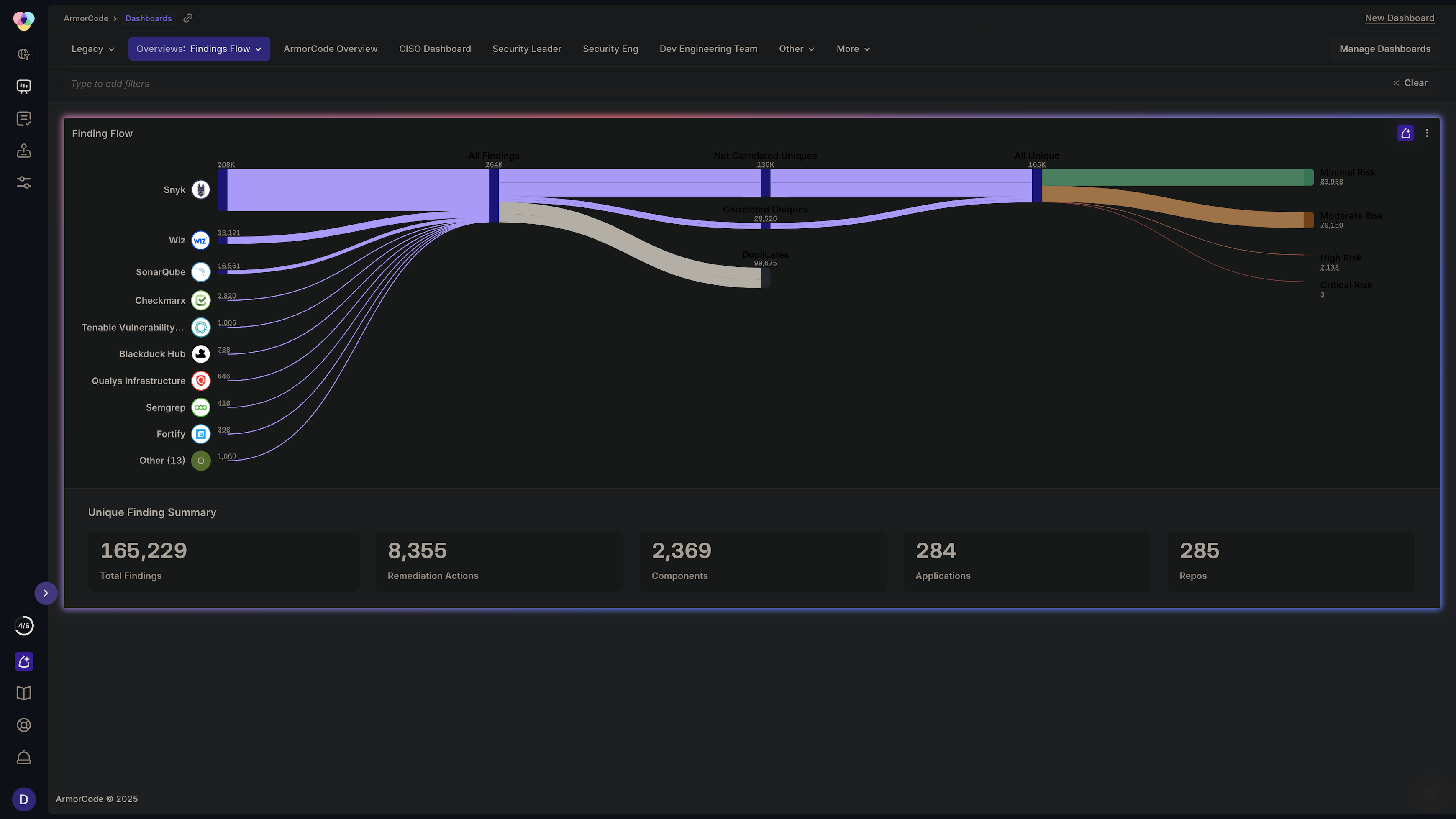
ArmorCode - Findings Flow (dark)
Image
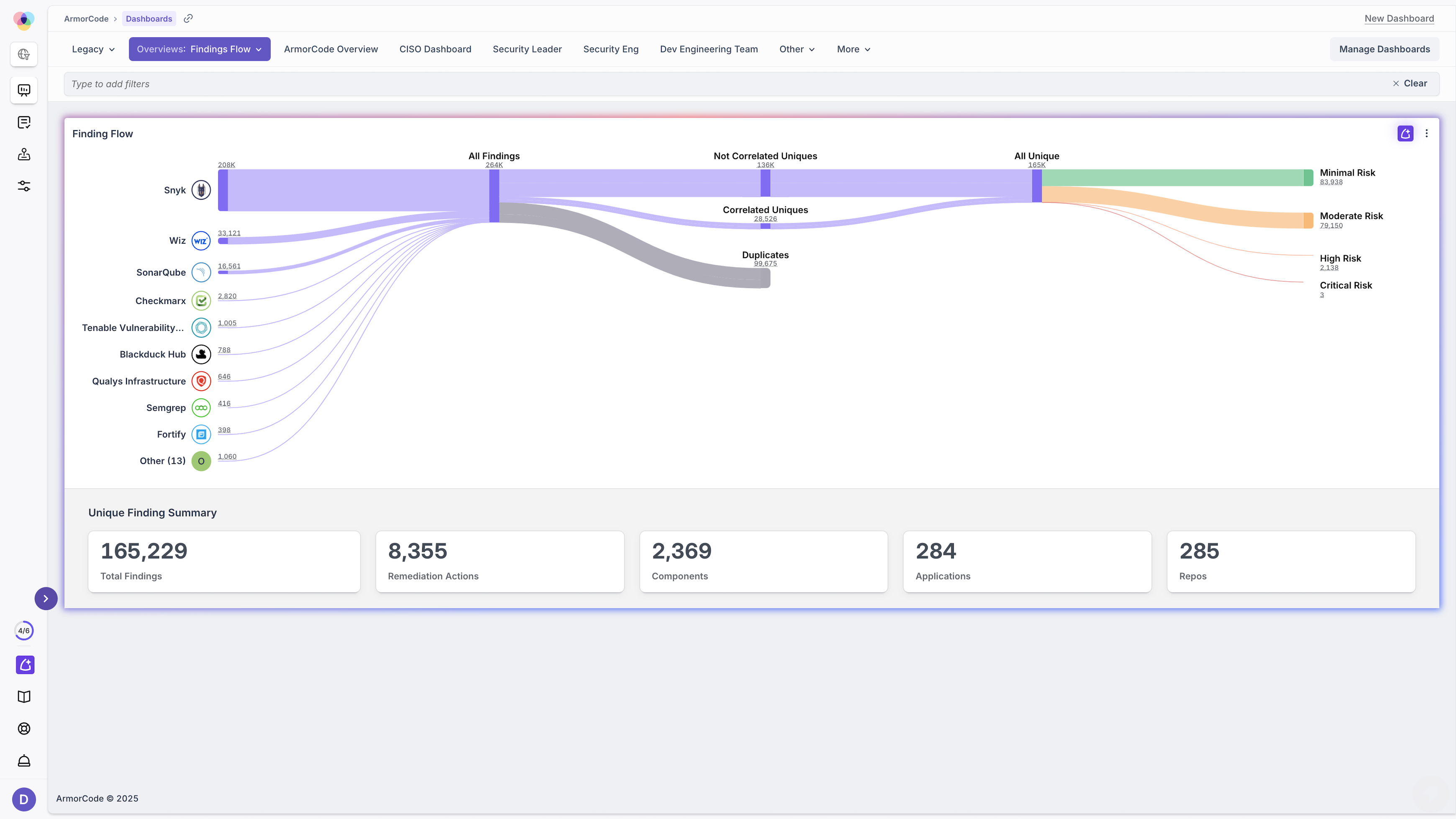
ArmorCode - Findings Flow (light)
Image
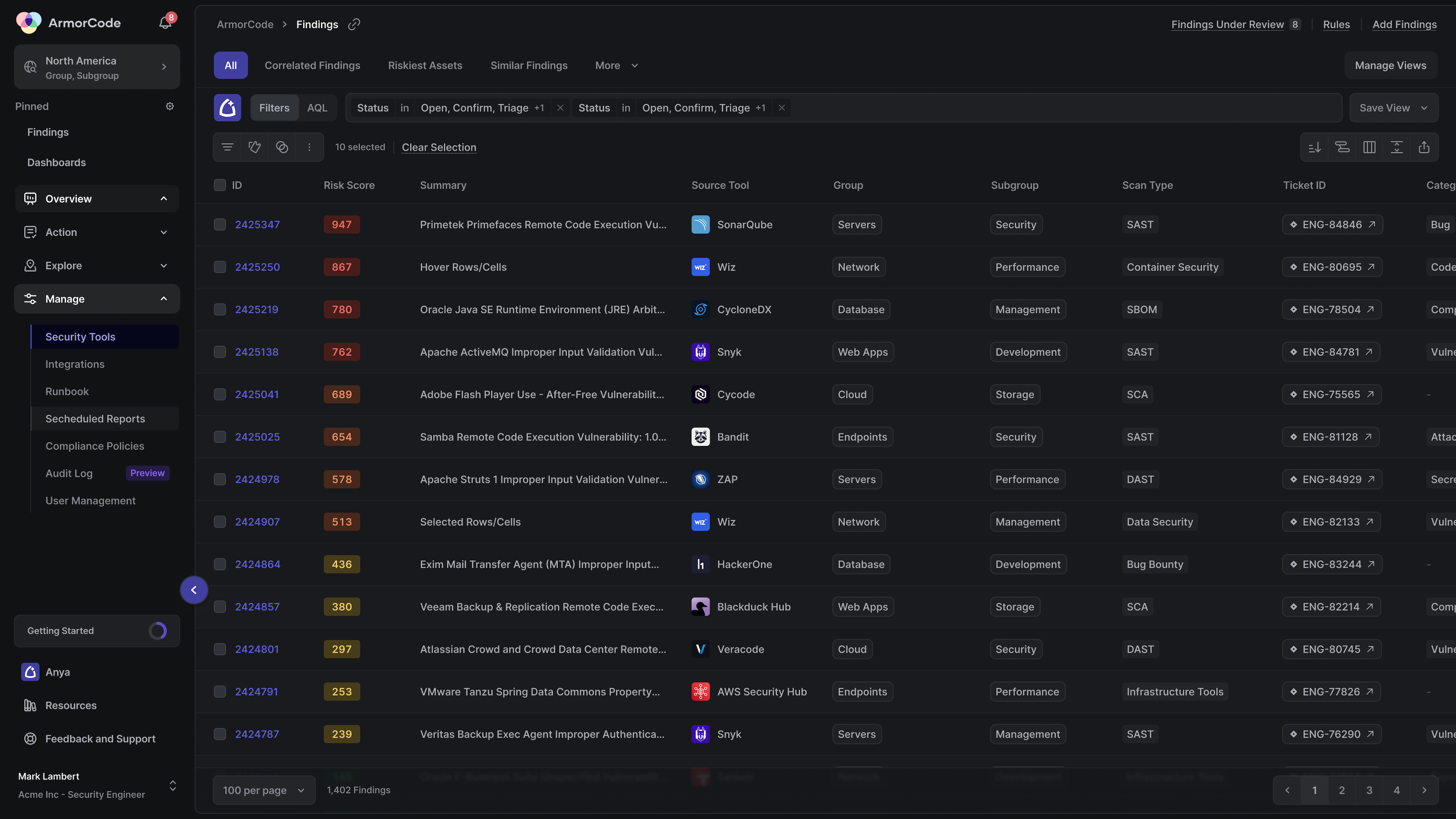
ArmorCode Findings View (dark)
Image
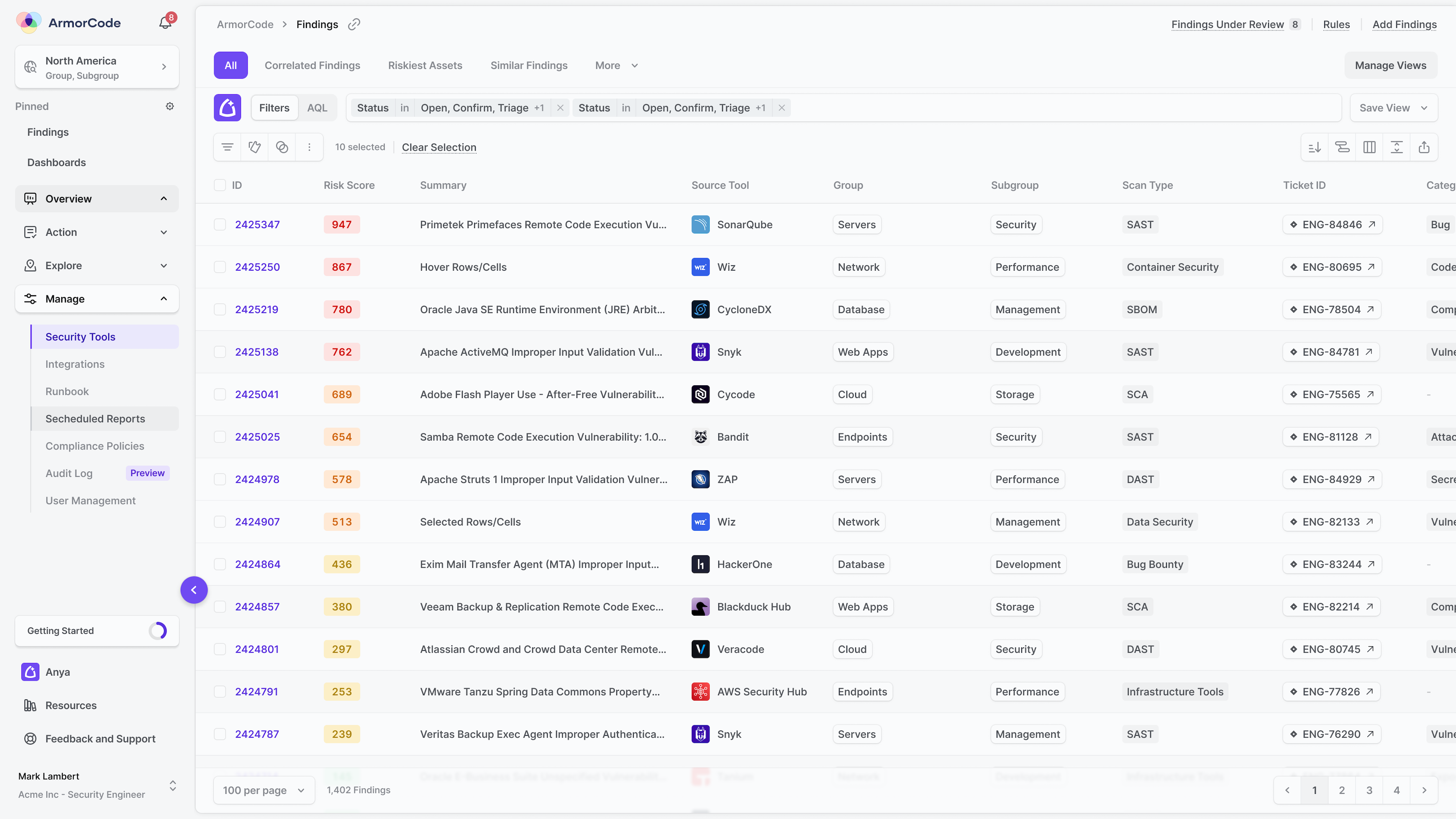
ArmorCode Findings View (light)

Video
Product video
Scalable Unified Vulnerability Management. ArmorCode is the only platform that is built to handle the scale of Frontier AI (Claude Mythos or Open AI Daybreak) discovered vulnerabilities. It unifies vulnerability management across applications, infrastructure, cloud, and containers. No other Vulnerability Remediation solution delivers the depth of offering in both AppSec (Application Security Posture Management) and infrastructure security (Risk-based Vulnerability Management) unifying them in one platform, enabling organizations to implement a robust application security and vulnerability management program across their entire ecosystem and enterprise. Through its control plane, ArmorCode helps organizations break down team silos and foster collaboration across different functions.
Highlights
- ArmorCode is the Agentic Control Plane for vulnerability remediation. The platform quickly integrates and ingests findings from your entire security ecosystem across hundreds of application, infrastructure, cloud, and container scanners to normalize and prioritize findings across your organization.
- The ArmorCode Risk Intelligence Graph goes beyond CVSS based severity and correlates business context and threat intelligence from vulnerabilities across infrastructure, cloud, containers, and applications. instead of drowning in a wall of vulnerabilities. It gives your security team a clear understanding of which Findings represent the highest impact to your organization.
- ArmorCode orchestrates triaging and remediation, so your security team can create streamlined workflows and send the right issues with more context to the right developer teams in the systems they prefer to use at scale. ArmorCode's agentic AI platform helps security and development teams work together to remediate at the scale of AI.
Details
New
Introducing multi-product solutions
You can now purchase comprehensive solutions tailored to use cases and industries.

Features and programs
Financing for AWS Marketplace purchases
AWS Marketplace now accepts line of credit payments through the PNC Vendor Finance program. This program is available to select AWS customers in the US, excluding NV, NC, ND, TN, & VT.

Pricing
Pricing is based on the duration and terms of your contract with the vendor. This entitles you to a specified quantity of use for the contract duration. If you choose not to renew or replace your contract before it ends, access to these entitlements will expire.
Additional AWS infrastructure costs may apply. Use the AWS Pricing Calculator to estimate your infrastructure costs.
Dimension | Description | Cost/12 months |
|---|---|---|
Bronze Tier | 1 Unit | $4,500.00 |
Dimensions summary
This listing uses a contract pricing model with one dimension: the Bronze Tier, billed by Unit. You purchase in Units, starting at a single Unit. Pricing scales with the number of Units you commit to under the contract. There are no separate tiers, instance sizes, or usage add-ons to choose from here. Your total cost depends on how many Units your organization needs. The Units grant access to the exposure management control plane, which unifies vulnerability, cloud, application, and AI risk signals in one platform.
Top-of-mind questions for buyers
The pricing table lists the Bronze Tier as one Unit but does not define what a Unit represents in concrete terms, such as an asset, seat, or finding volume. Confirm the exact metric a Unit maps to with the vendor before you commit under the contract.
Units grant access to the exposure management control plane. It unifies and prioritizes risk across applications, code, cloud, infrastructure, and AI. You get unified vulnerability management, application security posture management, software supply chain security, and AI exposure management, plus role-aware AI agents for triage and remediation.
This is a contract with one dimension billed per Unit. Cost scales with how many Units you commit to, not with day-to-day activity like scan volume or findings processed. To add capacity, you increase the Unit count. Confirm scaling terms with the vendor before purchase.
www.armorcode.com+1
Helpful?
Vendor refund policy
Contact Support

Legal
Vendor terms and conditions
Upon subscribing to this product, you must acknowledge and agree to the terms and conditions outlined in the vendor's End User License Agreement (EULA) .
Content disclaimer
Vendors are responsible for their product descriptions and other product content. AWS does not warrant that vendors' product descriptions or other product content are accurate, complete, reliable, current, or error-free.
Delivery details
Software as a Service (SaaS)
SaaS delivers cloud-based software applications directly to customers over the internet. You can access these applications through a subscription model. You will pay recurring monthly usage fees through your AWS bill, while AWS handles deployment and infrastructure management, ensuring scalability, reliability, and seamless integration with other AWS services.
Resources
Vendor resources
Support
Vendor support
For support questions, please see <www.armorcode.com >, Support@armorcode.io
AWS infrastructure support
AWS Support is a one-on-one, fast-response support channel that is staffed 24x7x365 with experienced and technical support engineers. The service helps customers of all sizes and technical abilities to successfully utilize the products and features provided by Amazon Web Services.
Updated weekly

By Cycode
By Apiiro
Top
10
In Vulnerability and Patch Management
Top
50
In Infrastructure as Code
Top
50
In Agile Lifecycle Management
Sentiment is AI generated from actual customer reviews on AWS and G2
Functionality
Ease of use
Customer service
Cost effectiveness
Positive reviews
Mixed reviews
Negative reviews
AI generated from product descriptions
Multi-Scanner Integration and Normalization
Integrates and ingests findings from hundreds of application, infrastructure, cloud, and container scanners with normalization and prioritization across the organization.
Risk Intelligence Graph
Correlates business context and threat intelligence from vulnerabilities across infrastructure, cloud, containers, and applications beyond CVSS-based severity scoring.
Unified Vulnerability Management
Unifies vulnerability management across applications, infrastructure, cloud, and containers in a single platform combining Application Security Posture Management and Risk-based Vulnerability Management.
Workflow Orchestration and Remediation
Orchestrates triaging and remediation workflows with context-aware issue routing to developer teams across preferred systems at scale.
Agentic AI Platform
Leverages agentic AI capabilities to enable security and development teams to collaborate and remediate vulnerabilities at AI-driven scale.
Risk Intelligence and Traceability
Risk Intelligence Graph provides code to cloud traceability with visibility, correlation, prioritization and remediation of vulnerabilities across the software development lifecycle, enabling identification of root causes and bulk remediation.
Multi-Scanner Integration
Platform supports pluggable scanner architecture allowing integration of custom scanners or replacement of legacy AppSec tools including SCA and SAST capabilities.
Threat Intelligence and Zero-Day Protection
Proactive security notifications with out-of-the-box policies for zero-day attacks and threats, backed by research team, to reduce mean time to resolution.
Comprehensive Code to Cloud Coverage
End-to-end security coverage spanning AppSec, Pipeline Security, and Application Risk including secrets detection, code leakage, SAST, SCA, and container security.
Vulnerability Prioritization and Remediation
Automated identification and prioritization of critical vulnerabilities with capability to filter and focus on the most critical issues while enabling fast remediation in native developer environments.
Real-time Code Generation Prevention
Prevents AI coding agents from generating vulnerable or non-compliant code through patent-pending Secure Prompt technology and Software and Risk Graph integration
Automated Vulnerability Remediation
Automatically fixes vulnerabilities and non-compliance in both newly generated code and existing production code through AutoFix capability
Dynamic Security Context Adaptation
Continuously adapts security guidance based on evolving architecture, runtime environments, and compliance requirements
Threat Modeling Automation
Automates threat modeling to eliminate manual security debt and reduce false positives through contextual risk analysis
Multi-Agent Framework Compatibility
Supports deployment alongside agent frameworks including Amazon BedRock AgentCore, Amazon Q Developer, and Kiro with consistent governance layer
Standard contract
No
No
Customer reviews
Vikram Chakravarthy
Centralized risk insights have transformed how our teams prioritize and manage vulnerabilities
Reviewed on Jul 19, 2026
Review provided by PeerSpot
What is our primary use case?
I started using ArmorCode in 2024 as part of our application security and exposure management program, with the objective to consolidate the security findings from multiple security tools into a single platform, which improved the remediation prioritization.
Our primary use case for ArmorCode is for application security posture management. We use ArmorCode to aggregate findings from SAST, DAST, container security, cloud security, and vulnerability management tools into a single platform, allowing our engineers to use ArmorCode as a centralized location for risk prioritization and remediation management instead of reviewing multiple dashboards.
What is most valuable?
ArmorCode offers several best features including centralized visibility, as we can integrate with multiple security products and view them in a single view, providing a single risky view. We also benefit from AI-assisted prioritization, risk correlation, remediation tracking, and an executive dashboard that is very helpful for leadership.
ArmorCode's AI-assisted prioritization and risk correlation have helped our team by allowing us to prioritize risk based on analysis, enabling the development team to remediate critical risks before deployment into the production environment.
The positive impact of ArmorCode on our organization includes improved vulnerability prioritization and better collaboration between security and development teams. Instead of discussing thousands of findings, we focus on critical risks, significantly reducing unnecessary effort and allowing the team to quickly identify high-risk vulnerabilities and assign remediation to application owners.
Since we started using ArmorCode, the security review meetings have become much more productive. Developers receive prioritized vulnerabilities in the proper context instead of lengthy reports, which has improved our remediation efficiency and reduced unnecessary effort.
What needs improvement?
I would like to see more AI-driven remediation recommendations, deeper contextual risk analysis, and additional workflow automation for the enterprise environment.
I wish ArmorCode could offer more flexible dashboard customization, especially for different stakeholder groups such as engineering managers, product owners, or business leaders.
For how long have I used the solution?
I started using ArmorCode in 2024 as part of our application security and exposure management program, with the objective to consolidate the security findings from multiple security tools into a single platform, which improved the remediation prioritization.
What other advice do I have?
My advice for others looking into using ArmorCode is to take your time. I recommend integrating as many security tools as possible into ArmorCode, as the platform delivers the most value when it functions as the central risk management platform for application security, focusing on AI-driven prioritization and remediation governance.
ArmorCode has helped our team during a product's release, where multiple scanners reported thousands of vulnerabilities across applications, containers, and open-source libraries. Previously, engineers had to manually compare findings with different security tools, but with ArmorCode, duplicate findings were correlated automatically, business context was added, and high-risk vulnerabilities were prioritized, allowing development teams to focus on fixing the most critical issues before production deployment.
We also use ArmorCode during release governance, security review meetings, remediation tracking, executive reporting, and to measure overall application security posture across business applications.
I rate this product a 9 out of 10.
Bobby B.
Strong Risk and Vulnerability Alignment with AI-Powered Prioritization
Reviewed on Jun 24, 2026
Review provided by G2
What do you like best about the product?
When we started with ArmorCode, the product did a good job of aligning risks and vulnerabilities. The amount of Vulnerabilities requires some AI to make sure we are targeting the proper Vulnerabilities to reduce Risk.
What do you dislike about the product?
The initial interface and some of the features were needing some improvements.
What problems is the product solving and how is that benefiting you?
It makes getting to the Vulnerabilities and remediations in a cleaner fashion.
Amandeep Pawar
Centralized risk-based workflows have reduced alert fatigue and improve on-time secure delivery
Reviewed on Jun 16, 2026
Review provided by PeerSpot
What is our primary use case?
ArmorCode is used for eliminating duplicate vulnerabilities and consolidating findings from multiple tools, prioritizing risk based on business impact, assigning remediation tasks automatically, and tracing security postures across the organization.
ArmorCode enables the creation of Jira tickets based on issues, allowing tracking of the entire flow through Jira tickets while maintaining prioritization and reducing significant effort. ArmorCode provides a separate platform that helps organize, manage, and prioritize remediation of security vulnerabilities across the software development lifecycle while maintaining time and effort efficiency. ArmorCode serves as a single pane of glass, providing one centralized dashboard for all security findings.
The main use case for ArmorCode is finding duplicates and correlating findings into one consolidated issue, which reduces alert fatigue. ArmorCode also helps with DevSecOps integration, including Jira ticket integration, GitHub, GitLab, Azure DevOps, Jenkins, and ServiceNow. This allows security findings to flow directly into the developer workflow.
ArmorCode was already in use when I joined the organization, and my colleagues noted that it provides centralized visibility, which is important. It helps reduce alert fatigue, improves developer productivity, and provides timely compliance and reporting, saving both time and cost. The most valuable feature is risk-based prioritization, as instead of showing thousands of security alerts, ArmorCode helps identify which vulnerabilities pose the greatest risk to the business. This allows teams to focus their efforts where they have the biggest impact.
How has it helped my organization?
ArmorCode has positively impacted the organization and improved revenue because of correct and timely delivery to clients. The biggest strengths are contextual risk prioritization, identify visibility, and workflow automation. Risk-based prioritization is the most valuable feature, as it helps the team focus on the most critical issues instead of spending time on thousands of low-priority alerts.
The time saved through ArmorCode has had a huge impact on revenue this year.
ArmorCode has helped the entire team, allowing us to easily view tickets and enabling smooth workflow across the team, ensuring on-time delivery of everything.
What is most valuable?
ArmorCode's best feature is automation, which creates ticket creation, workflow routing, and compliance reporting.
ArmorCode features from the developer perspective include receiving prioritized vulnerabilities, getting clear remediation guidance, tracking fixes through Jira, spending less time analyzing security reports, expediting the security team, centralized vulnerability management, better risk visibility, faster triage, and improved collaboration with developers. ArmorCode stands out by connecting all security tools together and adding intelligence on top of them. Most companies already have their scanners, and ArmorCode significantly reduces the time needed to identify and fix critical vulnerabilities.
ArmorCode's accuracy and reliability of output are very good and very efficient at finding issues. ArmorCode has saved us a lot of time.
I rate ArmorCode eight out of ten because it simplifies vulnerability management. The most valuable feature is its ability to integrate findings from multiple security tools and prioritize them based on risk. This helps the developer and security team focus on fixing the most impactful issues first, improving both security and productivity.
ArmorCode is very effective software that reduces human effort and saves time. It has a huge impact on the company's revenue and profit, and we deliver everything on time to the client because of ArmorCode. It is very useful for finding vulnerabilities and generating reports for auditing and workflow management.
What needs improvement?
ArmorCode is a strong ASPM platform that provides centralized visibility and risk-based prioritization, and there are several areas where it could be enhanced to improve the user experience and increase adoption across development teams. Improvements could include more AI-powered remediation guidance, improved developer experience, enhanced predictive risk analysis, strong cloud-native visibility such as Kubernetes, custom reporting, and dashboards including custom risk scorecards, team-specific dashboards, and faster onboarding and setup of new security tools. Improvements could also include pre-built integration, automation, automated connector setup, guided onboarding, and better risk connection that assesses criticality, business impact, data sensitivity, and internet exposure.
The most important improvements needed are strong cloud-native visibility, enhanced predictive risk analysis, adding AI-powered remediation guidance, and an improved developer experience. Predictive risk analysis is one area that needs enhancement. While ArmorCode is already excellent at centralizing security findings and prioritizing risk, these improvements could further reduce remediation time and make the platform even more valuable for both security and development teams.
Enhancing AI-powered remediation guidance would improve developer experience. For AI-powered remediation guidance, instead of only identifying vulnerabilities, ArmorCode could provide detailed fix recommendations, secure code examples, root cause analysis, and automated remediation suggestions.
For how long have I used the solution?
I have been using ArmorCode for three years.
What other advice do I have?
ArmorCode supports tracking and reporting for PCI DSS, SOC 2, ISO 27001, and HIPAA for compliance and governance purposes, and the security team can generate reports quickly during audits.
I rate this review eight out of ten.
Vaibhav S.
Kept Protected from Vulnerabilities
Reviewed on Jan 22, 2025
Review provided by G2
What do you like best about the product?
It gets integrated with almost all scanners and creates a unified understanding of where the product is lagging in terms of security.
What do you dislike about the product?
Sometimes the reporting is not accurate and has very little customization.
What problems is the product solving and how is that benefiting you?
It helps basically in tracking vulnerabilities and tells the ways to resolve them and gets integrated with almost all platforms like Git, Jira.
MD Sabbir H.
Review of ArmorCode
Reviewed on Sep 23, 2023
Review provided by G2
What do you like best about the product?
Easily integrate with JIRA, Gitlab, Github etc. More secure from development to deployment. Identify potential vulnerabilities and provides guidance on how to solve them.
What do you dislike about the product?
Limited scalability, not much options to customize, analytics and reporting is not that good
What problems is the product solving and how is that benefiting you?
ArmorCode provides the information of vulnerability of an application platform. So, this information helps users to solve those vulnerability and security issues.