
Sold by: Cribl
Deployed on AWS
Free Trial
Quick Launch
AWS Free Tier
Spend your time using telemetry, not running it. Cribl.Cloud gives you full control over IT and security data without managing infrastructure.
4.3
Overview

Cribl.Cloud is a fully managed, AI-ready telemetry platform on AWS that gives IT, security, and platform engineering teams control over how they collect, route, transform, store, and investigate logs, metrics, traces, and events without running the infrastructure behind it.
If you're migrating from a self-managed, on-prem Cribl deployment, Cribl.Cloud gives you two paths: move your workloads to Cribl-managed infrastructure for the full benefit, or connect your existing on-prem Leader first and convert to the Universal Subscription credit model, then migrate at your own pace. Either way, one credit pool covers every product below, so you can shift usage as priorities change instead of licensing each one separately.
Cribl Stream: A highly scalable data router for collecting, reducing, enriching, and routing observability and security data to any destination, including Amazon S3, Amazon CloudWatch, and Amazon Security Lake.
Cribl Edge: An intelligent, scalable edge-based collection system for logs, metrics, and application data, including Kubernetes/EKS environments.
Cribl Lake: A turnkey, open-format data lake that makes it easy and economical to store, access, replay, and analyze data without expertise or vendor lock-in.
Cribl Search: Federated search-in-place queries across any data, in any form, now with AI assistance (including a KQL assistant, visualization assistant, and guided Search investigations) that helps your team investigate without starting from a blank query.
Cribl Insights: Pipeline health monitoring and extended retention for catching silent log drops and anomalies earlier.
Cribl Detect: A new way to SIEM: detect threats in-stream, close detection coverage gaps, accelerate investigations and threat hunts, and retain full-fidelity logs in low-cost storage, all without locking security data into another monolithic, single-vendor stack.
Cribl StreamAI: An AI gateway and model router built into the platform that routes AI prompts and workloads to the right model at the right price.
Cribl AI: Built directly into the platform, Cribl AI accelerates configuration, troubleshooting, and investigation. Use natural language to get instant answers to product questions, execute advanced searches, and build pipelines without manually writing code.
Getting Started
When you purchase your Cribl.Cloud subscription directly from AWS Marketplace, you get a smooth billing process using your existing AWS Enterprise Discount Program (EDP) commitment, with no separate procurement plan required. Track billing and usage directly in Cribl.Cloud.
Enjoy a quick and easy purchasing experience by utilizing your existing spend commitments through the AWS Enterprise Discount Program (EDP) to subscribe to Cribl.Cloud. Get flexible pricing and terms by purchasing through a private offer. Purchase the Cribl Cloud Suite of offerings at a pre-negotiated price. Contact awsmp@cribl.io or a sales representative for flexible pricing for 12/24/36-month terms.
We are available in US-West-2 (Oregon), US-East-2 (Ohio), US-East-1 (Virginia), CA-Central-1 (Canada Central), EU-West-2 (London), EU-Central-1 (Frankfurt), and AP-Southeast-2 (Sydney) with more regions coming soon! Regional pricing will apply.
To learn more about pricing and the consumption pricing philosophy, please visit: Cribl Pricing - https://cribl.io/cribl-pricing/ Cribl.Cloud Simplified with Consumption Pricing Blog - https://cribl.io/blog/cribl-cloud-consumption-pricing/
Highlights
- Fast and easy onboarding - With zero-touch deployment, you can quickly start using Cribl products without the hassle, burden, and cost of managing infrastructure.
- Instant scalability - The cloud provides flexibility to easily scale up or down to meet changing business needs and dynamic data demands.
- Trusted security - Cribl knows how important protecting data is, and built all Cribl products and services from the ground up with security as the top priority. Cribl.Cloud is SOC 2 compliant and ISO 27001 certified, ensuring all your data is protected and secure. Cribl.Cloud is FedRAMP Moderate ATO.
Details
New
Introducing multi-product solutions
You can now purchase comprehensive solutions tailored to use cases and industries.

Features and programs
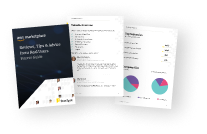
Buyer guide
Gain valuable insights from real users who purchased this product, powered by PeerSpot.
Financing for AWS Marketplace purchases
AWS Marketplace now accepts line of credit payments through the PNC Vendor Finance program. This program is available to select AWS customers in the US, excluding NV, NC, ND, TN, & VT.

Quick Launch
Leverage AWS CloudFormation templates to reduce the time and resources required to configure, deploy, and launch your software.
Pricing
Free trial
Try this product free according to the free trial terms set by the vendor.
Pricing is based on the duration and terms of your contract with the vendor, and additional usage. You pay upfront or in installments according to your contract terms with the vendor. This entitles you to a specified quantity of use for the contract duration. Usage-based pricing is in effect for overages or additional usage not covered in the contract. These charges are applied on top of the contract price. If you choose not to renew or replace your contract before the contract end date, access to your entitlements will expire.
Additional AWS infrastructure costs may apply. Use the AWS Pricing Calculator to estimate your infrastructure costs.
Dimension | Description | Cost/12 months |
|---|---|---|
Cribl.Cloud Free | Cribl.Cloud Suite Free Tier | $0.00 |
Cribl.Cloud Enterprise | Cribl.Cloud Suite Enterprise with 1TB Daily ingestion | $142,800.00 |
The following dimensions are not included in the contract terms, which will be charged based on your usage.
Dimension | Cost/unit |
|---|---|
Overage Fees | $0.01 |
Dimensions summary
This listing gives you three billing dimensions. The Free Tier lets you process data at no cost with no commitment. The Enterprise dimension covers a 1TB daily ingestion plan billed against your annual commitment. Overage Fees apply when your usage goes beyond what your plan includes. Cribl uses a credit-based consumption model, where $1 equals 1 credit and credits are deducted as you use products. The Free and Enterprise dimensions set your baseline capacity, while Overage Fees handle extra usage above that baseline. You pay only for what you consume.
Top-of-mind questions for buyers
Daily ingestion measures the volume of telemetry data you bring into the platform each day, counted in gigabytes. The Enterprise dimension covers up to 1TB per day. Credits are used at ingest. If your daily ingest crosses that level, additional usage draws on Overage Fees.
Overage Fees apply when your usage goes past the capacity included in your plan. You are not required to upgrade manually. Usage beyond your baseline draws from the credit model automatically, and $1 equals 1 credit. You are invoiced monthly with credits deducted at that time.
A credit is the transaction currency across the product suite, where $1 equals 1 credit. Each product has a set usage rate, and credits deduct from your pool as you use it. A single credit pool applies across products, so you track spend in one place.
cribl.io+1
Helpful?
Vendor refund policy
Cribl will refund prior payments attributable to the unused remainder of your purchase.
Custom pricing options
Request a private offer to receive a custom quote.

Legal
Vendor terms and conditions
Upon subscribing to this product, you must acknowledge and agree to the terms and conditions outlined in the vendor's End User License Agreement (EULA) .
Content disclaimer
Vendors are responsible for their product descriptions and other product content. AWS does not warrant that vendors' product descriptions or other product content are accurate, complete, reliable, current, or error-free.
Delivery details
Software as a Service (SaaS)
SaaS delivers cloud-based software applications directly to customers over the internet. You can access these applications through a subscription model. You will pay recurring monthly usage fees through your AWS bill, while AWS handles deployment and infrastructure management, ensuring scalability, reliability, and seamless integration with other AWS services.
Additional details
Usage instructions
Cribl Cloud Trust IAM Role CloudFormation Template
This CloudFormation template creates an IAM role that allows Cribl Cloud to access specific AWS resources in your account. The role is designed to provide Cribl Cloud with the necessary permissions to interact with S3 buckets and SQS queues.
Template Overview
The template does the following:
- Creates an IAM role named CriblTrustCloud
- Configures a trust relationship with Cribl Cloud's AWS account
- Attaches a policy that grants access to S3 and SQS resources
- Outputs the role name, ARN, and an external ID for authentication
Parameters
- CriblCloudAccountID: The AWS account ID of Cribl Cloud (default: '012345678910')
IAM Role Details
Trust Relationship
The role trusts two specific roles in the Cribl Cloud account:
- arn:aws:iam::{CriblCloudAccountID}:role/search-exec-main
- arn:aws:iam::{CriblCloudAccountID}:role/main-default
These roles can assume the CriblTrustCloud role using the sts:AssumeRole, sts:TagSession, and sts:SetSourceIdentity actions.
Permissions
The role has a policy named CriblCloudS3SQSPolicy that grants the following permissions:
- S3 access:
- List buckets
- Get and put objects
- Get bucket location
- SQS access:
- Receive and delete messages
- Change message visibility
- Get queue attributes and URL
These permissions apply to all S3 buckets and SQS queues in the account.
Security Feature
The template includes a security feature that requires an external ID for authentication. This external ID is derived from the CloudFormation stack ID, providing an additional layer of security when assuming the role.
Outputs
The template provides three outputs:
- RoleName: The name of the created IAM role
- RoleArn: The ARN of the created role
- ExternalId: The external ID required for authentication when assuming the role
Usage
To use this template:
- Deploy it in your AWS account using CloudFormation
- Provide the resulting role ARN and external ID to Cribl Cloud
- Cribl Cloud can then assume this role to access your S3 and SQS resources
Remember to review and adjust the permissions as necessary to align with your security requirements and the specific needs of your Cribl Cloud integration1 2 3 .
<div style="text-align: center">⁂</div>Enable CloudTrail and VPC Flow Logging for Cribl Cloud
This document explains the resources that will be created when deploying the provided CloudFormation template. The template is designed to create an IAM role that trusts Cribl Cloud and sets up CloudTrail and VPC Flow logging to an S3 bucket.
Template Overview
The template automates the creation of AWS resources to enable centralized logging, specifically focusing on CloudTrail logs and VPC Flow Logs. It creates S3 buckets for storing these logs, SQS queues for triggering processes upon log arrival, and an IAM role to allow Cribl Cloud to access these logs.
Resources Created
Here's a breakdown of the resources defined in the CloudFormation template:
-
CriblCTQueue (AWS::SQS::Queue): Creates an SQS queue named according to the CTSQS parameter (default: cribl-cloudtrail-sqs). This queue will be used to trigger actions when new CloudTrail logs are written to the S3 bucket.
- Properties:
- QueueName: !Ref CTSQS - Sets the queue name to the value of the CTSQS parameter.
- Properties:
-
CriblCTQueuePolicy (AWS::SQS::QueuePolicy): Defines the policy for the CriblCTQueue, allowing s3.amazonaws.com to send messages to the queue. The policy includes a condition that the source account must match the AWS account ID in which the stack is deployed. This ensures only S3 events from the current AWS account can trigger the queue.
- Properties:
- PolicyDocument:
- Statement:
- Effect: Allow - Allows actions specified in the policy.
- Principal: Service: s3.amazonaws.com - Specifies the service that can perform the actions.
- Action: SQS:SendMessage - Allows sending messages to the queue.
- Resource: !GetAtt CriblCTQueue.Arn - The ARN of the SQS queue.
- Condition:
- StringEquals: 'aws:SourceAccount': !Ref AWS::AccountId - Restricts the source account to the account where the stack is deployed.
- Statement:
- Queues: !Ref CTSQS - Associates the policy with the SQS queue.
- PolicyDocument:
- Properties:
-
TrailBucket (AWS::S3::Bucket): Creates an S3 bucket used to store CloudTrail logs. The bucket is configured with a NotificationConfiguration that sends an event to the CriblCTQueue when a new object is created (specifically, a PUT operation). This will trigger processing when new CloudTrail logs are available.
- Properties:
- NotificationConfiguration:
- QueueConfigurations:
- Event: s3:ObjectCreated:Put - Specifies that the notification should be triggered when an object is created using a PUT operation.
- Queue: !GetAtt CriblCTQueue.Arn - The ARN of the SQS queue to send the notification to.
- QueueConfigurations:
- NotificationConfiguration:
- DependsOn: CriblCTQueuePolicy - Ensures that the queue policy is created before the bucket.
- Properties:
-
TrailBucketPolicy (AWS::S3::BucketPolicy): Defines the policy for the TrailBucket. This policy grants permissions to:
-
delivery.logs.amazonaws.com: Allows the AWS Logs service to write objects to the bucket, ensuring proper log delivery. It requires bucket-owner-full-control ACL.
-
cloudtrail.amazonaws.com: Allows CloudTrail to get the bucket ACL and put objects into the bucket. It also requires bucket-owner-full-control ACL.
-
A Deny statement that enforces the use of SSL for all requests to the bucket, enhancing security.
-
Properties:
- Bucket: !Ref TrailBucket - The name of the S3 bucket.
- PolicyDocument:
- Version: 2012-10-17 - The version of the policy document.
- Statement:
- Sid: AWSLogDeliveryWrite
- Effect: Allow - Allows the action specified.
- Principal: Service: delivery.logs.amazonaws.com - The AWS Logs service principal.
- Action: s3:PutObject - Allows putting objects into the bucket.
- Resource: !Sub '${TrailBucket.Arn}/AWSLogs/' - The S3 bucket and prefix to allow the action on.
- Condition: StringEquals: 's3:x-amz-acl': bucket-owner-full-control - Requires the bucket-owner-full-control ACL.
- Sid: AWSCloudTrailAclCheck
- Effect: Allow
- Principal: Service: cloudtrail.amazonaws.com
- Action: s3:GetBucketAcl
- Resource: !Sub '${TrailBucket.Arn}'
- Sid: AWSCloudTrailWrite
- Effect: Allow
- Principal: Service: cloudtrail.amazonaws.com
- Action: s3:PutObject
- Resource: !Sub '${TrailBucket.Arn}/AWSLogs/*/*'
- Condition: StringEquals: 's3:x-amz-acl': 'bucket-owner-full-control'
- Sid: AllowSSLRequestsOnly
- Effect: Deny
- Principal: * - Applies to all principals.
- Action: s3:* - Denies all S3 actions.
- Resource:
- !GetAtt TrailBucket.Arn
- !Sub '${TrailBucket.Arn}/*'
- Condition: Bool: 'aws:SecureTransport': false - Denies requests that are not using SSL.
- Sid: AWSLogDeliveryWrite
-
-
ExternalTrail (AWS::CloudTrail::Trail): Creates a CloudTrail trail. It is configured to:
-
Store logs in the TrailBucket.
-
Include global service events.
-
Enable logging.
-
Create a multi-region trail.
-
Enable log file validation.
-
Properties:
- S3BucketName: !Ref TrailBucket - The name of the S3 bucket where the logs will be stored.
- IncludeGlobalServiceEvents: true - Includes global service events.
- IsLogging: true - Enables logging.
- IsMultiRegionTrail: true - Creates a multi-region trail.
- EnableLogFileValidation: true - Enables log file validation.
- TrailName: !Sub '${TrailBucket}-trail' - Sets the name of the trail.
-
DependsOn:
- TrailBucket
- TrailBucketPolicy
-
-
CriblVPCQueue (AWS::SQS::Queue): Creates an SQS queue named according to the VPCSQS parameter (default: cribl-vpc-sqs). This queue will be used to trigger actions when new VPC Flow Logs are written to the S3 bucket.
- Properties:
- QueueName: !Ref VPCSQS - Sets the queue name.
- Properties:
-
CriblVPCQueuePolicy (AWS::SQS::QueuePolicy): Defines the policy for the CriblVPCQueue, allowing s3.amazonaws.com to send messages to the queue. Similar to CriblCTQueuePolicy, it restricts access to events originating from the same AWS account.
- Properties:
- PolicyDocument:
- Statement:
- Effect: Allow
- Principal: Service: s3.amazonaws.com
- Action: SQS:SendMessage
- Resource: !GetAtt CriblVPCQueue.Arn
- Condition: StringEquals: 'aws:SourceAccount': !Ref "AWS::AccountId"
- Statement:
- Queues: !Ref VPCSQS
- PolicyDocument:
- Properties:
-
LogBucket (AWS::S3::Bucket): Creates an S3 bucket used to store VPC Flow Logs. The bucket is configured with a NotificationConfiguration to send an event to the CriblVPCQueue when new objects are created.
- Properties:
- NotificationConfiguration:
- QueueConfigurations:
- Event: s3:ObjectCreated:Put
- Queue: !GetAtt CriblVPCQueue.Arn
- QueueConfigurations:
- NotificationConfiguration:
- DependsOn: CriblVPCQueuePolicy
- Properties:
-
LogBucketPolicy (AWS::S3::BucketPolicy): Defines the policy for the LogBucket. This policy grants permissions to:
-
delivery.logs.amazonaws.com: Allows the AWS Logs service to write objects to the bucket. It requires bucket-owner-full-control ACL.
-
Allows delivery.logs.amazonaws.com to get the bucket ACL.
-
Enforces SSL for all requests to the bucket.
-
Properties:
- Bucket: !Ref LogBucket
- PolicyDocument:
- Version: 2012-10-17
- Statement:
- Sid: AWSLogDeliveryWrite
- Effect: Allow
- Principal: Service: delivery.logs.amazonaws.com
- Action: s3:PutObject
- Resource: !Sub '${LogBucket.Arn}/AWSLogs/${AWS::AccountId}/*'
- Condition: StringEquals: 's3:x-amz-acl': bucket-owner-full-control
- Sid: AWSLogDeliveryAclCheck
- Effect: Allow
- Principal: Service: delivery.logs.amazonaws.com
- Action: s3:GetBucketAcl
- Resource: !GetAtt LogBucket.Arn
- Sid: AllowSSLRequestsOnly
- Effect: Deny
- Principal: *
- Action: s3:*
- Resource:
- !GetAtt LogBucket.Arn
- !Sub '${LogBucket.Arn}/*'
- Condition: Bool: 'aws:SecureTransport': false
- Sid: AWSLogDeliveryWrite
-
-
FlowLog (AWS::EC2::FlowLog): Creates a VPC Flow Log that captures network traffic information for the VPC specified in the VPCId parameter. The flow logs are stored in the LogBucket. The type of traffic to log is determined by the TrafficType parameter (ALL, ACCEPT, or REJECT).
- Properties:
- LogDestination: !Sub 'arn:${AWS::Partition}:s3:::${LogBucket}' - The ARN of the S3 bucket where the flow logs will be stored.
- LogDestinationType: s3 - Specifies that the destination is an S3 bucket.
- ResourceId: !Ref VPCId - The ID of the VPC to log.
- ResourceType: VPC - Specifies that the resource is a VPC.
- TrafficType: !Ref TrafficType - The type of traffic to log (ALL, ACCEPT, REJECT).
- Properties:
-
CriblTrustCloud (AWS::IAM::Role): Creates an IAM role that allows Cribl Cloud to access AWS resources.
- Properties:
- AssumeRolePolicyDocument:
- Version: 2012-10-17
- Statement:
- Effect: Allow
- Principal:
- AWS:
- !Sub 'arn:aws:iam::${CriblCloudAccountID}:role/search-exec-main'
- !Sub 'arn:aws:iam::${CriblCloudAccountID}:role/main-default'
- AWS:
- Action:
- sts:AssumeRole
- sts:TagSession
- sts:SetSourceIdentity
- Condition:
- StringEquals: 'sts:ExternalId': !Select - 4 - !Split - '-' - !Select - 2 - !Split - '/' - !Ref 'AWS::StackId'
- Description: Role to provide access AWS resources from Cribl Cloud Trust
- Policies:
- PolicyName: SQS
- PolicyDocument:
- Version: 2012-10-17
- Statement:
- Effect: Allow
- Action:
- sqs:ReceiveMessage
- sqs:DeleteMessage
- sqs:GetQueueAttributes
- sqs:GetQueueUrl
- Resource:
- !GetAtt CriblCTQueue.Arn
- !GetAtt CriblVPCQueue.Arn
- PolicyDocument:
- PolicyName: S3EmbeddedInlinePolicy
- PolicyDocument:
- Version: 2012-10-17
- Statement:
- Effect: Allow
- Action:
- s3:ListBucket
- s3:GetObject
- s3:PutObject
- s3:GetBucketLocation
- Resource:
- !Sub ${TrailBucket.Arn}
- !Sub ${TrailBucket.Arn}/*
- !Sub ${LogBucket.Arn}
- !Sub ${LogBucket.Arn}/*
- PolicyDocument:
- PolicyName: SQS
- AssumeRolePolicyDocument:
- Properties:
Parameters
The template utilizes parameters to allow customization during deployment:
- CriblCloudAccountID: The AWS account ID of the Cribl Cloud instance. This is required for the IAM role's trust relationship.
- Description: Cribl Cloud Trust AWS Account ID. Navigate to Cribl.Cloud, go to Workspace and click on Access. Find the Trust and copy the AWS Account ID found in the trust ARN.
- Type: String
- Default: '012345678910'
- CTSQS: The name of the SQS queue for CloudTrail logs.
- Description: Name of the SQS queue for CloudTrail to trigger for S3 log retrieval.
- Type: String
- Default: cribl-cloudtrail-sqs
- TrafficType: The type of traffic to log for VPC Flow Logs (ALL, ACCEPT, REJECT).
- Description: The type of traffic to log.
- Type: String
- Default: ALL
- AllowedValues: ACCEPT, REJECT, ALL
- VPCSQS: The name of the SQS queue for VPC Flow Logs.
- Description: Name of the SQS for VPCFlow Logs.
- Type: String
- Default: cribl-vpc-sqs
- VPCId: The ID of the VPC for which to enable flow logging.
- Description: Select your VPC to enable logging
- Type: AWS::EC2::VPC::Id
Outputs
The template defines outputs that provide key information about the created resources:
- CloudTrailS3Bucket: The ARN of the S3 bucket storing CloudTrail logs.
- Description: Amazon S3 Bucket for CloudTrail Events
- Value: !GetAtt TrailBucket.Arn
- VPCFlowLogsS3Bucket: The ARN of the S3 bucket storing VPC Flow Logs.
- Description: Amazon S3 Bucket for VPC Flow Logs
- Value: !GetAtt LogBucket.Arn
- RoleName: The name of the created IAM role.
- Description: Name of created IAM Role
- Value: !Ref CriblTrustCloud
- RoleArn: The ARN of the created IAM role.
- Description: Arn of created Role
- Value: !GetAtt CriblTrustCloud.Arn
- ExternalId: The external ID used for authentication when assuming the IAM role.
- Description: External Id for authentication
- Value: !Select - 4 - !Split - '-' - !Select - 2 - !Split - '/' - !Ref 'AWS::StackId'
Deployment Considerations
- Cribl Cloud Account ID: Ensure the CriblCloudAccountID parameter is set to the correct AWS account ID for your Cribl Cloud instance. This is crucial for establishing the trust relationship.
- S3 Bucket Names: S3 bucket names must be globally unique. If the template is deployed multiple times in the same region, you may need to adjust the names of the buckets. Consider using a Stack name prefix.
- VPC ID: The VPCId parameter should be set to the ID of the VPC for which you want to enable flow logging.
- Security: Regularly review and update IAM policies to adhere to the principle of least privilege. Consider using more restrictive S3 bucket policies if necessary.
- SQS Queue Configuration: Monitor the SQS queues for backlog and adjust the processing capacity accordingly.
- CloudTrail Configuration: Confirm that CloudTrail is properly configured to deliver logs to the designated S3 bucket.
- VPC Flow Log Configuration: Verify that VPC Flow Logs are correctly capturing network traffic.
- External ID: The External ID is a critical security measure for cross-account access. Make sure it's correctly configured in both AWS and Cribl Cloud.
This detailed explanation provides a comprehensive understanding of the resources created by the CloudFormation template, enabling informed deployment and management. Remember to adapt parameters to your specific environment and security requirements.
Footnotes
Resources
Vendor resources
Support
Vendor support
AWS infrastructure support
AWS Support is a one-on-one, fast-response support channel that is staffed 24x7x365 with experienced and technical support engineers. The service helps customers of all sizes and technical abilities to successfully utilize the products and features provided by Amazon Web Services.
Updated weekly

Top
10
In Log Management, Security Observability
Top
10
In Migration, Monitoring, Continuous Integration and Continuous Delivery
Sentiment is AI generated from actual customer reviews on AWS and G2
Functionality
Ease of use
Customer service
Cost effectiveness
Positive reviews
Mixed reviews
Negative reviews
AI generated from product descriptions
Data Routing and Collection
Highly scalable data router for data collection, reduction, enrichment, and routing of observability data
Edge-Based Data Collection
Intelligent, scalable edge-based data collection system for logs, metrics, and application data
Data Lake Storage
Turnkey data lake storage that enables storing, accessing, replaying, and analyzing data without vendor lock-in
Federated Search Capability
Federated search-in-place query functionality across any data in any form
Security Compliance
SOC 2 compliance certification with FedRAMP IL4 authorization in process
Real-time Data Collection and Indexing
Collects and indexes machine-generated data from virtually any source or location in real time with automatic indexing upon data ingestion.
Complex Event Correlation
Correlates complex events spanning multiple diverse data sources using time-based correlations, transaction-based correlations, sub-searches, lookups, and joins.
Scalable Data Processing
Scales to collect and index tens of terabytes of data per day with distributed computing architecture.
High Availability Clustering
Provides clustering technology for availability and fault tolerance across distributed low-cost computing environments.
Search and Analysis Capabilities
Enables searching and analyzing of indexed machine data with visualization capabilities for operational intelligence.
Telemetry Data Ingestion and Analysis
Ingests, analyzes, and alerts on metrics, events, logs, and traces in a unified platform
Full-Stack Observability
Visualizes and troubleshoots entire software stack in one connected experience with integrated AWS service monitoring including Amazon EKS, AWS Lambda, AWS Kinesis, Amazon CloudWatch, and AWS Distro for OpenTelemetry
Anomaly Detection and Alert Correlation
Automatically detects anomalies, correlates issues, and reduces alert noise through applied intelligence capabilities
Agentless SAP Monitoring
Provides agentless monitoring for ABAP systems with support for SAP RISE, ECC, S/4HANA, BTP, CALM, Fiori, Ariba, PI/PO, and BW with 175+ monitoring points including CPU, HANA/non-HANA databases, RFC details, background jobs, and IDoc insights
Tag-Driven Dashboard and Alerting
Implements dynamic, tag-driven approach to dashboards and alerting for infrastructure visualization and configuration monitoring
Standard contract
No
No
No
Customer reviews
Stefan Feher
Modernization of security operations has boosted investigations and simplified long-term log retention
Reviewed on Oct 27, 2026
Review from a verified AWS customer
What is our primary use case?
Cribl serves as our SIEM. A specific example of how we use Cribl as our SIEM is that we have substantial data and numerous alerts that we gather from Cribl, and we create incidents in ServiceNow using ServiceNow API manager.
We are also using it to create automations. Cribl products and features I currently use are Search, AI, and SIEM.
I am not using the new search-in-place technology feature of Cribl Search at this time, but we are looking to migrate to it.
How has it helped my organization?
Cribl has positively impacted our organization because it helped us shift left and provided an easier time onboarding data.
Specific outcomes include freeing up our senior people and shifting left to the L1 people, making it easier for them. Cribl Search has changed my approach to long-term log retention and historical investigations since we don't have to occupy as much space now.
Cribl AI or Copilot has affected my team's productivity and time to value when working with Cribl in areas such as writing queries and troubleshooting; it has improved our workflow and response time.
I have seen a decrease in firewall logs with Cribl, and it has improved our overall data processing workflow.
What is most valuable?
The best features Cribl offers include a good approach for SOC modernization. I particularly appreciate the AI observability features and the ability to search faster to investigate smarter. Security teams can collect once and search anywhere.
Cribl's AI observability features and the ability to search faster and smarter really optimize our operations team time and efficiency. Our teams are now able to troubleshoot and find issues for our internal colleagues in minimal time.
I appreciate telemetry as a shared service. Our SREs are now freed up to tackle major architecture challenges and my team as L1 can onboard data.
Cribl Search's ability to search data in place has changed how I can investigate issues or answer questions across my data stores since it's much easier to have all the data in one place and search it very fast instead of searching through multiple vendors.
Cribl AI or Copilot has helped close skills gaps and made complex telemetry workflows more accessible to my team, as everyone can now search with natural language and Cribl will handle the backend.
I would describe my experience with Cribl's user interface when managing log processing tasks as intuitive because it has great UI and UX, making it easier to navigate.
I assess Cribl's ability to handle high volumes of diverse data types, such as logs and metrics, as very strong. Cribl processing and data ingestion power are excellent.
What needs improvement?
Regarding Cribl's improvements, I don't think it could be better. I don't have anything specific to improve at this time. I really appreciate the way that it works and how it is designed.
If there was one thing I could change or add, even something small, it would be more agentic workflows and reports within AI observability.
For how long have I used the solution?
I have been working in my current field for around five years, and I have been using Cribl for the past two and a half years.
What do I think about the stability of the solution?
Cribl is stable and very reliable.
What do I think about the scalability of the solution?
Cribl's scalability is very straightforward to scale.
How are customer service and support?
The customer support is good; they are always answering our questions. I would rate the customer support a perfect ten.
Which solution did I use previously and why did I switch?
I previously used a different solution, Splunk, but I switched because of cost-effectiveness and performance.
What was our ROI?
I have seen a return on investment for sure, as we save considerable time by ingesting huge volumes of data.
What's my experience with pricing, setup cost, and licensing?
I have a direct contract with Cribl. My experience with pricing, setup cost, and licensing is straightforward; we talked with Cribl directly and established a contract with them.
Which other solutions did I evaluate?
Before choosing Cribl, I evaluated other options, specifically Splunk.
What other advice do I have?
I would rate Cribl nine out of ten. A nine is my choice because I would prefer to see more agentic workflows, but other than that, I think it's a truly complete tool.
My advice to others looking into using Cribl is to pursue it; it's a truly great tool.
Which deployment model are you using for this solution?
Private Cloud
If public cloud, private cloud, or hybrid cloud, which cloud provider do you use?
Amazon Web Services (AWS)
Dipesh-Bhawsar
Centralized log routing has cut SIEM costs and supports diverse formats for better monitoring
Reviewed on Jul 24, 2026
Review provided by PeerSpot
What is our primary use case?
We are using Cribl for log trimming with a vast majority of log sources that have different log patterns or log types. Some logs come in syslog format, some are in JSON, and some are in other HTML kinds of formats. We are using Cribl to streamline all the log formats and send the logs to Splunk, and we can also filter out the logs that are not required for us for security monitoring.
If logs from one device are sending us a lot of logs but we only need some events of interest for security monitoring, we can filter out the unnecessary logs and only forward those events of interest from Cribl to our SIEM solution.
Cribl has had a very positive impact on our organization. We are also using it for our cost cutting. The first benefit is cost cutting because we can filter out the unnecessary logs from the log sources, so we are only sending the events of interest to our SIEM solution for security monitoring. Most of the logs that are not necessary are filtered out within Cribl, which positively impacts the pricing of our SIEM solution.
The second benefit is that it has improved our security monitoring because Cribl is an augmented solution that can pull any log format, convert it, and send it to the SIEM solution. There is no requirement to have a specific log type to use Cribl. The third benefit is the filter option, which allows us to filter out the unnecessary logs.
In our organization, we are keeping the logging level of the firewall up to debug and forwarding all the logs from the firewall to our SIEM solution for security monitoring, so specifically for the firewall, we do not have any filtering in place in Cribl.
We can filter out the firewall logs if we keep the logging level up to informational, which would allow us to filter out all the debug logs through Cribl, which will definitely reduce the firewall traffic.
In our environment, we are handling around TBs of logs through Cribl, and it is handling everything perfectly fine. We have not observed any issues with traffic, log stoppage, system failures, or service failures related to Cribl, so everything is working fine.
What is most valuable?
The overall pipeline and the filtering option in Cribl are very good.
The complexity aspect is impressive; Cribl is already augmented and can receive any kind of logs with any format. It can handle almost all types of logs, which include Syslog, WMI, and all kinds of complex logs. It is particularly very good for complex logs where we have multi-line logs and large sources sending a significant quantity of logs; it is very helpful in that regard. Regarding the costing part, Cribl's charges are less than what we are saving in our SIEM solution, so ultimately, it is profitable for us.
What needs improvement?
Currently, Cribl is perfectly fine for us, and we have not observed any such issues. However, if we find anything later on, we will document it and share it with you.
Cribl could respond more quickly to email notifications to make the experience a nine or ten.
For how long have I used the solution?
We have been working with Cribl for around eight months because we recently implemented it, so it has been six to eight months.
What do I think about the stability of the solution?
Cribl is a very stable product, and we have not observed any platform-related or internal service-related issues. It has been working fine since six to eight months, so we can say it is pretty stable.
We have not experienced any outages or crashes.
What do I think about the scalability of the solution?
We can scale Cribl based on the log inputs we are providing. It is pretty much scalable, depending on when we want to scale it.
It has an option for scalability, so it is not an issue.
How are customer service and support?
We often communicate with the technical support of Cribl.
They are very supportive and respond timely.
Which solution did I use previously and why did I switch?
This is the first time we are using Cribl; previously we were directly sending logs to a SIEM solution. This is the first time we started using Cribl for that.
What about the implementation team?
We were not personally involved in the implementation because there are multiple members on our team. One of our colleagues was involved along with Cribl resources to implement it. However, later on, once it was implemented, we got a chance to work on a few changes in Cribl.
Which other solutions did I evaluate?
In this particular area, we think Cribl is the only good solution partner, which is why we chose Cribl. There are no other applications that have that kind of capability like Cribl, as it is the industry-leading product as of now.
We went straight to Cribl and did not consider anything else.
What other advice do I have?
We can share our feedback on Cribl.
We are a customer of Cribl.
Cribl is a pretty good solution. We did not face any challenges while working on Cribl.
Cribl is deployed on the cloud in our organization.
We are happy with the pricing that they offer.
Our review rating for Cribl is 9.
Hardik Murdia
Telemetry routing has improved observability and simplifies incident investigation
Reviewed on Jun 03, 2026
Review from a verified AWS customer
What is our primary use case?
My current use cases for Cribl involve how the telemetry data moves. We have instrumented our observability backend related services, which we use specifically for our business logic. Basically, how it works is there is something called Autopage where we have all the details of whatever data was just coming in terms of from the adapters of AWS. There, we have Cribl deployed even when no queue queue Kubernetes cluster exists. We have these things and we're very well organized. Most of the use cases are on Kubernetes where we have better observability because Kubernetes generates a lot of traces, and manually, it is very difficult to manage all these things. Cribl plays a good amount of role to summarize everything properly provided all the information.
What is most valuable?
What I like the most about Cribl is that it extracts the spans very well. Honeycomb does the same thing, but Cribl does it a little bit better than that. We can route one stream from too many destinations with no problem. We have configured a center table easy instance, and we have also tried with the cloud solution. When we send the data in, it just gets extracted in different telemetry solutions such as signals and data doc. It provides all those enriched data with all the details. For example, we gave user ID as one of the attributes we wanted, and it mapped email on top automatically. So it becomes very easy to identify which customer has a problem during incidents and other things.
What needs improvement?
I'm not the right person to ask this because I only configured it for providing certain specific things. If I say one negative thing, the setup is a little bit trickier because observability setups are generally trickier.
For how long have I used the solution?
I have been using Cribl in my career for six and a half months.
What do I think about the stability of the solution?
Regarding stability, I don't really face any lagging or crashing, but that comes with not a lot of data being injected there. If a very high cardinal solution or high cardinal metrics goes in, there might be some issues, but I haven't faced any problem that way till now.
What do I think about the scalability of the solution?
Scalability, stability, and reliability can only be judged when you have a huge amount of data. Our current organization doesn't deal with a huge amount of data. What we have is around two hundred to three hundred GB of data that we are moving daily. Out of that, whatever telemetry we are getting from our total collector, there's something which we are directing to this, and this is providing to our other solutions out there such as Datadog and Honeycomb. Basically, we are not facing any problem as of now in terms of stability, reliability, and scalability.
How are customer service and support?
In terms of technical support, I have not had to contact them about anything. Technical solutions are shifting now. People are more identifying things on their own, and we have a lot of solutions coming, so it's very easy now.
How was the initial setup?
The initial deployment setup of Cribl was relatively easy for the first time. This comes after a certain new experience that I have. For a very new person who doesn't understand much about observability, it might be a tricky solution. When you are working with an OLTP kind of solution, versioning, pipeline, learning, and coverage are important parts. Once you have that, everything works accordingly. You just have to figure out how it will work.
I really enjoyed working with the open telemetry collectors. I have tried with some AI-related implementations. We have a vector database in the backend, and it has given us a good amount of data transformation depth, which was really good. That has given us more usage context for what we are providing to the AI model. This is a service what we had in AWS Bedrock where we were running an NLM solution. That has given us good amount of insights whether this is properly working or not. The only problem was there was no token count. For that, I have to use some different solution. For a specific integration, I would be very happy if I could get some other solution which provides me the token information also. How much token I have been consuming is not there right now in any of the auxiliary tools. I have to do it via some other aspect. No complaints with Cribl. Cribl actually has sorted out our problems, but it will probably be better.
What about the implementation team?
For the deployment of Cribl, I have done the complete deployment without anyone's help. I took some documentation that they have and used it for certain structural things. For our department's sake, I deploy our changes directly without any problem.
What was our ROI?
I have seen a decrease in firewall logs with Cribl. Sampling is enabled and definitely that is something which I have actually seen a good amount of reduction in. The logs are really high, so what we had previously because a lot of those kinds of things happen on the valve, followed by a lot of things that happen on our product. Because of that, the logs get filled up very fast, and we store all those logs in history. When I compared the situation after Cribl and when we actually validated whether the amount of logs in the history compared to what they were before, the growth results significantly decreased. I don't have a number in mind right now, but I have documented it somewhere.
What's my experience with pricing, setup cost, and licensing?
Regarding the pricing of Cribl, I'm not the right person to talk about pricing because all these things are taken care of by our VP of engineering. I suggested them to ship also, and then we are on a pilot with them. We have not paid any money to them yet. With respect to this current Cribl implementation, I am not hundred percent sure what we have actually done. I can answer the technical aspect of it, but the financial part is something that's out of my scope right now.
Which other solutions did I evaluate?
When it comes to using any similar solutions to Cribl, there are not really alternatives. We have used Chip, if you have heard of it. But the use cases are a little bit different. Chip is something which provides more enhanced metrics on top of existing metrics of what we have. So we don't have to look at ten different metrics, and we can use this. They have run a pilot with us a while back, but they are focused mainly on Kubernetes clusters, whereas our solution is more tied to the instances and other things. These are not a cluster mode running. In our case, it has given us significant value.
What other advice do I have?
Regarding Cribl's ability to handle high volumes of diverse data types, for logs, it is something we have used. We have used it specifically, and I'm not saying I know how to use it completely, but not that much, to be honest. It's okay what we have done.
In my experience with Cribl's new search in place technology, Cribl search, I find the user interface when managing log processing tasks to be decent. I don't have any complaints.
I would give Cribl an overall rating of eight out of ten.
Aman Thakkar
Data optimization has reduced logging costs and provides clear, efficient pipelines
Reviewed on May 25, 2026
Review provided by PeerSpot
What is our primary use case?
We mainly use Cribl for data optimization and log reporting to clean up the data and determine how to pass and provide this data to Splunk, which we are using. Cribl serves as a pipeline for us.
How has it helped my organization?
Cribl has impacted our organization very positively. Our management team was previously very concerned about costs. If we were using the traditional method, we would be giving every log to Splunk, and it became very messy and tough to handle. Because of Cribl, we have experienced very high impact in cost efficiency, data clarity, and data optimization. It has been a very big impact.
What is most valuable?
The best feature is data cleaning and data optimization, which has reduced our costs significantly. Cost optimization can be counted as one of the valuable features.
My experience with the UI is very decent compared to others, and it is very good.
Cribl handles fire logs very well because we are getting logs from many of our applications. We collect the data from APIs and everything, and it works very well with fire logs.
Cribl has handled our needs very easily and very stably. We have depended on it, and it works very well. Data costs have become very low, making it more reliable in terms of cost efficiency.
What needs improvement?
The main improvement is to provide a very clear and comprehensive user manual.
Another main improvement I would like to see is if we could get an advanced monitoring system or advanced monitoring capability, we could use Cribl in a very advanced way.
For how long have I used the solution?
We have been using Cribl for mainly around ten months.
What do I think about the stability of the solution?
Cribl is very stable. Once the pipeline is configured properly, it runs consistently, even with high volume. We have not faced any major issues.
What do I think about the scalability of the solution?
From my experience, Cribl is quite scalable and very scalable. We are using it with very high volume, and it is very scalable.
How are customer service and support?
Cribl's customer service is good. We have tried contacting them one or two or three times, and it has been good.
Which solution did I use previously and why did I switch?
We are using Splunk currently, but we were giving logs directly to Splunk without any clarity, without any cleaning, and without any optimization. We were giving everything to Splunk, and because of this, it became very messy. We had to make a call to Splunk's help section for assistance. Now that we are using Cribl, it is very good, and we do not have to rely on Splunk's support to help us.
How was the initial setup?
Cribl's initial setup is quite complex. That is why I am recommending that they provide a very comprehensive user manual.
What about the implementation team?
We integrated Cribl by ourselves.
What was our ROI?
Cribl is reliable, and while the ROI is not as significant as other metrics, we have already exceeded it because the costs are very low.
What's my experience with pricing, setup cost, and licensing?
The costing part is not something I directly handle, but from what I know, the setup cost is very low.
Which other solutions did I evaluate?
We have not checked any other options because this option has matched our requirements.
What other advice do I have?
I would like to recommend providing a very clear and comprehensive user manual so that any newcomer or new customer can understand it very easily. Our review rating for Cribl is nine.
Dhyey Padalia
Streamlined log processing has reduced storage costs and improves real-time data routing
Reviewed on May 12, 2026
Review provided by PeerSpot
What is our primary use case?
I have used Cribl Stream for filtering service logs, reducing data volume before sending it to Splunk, and enriching logged data with custom context.
What is most valuable?
Cribl features integration support since it works with 50 plus sources and destinations, data routing and flexibility allowing me to easily route telemetry to multiple destinations such as SIEM, data lake, and cheap object storage, and data processing and reduction because it filters out unwanted fields, removes redundant data, and restructures logs before reaching systems, which is helpful in saving cost and improving performance.
We have observed a 30 to 40% reduction in log volume hitting the firewall.
Cribl Stream handles a high volume of data very efficiently as it is designed to process log metrics and data from multiple sources in real time without major performance impact. We tested Cribl Stream with different types of machine data and even with large ingestion volumes, and the platform remains stable because of its distributed and horizontally scalable architecture.
I can assess Cribl's ability to handle high volumes of different data types, as it can handle multiple formats because it supports structured and unstructured data formats such as JSON, CSV, XML, and plain text logs. It processes and transforms data in real time with low latency. In our PLM environment, we had logs coming from multiple enterprise systems and services, and Cribl helped normalize and route those diverse logs efficiently before forwarding them to Splunk.
What needs improvement?
My experience with the user interface when managing log processing tasks is quite complex for new beginners, and there is also a documentation gap that leads new beginners to take a while to get fluency over the software.
Areas that have room for improvement include the complex UI for beginners and the documentation gap. One challenge initially was configuring pipelines and understanding parsing rules because of this gap, and I think there should be more plug-and-play integration examples for common enterprise tools.
For how long have I used the solution?
I have been using Cribl for 13 to 14 months.
What do I think about the stability of the solution?
Cribl is a stable solution, and overall, I give it a 10.
What do I think about the scalability of the solution?
Cribl's architecture is quite scalable because it horizontally scales whenever required, so I give it a nine for scalability.
How are customer service and support?
I would rate the technical support as nine out of ten.
Which solution did I use previously and why did I switch?
This is my first time using this type of solution, and I have not used any other alternative or competitor solution, so I am not aware of other options.
What about the implementation team?
My team members mentioned that it was not difficult to deploy it; it was handled by two of our IT team members.
What's my experience with pricing, setup cost, and licensing?
I find the pricing of Cribl to be cost-efficient because it has helped us save costs for data storage by removing unwanted logs.
What other advice do I have?
I am aware of Cribl Search and its new search in-place technology, but I have not used it.
I am pretty new to Cribl and have only used Cribl Stream, but I am looking forward to exploring other products such as Edge, Search, and Lake.
I would highly recommend Cribl because it has been very helpful in cost optimization. I give this review an overall rating of 9.