
Sold by: CrateDB
Deployed on AWS
CrateDB is a multi-model, scalable SQL database optimized for rapid analytics on relational and semi-structured data (JSON). It features a built-in full-text and vector search, enabling efficient querying and analysis of complex data sets, regardless of size or complexity.
4.3
Overview
CrateDB Cloud on AWS offers a seamless and scalable SQL database solution for managing real-time analytics, full-text search, geospatial data, relational and semi-structured data, and now, with the addition of vector storage and search capabilities for advanced analytics and machine learning applications. It's designed to store any type of data and runs queries in milliseconds, handling complex, high-volume, and high-velocity data with ease. Available on AWS, CrateDB Cloud enables the deployment of modern, scalable applications, ensuring compliance with strict security standards.
Explore CrateDB's full potential with our forever free tier, perfect for trying out its features without cost. As your needs grow, dedicated clusters provide scalable solutions tailored to your application's demands, with flexible pricing based on your specific requirements. For custom solutions, including pricing and contracts, contact our team. Begin your CrateDB Cloud journey on AWS today to effortlessly manage and analyze your data with our efficient, powerful database platform.
Highlights
- Effortless Deployment & Scaling: Instantly access CrateDB Cloud's advanced SQL database capabilities for real-time analytics on AWS with one-click deployment. Easily scale your database to meet the demands of applications involving full-text search, geospatial data, relational and semi-structured data, and advanced analytics with vector storage and search capabilities.
- Ultra-Fast Analytics: CrateDB Cloud ensures rapid analytics performance for managing complex, high-volume, and high-velocity data. Run queries in milliseconds across diverse data types, supporting the development of scalable applications that meet stringent service level agreements.
Details
Sold by
Delivery method
Deployed on AWS
New
Introducing multi-product solutions
You can now purchase comprehensive solutions tailored to use cases and industries.

Features and programs
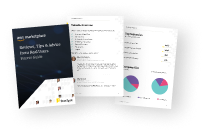
Buyer guide
Gain valuable insights from real users who purchased this product, powered by PeerSpot.
Financing for AWS Marketplace purchases
AWS Marketplace now accepts line of credit payments through the PNC Vendor Finance program. This program is available to select AWS customers in the US, excluding NV, NC, ND, TN, & VT.

Pricing
Pricing is based on actual usage, with charges varying according to how much you consume. Subscriptions have no end date and may be canceled any time.
Additional AWS infrastructure costs may apply. Use the AWS Pricing Calculator to estimate your infrastructure costs.
Dimension | Cost/unit |
|---|---|
CrateDB Cloud Usage - Compute | $0.001 |
CrateDB Cloud Usage - Storage | $0.001 |
Dimensions summary
You pay for this fully managed database service based on actual usage, with two separate metered dimensions. Compute is billed by usage units tied to the processing power your cluster consumes. Storage is billed by usage units tied to the data volume you hold. These two dimensions bill independently, so your compute and storage costs scale on their own. As your workload grows or shrinks, your charges rise and fall with the units you consume. There is no upfront commitment; you pay only for what you use.
Top-of-mind questions for buyers
Compute units track the processing power your cluster consumes, tied to the vCPUs and RAM in your running nodes. Storage units track the volume of data you hold. The service meters both continuously as your cluster runs, so each reflects the resources actively in use.
Both charges apply at the same time and appear together on one invoice. Compute usually drives the larger share for query-heavy or high-processing workloads. Storage dominates when you hold large data volumes with lower activity. Because the two meter independently, each scales on its own.
You can add nodes or increase compute without downtime, and the cluster rebalances automatically. Because billing is usage-based, adding capacity raises your compute units while active. Scaling back down reduces them. Storage units follow the data volume you hold, independent of compute changes.
cratedb.com+1
Helpful?
Vendor refund policy

Legal
Vendor terms and conditions
Upon subscribing to this product, you must acknowledge and agree to the terms and conditions outlined in the vendor's End User License Agreement (EULA) .
Content disclaimer
Vendors are responsible for their product descriptions and other product content. AWS does not warrant that vendors' product descriptions or other product content are accurate, complete, reliable, current, or error-free.
Delivery details
Software as a Service (SaaS)
SaaS delivers cloud-based software applications directly to customers over the internet. You can access these applications through a subscription model. You will pay recurring monthly usage fees through your AWS bill, while AWS handles deployment and infrastructure management, ensuring scalability, reliability, and seamless integration with other AWS services.
Resources
Vendor resources
Support
Vendor support
AWS infrastructure support
AWS Support is a one-on-one, fast-response support channel that is staffed 24x7x365 with experienced and technical support engineers. The service helps customers of all sizes and technical abilities to successfully utilize the products and features provided by Amazon Web Services.
Updated weekly
By CrateDB
By MongoDB, Inc

Sentiment is AI generated from actual customer reviews on AWS and G2
Functionality
Ease of use
Customer service
Cost effectiveness
Positive reviews
Mixed reviews
Negative reviews
AI generated from product descriptions
Multi-Model Data Support
Supports relational, semi-structured (JSON), geospatial, and vector data types within a single SQL database platform
Full-Text and Vector Search
Built-in full-text search and vector search capabilities enabling efficient querying and analysis of complex data sets
Sub-Millisecond Query Performance
Executes queries in milliseconds across high-volume and high-velocity data sets for real-time analytics
Horizontal Scalability
Provides scalable architecture with dedicated clusters that can be scaled to meet application demands and handle complex data workloads
One-Click Deployment on AWS
Enables instant deployment and provisioning of CrateDB Cloud instances on AWS infrastructure with automated scaling capabilities
Vector Search and Semantic Search
Integrated vector search and semantic search capabilities enabling unified operational data with vector embeddings for AI-powered applications
Multi-Region Clustering with Auto-Scaling
Horizontal and vertical auto-scaling with multi-region cluster deployment maintaining low latency and 99.995% uptime SLA
Retrieval-Augmented Generation (RAG)
Built-in RAG capabilities with Voyage AI-powered retrieval and long-term memory for stateful AI agents
Native Encryption and Compliance
Native encryption for sensitive data protection with comprehensive compliance certifications and industry-leading security controls
AI Agent Execution and Governance
Atlas Agent Engine providing unified execution layer, memory management, and governance enforcement with real identity and org-level policy controls for production AI agents
Automatic Time-based Data Partitioning
Automatic partitioning through Hypertables that partition data by time and optionally by space/dimension to optimize ingest performance as datasets grow.
Hybrid Storage Architecture
Hybrid row/columnar storage (Hypercore) supporting both transactional and analytical workloads efficiently within the same system.
Data Compression
Native compression capability reducing storage costs up to 95% while maintaining full queryability through standard SQL interface.
Incremental Materialized Views
Continuous aggregates feature enabling precomputation and incremental refresh of common analytical queries for real-time dashboard responsiveness.
Vector and Keyword Search Integration
Native hybrid search combining HNSW vector search (pgvectorscale) with BM25 keyword ranking (pg_textsearch) without requiring separate vector database infrastructure.
Standard contract
No
Customer reviews
Cristian M.
Scalable Real-Time Time-Series SQL That’s Built for Observability
Reviewed on Mar 09, 2026
Review provided by G2
What do you like best about the product?
Its combination of horizontal scalability and standard SQL for real-time time-series data. It feels practical for large-scale telemetry and observability use cases without adding unnecessary complexity.
What do you dislike about the product?
I would like to see more detailed production-scale benchmarks and clearer architectural guidance for large observability workloads.
What problems is the product solving and how is that benefiting you?
It solves the complexity of handling high-volume telemetry and time-series data at scale while keeping SQL as the query interface. This simplifies observability workflows and supports faster operational decision-making in infrastructure environments.
reviewer2803401
Advanced queries have enabled large-scale analytics for digital twin data management
Reviewed on Feb 17, 2026
Review provided by PeerSpot
What is our primary use case?
I used CrateDB for a one-off project from April to August in 2025. My main use case was a digital twin project designed to create a FIWARE-based application with a focus on optimizing the data management and repository component. I used tools including Orion Context Broker, MongoDB, QuantumLeap, and configured CrateDB for advanced query and large-scale analytics. I ended up using Grafana for data visualization and monitoring with an interactive dashboard.
CrateDB performed excellently in handling large-scale analytics and integrating with other tools such as Grafana and Orion Context Broker. I was able to make some really nice analysis with CrateDB. Using Grafana for visualization was a scale-up approach because we needed the free version, and it was very beneficial seeing visualizations on Grafana while doing database analytics and SQL operations on CrateDB.
What is most valuable?
CrateDB fit into my project very well as it was an excellent database that allowed me to query analyses I did not think I would be able to perform. Using CrateDB was invaluable because it offered advanced query options and helped tremendously since we were dealing with a very large dataset, which made the large-scale analytics possible.
The best features CrateDB offers in my experience are the querying analytics and the advanced query functionality.
CrateDB positively impacted my organization and project by improving performance and making the work easier. I was originally looking for a very good database for querying, and when someone introduced me to CrateDB, I tried it out and found it had a very nice interface that was easy to navigate. It was very understandable, even for a first-time beginner.
What needs improvement?
I wanted to use CrateDB for visualization as well, but it did not provide what I needed, so we had to opt for Grafana for the visualization instead.
Regarding needed improvements, I was quite able to integrate CrateDB with other tools very easily, especially integrating it with Grafana and QuantumLeap with just a little bit of coding. The interface is quite easy, even for a beginner, so I do not think there should be any improvement whatsoever.
For how long have I used the solution?
I have been working in my current field for approximately six months.
What do I think about the stability of the solution?
CrateDB was stable in my experience, though there were some glitches related to the port number. I could not find the correct port number for CrateDB when I started, as I was still trying to figure out what it was. However, once I obtained that information, I was able to run it, and then it ran perfectly.
What do I think about the scalability of the solution?
CrateDB was good regarding scalability, though not excellent.
Which solution did I use previously and why did I switch?
I did not use a different solution before CrateDB, as a colleague recommended it to me at the start of the project, so when I began the project, I opted for CrateDB immediately.
What was our ROI?
I have seen a return on investment from using CrateDB as it helped save time. However, I am not certain if there was an exact return on investment because immediately after setting up the project, I left the company, so I did not have the opportunity to fully understand the return on investments.
What's my experience with pricing, setup cost, and licensing?
CrateDB was free when I used it, so there was no pricing associated with it, as we used the free version.
Which other solutions did I evaluate?
I did not evaluate other options before choosing CrateDB. The project was specific for CrateDB, and I was focused on it because of the large scaling aspect. For storage, I used MongoDB. For the analytics and querying aspect, I only opted for CrateDB and did not check any other database tools.
What other advice do I have?
I did not notice any particular feature or query type that CrateDB performed better than other databases I have used, as aside from PostgreSQL, CrateDB was the only other database I used simultaneously with MongoDB. However, I did not conduct much analysis using MongoDB because I only used it to store the data. With CrateDB, I used it for querying and making queries.
The outcomes I noticed were significant because for other databases, we were not able to make large-scale analytics, so CrateDB helped tremendously with that and saved time. The process from CrateDB to Grafana for visualization was just seconds, and updating the interactive dashboard regularly did not require much time—just one click was all it took.
Before starting with CrateDB, although it has a very easy user interface, it would be beneficial to check out a demo or watch YouTube videos demonstrating uses of CrateDB. Having foundational knowledge of basic querying concepts will make using CrateDB quite straightforward.
FranciscoCampos
Data platform has delivered real-time casino gameplay insights but still needs broader expertise
Reviewed on Jan 20, 2026
Review provided by PeerSpot
What is our primary use case?
My main use case for CrateDB was to store the entire gameplay from our Asian clients at the workshop, which meant they were generating a large amount of gameplay on a daily basis.
A specific example of the kind of gameplay data I stored in CrateDB includes rounds and transactions dedicated to slot games and casino games, with each round being one spin from a player, requiring storage of everything about the date, the time, the bet, the game, the different results of the round, and the balance after the round. I also worked with transaction types that included debit and credit, among many other things.
What is most valuable?
The best features CrateDB offers in my experience include many functionalities that allow you to purge data, maintain data, keep the database clean and essentially updated. CrateDB also allows us to store many records, and I think the performance is very strong compared to other databases or technologies.
CrateDB's performance stood out for me as it allowed me to query results in less than seconds, which was optimal and enabled real-time analytics. I found it to be a very distributed SQL engine, which was beneficial considering our specific requirements. It supports multi-model and flexible schemas for structured and semi-structured data, JSON, time series for loads, and BLOBs, along with integrated performance improvements and faster ingestion than what I recall from other databases, plus better query optimizations.
CrateDB has positively impacted my organization by allowing us to store several years of gameplay from our Asian customers, which involves millions and millions of records generated every day. Positively, we did not experience significant downtimes or outages, meaning the gameplay was not affected at all during these two years.
What needs improvement?
CrateDB can be improved as it is not very popular, which means there are not many people dedicated or experienced with this particular technology, making it less usable or suitable for many companies. From my experience, it is a very niche technology, especially compared to more mainstream options like PostgreSQL, and perhaps more advertising or popularity would be beneficial.
Having robust support could be valuable for CrateDB because if a company is unable to hire someone specialized in this technology, having better documentation or support could be useful.
For how long have I used the solution?
I have been using CrateDB for about two years during my period at the workshop.
What do I think about the stability of the solution?
CrateDB is stable in my experience.
How are customer service and support?
I think our company was using an outdated version of CrateDB, which means we did not get support or have someone dedicated in-house, so I cannot speak to how the customer support was because we did not receive that.
What other advice do I have?
My advice for others looking into using CrateDB is to have the updated version in case they want to get support or have someone dedicated with expertise in this technology. I would rate this product a 7 out of 10.
reviewer2794641
Log analytics has become faster and data resilience supports growing security workloads
Reviewed on Jan 05, 2026
Review from a verified AWS customer
What is our primary use case?
At my previous company, which was a security analytics tool, my main use case for CrateDB was to ingest any kind of logs from email, applications, firewalls, DNS, Microsoft, and other technology tools. We used to ingest logs, which are small text files with information of what occurred, and after a process of going through a Kafka queue, they would be stored in CrateDB as a long-term storage option. Later, we would retrieve this data to look for anomalies in a UI-based platform.
CrateDB fit well into our pipeline and use cases in general terms. In some situations where the customer was very big or the data volume was huge, there might be a little delay because we were using CrateDB installed by us in AWS servers. Sometimes those servers were not powerful enough, so there was some delay, but after restarting it, all worked pretty well and I think it was a great solution for our use case.
CrateDB positively impacted my organization by reducing the time needed for processes. Sometimes with other data tools, like Snowflake, it would take a long time to store and retrieve all the logs quickly. Its scalability was also impressive, as it was easy to start with one server and then horizontally scale to multiple nodes to retrieve data. These aspects stood out for our use case and helped my company gain more customers during my time there.
What is most valuable?
One of the best features CrateDB offers is that it never lost data. Even with intermittent connection issues due to data volume, the data was never lost and could always be recovered. It was very fast to retrieve long queries, for example, we used to query in the UI very quickly, even with complex queries. CrateDB was fast to parse all that data and fix it for us, as well as display it on our UI platform. From a performance point of view, the speed of read and write was probably the best capability that CrateDB had, especially under stress situations and how it was able to work around them.
CrateDB's speed and reliability made a big difference for us, especially when there were big customers where the data was in gigabytes or terabytes per day. It could ingest all that data quickly and never failed in writing or reading it. This performance made a difference for our customers when choosing a security analytics tool because of CrateDB's speed with large data volumes. A tough scenario we encountered was when we had to restart the servers when CrateDB was unresponsive, but this process did not take long since they were in AWS. If the data volume was very high, it occasionally needed a restart because it could not be read perfectly fine, but generally, the performance and way it worked were very great and I did not have any complaints about it.
Integrations were great, as we used CrateDB with Kafka and other big data analytics tools like Hadoop. This compatibility between different technologies in an ETL scenario was key for us. The integrations were very important and they worked well with the mentioned technologies—Kafka, Hadoop, Logstash, and others.
What needs improvement?
One area for improvement in CrateDB could be the command line interface, as sometimes it was not very easy to understand. However, if you are technically adept, it was not a tough challenge; it was just a matter of getting used to the platform, the CLI, and the commands needed for execution.
Documentation could be better because there was not as much available compared to other storage options. Nonetheless, we were able to find the needed information, and there were colleagues with similar experiences who helped.
For how long have I used the solution?
I have been using CrateDB for almost three years at my previous company, which was a security analytics software vendor.
What do I think about the stability of the solution?
CrateDB is stable. In ninety percent of the times, it was quite stable, but as always with varying data volumes, there were occasional instances where we had to restart the servers, though this was rarely necessary.
What do I think about the scalability of the solution?
CrateDB's scalability was good; we were able to deploy it on different servers and achieve horizontal scaling when needed, especially with high customer data volumes.
How are customer service and support?
I did not have to work with customer support directly, so I do not have any complaints. We managed to fix most of the issues ourselves without needing their involvement.
How would you rate customer service and support?
Positive
Which solution did I use previously and why did I switch?
I have used Snowflake in other situations, but I mainly have experience with CrateDB. CrateDB was the first solution we chose and the one we started using right away without evaluating other tools at that time.
How was the initial setup?
Integrations were great, as we used CrateDB with Kafka and other big data analytics tools like Hadoop. This compatibility between different technologies in an ETL scenario was key for us. The integrations were very important and they worked well with the mentioned technologies—Kafka, Hadoop, Logstash, and others.
What about the implementation team?
We installed CrateDB ourselves and did not purchase it through the AWS Marketplace.
What was our ROI?
I can assert that we saw a return on investment through time saved for sure. I do not have estimates for money saved or employee reduction, as we did not experience any shortage on that front. We did save time from the configuration and setup point of view since it was fairly easy for those with technical experience in Ubuntu or other Linux environments.
What's my experience with pricing, setup cost, and licensing?
We were happy with the pricing, setup cost, and licensing of CrateDB, and I do not have any complaints. Everything was great.
Which other solutions did I evaluate?
CrateDB was the first solution we chose and the one we started using right away without evaluating other tools at that time.
What other advice do I have?
I think CrateDB did great in our use case, as it was a great solution for storing and retrieving data quickly. At the end of the day, there is a lot of parsing and steps along the way, and CrateDB was fast enough for our needs. At my previous company, they still use it up to today, and I think they are pretty happy with how it works and the kind of performance it provides.
I would advise others looking into using CrateDB to have some technical experience in the background before starting to use it to avoid running into issues during setup.
I do not have specific statistics on time saved, but for customer growth, I know we achieved an increase of thirty percent in our current customer volume once we switched to CrateDB.
My company was just a customer of CrateDB and there were no other kinds of partnerships with them.
CrateDB is deployed in various ways depending on the project and customer needs. In most cases, it is in AWS, which is a public cloud. In other cases, it is on-premises, installed on the servers of a company or even on my own company's servers.
I would rate this review an eight overall.
Which deployment model are you using for this solution?
Public Cloud
If public cloud, private cloud, or hybrid cloud, which cloud provider do you use?
Amazon Web Services (AWS)
Computer Software
Evaluating CrateDB capabilities
Reviewed on Dec 18, 2025
Review provided by G2
What do you like best about the product?
Simple and Easy to use UI, good support for GeoJSON and Time Series DB and possibility to run it locally
What do you dislike about the product?
I have not yet came across any shortcomings yet.
What problems is the product solving and how is that benefiting you?
POC for understanding Databases of different types which can run on premise or in the cloud,