
Sold by: Hugging Face
Deployed on AWS
The Hugging Face Hub is the leading open platform for AI builders.
4.1
Overview
The Hugging Face Hub is the leading open platform for AI builders, with over 1 million models, datasets, and AI applications for building AI features that process and generate text, images, audio, video, and more. Subscribe to the Hugging Face Hub to give your team access to all its premium features:
- Inference Endpoints to deploy models for production,
- Spaces to create AI applications easily,
- Enterprise Hub to give your company additional security, access controls, and compute features, including Single Sign-On, Resource Groups, Audit Logs, Storage Regions, Train on DGX Cloud, and more (https://www.youtube.com/watch?v=CPQGBn-yXJQ )
To use the Hugging Face Hub and get billed with your AWS Account, follow the steps in our tutorial (https://huggingface.co/blog/enterprise-hub-aws-marketplace ).
By subscribing to the Hugging Face Hub, you will be billed for what you use as paid features. For instance, if you consume $30 worth of inference endpoints, $5 worth of Spaces, and 7 seats for an Enterprise Hub license (one month), we would bill your AWS account with 30x1000 + 5x1000 + 7x20x1000 Hugging Face Billing Units ($0.001 per unit).
Inference Endpoint and Spaces Upgrade use a usage-based, pay-as-you-go pricing: https://huggingface.co/pricing . Enterprise Hub uses seat-based pricing ($20 per seat per month)
Highlights
- Inference Endpoints: Deploy any model as a secure, production-ready API for fast inference.
- Spaces: Build and host any ML application on huggingface.co, batteries and GPUs included
- Enterprise Hub: advanced security, access controls, collaboration and compute for companies
Details
Sold by
Categories
Delivery method
Deployed on AWS
New
Introducing multi-product solutions
You can now purchase comprehensive solutions tailored to use cases and industries.

Features and programs
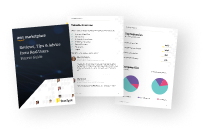
Buyer guide
Gain valuable insights from real users who purchased this product, powered by PeerSpot.
Financing for AWS Marketplace purchases
AWS Marketplace now accepts line of credit payments through the PNC Vendor Finance program. This program is available to select AWS customers in the US, excluding NV, NC, ND, TN, & VT.

Pricing
Pricing is based on actual usage, with charges varying according to how much you consume. Subscriptions have no end date and may be canceled any time.
Additional AWS infrastructure costs may apply. Use the AWS Pricing Calculator to estimate your infrastructure costs.
Dimension | Cost/unit |
|---|---|
Hugging Face Billing Unit | $0.001 |
Hugging Face Usage Fee | $0.01 |
Dimensions summary
This listing uses usage-based pricing with two metered dimensions. The Hugging Face Billing Unit and the Hugging Face Usage Fee both track your consumption of platform services. You pay based on actual usage rather than a fixed seat or subscription rate. The Hub covers activities like model and dataset storage, dedicated inference, and on-demand compute. Your total scales up or down with how much you use each month. There is no upfront commitment tied to these dimensions; charges accrue through AWS billing as you consume resources.
Top-of-mind questions for buyers
Both dimensions track your platform consumption in metered units. The Hugging Face Billing Unit records usage of Hub services, and the Hugging Face Usage Fee applies charges against that usage. Together they convert your activity, like storage, dedicated inference, and on-demand compute, into a metered bill through AWS.
Charges come from what you consume on the Hub. Storage uses per-TB pricing for models, datasets, and buckets. Dedicated inference runs on autoscaling infrastructure billed per hour. On-demand compute for Spaces is billed hourly by hardware type. Your bill reflects the mix of services you actually run.
Usage-based charges accrue while resources run. On-demand Spaces hardware and dedicated inference meter active runtime, so charges track the hours you use. Storage bills on a per-TB basis for data you keep stored. Idle running resources still meter time; fully removed data or stopped compute stops that metering.
huggingface.co
Helpful?
Vendor refund policy
No refunds

Legal
Vendor terms and conditions
Upon subscribing to this product, you must acknowledge and agree to the terms and conditions outlined in the vendor's End User License Agreement (EULA) .
Content disclaimer
Vendors are responsible for their product descriptions and other product content. AWS does not warrant that vendors' product descriptions or other product content are accurate, complete, reliable, current, or error-free.
Delivery details
Software as a Service (SaaS)
SaaS delivers cloud-based software applications directly to customers over the internet. You can access these applications through a subscription model. You will pay recurring monthly usage fees through your AWS bill, while AWS handles deployment and infrastructure management, ensuring scalability, reliability, and seamless integration with other AWS services.
Resources
Support
AWS infrastructure support
AWS Support is a one-on-one, fast-response support channel that is staffed 24x7x365 with experienced and technical support engineers. The service helps customers of all sizes and technical abilities to successfully utilize the products and features provided by Amazon Web Services.
Updated weekly

Sentiment is AI generated from actual customer reviews on AWS and G2
Functionality
Ease of use
Customer service
Cost effectiveness
Positive reviews
Mixed reviews
Negative reviews
AI generated from product descriptions
Model Deployment Infrastructure
Inference Endpoints enable deployment of machine learning models as secure, production-ready APIs with fast inference capabilities.
Application Hosting Platform
Spaces provides hosting infrastructure for machine learning applications with integrated GPU resources and pre-configured dependencies.
Enterprise Access Control
Enterprise Hub includes Single Sign-On, Resource Groups, and Audit Logs for advanced security and access management.
Model and Dataset Repository
Platform hosts over 1 million pre-trained models, datasets, and AI applications for text, image, audio, and video processing tasks.
Multi-Node Distributed Training
Supports multi-node training capabilities enabling scalable AI model training across multiple machines with on-demand compute resources including A100 and H100 GPUs.
Integrated Development Environment
Provides unified platform integrating data preparation, model development, distributed training, and application deployment within a single cohesive interface.
Pre-built Model Templates
Includes pre-built studios from expert contributors and PyTorch ecosystem optimized for state-of-the-art AI applications including large language models, diffusion models, and graph neural networks.
Enterprise Security and Isolation
Offers bring-your-own-cloud (BYOC) deployment ensuring data remains within customer accounts, fine-grained access control, and private networking capabilities.
Serverless Deployment
Supports serverless deployment options for AI applications and endpoints with automatic scaling capabilities.
Model Deployment and Serving
Supports deployment of proprietary ML models with optimized serving engines and open-source models on dedicated instances.
Autoscaling Infrastructure
Handles massive traffic spikes with autoscaling model deployments and supports scale to zero functionality with fast cold starts.
Monitoring and Observability
Provides reliable logging and visibility across deployments, health metrics, and spending through a centralized workspace.
Access Control and Management
Includes role-based access control for managing deployments, metrics, and spending across the infrastructure.
Security and Compliance
Implements SOC 2 Type II certification, HIPAA compliance, and custom SLAs for enterprise-grade security and reliability.
Standard contract
Customer reviews
Khasim Mirza
Extensive documentation and diverse models support AI-driven projects
Reviewed on Apr 18, 2025
Review provided by PeerSpot
What is our primary use case?
I am working on AI with various large language models for different purposes such as medicine and law, where they are fine-tuned with specific requirements. I download LLMs from Hugging Face for these environments. I use it to support AI-driven projects and deploy AI applications for local use, focusing on local LLMs with real-world applications.
What is most valuable?
Hugging Face is valuable because it provides a single, comprehensive repository with thorough documentation and extensive datasets. It hosts nearly 400,000 open-source LLMs that cover a wide variety of tasks, including text classification, token classification, text generation, and more. It serves as a foundational platform offering updated resources, making it essential in the AI community.
What needs improvement?
It is challenging to suggest specific improvements for Hugging Face, as their platform is already very well-organized and efficient. However, they could focus on cleaning up outdated models if they seem unnecessary and continue organizing more LLMs.
For how long have I used the solution?
I have been working with Hugging Face for about one and a half years.
What do I think about the stability of the solution?
Hugging Face is stable, provided the environment is controlled, and the user base is limited. The stability relies on the specific models and the data they're fed, which minimizes issues like hallucination.
What do I think about the scalability of the solution?
Hugging Face is quite scalable, especially in terms of upgrading models for better performance. There is flexibility in using models of varying sizes while keeping the application environment consistent.
How are customer service and support?
I have not needed to communicate with Hugging Face's technical support because they have extensive documentation available.
Which solution did I use previously and why did I switch?
Before Hugging Face, I used Ollama due to its ease of use, but Hugging Face offers a wider range of models.
How was the initial setup?
The initial setup can be rated as a seven out of ten due to occasional issues during model deployment, which might require adjustments. Recent developments have made the process easier though.
What's my experience with pricing, setup cost, and licensing?
The pricing is reasonable. I use a pro account, which costs about $9 a month. This positions it in the middle of the cost scale.
Which other solutions did I evaluate?
Before choosing Hugging Face, I used Ollama for its ease of use, but it lacked the variety offered by Hugging Face.
What other advice do I have?
Overall, the platform is excellent. For any AI enthusiast, Hugging Face provides a broad array of open-source models and a solid foundation for building AI applications. Using an on-premises model helps manage errors in critical environments. I rate Hugging Face as an eight out of ten.
SwaminathanSubramanian
Versatility empowers AI concept development despite the multi-GPU challenge
Reviewed on Feb 05, 2025
Review provided by PeerSpot
What is our primary use case?
I have been using Hugging Face for proof of concepts (POC) and a generative AI project. Currently, I'm trying to use it with Tala and Olaama, along with some other AI tools as I build up my knowledge of AI and generative AI.
What is most valuable?
I like that Hugging Face is versatile in the way it has been developed. I appreciate the versatility and the fact that it has generalized many models. I'm exploring other solutions as well, however, I find Hugging Face very user-friendly.
I am still building my knowledge of it. From my perspective, it's very easy to use, and as you ramp up, you discover new aspects about it.
What needs improvement?
Regarding scalability, I'm finding the multi-GPU aspect of it challenging. Training the model is another hurdle, although I'm only getting into that aspect currently. Organizations are apprehensive about investing in multi-GPU setups.
Additionally, data cleanup is a challenge that needs to be resolved, as data must be mature and pristine.
For how long have I used the solution?
I have been using it for a total of around six months.
What do I think about the stability of the solution?
I have not really faced any stability issues, however, the scale has been small. I'm unsure how it would perform on a larger scale.
What do I think about the scalability of the solution?
I have not had production-type deployments for a client yet. Organizations are not mature enough to invest significantly in multi-GPU setups, which presents a scalability challenge. Also, organizations are apprehensive about the multi-GPU route.
How are customer service and support?
I have not contacted their support team yet.
What's my experience with pricing, setup cost, and licensing?
I am just a user at this point and do not have information about their pricing.
Which other solutions did I evaluate?
I'm exploring Langchain and Agentic AI as part of my current learning and development.
What other advice do I have?
Joining the Hugging Face community can provide additional support. It allows for collaboration on models and datasets, offering quick insights on how the community is using it.
I rate the solution a seven out of ten.
Melek Ghouma
Accessible inference APIs drive personal project success for students
Reviewed on Jan 24, 2025
Review provided by PeerSpot
What is our primary use case?
This is a simple personal project, non-commercial. As a student, that's all I do.
What is most valuable?
The most valuable features are the inference APIs as it takes me a long time to run inferences on my local machine.
What needs improvement?
Access to the models and datasets could be improved. Many interesting ones are restricted. It would be great if they provided access for students or non-professionals who just want to test things.
For how long have I used the solution?
I have been using this solution for about the last three or four months.
Which solution did I use previously and why did I switch?
I have used just TensorFlow and PyTorch. Nothing else.
What's my experience with pricing, setup cost, and licensing?
What other advice do I have?
I've been trying to implement some chatbots, and having free access to Hugging Face helped me a lot.
I use PyTorch and TensorFlow to implement other deep-learning models and access LLMs. Each one of these tools has its own purpose. Python is used for deep learning projects to train and fine-tune models at the deep learning level, while for Hugging Face, it's mainly for the transformers library and LLM APIs. I cannot compare them directly. For me, it's about access to datasets and models.
I would rate this product nine out of ten.
Vikas_Gupta
Easy to use, but initial configuration can be a bit challenging
Reviewed on Sep 04, 2024
Review provided by PeerSpot
What is our primary use case?
We use the tool to extract data from a PDF file, give the text data to any Hugging Face model like Meta or Llama, and get the results from those models according to the prompt. It's basically like having a chat with the PDF file.
What is most valuable?
The solution is easy to use compared to other frameworks like PyTorch and TensorFlow.
What needs improvement?
Initially, I faced issues with the solution's configuration.
For how long have I used the solution?
I have been using Hugging Face for almost two years.
What do I think about the stability of the solution?
Hugging Face is a stable solution.
What do I think about the scalability of the solution?
Hugging Face is a scalable solution.
What other advice do I have?
To use Hugging Face, you need to have basic knowledge of how to feed the data, how to speed data, how to train the model, and how to evaluate the model. Compared to other frameworks like PyTorch and TensorFlow, I'm more comfortable with using Hugging Face. I would recommend the solution to other users.
Overall, I rate the solution seven and a half out of ten.
Devendra (Dev) Mandloi
Open-source, reliable, and easy to learn
Reviewed on Aug 08, 2024
Review from a verified AWS customer
What is our primary use case?
I had to perform training on a model when I worked as a data scientist. There is already a pre-trained model, and we train our model on our custom data. We can accept things from this pre-trained model that has already been trained on a huge amount of data.
What is most valuable?
Hugging Face provides open-source models, making it the best open-source and reliable solution. Currently, Hugging Face is the best solution for exploring many models. There are several models that we can use in real life. There are several words, and we can use a Hugging Face model like NER to accept only limited words from a text.
What needs improvement?
Most people upload their pre-trained models on Hugging Face, but more details should be added about the models.
For how long have I used the solution?
I have been using Hugging Face for six months.
What do I think about the stability of the solution?
The solution provides good stability.
What do I think about the scalability of the solution?
Five people from our team totally depend on the Hugging Face model whenever the company gets a new project.
What's my experience with pricing, setup cost, and licensing?
Hugging Face is an open-source solution.
What other advice do I have?
The solution is deployed on the cloud in our organization. Hugging Face provides many open-source models like Meta and Gemma that are performing very well. When someone puts their model on Hugging Face, they provide us with all the steps. We can follow those steps and train our model. This is the best thing I have seen by Hugging Face.
Several IT industries in India are unable to purchase models like ChatGPT. Hugging Face provides open-source models, making it the best open-source and reliable solution. I would recommend the solution to other users. Users can easily use Hugging Face after watching YouTube videos on how to use it. It is easy to learn to use Hugging Face.
Overall, I rate the solution an eight out of ten.