
Sold by: Splunk
Deployed on AWS
If you are looking for security and operational visibility across your AWS environment including applications, infrastructure and AWS services such as CloudTrail, Config, VPC Flow Logs, and more then Splunk Cloud is the right solution for you.
4.2
Overview
If you're looking for security and operational visibility across your AWS environment - including applications, infrastructure and AWS services such as CloudTrail, Config, VPC Flow Logs, and more - then Splunk Cloud is the right solution for you. Organizations of all sizes leverage Splunk visibility with AWS agility to rapidly troubleshoot applications, ensure security and compliance, and monitor business-critical services in real-time. Splunk Cloud makes it easy to gain end-to-end visibility across your AWS and hybrid environment. Leverage Splunk Cloud with the free Splunk App for AWS to gain critical security, operational and cost optimization insight into your AWS deployment. Whether you're managing applications, infrastructure or a security operations center in the cloud, Splunk delivers Operational Intelligence for a real-time understanding of what's happening across your business and IT so you can make informed decisions. It's easy to get started - and remember - when choosing a product option, match your location and anticipated index volume per day. Splunk Cloud is now FedRAMP authorized: Moderate
Highlights
- Collect and index any machine-generated data from virtually any source or location in real time. Just point Splunk Cloud at your data, and it immediately starts collecting and indexing so you can start searching and analyzing.
- Splunk Cloud offers single-pane-of-glass visibility across on-premise Splunk Enterprise and Splunk Cloud deployments, enabling customers to deploy Splunk as software or SaaS according to their business requirements, while maintaining centralized visibility.
- Splunk Cloud includes support for Splunk apps and other content. Splunk apps deliver a targeted user experience for different roles, use cases and enterprise technologies. These apps can help you visualize data in new ways or provide pre-defined views of leading technologies such as Linux, Windows, VMware and more.
Details
New
Introducing multi-product solutions
You can now purchase comprehensive solutions tailored to use cases and industries.

Features and programs
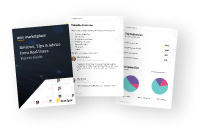
Buyer guide
Gain valuable insights from real users who purchased this product, powered by PeerSpot.
Financing for AWS Marketplace purchases
AWS Marketplace now accepts line of credit payments through the PNC Vendor Finance program. This program is available to select AWS customers in the US, excluding NV, NC, ND, TN, & VT.

Pricing
Custom pricing options
Pricing is based on your specific requirements and eligibility. Request a private offer to receive a custom quote. Sign in to view any offers that have been extended to you.

Legal
Content disclaimer
Vendors are responsible for their product descriptions and other product content. AWS does not warrant that vendors' product descriptions or other product content are accurate, complete, reliable, current, or error-free.
Delivery details
Software as a Service (SaaS)
SaaS delivers cloud-based software applications directly to customers over the internet. You can access these applications through a subscription model. You will pay recurring monthly usage fees through your AWS bill, while AWS handles deployment and infrastructure management, ensuring scalability, reliability, and seamless integration with other AWS services.
Resources
Support
Vendor support
Splunk offers a variety of support options to help ensure your success.
AWS infrastructure support
AWS Support is a one-on-one, fast-response support channel that is staffed 24x7x365 with experienced and technical support engineers. The service helps customers of all sizes and technical abilities to successfully utilize the products and features provided by Amazon Web Services.
Updated weekly

Top
10
In Data Anonymization, Data Security and Governance
Sentiment is AI generated from actual customer reviews on AWS and G2
Functionality
Ease of use
Customer service
Cost effectiveness
Positive reviews
Mixed reviews
Negative reviews
AI generated from product descriptions
Real-time Data Collection and Indexing
Collects and indexes machine-generated data from virtually any source or location in real time with immediate search and analysis capabilities.
Multi-deployment Visibility
Provides single-pane-of-glass visibility across on-premise and cloud deployments, enabling centralized monitoring across hybrid environments.
AWS Service Integration
Supports integration with AWS services including CloudTrail, Config, and VPC Flow Logs for comprehensive AWS environment monitoring.
Pre-built Application Support
Includes support for Splunk apps with pre-defined views for technologies such as Linux, Windows, and VMware.
FedRAMP Authorization
Maintains FedRAMP Moderate authorization for compliance with federal security standards.
Real-time Data Collection and Indexing
Collects and indexes machine-generated data from virtually any source or location in real time with automatic indexing upon data ingestion.
Complex Event Correlation
Correlates complex events spanning multiple diverse data sources using time-based correlations, transaction-based correlations, sub-searches, lookups, and joins.
Scalable Data Processing
Scales to collect and index tens of terabytes of data per day with distributed computing architecture.
High Availability Clustering
Provides clustering technology for availability and fault tolerance across distributed low-cost computing environments.
Search and Analysis Capabilities
Enables searching and analyzing of indexed machine data with visualization capabilities for operational intelligence.
Data Routing and Destination Management
Routes data to multiple destinations with capability to deliver specific data to targeted tools while archiving full fidelity data to cost-effective storage
Data Optimization and Reduction
Reduces data streams by up to 50% through removal of unused log and metric data
Event Processing and Transformation
Processes event data through centralized parsing with capabilities to route, optimize, reformat, and enrich data in flight
Role-Based Access Control
Implements role-based access control with support for external authentication via LDAP, Splunk, and OpenID Connect identity providers
Real-Time Monitoring and Configuration
Provides GUI-based configuration and testing interface with real-time capture and monitoring of observability pipeline
Standard contract
No
No
No
Customer reviews
reviewer2913942
Flexible data analytics supports security, operational visibility, and broader business value.
Reviewed on Oct 20, 2026
Review from a verified AWS customer
What is our primary use case?
I advise customers on using Splunk Cloud Platform to bring together and analyze logs and other machine data for security monitoring, troubleshooting, and operational visibility. My focus is on identifying business outcomes and opportunities to reuse data across multiple use cases. I do not operate the platform within my own organization.
What is most valuable?
What are Splunk Cloud Platform's best features? Why?
What I value most is the flexibility to search, correlate, and visualize data from different sources. This supports discussions that start with a business problem and then identify the data needed to address it, rather than limiting the conversation to a single predefined application.
Search, dashboards, and alerting can help teams investigate issues and make operational information easier to understand. The ability to use relevant data across multiple use cases is particularly valuable when customers want to connect security monitoring with broader operational visibility.
It is important to distinguish the platform from complementary products.
Splunk Cloud Platform, provides a foundation for data analysis, while requirements such as a full SIEM solution or application performance monitoring may call for additional products, capabilities, and configuration.
A public customer example of the broader Splunk platform's potential is Zeppelin . Splunk's published customer story describes how Zeppelin uses operational and equipment data, together with machine learning, to identify potential faults and support predictive maintenance. This illustrates how data analysis can help organizations move from reactive troubleshooting toward more proactive maintenance.
I was not involved in that implementation. The published case uses Splunk Enterprise, Splunk Machine Learning Toolkit, and Splunk DB Connect; it should therefore be understood as an example of the broader Splunk platform rather than a reference deployment of Splunk Cloud Platform.
What needs improvement?
More ready-to-use configurations, guided workflows, and clear reference architectures would help customers turn business requirements into working solutions faster. Simplifying app selection and configuration would benefit teams with limited specialist resources. Clearer guidance on when to use Splunk Cloud Platform and when to add complementary security or observability products would also improve project scoping and time to value.
For how long have I used the solution?
I have been working with Splunk Cloud Platform in a customer advisory capacity for more than seven months. My experience focuses on discussing business requirements and potential use cases rather than administering an internal deployment.
What do I think about the scalability of the solution?
I consider scalability one of Splunk Cloud Platform's strengths. However, I have not personally carried out capacity planning or load testing.
For a specific deployment, I would ask a technical specialist to validate the expected data volumes, search workloads, retention requirements, and service capacity against the customer's needs.
How are customer service and support?
My overall impression of Splunk's technical support is good to excellent, and I would rate it eight to nine out of ten. This reflects my advisory perspective rather than day-to-day ownership of support cases for an internal production deployment.
What's my experience with pricing, setup cost, and licensing?
From an advisory perspective, I assess pricing in relation to the customer's intended outcomes and total cost of ownership rather than license cost alone.
For a narrowly scoped requirement, customers should carefully assess whether the expected benefits justify the investment. The value proposition can become more compelling when the platform supports several relevant use cases and allows data to serve multiple teams or business objectives.
However, broader usage does not automatically mean lower costs. Customers should understand the applicable licensing model, expected usage, data retention requirements, additional products, implementation services, and ongoing administration.
Implementation effort depends on the environment, data sources, integrations, and desired outcomes. I would avoid assuming a fixed deployment timeframe or making a general pricing comparison with another vendor without a like-for-like scope.
What other advice do I have?
I would rate Splunk Cloud Platform nine out of ten, based on my customer advisory experience.
My advice is to start with a clearly defined business problem and measurable success criteria. Identify the necessary data sources, confirm which products and capabilities are required, and involve experienced technical specialists early.
Start with a manageable use case that can demonstrate value, then expand where there is a sound business case. Evaluate implementation effort and ongoing operating costs alongside the platform's flexibility.
Laurentiu Popescu
Log analysis has improved incident insights and currently provides reliable security monitoring
Reviewed on Oct 06, 2026
Review from a verified AWS customer
What is our primary use case?
I have not utilized Splunk Cloud's machine learning capabilities as we just started.
I have not used Splunk Cloud's integration with third-party applications.
I track some false-positive indicators to measure the effectiveness of Splunk Cloud's real-time data processing.
I track approximately an 80% rate of false positives.
What is most valuable?
The log analysis features of Splunk Cloud have been the most valuable to me.
The data encryption and access controls work fine for my needs, so I assess their value as satisfactory. I am satisfied and would rate them a nine.
What needs improvement?
I see room for improvement in the area of reporting, especially the reporting dashboard for Splunk Cloud.
I am not expecting any additional features in the future because I have not explored the current features fully yet.
For how long have I used the solution?
I have been working with Splunk Cloud for about two years.
How are customer service and support?
I would rate their technical support as a 10 out of 10.
What's my experience with pricing, setup cost, and licensing?
I think the pricing of Splunk Cloud offers a good quality-price ratio.
What other advice do I have?
I would rate my overall experience with Splunk Cloud as a nine out of ten.
Haresh Nankani
Cloud dashboards and alerts have transformed how our team monitors production in real time
Reviewed on Sep 20, 2026
Review from a verified AWS customer
What is our primary use case?
Currently, our main use cases for Splunk Cloud Platform involve using dashboarding and alerting most of the time.
We also have scheduled reports that run daily to feed data into those dashboards, and we are actively using alerts to notify in the Webex channels about any issues that have occurred in production on a real-time basis.
What is most valuable?
I appreciate the fact that you can quickly click and create dashboards and alerts without having to spend too much time writing SPL queries to get your results.
Additionally, the fact that it is so much faster than Splunk Enterprise allows us to see things churn quickly.
Since the time I joined this organization, Splunk has been a very important tool for collecting the logins and the events. My organization has been using Splunk Enterprise for a very long time, and very recently, we migrated from Splunk Enterprise to Splunk Cloud Platform. My role has been as an end user of Splunk to see how all the migrations have completed successfully. Now in my current role, I am responsible for creating alerts and dashboards in Splunk Cloud Platform to assist with all the monitoring in the production environment.
What needs improvement?
I cannot say what improvements can be made right now because we have just migrated to Splunk Cloud Platform. I wish I could say more.
For how long have I used the solution?
I have been using Splunk Enterprise for almost seven years. With Splunk Cloud Platform, we have recently migrated, and it has been just over a month.
What do I think about the stability of the solution?
We have not seen benefits right away because we have just started to migrate to Splunk Cloud Platform.
We have been using Splunk Enterprise for a very long time, which has had its benefits, and now we want to migrate to the cloud to see how that can help us.
What do I think about the scalability of the solution?
Splunk Cloud Platform's ability to scale is a very important feature because it aligns with our demand fluctuations, which is why we migrated to Splunk Cloud Platform.
Splunk Enterprise was not scaling as the demand for Splunk usage grew, leading us to face issues that encouraged our migration to Splunk Cloud Platform to support the additional usage from multiple users.
We now expect it to scale and help all additional users benefit from Splunk Cloud Platform.
How are customer service and support?
I rate the customer service technical support for Splunk Cloud Platform at seven, primarily because we have been getting answers from a Splunk POC who has been on-premises helping us out.
However, we have had some delays in getting answers to certain issues we faced during migrations, which has taken some time and resulted in some churn to get resolutions.
What other advice do I have?
Our team has primarily been using AWS services, and the entire team has been using it for all of the seven years we have been here.
Currently, our workloads vary from a very low client headcount early in the day to peak times during the evening hours when people are using more of the network.
Our top priority for using AWS Cloud includes having a lot of different advantages, one of the primary ones being the serverless concept. Instead of having fixed VMs where everything is being hosted, we are now hosted on the cloud, which alleviates worries about scaling our performance at scale. There are many different advantages for which we migrated from on-premises to cloud, including avoiding issues with failovers, which has been facilitated by using AWS.
For cloud migrations, you have to really be aware of what you need to migrate. You need to prioritize everything that you need to work with and also take into account everything that is being done step by step to ensure a smooth transition from your current on-premises resources to the cloud.
You need to start with prioritizing what you really need to migrate, beginning with a prioritizing list. From that point on, you take small steps to migrate whatever is important, followed by migrating the less critical jobs or aspects. Once the migration is done, you verify everything to ensure that your business-critical aspects are taken care of, and you are not missing anything.
My experiences with deploying Splunk Cloud Platform are relatively new, but I can discuss Splunk Enterprise, which has really benefited us significantly. We have been able to do a lot of analysis using Splunk, and we have gained a lot of insight into our applications through it.
Something interesting that happened at the conference before we started is that I went into a session not knowing what to expect, and I went into a completely wrong session that was about edge processor, which is not what I intended to attend.
When I checked my schedule, I realized this is not where I was supposed to be, and I did not even know how to configure Splunk edge processor, so it was a completely different session than what I planned.
If public cloud, private cloud, or hybrid cloud, which cloud provider do you use?
Amazon Web Services (AWS)
Jyoti In
Monitoring has improved business insights while search guardrails still need refinement
Reviewed on Sep 17, 2026
Review from a verified AWS customer
What is our primary use case?
Splunk Cloud Platform serves as our primary observability solution, focusing on monitoring logs, metrics, and traces for our systems.
We primarily use Splunk Cloud Platform for log monitoring by setting up feature dashboards in my day-to-day work.
Dashboards are used to monitor business API and business-related metrics from logs, which enhances our workflow.
What is most valuable?
Splunk Cloud Platform offers exceptional features including quick upgrades, as Splunk Cloud receives the first upgrade for any GA release with rapid support.
Their team manages indexers and search head upgrades, allowing us to focus on bringing data and creating metrics from it and monitoring that output.
Splunk is very helpful in troubleshooting with its SPL, and the AI assistant significantly helps in troubleshooting issues.
Splunk MCP allows quick turnaround with integration into platforms.
The platform's ability to validate application logs, correlate microservices using trace IDs, and enhance security with threat detection greatly impacts our organization.
What needs improvement?
More guardrails can be implemented, and workload management can be improved in Splunk Cloud Platform.
Ad hoc searches are still being executed with index equal to star, which reveals opportunities for improvement, and there must be a way to enforce this.
Splunk should enforce predicates for users, requiring index equal to an index name instead of allowing index equal to star. This will improve compute utilization and help maintain stability in Splunk Cloud Platform.
For how long have I used the solution?
I have been working in my current field for the last six years.
We have been using Splunk Cloud Platform for the last six years.
What do I think about the stability of the solution?
Splunk Cloud Platform is stable.
What do I think about the scalability of the solution?
Scalability is good, as we work with our TAM to ensure our environment is right-sized, preventing any issues or load impacts.
How are customer service and support?
Customer support is very good, and we have a dedicated TAM as well as a dedicated engineer to assist us.
Which solution did I use previously and why did I switch?
We did not use any other solution previously. We were using Splunk Enterprise before migrating to Splunk Cloud Platform, so we have always been Splunk customers.
What was our ROI?
We are utilizing federated search with S3 in our organization, redirecting 20 terabytes of low-value logs into S3.
Using federated search heavily allows us to save significantly on costs, which is a very important metric for us.
What's my experience with pricing, setup cost, and licensing?
My experience with pricing, setup costs, and licensing has been very good, as we did not face any issues.
We're receiving all the needed support from the start.
What other advice do I have?
Teams should evaluate their business use case and compare whether that use case can be effectively implemented with Splunk Cloud Platform.
It's important to determine the retention period for logs and to identify high-value logs versus low-value logs; high-value logs can go directly into Splunk Cloud Platform while low-value logs can be redirected to S3, utilizing federated search with S3 for low-value log management.
I would rate this solution a 7 overall.
Which deployment model are you using for this solution?
Public Cloud
If public cloud, private cloud, or hybrid cloud, which cloud provider do you use?
Amazon Web Services (AWS)
reviewer2899437
Cloud monitoring has transformed our security insights and reduces incidents across applications
Reviewed on Sep 16, 2026
Review from a verified AWS customer
What is our primary use case?
My main use case for Splunk Cloud Platform is general Splunk usage. Instead of on-prem, we are using cloud.
A quick specific example of how I'm using Splunk Cloud Platform is application monitoring, security monitoring, and enterprise security. Specifically for security monitoring, I'm looking for application-related logging, trying to understand how the applications are progressing, and monitoring the status of the servers and other infrastructure.
What is most valuable?
The best features Splunk Cloud Platform offers include ease of use, good integration, and easy scalability.
Regarding how the integration works and how the scalability has helped my team, when SVC usage is high or if there is lots of data coming in, the scalability is helping us with indexer clustering.
Splunk Cloud Platform has positively impacted my organization by reducing a lot of time, reducing a lot of incidents, and helping in mitigating issues without major downtimes.
Regarding time saved, we have caught many anomalies and issues related to applications or security data coming in through the data, which gave us proactive monitoring as well related to those.
What needs improvement?
I think Splunk Cloud Platform can be improved with some improvements on the ingestion pipelines related to edge processors, including all protocols, not only the HEC or other features. Improvements on the HEC side of things would be beneficial.
For how long have I used the solution?
I have been using Splunk Cloud Platform for almost 10 plus years.
What do I think about the stability of the solution?
Regarding Splunk Cloud Platform's stability, I would say it is kind of stable, though not completely.
What do I think about the scalability of the solution?
Splunk Cloud Platform's scalability is pretty much easy. It is auto-scaling, so we are not even bothering much about it.
How are customer service and support?
I find the customer support to be good enough.
Which solution did I use previously and why did I switch?
We previously used an on-prem solution.
What was our ROI?
I have not seen a return on investment yet; it is just the starting for us and it is completely a non-matured setup as of now on our side.
What's my experience with pricing, setup cost, and licensing?
My experience with pricing, setup cost, and licensing is pretty much seamless.
Which other solutions did I evaluate?
Before choosing Splunk Cloud Platform, we evaluated our on-prem solution.
What other advice do I have?
My advice to others looking into using Splunk Cloud Platform is to review your data. Do not bring all data; just bring in only what you need. I would rate this product an 8.
Which deployment model are you using for this solution?
Hybrid Cloud
If public cloud, private cloud, or hybrid cloud, which cloud provider do you use?
Amazon Web Services (AWS)