Sold by: TRON Blockchain
Deployed on AWS
AWS Free Tier
TRON is an open source public blockchain platform that supports smart contracts. TRON is compatible with Ethereum, meaning you can migrate smart contracts on Ethereum to TRON directly or with minor modifications. TRON relies on a unique consensus mechanism to realize the high TPS of the TRON network, bringing developers a seamless experience and faster transactions.
Overview
Running a node allows you to trustlessly and privately use the TRON network while supporting the ecosystem. Your node verifies all the transactions and blocks against consensus rules by itself. This means you don't have to rely on or fully trust any other nodes in the network, and you can program your own custom RPC endpoints.
A full node setup can enhance a blockchain DApp performance, availability, and scalability while maintaining the network decentralized nature. A TRON FullNode stores and synchronizes full blockchain data, verifies all blocks and states, provides HTTP API and Grpc API for external queries.
Setup Instructions: https://docs.google.com/document/d/1ohUa7QOdUXn3wXYFciDbat1tymIAlNhFqkoYhBBtbJk/edit?usp=sharing
Highlights
- Launch a TRON FullNode on AWS with the click of a button.
Details
Sold by
Categories
Delivery method
Delivery option
64-bit (x86) Amazon Machine Image (AMI)
Latest version
Operating system
Ubuntu 22.04
Deployed on AWS
New
Introducing multi-product solutions
You can now purchase comprehensive solutions tailored to use cases and industries.

Features and programs
Financing for AWS Marketplace purchases
AWS Marketplace now accepts line of credit payments through the PNC Vendor Finance program. This program is available to select AWS customers in the US, excluding NV, NC, ND, TN, & VT.

Pricing
This product is available free of charge. Free subscriptions have no end date and may be canceled any time.
Additional AWS infrastructure costs may apply. Use the AWS Pricing Calculator to estimate your infrastructure costs.
If you are an AWS Free Tier customer with a free plan, you are eligible to subscribe to this offer. You can use free credits to cover the cost of eligible AWS infrastructure. See AWS Free Tier for more details. If you created an AWS account before July 15th, 2025, and qualify for the Legacy AWS Free Tier, Amazon EC2 charges for Micro instances are free for up to 750 hours per month. See Legacy AWS Free Tier for more details.
Dimensions summary
The TRON Full Node software is free to use. You pay nothing for the software itself under every option listed. Each dimension names a different AWS EC2 instance type, billed per hour. These instances cover general-purpose, compute-optimized, memory-optimized, and storage-optimized families across many sizes, from micro and nano up through xlarge. Your cost depends only on the AWS infrastructure you select, not on the software. Choose an instance type that matches the processing power, memory, and storage your full node needs. Larger instances carry higher AWS hourly charges.
Top-of-mind questions for buyers
Each dimension names a specific AWS EC2 instance type. You are billed per hour for the running instance, not for the TRON Full Node software, which is free. One unit equals one hour of that instance running. The hourly rate changes based on the instance's processing power, memory, and storage.
The software itself is free, so no software charge applies while stopped. Hourly metering counts running time only. A stopped instance stops accruing compute charges. You may still pay AWS for attached storage, like EBS volumes, while the instance is stopped but retained.
Match the instance family to your node's needs. General-purpose families balance compute and memory. Compute-optimized families favor processing. Memory-optimized families favor RAM. Storage-optimized families favor local disk throughput. The node syncs large chain data, so disk and memory capacity matter. Check the vendor for current hardware requirements.
trondao.org
Helpful?
Vendor refund policy
None

Legal
Vendor terms and conditions
Upon subscribing to this product, you must acknowledge and agree to the terms and conditions outlined in the vendor's End User License Agreement (EULA) .
Content disclaimer
Vendors are responsible for their product descriptions and other product content. AWS does not warrant that vendors' product descriptions or other product content are accurate, complete, reliable, current, or error-free.
Delivery details
64-bit (x86) Amazon Machine Image (AMI)
Amazon Machine Image (AMI)
An AMI is a virtual image that provides the information required to launch an instance. Amazon EC2 (Elastic Compute Cloud) instances are virtual servers on which you can run your applications and workloads, offering varying combinations of CPU, memory, storage, and networking resources. You can launch as many instances from as many different AMIs as you need.
Version release notes
- Optimize event plugin storage logic of MongoDB
- Support dynamic loading according to node.active and node.passive
- Optimize block synchronization logic
- Normalize HTTP URLs
- Optimize block fetching under weak network
- Add a new node startup mode
- Add monitoring metrics for JSON-RPC
- Remove auto-repair function for corrupted LevelDB data
- Upgrade JUnit from 4.12 to 4.13.2
- Optimize checkpoint v2 recovery process
Additional details
Usage instructions
Support
Vendor support
Please visit developers.tron.network to learn more about TRON nodes. Here, you can learn about APIs, configuration options, and other features related to nodes and validators.
To chat with other node operators and TRON technical support, please join the TRON Developers & SRs Discord channel at https://discord.gg/BCrkRAdsGs or the TRON Official Developer Group on Telegram at https://t.me/TronOfficialDevelopersGroupEn .
For general information and support, TRON offers extensive developer documentation at developers.tron.network.
AWS infrastructure support
AWS Support is a one-on-one, fast-response support channel that is staffed 24x7x365 with experienced and technical support engineers. The service helps customers of all sizes and technical abilities to successfully utilize the products and features provided by Amazon Web Services.
Similar products

This is a repackaged open source software product wherein additional charges apply for support by TechLatest.net. This VM provides you full bitcoin node . It has out of box setup for bitcoin which includes the bitcoind and bitcoin QT GUI, Ordinal , Hiro wallet and synched ledger (updated on monthly basis). Ledger with this VM is synced till the vm publishing date, making it easier and faster for you to fully sync the remaining ledger.
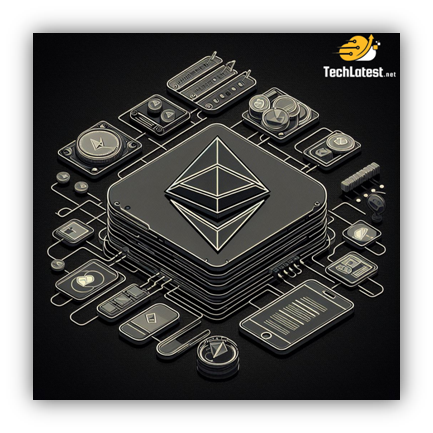
This product has charges associated with it for seller support. This VM provides you full Ethereum node with PoS (Proof-of-Stake). It has out of box setup for Ethereum which includes Geth (Go based ethereum implementation), Lighthouse (Consensus Client) and synced ledger (updated on monthly basis). The Ethereum ledger is synced till the VM publishing date making it easier and faster for you to fully sync the ledger .
Run full-stack observability in your own AWS infrastructure. Observe your AWS environments in real-time with high-fidelity data that helps you find and fix problems before they impact users.
Customer reviews
No customer reviews yet
Be the first to review this product . We've partnered with PeerSpot to gather customer feedback. You can share your experience by writing or recording a review, or scheduling a call with a PeerSpot analyst.