Sold by: cloudimg
Deployed on AWS
Free Trial
AWS Free Tier
This product has charges associated with it for seller support. Jenkins LTS preinstalled on AWS with nginx reverse proxy - no setup wizard needed. Unique admin credentials generated per instance. 24/7 expert CI/CD support from cloudimg.
Overview
Image
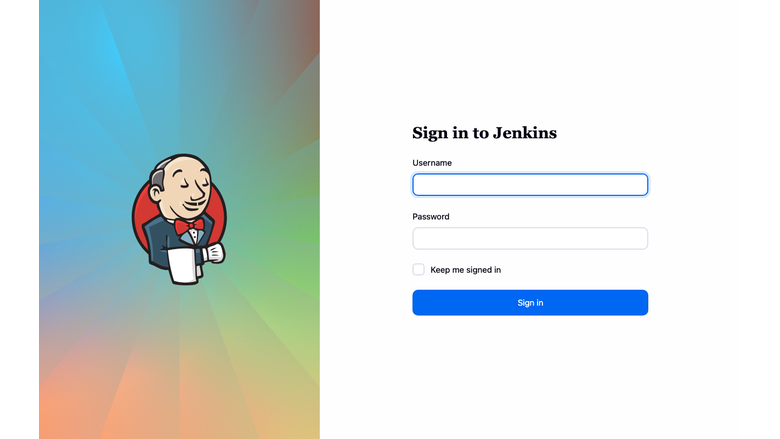
Jenkins sign-in page
Image
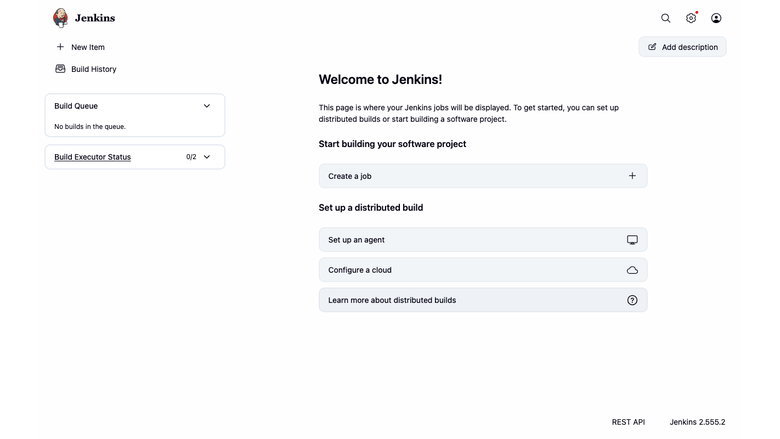
Jenkins dashboard
Image
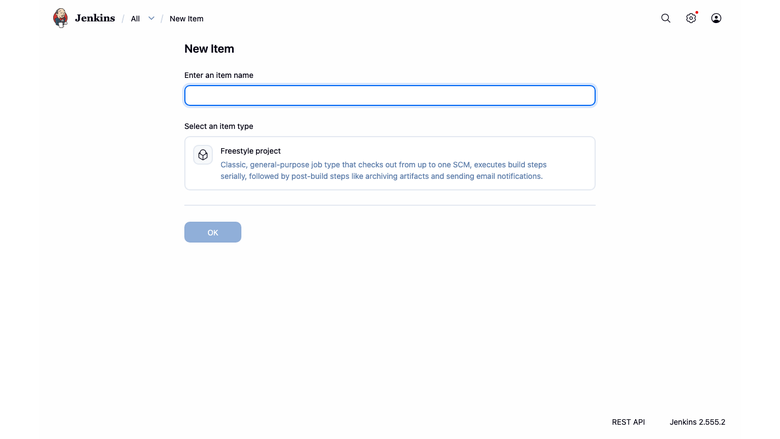
New item creation form
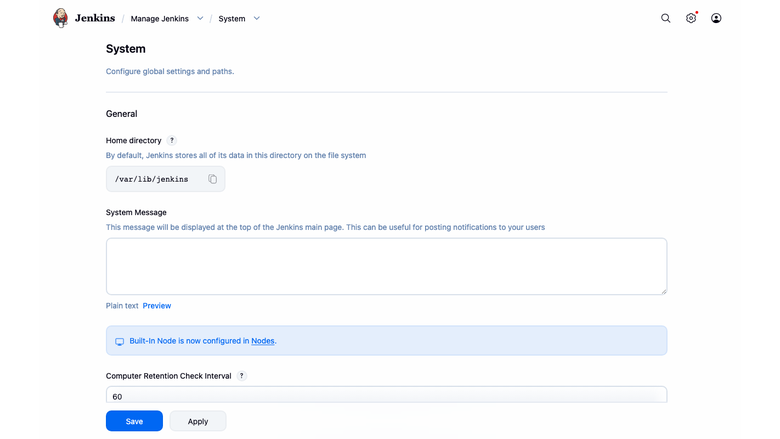
Image
Manage Jenkins system page
This is a repackaged open source software product wherein additional charges apply for cloudimg support services.
Overview
Jenkins is the leading open source automation server used by development teams worldwide. It serves as a continuous integration and continuous delivery hub - building source code, running tests, packaging artifacts, deploying applications, and orchestrating pipelines across distributed build agents. This image delivers Jenkins LTS fully installed and configured so a complete CI/CD server is running within minutes of launch - no setup wizard, no manual configuration, no shared credentials.
Why This Image
Unlike other Jenkins AMIs that require completing a multi-step setup wizard or ship with shared default passwords, this image is production-ready immediately. The architecture eliminates manual steps competitors still require: the nginx reverse proxy, administrator account, and Jenkins URL are all configured automatically on first boot. Every instance receives its own unique credentials, meaning no two deployments share authentication material.
Automation Stack
Jenkins LTS runs as a systemd service on OpenJDK 21 headless. The Jenkins controller listens on 127.0.0.1:8080 behind an nginx reverse proxy on TCP port 80, with X-Forwarded headers and websocket upgrade support for the build console and inbound agent traffic. The setup wizard is disabled and replaced by a Groovy init script that provisions the administrator user without manual interaction.
Integrations and Plugin Ecosystem
Jenkins supports over 1,800 community plugins. Common integrations include:
- Source Control: GitHub, GitLab, Bitbucket, AWS CodeCommit
- Build and Containerization: Docker, Maven, Gradle, npm
- Artifact Storage: Amazon S3, Nexus, Artifactory
- Orchestration: AWS CodePipeline, Terraform, Ansible
- Notifications: Slack, Microsoft Teams, email
- Cloud Agents: Amazon EC2 plugin for auto-scaling build agents
Secure First Boot
On first boot a one-shot service generates a fresh Jenkins administrator password unique to that instance, writes it into the Jenkins user store via a Groovy init script, and stores the plain text value in a root-only file (chmod 600). The default Jenkins initial admin password file is deleted, so the image never carries shared or default credentials. Jenkins binds exclusively to localhost - all external traffic passes through the nginx reverse proxy, limiting the attack surface.
Security Considerations
- Jenkins is not directly exposed to the internet; nginx mediates all connections
- No default or shared credentials exist in the published AMI
- The JENKINS_HOME data disk supports Amazon EBS encryption - enable encryption when launching to protect build data at rest
- Buyers can configure TLS/HTTPS by adding an SSL certificate to the nginx configuration or placing an AWS Application Load Balancer in front of the instance
- Security groups should restrict inbound traffic to ports 80/443 from trusted networks
Requirements
- Minimum instance type: t3.medium (2 vCPU, 4 GB RAM) for small teams; m5.large or larger recommended for distributed builds
- Data disk: A dedicated EBS volume is attached for JENKINS_HOME; resize independently as build history grows
- Runtime: OpenJDK 21 headless (preinstalled)
Ready To Use
Browse to your instance public address on port 80 and sign in as the admin user. The Jenkins URL is recorded inside Jenkins on first boot so emailed build notifications and webhook URLs are correct from the start.
Example Use Case
A development team of 10 engineers pushes code to GitHub multiple times per day. This Jenkins AMI, launched on an m5.large instance, polls the repository, triggers automated builds, runs unit and integration tests in parallel across EC2-based build agents, packages Docker container images, pushes them to Amazon ECR, and deploys to Amazon ECS - all orchestrated through a declarative Jenkinsfile committed alongside application code.
Use Cases
- Continuous integration of source code repositories (GitHub, GitLab, CodeCommit)
- Continuous delivery and deployment pipelines to AWS services
- Scheduled and triggered build and test automation
- Artifact packaging and publishing to S3 or container registries
- Infrastructure as code orchestration with Terraform and Ansible
- Release management for software teams of any size
cloudimg Support
24/7 technical support by email and live chat. Expert assistance for Jenkins deployment, plugin selection, upgrades, distributed agents, pipeline authoring, and performance tuning. Contact us to book a guided deployment walkthrough or pipeline setup consultation.
All product and company names are trademarks or registered trademarks of their respective holders. Use of them does not imply any affiliation with or endorsement by them.
Highlights
- Jenkins LTS production-ready in minutes with zero manual setup - unlike other Jenkins AMIs that require completing a multi-step setup wizard, this image launches with nginx reverse proxy, administrator account, and Jenkins URL fully configured on first boot. No wizard screens, no default credentials, no manual plugin installation needed to start building pipelines immediately.
- Every instance generates its own unique administrator password on first boot, stored in a root-only file (chmod 600), with the default Jenkins initial admin password deleted. No two deployments share credentials, eliminating the shared-password risk present in standard Jenkins installations. Jenkins binds to localhost only, with nginx mediating all external traffic to reduce attack surface.
- 24/7 expert CI/CD support from cloudimg by email and live chat, with one-hour average response for critical issues. Engineers provide hands-on assistance with pipeline authoring, plugin selection, distributed build agents, upgrades, and performance tuning - specialized Jenkins expertise that goes beyond generic AWS infrastructure support.
Details
Sold by
Delivery method
Delivery option
64-bit (x86) Amazon Machine Image (AMI)
Latest version
Operating system
Ubuntu 24.04
Deployed on AWS
New
Introducing multi-product solutions
You can now purchase comprehensive solutions tailored to use cases and industries.

Features and programs
Financing for AWS Marketplace purchases
AWS Marketplace now accepts line of credit payments through the PNC Vendor Finance program. This program is available to select AWS customers in the US, excluding NV, NC, ND, TN, & VT.

Pricing
Free trial
Try this product free for 7 days according to the free trial terms set by the vendor. Usage-based pricing is in effect for usage beyond the free trial terms. Your free trial gets automatically converted to a paid subscription when the trial ends, but may be canceled any time before that.
Pricing is based on actual usage, with charges varying according to how much you consume. Subscriptions have no end date and may be canceled any time. Alternatively, you can pay upfront for a contract, which typically covers your anticipated usage for the contract duration. Any usage beyond contract will incur additional usage-based costs.
Additional AWS infrastructure costs may apply. Use the AWS Pricing Calculator to estimate your infrastructure costs.
If you are an AWS Free Tier customer with a free plan, you are eligible to subscribe to this offer. You can use free credits to cover the cost of eligible AWS infrastructure. See AWS Free Tier for more details. If you created an AWS account before July 15th, 2025, and qualify for the Legacy AWS Free Tier, Amazon EC2 charges for Micro instances are free for up to 750 hours per month. See Legacy AWS Free Tier for more details.
Dimension | Description | Cost/hour |
|---|---|---|
m5.large Recommended | m5.large | $0.08 |
t2.micro | t2.micro instance type | $0.04 |
t3.micro | t3.micro instance type | $0.04 |
r5n.2xlarge | r5n.2xlarge instance type | $0.24 |
i7ie.3xlarge | i7ie.3xlarge instance type | $0.24 |
t3.xlarge | t3.xlarge instance type | $0.12 |
m8i.32xlarge | m8i.32xlarge instance type | $0.24 |
r6id.xlarge | r6id.xlarge instance type | $0.12 |
r6in.4xlarge | r6in.4xlarge instance type | $0.24 |
r8id.24xlarge | r8id.24xlarge instance type | $0.24 |
Vendor refund policy
Refunds available on request.

Legal
Vendor terms and conditions
Upon subscribing to this product, you must acknowledge and agree to the terms and conditions outlined in the vendor's End User License Agreement (EULA) .
Content disclaimer
Vendors are responsible for their product descriptions and other product content. AWS does not warrant that vendors' product descriptions or other product content are accurate, complete, reliable, current, or error-free.
Delivery details
64-bit (x86) Amazon Machine Image (AMI)
Amazon Machine Image (AMI)
An AMI is a virtual image that provides the information required to launch an instance. Amazon EC2 (Elastic Compute Cloud) instances are virtual servers on which you can run your applications and workloads, offering varying combinations of CPU, memory, storage, and networking resources. You can launch as many instances from as many different AMIs as you need.
Version release notes
Initial release of Jenkins LTS 2.x continuous integration and delivery automation server.
Additional details
Usage instructions
Connect via SSH on port 22 as the default login user for your operating system variant (the user guide lists it per variant). Jenkins is fronted by nginx on TCP port 80. Browse to http://<instance-public-ip>/ and sign in as the 'admin' user. Retrieve the generated administrator password with: sudo cat /root/jenkins-credentials.txt. Restrict port 80 to trusted networks until you have configured TLS (the user guide includes an nginx HTTPS section).
Resources
Vendor resources
Support
Vendor support
cloudimg provides 24/7 technical support for this Jenkins LTS product by email and live chat.
Contact: support@cloudimg.co.uk
Response Times:
- Critical issues (service down): one-hour average response
- General inquiries: handled during the next available support window
What We Help With:
- Jenkins deployment and initial configuration
- Plugin selection and compatibility guidance
- Pipeline authoring and Jenkinsfile troubleshooting
- Distributed build agent setup and scaling
- Jenkins upgrades and migration between LTS versions
- Performance tuning and resource optimization
- nginx reverse proxy configuration and TLS setup
- Troubleshooting build failures and connectivity issues
Refunds and Billing: For questions about charges, billing, or refund requests, contact support@cloudimg.co.uk with your AWS account ID and instance details.
Getting Started: After launching your instance, retrieve the administrator password from the root-only file and sign in at your instance public address on port 80. Our support team is available to guide you through first-time setup or help configure your first pipeline.
AWS infrastructure support
AWS Support is a one-on-one, fast-response support channel that is staffed 24x7x365 with experienced and technical support engineers. The service helps customers of all sizes and technical abilities to successfully utilize the products and features provided by Amazon Web Services.
Similar products
This product has charges associated with it for seller support. Production-ready Jenkins CI/CD AMI for DevOps teams on AWS. Pre-configured with build tools, security hardening, and 24/7 cloudimg support with guaranteed 24hr response SLA.
This product has charges associated with it for seller support. Oracle Linux 10.0 (OL10) with 24/7 cloudimg support. RHEL 10 compatible, AWS optimized with CLI v2, CloudWatch, SSM pre installed. Choice of RHCK or UEK kernel. Production ready.

This product has charges associated with it for AWS support & maintenance. Jenkins Continuous Integration (CI) automation Server. 1500+ Plugins Available. Build, Test & Deploy on AWS

This product has charges associated with it for seller support. Experience seamless continuous integration and delivery with our Jenkins on CentOS 10 AMI, designed for robust performance in the EC2 cloud. This pre-configured environment streamlines your development pipeline, allowing you to automate build and deploy processes efficiently. Benefit from enhanced stability and scalability, ensuring high availability for your Jenkins server. With built-in support for secure communications and a vast array of plugins, this AMI can easily be tailored for your team's specific needs. Ideal for development teams looking to optimize workflow or organizations implementing DevOps best practices, this CentOS 10 AMI simplifies the setup process, empowering you to focus on innovation rather than infrastructure. Launch your Jenkins environment instantly and elevate your CI/CD practices today!

This solution is a Windows 2019 server running Jenkins with all plugins needed to deploy any service and is fully configured for quick and easy deployment.

This solution is a Windows Server 2022 server running Jenkins with all plugins needed to deploy any service and is fully configured for quick and easy deployment.

A secure Jenkins engineered and updated regularly by Cloudeya. Jenkins is an open source Continuous Integration and Continuous Delivery (CI/CD) server designed to automate the building, testing, and deployment of any software project.
Customer reviews
No customer reviews yet
Be the first to review this product . We've partnered with PeerSpot to gather customer feedback. You can share your experience by writing or recording a review, or scheduling a call with a PeerSpot analyst.