
Sold by: Siemens Digital Industries Software
Deployed on AWS
Insights Hub for Enterprise Manufacturing is an open industrial IoT as a service solution that enables industrial scalable solutions, continuous insights, comprehensive analytics, complete lifecycle visibility and custom digital strategies that give companies a competitive advantage.
4.4
Overview
Insights Hub Enterprise Manufacturing is part of Siemens Xcelerator portfolio. Insights Hub empowers industries to generate actionable insights from assets and operations data, driving manufacturing excellence by improving operational efficiency and quality. Insights Hub for Enterprise Manufacturing is an industrial IoT as a service solution that uses advanced analytics and AI to power IoT solutions, coupled with Closed-Loop Digital Twin, to provide insights to improve shopfloor operations and throughput performance. With Insights Hub you can ingest and visualize immediate real-time data and analytic results in one centralized location with powerful core applications and an application ecosystem to unleash your digital potential.
Siemens' IoT & Lifecycle Analytics within Industrial IoT for Enterprise Manufacturing addresses all Enterprise IIoT challenges providing an easy, configurable industrial IoT solution for the Enterprise at any stage of their digitalization journey. IoT & Lifecycle Analytics is an AWS cloud native solution deployed in your AWS Accounts providing an ongoing value for companies that want to use software solutions as a service (SaaS) via connection to the cloud for their Enterprise. Enterprises with the Insights Hub Enterprise Manufacturing environment can scale up, utilize and deploy IoT technologies quickly and cost-effectively, collaborate securely across engineering and manufacturing domains to leverage their ecosystem insights and information.
Benefit from the unlimited possibilities of IIoT: Lower costs, higher quality, more flexibility, efficiency and faster innovation. At Siemens, our mission is to support your strategy: Conquer your market through the perfect integration of data and digitalization. Our IIoT solutions deliver the speed, scalability and versatility you need to succeed. Discover how you can use the power of Insights Hub from published use cases and applications across the connected assets on manufacturing applications for specific industries below.
Highlights
- Leading industrial IoT as a service solution: Connect assets and upload data to the cloud; Collect, monitor, and analyze data in near real-time.
- Gain insights to improve efficiency and profitability.
- Take advantage of all the Siemens Industrial IoT apps and solutions that solve business problems, including Insights Hub OEE for Manufacturing and Connected Shopfloors and Insights Hub Intralogics.
Details
Categories
Delivery method
Deployed on AWS
New
Introducing multi-product solutions
You can now purchase comprehensive solutions tailored to use cases and industries.

Features and programs
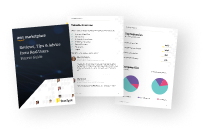
Buyer guide
Gain valuable insights from real users who purchased this product, powered by PeerSpot.
Financing for AWS Marketplace purchases
AWS Marketplace now accepts line of credit payments through the PNC Vendor Finance program. This program is available to select AWS customers in the US, excluding NV, NC, ND, TN, & VT.

Pricing
Pricing is based on the duration and terms of your contract with the vendor. This entitles you to a specified quantity of use for the contract duration. If you choose not to renew or replace your contract before it ends, access to these entitlements will expire.
Additional AWS infrastructure costs may apply. Use the AWS Pricing Calculator to estimate your infrastructure costs.
Dimension | Description | Cost/12 months |
|---|---|---|
Custom Quote | Insights Hub for Enterprise Manufacturing (Connected Assets) | $300,000.00 |
Dimensions summary
This listing uses a single pricing dimension billed under a contract. You pay through a custom quote based on the number of connected assets. This means your price scales with how many pieces of equipment or machines you link to the platform. Because it is a custom quote, you work with the vendor to set the unit quantity that matches your operation. There are no separate tiers or add-on dimensions to choose from. The connected-asset count is the single factor that determines your pricing.
Top-of-mind questions for buyers
A connected asset is a piece of equipment or machine you link to the platform, such as a production line, factory machine, or monitored device. Each linked asset feeds its operational data into the platform. Your quantity reflects how many of these assets you connect for monitoring and analysis.
Price scales with the number of connected assets in your quote. To add more equipment, you work with the vendor to adjust your unit quantity. The platform is built to scale, so you can add assets as your operation grows and connect additional machines or sites.
This is a contract model priced through a custom quote, not pay-as-you-go metering. You agree on a connected-asset quantity with the vendor upfront. The price is set for that quantity rather than fluctuating with how much data each asset sends during the term.
plm.sw.siemens.com
Helpful?
Vendor refund policy
Custom pricing options
Request a private offer to receive a custom quote.

Legal
Vendor terms and conditions
Upon subscribing to this product, you must acknowledge and agree to the terms and conditions outlined in the vendor's End User License Agreement (EULA) .
Content disclaimer
Vendors are responsible for their product descriptions and other product content. AWS does not warrant that vendors' product descriptions or other product content are accurate, complete, reliable, current, or error-free.
Delivery details
Software as a Service (SaaS)
SaaS delivers cloud-based software applications directly to customers over the internet. You can access these applications through a subscription model. You will pay recurring monthly usage fees through your AWS bill, while AWS handles deployment and infrastructure management, ensuring scalability, reliability, and seamless integration with other AWS services.
Resources
Vendor resources
Support
Vendor support
Contact our Support Center at
AWS infrastructure support
AWS Support is a one-on-one, fast-response support channel that is staffed 24x7x365 with experienced and technical support engineers. The service helps customers of all sizes and technical abilities to successfully utilize the products and features provided by Amazon Web Services.
Updated weekly
By Siemens Digital Industries Software

By HighByte

By Xemelgo
Top
100
In Analytics, Industrial IoT, Industrial
Top
10
In Data Analysis, Industrial, Industrial IoT
Top
100
In Applications, Industrial IoT, Industrial
Sentiment is AI generated from actual customer reviews on AWS and G2
Functionality
Ease of use
Customer service
Cost effectiveness
Positive reviews
Mixed reviews
Negative reviews
AI generated from product descriptions
Real-Time Data Ingestion and Visualization
Capability to ingest and visualize immediate real-time data and analytic results in a centralized location from connected industrial assets.
Advanced Analytics and AI Processing
Integration of advanced analytics and artificial intelligence algorithms to generate actionable insights from assets and operations data for manufacturing optimization.
Closed-Loop Digital Twin Technology
Implementation of Closed-Loop Digital Twin coupled with IoT solutions to provide insights for improving shopfloor operations and throughput performance.
Cloud-Native Deployment Architecture
AWS cloud-native solution deployed within customer AWS accounts providing scalable industrial IoT infrastructure without requiring on-premises deployment.
Configurable Industrial IoT Platform
Configurable industrial IoT solution with core applications and extensible application ecosystem enabling rapid deployment and customization across enterprise digitalization stages.
Data Modeling and Asset Management
Build and deploy asset models using a visual editor or import external model definitions, with capability to calculate and visualize metrics from telemetry data through integration with AWS IoT SiteWise.
Multi-Protocol Data Connectivity
Connect to diverse industrial data sources using open standards and native protocols including OPC UA, SQL, MQTT, Sparkplug, REST, and CSV from sensors, machines, legacy equipment, OPC servers, transactional systems, and historians.
Bidirectional Edge-to-Cloud Data Streaming
Stream modeled data from edge to multiple AWS endpoints including AWS IoT Core, IoT SiteWise, IoT Greengrass, Amazon Kinesis, and Amazon S3, while simultaneously consuming cloud data and publishing it back to on-premises systems via MQTT.
Data Transformation and Normalization
Normalize, standardize, and contextualize data points using a drag-and-drop interface to model and transform data in motion for consumption by target applications and AI agents without requiring code.
Model Context Protocol (MCP) Server Integration
Embed MCP Server functionality to build MCP Services around industrial assets for agentic AI platforms, enabling scoped data access and narrowed agent understanding while restricting agent permissions to required data only.
Real-time Operational Visibility
Cloud-based access to real-time information across all stages of production from raw materials to finished goods, accessible from web or mobile devices.
IoT-Powered Tracking and Monitoring
IoT technology integration for automated tracking of work-in-progress, inventory, assets, and shipments with real-time data collection.
Intelligent Alert System
Automated intelligent alerts and advanced analytics that proactively identify and mitigate potential operational risks and disruptions.
Multi-Domain Operations Management
Unified management of work-in-process, inventory, assets, and shipments across manufacturing operations in a single platform.
Scalable Cloud-Based Architecture
Flexible and scalable cloud-based solution designed to support businesses of varying sizes across multiple industries.
Standard contract
No
No
Customer reviews
Sathvika .
AI-Powered Predictive Maintenance, Simple Setup
Reviewed on Oct 01, 2026
Review provided by G2
What do you like best about the product?
I really like Insights Hub's AI-driven analysis for running predictive algorithms, which is crucial for my work in predictive maintenance. The excellent dashboards are another feature I value since they help me see the overall machine performance easily. I also found the initial setup to be easy, which was a relief.
What do you dislike about the product?
I dislike the complex third-party mapping. If a floor is running heavily on old non-Siemens software, configuring is extremely difficult.
What problems is the product solving and how is that benefiting you?
I use Insights Hub to connect physical machinery to the cloud and solve predictive maintenance by analyzing machine vibrations.
Vignesh D.
Powerful Analytics, Needs Better Compatibility
Reviewed on Sep 29, 2026
Review provided by G2
What do you like best about the product?
I really like the out-of-box dashboards that Insights Hub provides, which make it easy to visualize overall equipment effectiveness and monitor energy consumption. I also find the advanced analytics feature very useful for predictive maintenance, helping me avoid major failures.
What do you dislike about the product?
Connecting older 3rd party non-Siemens machinery is very complex. It requires complex custom protocol mapping and edge script programming, which we found difficult.
What problems is the product solving and how is that benefiting you?
I use Insights Hub to manage asset performance by connecting industrial machinery to the digital world. It offers out-of-the-box dashboards for equipment effectiveness and energy monitoring. The advanced analytics feature helps in predictive maintenance, preventing major failures.
love s.
Empowers IoT Integration with AI Solutions
Reviewed on Aug 04, 2026
Review provided by G2
What do you like best about the product?
I find Insights Hub beneficial for the system, especially because it provides a cloud-based IoT interface. I like how it connects real-life devices to the digital world and offers AI solutions. It's great for working independently and synchronously, making cloud-based things easy to share and allowing the addition of many IoT devices. I also appreciate its integration with open software like Prepromax, MATLAB, and many other platforms. The initial setup is relatively easy but does require some proficiency.
What do you dislike about the product?
I sometimes experience robustness and compatibility issues.
What problems is the product solving and how is that benefiting you?
I use Insights Hub for its cloud-based IoT interface that connects real-life devices to the digital world, providing AI solutions. It helps share cloud-based resources and enables IoT devices to work both independently and synchronously.
Naveen P.
Smooth Setup, Insightful Dashboard
Reviewed on Aug 04, 2026
Review provided by G2
What do you like best about the product?
I like the Dashboard in Insights Hub because it helps me to take the right decision. Also, the initial setup of Insights Hub was smooth.
What do you dislike about the product?
I feel that the UI, especially the Login UI, could be improved.
What problems is the product solving and how is that benefiting you?
I use Insights Hub for connected intelligence of industrial data, helping me make the right decisions.
Automotive
Great for Daily Operations and Reducing Repetitive Work
Reviewed on Aug 04, 2026
Review provided by G2
What do you like best about the product?
Good to have for daily operations to reduce repeating work
What do you dislike about the product?
Too heavy application need lighter version
What problems is the product solving and how is that benefiting you?
Increase daily efficiency