
Sold by: F5, Inc.
Deployed on AWS
Free Trial
F5 Advanced WAF (AWF) is an industry leading Web Application Firewall (WAF) that delivers the most innovative capabilities for application protection. Key features include anti-bot, DDoS Mitigation, Behavioral App Protection, Application Vulnerability Protection, and more.
4.3
Overview

This offering includes a free, full featured 30-day trial as well as access to F5 premium support.
The F5 Advanced WAF is an industry-leading web application firewall providing comprehensive protection for your websites, mobile apps, and APIs. Leveraging behavioral analytics, automated learning capabilities, and risk-based policies, the F5 Advanced WAF secures applications against threats including application-layer DoS attacks, malicious bot traffic, all OWASP top 10 threats and API protocol vulnerabilities.
In addition to attack mitigation, powerful reporting capabilities allow for easy, real-time analysis of attacks allowing you to quickly make informed security decisions.
This offering includes load balancing, IP Intelligence threat feed, and Threat Campaigns.
Combining BIG-IP VE with F5 Container Ingress Services (free & open-source) delivers advanced application services to container environments including Kubernetes.
Additionally, F5 has made it faster and easier to deploy and configure BIG-IP VE via the following mechanisms that can be integrated with all common automation and CI/CD tools:
Consult the following topics for implementation details:
- Getting started steps
- Application security knowledge article
- Application security operations manual
- Managing application security live updates guide
- Video-based demo series
For sales inquiries, contact our sales organization at here. and for all other general inquiries, email F5 at tellaskf5@f5.com .
Highlights
- Proactive Bot Protection - Using fingerprinting and challenge/response techniques in combination with behavioral analysis, Advanced WAF blocks automated attacks like account takeover, web/content scraping, and vulnerability recon.
- Advanced Application Protection - Combining machine learning and threat intelligence, Advanced WAF protects against OWASP Top 10 threats, application-layer DoS attacks, malware-infected browsers, and more.
- Includes an IP Intelligence threat feed to block traffic from and to malicious IPs. Also, includes regular updates to Threat Campaigns signatures.
Details
Sold by
Delivery method
Delivery option
64-bit (x86) Amazon Machine Image (AMI)
Latest version
Operating system
CentOs 7.3
Deployed on AWS
New
Introducing multi-product solutions
You can now purchase comprehensive solutions tailored to use cases and industries.

Features and programs
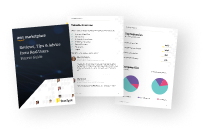
Buyer guide
Gain valuable insights from real users who purchased this product, powered by PeerSpot.
Financing for AWS Marketplace purchases
AWS Marketplace now accepts line of credit payments through the PNC Vendor Finance program. This program is available to select AWS customers in the US, excluding NV, NC, ND, TN, & VT.

Pricing
Free trial
Try this product free for 30 days according to the free trial terms set by the vendor. Usage-based pricing is in effect for usage beyond the free trial terms. Your free trial gets automatically converted to a paid subscription when the trial ends, but may be canceled any time before that.
Pricing is based on actual usage, with charges varying according to how much you consume. Subscriptions have no end date and may be canceled any time. Alternatively, you can pay upfront for a contract, which typically covers your anticipated usage for the contract duration. Any usage beyond contract will incur additional usage-based costs.
Additional AWS infrastructure costs may apply. Use the AWS Pricing Calculator to estimate your infrastructure costs.
Dimension | Cost/hour |
|---|---|
m5.xlarge Recommended | $5.42 |
c3.2xlarge | $5.42 |
c3.4xlarge | $5.42 |
c3.8xlarge | $5.42 |
c3.xlarge | $5.42 |
c4.2xlarge | $5.42 |
c4.4xlarge | $5.42 |
c4.8xlarge | $5.42 |
c4.xlarge | $5.42 |
c5.2xlarge | $5.42 |
Dimensions summary
You pay by the hour based on the AWS EC2 instance size you run this software on. There is no upfront commitment; billing follows actual usage. The pricing dimensions map to a wide range of instance types across the compute-optimized, memory-optimized, and general-purpose families, in sizes from small to very large. Larger instances carry higher hourly rates to match added compute and memory capacity. All dimensions deliver the same bundled protection: web application firewall, local traffic management, IP intelligence, and threat campaign features. You choose the instance that fits your throughput and performance needs, then scale by switching sizes.
Top-of-mind questions for buyers
Each unit is one running EC2 instance of the selected type, billed per hour. You pay for the software licence on top of the underlying AWS instance cost. Counting follows instance run time, so hours accrue only while the instance is active.
The software fee meters running instance-hours only. A stopped or powered-off instance does not accrue software charges. Underlying AWS storage fees may still apply while the instance is stopped, but the software licence bills active time only.
You pay the hourly rate tied to whichever instance size runs at that time. Switching to a larger size raises your hourly rate to match added compute and memory. The change takes effect when you launch the new size; billing is not prorated across sizes.
www.f5.com
Helpful?
Vendor refund policy
For the hourly licensed AMI, F5 does not offer refunds, you may cancel at any time.

Legal
Vendor terms and conditions
Upon subscribing to this product, you must acknowledge and agree to the terms and conditions outlined in the vendor's End User License Agreement (EULA) .
Content disclaimer
Vendors are responsible for their product descriptions and other product content. AWS does not warrant that vendors' product descriptions or other product content are accurate, complete, reliable, current, or error-free.
Delivery details
64-bit (x86) Amazon Machine Image (AMI)
Amazon Machine Image (AMI)
An AMI is a virtual image that provides the information required to launch an instance. Amazon EC2 (Elastic Compute Cloud) instances are virtual servers on which you can run your applications and workloads, offering varying combinations of CPU, memory, storage, and networking resources. You can launch as many instances from as many different AMIs as you need.
Additional details
Usage instructions
Before deploy: Create a key pair and VPC (if none exists).
After deploy: Wait approximately 6 minutes before logging in. SSH (login w/ your ssh key as username 'admin') to the instance and run these tmsh commands to set the admin password (GUI User, not SSH): modify auth user admin password save sys config.
Log into the Config utility web page: If only one NIC was present during deploy, use https://[eth0-IP]:8443. If more than one NIC was present during deploy, use https://[eth0-IP]:443. Ensure your security groups allow access to the required port.
For details, see: http://clouddocs.f5.com/cloud/public/v1/aws_index.html https://support.f5.com/csp/knowledge-center/cloud/Public%20Cloud/Amazon%20Web%20Services
Resources
Support
Vendor support
You can open a support case in the F5 WebSupport Portal , review additional F5 technical support documentation here or contact F5 support directly (24x7x365):
- North America: 1-888-882-7535
- Outside North America: +800 11 ASK 4 F5 (800 1127 5435)
F5 support centers are strategically located for partners and customers in APAC, Japan, EMEA and North America. Regionally located support centers enable F5 to provide support in a number of languages through native-speaking engineers who are available when you are.
AWS infrastructure support
AWS Support is a one-on-one, fast-response support channel that is staffed 24x7x365 with experienced and technical support engineers. The service helps customers of all sizes and technical abilities to successfully utilize the products and features provided by Amazon Web Services.
Updated weekly

By Fortinet Inc.

By Cyber Security Cloud
Sentiment is AI generated from actual customer reviews on AWS and G2
Functionality
Ease of use
Customer service
Cost effectiveness
Positive reviews
Mixed reviews
Negative reviews
AI generated from product descriptions
Bot Protection
Fingerprinting and challenge/response techniques combined with behavioral analysis to block automated attacks including account takeover, web/content scraping, and vulnerability reconnaissance.
Application Vulnerability Protection
Machine learning and threat intelligence-based protection against OWASP Top 10 threats, application-layer DoS attacks, and malware-infected browsers.
IP Threat Intelligence
IP Intelligence threat feed integration to block traffic from and to malicious IP addresses with regular signature updates.
Container Environment Support
Integration with F5 Container Ingress Services for delivering advanced application services to container environments including Kubernetes.
OWASP Top 10 Protection Coverage
Comprehensive ruleset protecting against all OWASP Top 10 web application threats including SQL Injection, Cross Site Scripting, General and Known Exploits, Malicious Bots, and Common Vulnerabilities and Exposures (CVE)
Threat Intelligence Updates
Regular updates based on latest threat information from FortiGuard Labs security research
Configurable Response Actions
Rules can be configured to log, alert, and/or block detected threats
AWS WAF Integration
Managed rule group compatible with AWS WAF for web application firewall deployment
Multi-Region Support
Deployable across multiple AWS regions with per-region configuration capabilities
Threat Intelligence Integration
Rulesets regularly updated with latest threat alerts using Cyber Threat Intelligence
OWASP Top 10 Coverage
Managed rules designed to mitigate and minimize all vulnerabilities on OWASP Top 10 Web Application Threats list
Code Injection Prevention
Targeted rules for common code injection techniques including SQLi, NoSQLi, and OS command injection
Technology-Specific Vulnerability Detection
Managed rules targeting known exploits in Apache Struts2, Apache Tomcat, Oracle WebLogic, WordPress, Drupal, and Joomla
Malicious Bot Detection
Rulesets for identifying and blocking malicious bot traffic
Standard contract
No
No
No
Customer reviews
reviewer2797602
Granular security policies have protected critical applications and ensure safe user and admin access
Reviewed on May 08, 2026
Review from a verified AWS customer
What is our primary use case?
My main use case for F5 Advanced WAF is to protect external and internal applications from cyber attacks and to prevent malicious payloads and malicious data from reaching servers. Even if malicious content is compromised on the client side and could be executed on the server side before reaching the server, F5 Advanced WAF intercepts the communication and verifies the actual payload and data that the client wants to access or send to the server so that it gets executed securely at the server level.
I can provide a specific example of how I have used F5 Advanced WAF to protect an application. There was an application where some of the contents actually get loaded from a third-party domain. In that case, the client has to load scripts, images, or any other sort of resources from that third-party domain. When the request reached F5 Advanced WAF, the application sets response headers so that in those response headers, the browser sends the request with the information mentioned in those response headers. Those response headers include Content Security Policy and CORS headers. The domains mentioned there, along with the resources like scripts and images, determine which resources can be accessed. Only those resources are loaded from those domains. If an attacker tries to send the request to a different domain, the browser will not load that. If the application is unable to implement those headers, F5 Advanced WAF can implement or configure those headers so that the resources from the third party get executed or loaded in a secure way. Moreover, if a request comes from the client side, the actual payload is verified because it would be encrypted. This is because whenever we host an application, it should be HTTPS, which means secure communication with F5 Advanced WAF and the server. The client communicates securely. F5 Advanced WAF intercepts everything initiated from the client side, decrypts it with the help of SSL handshake, and there are private and public keys that help encrypt and decrypt the data. F5 Advanced WAF acts as a proxy for that particular application. When a client initiates the request, it seems to the client that they are communicating with the real server, but the request reaches F5 Advanced WAF first instead of the server. F5 Advanced WAF communicates with the client and forwards the data to F5 Advanced WAF. F5 Advanced WAF decrypts the data through SSL handshake. F5 Advanced WAF then verifies what exactly the actual payload contains, whether it is malicious data or legitimate data. F5 Advanced WAF verifies by having predefined attack patterns that contain some attack information. If those attack patterns or malicious data are executed on the server side, that data can compromise server confidentiality and sensitive data. In that case, the actual payload from the client is verified against those patterns. If the data matches those patterns, F5 Advanced WAF enforces the security. If security is in blocking mode, it will stop the request and the blocking reference ID will be forwarded to the client. The client will retain that reference ID. If it is a non-legitimate client, they will be blocked. If legitimate, the client receives the reference ID. Upon receiving the reference ID, the client has to forward it to the company that they are receiving the reference ID while accessing the application, seeking clarification about the issue. The reference ID is verified in F5 Advanced WAF logs, providing insights into what exactly the client sent and what observations were made based on attack patterns triggered by the data. If the client is legitimate, it is treated as a false positive. We then either request the applications team to refactor the way requests are sent or, if cumbersome, relax the policy for that user or URL. This is a granular way to protect against malicious and mitigate false positives for applications deployed on F5 Advanced WAF.
F5 Advanced WAF has an added advantage over Cloudflare, Barracuda WAF, Imperva WAF, and other WAFs currently in the market. The essential feature is called iRules. With iRules, we can apply two security policies for a single application while segregating user traffic from admin traffic. It is necessary to secure and segregate admin and user traffic because we can implement robust security for user traffic. For admin policy, we can relax the policy since it is an admin resource performing admin functionalities like upgrading the application, integrating resources, or implementing new features. We can simply relax the admin policy and enhance the user policy. One of the most important advantages of F5 Advanced WAF is that we can apply it on the same virtual server where we configure the applications. Other vendors in the market, especially Barracuda WAF, lack such functionality or advanced features. This is a significant advantage that F5 has, and their STM, which handles traffic, is secure and stable.
What is most valuable?
The best features F5 Advanced WAF offers include iRules, which are the most important, where out of the box requirements can be met, even if F5 Advanced WAF does not have them natively. If something is missing, iRules help achieve functionality that is lacking. This is the first standout feature against other vendors' products. The second most crucial feature is their secure traffic handling manager, which is stable and handles millions of requests within milliseconds. That is the most stable in the current market. Thirdly, the granularity of security policies, where we can segregate user and administrative policies on the same virtual server, is important. Additionally, the advanced bot protection is very good, with numerous categories of bots. Their DDoS protection also offers granularity, including behavioral DDoS features that verify server load. They incorporate client-side integrity by sending JavaScript to clients to determine whether they are real browsers or bots before verifying requests. There is also rate limiting in the DDoS features. Furthermore, they have session awareness features where if a single client generates a specified number of violations within a time frame, the IP can be automatically blocked for a specified period. These features stand out for F5 Advanced WAF compared to vendors in the market.
F5 Advanced WAF has positively impacted my organization. We can lower down the attacks; there are ways the non-legitimate malicious requests can pass. However, after implementing F5 Advanced WAF, nearly 99.9% of requests are legitimate due to the granularity and response verification by attack patterns and request blocking.
What needs improvement?
Improvements could be made regarding the log information from the backend CLI. There are enhancements needed; if a request gets blocked on the TCP layer, there should be traces or data to verify which source generated these requests, including the source and port information for initiation. These data are missing from F5 Advanced WAF. Besides that, another improvement could be refining the bot detection to minimize false positives; it should be able to verify more granularly between legitimate and non-legitimate clients. Overall, I find everything else good.
A wish list feature I have is for the Technical Assistance Center (TAC) to respond more promptly. Their response time needs improvement; while they do not take excessive time, it can be enhanced, especially given it is a security product.
For how long have I used the solution?
I have been using F5 Advanced WAF for almost three years.
What do I think about the stability of the solution?
F5 Advanced WAF is stable, and there is no doubt it is one of the best WAFs in the market. The pricing they offer is justified.
What do I think about the scalability of the solution?
F5 Advanced WAF's scalability is satisfactory. If you need to scale up, such as moving from a lower model to a higher one, the configuration from the lower model can be migrated easily without issues. Additionally, it does this without requiring excessive manual work. Their features also provide buffer space to alleviate issues from changes in resource capability.
How are customer service and support?
I find their customer support has experienced and knowledgeable personnel, but their response time could be improved. While they resolve issues well, the time taken for responses to non-critical issues should be shorter.
Which solution did I use previously and why did I switch?
In my previous company, I used Barracuda WAF and migrated to F5 Advanced WAF.
What was our ROI?
I have seen a return on investment with F5 Advanced WAF. The time saved is significant because of its learning feature, allowing automatic configuration for legitimate requests. This automatically accommodates changes, ultimately saving time. Additionally, the overall operational costs decrease as F5 Advanced WAF ensures 24/7 application availability, preventing any traffic disruptions impacting business operations. Hence, F5 Advanced WAF delivers a solid return on investment.
What's my experience with pricing, setup cost, and licensing?
F5 Advanced WAF is somewhat costly compared to other vendors, but it is worth the investment due to the stability it provides to the environment and infrastructure.
Which other solutions did I evaluate?
Before choosing F5 Advanced WAF, I evaluated options like Imperva and Cloudflare. However, F5's reputation and stature built over the years is commendable and influenced my decision.
What other advice do I have?
My advice for others considering F5 Advanced WAF is straightforward: if you foresee your business growing and the potential need for new applications, prioritize security. Ensuring that security is not compromised and maintaining application availability is critical. If budget permits, do not hesitate to invest in F5 Advanced WAF, as it will deliver substantial benefits to your infrastructure over time, rather than opting for cheaper alternatives.
Companies with adequate budgets should not hesitate to invest in F5 Advanced WAF without considering other vendors. If they want on-prem security for critical, sensitive, and confidential data, F5 Advanced WAF should be the go-to option.
I measured the 99.9% reduction in malicious requests by utilizing the features of F5 Advanced WAF like DDoS protection, bot protection, enforcement mode of the policy, session awareness, enabled IP intelligence, and other defined features. Every URL is explicitly allowed, with parameters used by those URLs explicitly mentioned. Values for those parameters are tightly controlled. Only certain file types are permitted that are integrated with the application. Additionally, specific enforced parameters include the length of URLs and post data, ensuring that if any application changes occur, requests will be blocked unless they match specified criteria. This creates a positive security model, resulting in 99.9% of the requests being legitimate, with no attacks bypassing F5 Advanced WAF.
I would rate this product nine out of ten.
Kkc Casey
Advanced configurability has strengthened financial app protection and provides deep traffic insight
Reviewed on Jan 30, 2026
Review provided by PeerSpot
What is our primary use case?
My main use case for F5 Advanced WAF is providing deployment solutions for financial institutions and onboarding their applications on the solution itself. I perform fine-tunings on their solution based on the type of application services that they are hosting on the WAF and also based on traffic behaviors. I provide them with appropriate solutions and tuning requirements for the solution itself.
I deployed F5 Advanced WAF in one of the top-tier commercial banks of Nepal, and I have deployed it in more than two or three banks here. The deployment went from a proof-of-concept state to the deployment stage. Initially, I deployed the proof-of-concept product and tested it on some of their proof-of-concept applications. After that, I deployed it for the production applications. I gradually kept it under tuning and overall monitoring, and after learning the traffic behavior, I moved it to enforcement mode while turning on the blocking part. Initially it started with a monitoring phase and eventually turned into the blocking phase where it starts to protect applications against real attacks.
What is most valuable?
F5 Advanced WAF offers excellent configurability, and you have all the things in your hand that you want to configure for it. It starts from overall network level things to how a web application should be developed, for example, how an HTTP request should be created from the backend itself and how it is made an RFC compliant HTTP request. I can tune the configuration and security configurations based on each very minute content or minute context details. I can fine-tune my policy to act upon very specific parameters on very specific URLs and very specific headers.
Even if I get false positives, I can disable it for very specific contexts in an HTTP request and not on the whole application level because disabling a signature on a whole application level might not be that secure or recommended as it might cause false positives on specific input endpoints or on a specific area. The same kind of attack signature or the same kind of attack may be executed in another part of the same application which is covered by a single policy in itself. The level of configurability that I get with F5 Advanced WAF solution is immense, and I have to be a bit aware of how it works and all of its features, but at the end of the day, it is all about the administration expertise that I will require to have and use it to my liking based on the kind of services that I have onboarded on my solution itself.
F5 Advanced WAF has positively impacted my organization by providing immense visibility of the application traffic itself and how it protects against attacks that are prevailing in the application. The threat intelligence and threat campaigning feature that F5 provides allows their in-house threat intelligence team to research regularly and provide updates based on real-time or near zero-day attacks. The IP intelligence databases that it provides and the many other things F5 provides are something that I believe every organization should have in their security budget or security architecture. I think it is something that is a must-have solution. It does not matter if it is F5 or any other solution, but it should be enough to protect an organization from the threats that are prevalent in these generations, which require a really complicated solution itself, and F5 is one of them.
What needs improvement?
On the features I wish existed, Big-IP Advanced WAF is primarily an on-premises solution and in that solution, there are not enough features that need to be there to protect API-based applications. F5 somehow tends to force clients to go for a cloud WAF solution where it provides a solution for API security at least at some granular level, but Big-IP Advanced WAF in itself does not provide a complete API security solution. There could be a bit more of an easier way that I could configure things, and the resources that F5 provides should be freely available. Maybe some training and many other things regarding application-specific configurations and all those things would help. It is fine in itself, but the main thing that I wish should be there or it would be great if it was there is the API security solution that was supposed to be there in Big-IP Advanced WAF itself but which is not completely there. Only the basic features are there.
F5 Advanced WAF can be improved by including some features that need to be included regarding API security solutions and all, but as of now, it is improving and it will keep on improving. It is fine for now, but it is improving itself. If some of the features that I mentioned above are integrated into the application or the solution itself, then it will be good to go.
Regarding the needed improvements, it would be better if F5 Advanced WAF could have some professional-level training and some curated training and not just paywall-backed training, but some free-of-cost training that administrators can access and complete. F5 itself provides a good amount of knowledge base articles and documentation and a help menu in the solution itself in the user interface. It is not that tough, but it could have been a bit more easier.
For how long have I used the solution?
I have been using F5 Advanced WAF for around two years.
What do I think about the stability of the solution?
F5 Advanced WAF is pretty stable. It faced a persistent attack on the F5 company itself and some part of the F5 source code was hacked as per the news, but besides that, F5 is stable. The newer updates are coming up and they offer even more good options.
What do I think about the scalability of the solution?
F5 Advanced WAF is pretty scalable. I can have multiple solutions or multiple instances running or I can run it in HA mode or even divide the traffic volume to the number of instances that I have based on their resource sizing. I can prioritize traffic also. So it is pretty scalable.
How are customer service and support?
The customer support for F5 Advanced WAF is fine in itself, though a bit late, but on priority they come in time, so it is not that bad. It is good enough.
Which solution did I use previously and why did I switch?
I do not use a WAF solution in my end itself, but I do provide that solution to others. I have used FortiWeb and Imperva and Traceable to provide solutions to clients, but as of now, the on-premises solution is primarily F5, which is a bit better in this case. Imperva and Akamai are there if they provide on-premises solutions, but it is good enough in itself for now, at least.
What was our ROI?
In terms of return on investment with F5 Advanced WAF, if an administrator is good enough in operating a WAF solution, then a single administrator would work. The amount of attacks it protects against is immense, more than F5 Advanced WAF itself costs. So it is worth it to have.
What's my experience with pricing, setup cost, and licensing?
The pricing for F5 Advanced WAF is a bit higher, but not that high. I would say for a good amount of revenue-generating organization, it is a worthwhile investment, but it is not that easily accessible for small and medium-sized enterprises. The licensing and setup cost require some setup manpower that is technical, so there might be some pricing involved, but I cannot name the pricing itself. It is pretty steep.
Kallamuddin Ansari
Application security has protected critical banking services while policy learning minimizes false blocks
Reviewed on Dec 21, 2025
Review provided by PeerSpot
What is our primary use case?
My main use case for F5 Advanced WAF is to protect applications and support application delivery, and sometimes we use LTM for load balancing.
A specific scenario where I used F5 Advanced WAF for application delivery was in our banking environment called IDFC First Bank, where we had a critical internet-facing web application used by internet teams and partners that handled sensitive data, and both security and performance were equally important. The application was exposed to the internet and started receiving SQL injections and cross-site attempts, along with automated bot traffic hitting login and search pages. Simultaneously, the traffic load increased, causing slow response times during peak hours, resulting in uneven traffic distribution to the backend servers. We configured the virtual server and pool on F5, enabled health monitors to ensure traffic was sent only to healthy backend servers, and used a load balancing algorithm to distribute traffic. The result was improved application availability, faster response times, and no single backend server overload.
This scenario stands out because it clearly shows how F5 LTM and WAF work together, with LTM focusing on availability and performance, while WAF focuses on security and threat protections, delivering a secure application delivery. The final outcome was that LTM ensures smooth and optimized traffic flow, and F5 Advanced WAF ensures strong application security, keeping the application stable, fast, and secure even during high traffic. It worked reliably in production with 2,000 or more users.
What is most valuable?
From my hands-on experience with F5 Advanced WAF in the banking production environment, some of the best features that really stand out are those that help reduce risk without breaking applications. One major strength is its Behavioral and Automatic Learning capabilities, which allow the WAF to understand normal application behavior and help create policies based on real traffic, minimizing manual effort and false positives. Another notable feature is the Advanced Attack Signature database that is very strong and regularly updated, effectively blocking SQL injections, cross-site scripting, command injections, and file inclusion attacks while allowing selective enabling or disabling of signatures to avoid blocking genuine traffic. Additionally, the Bot Protection feature is critical for the login page and API, helping stop automated login attempts, control scraping, and manage abnormal request rates, which ultimately reduces unnecessary loads on the backend server and improves overall stability. Finally, the strong visibility and logging properties provide detailed event logging and reporting, allowing the security team to see which attacks were blocked, which parameters or URLs triggered them, and source behavior patterns.
In my day-to-day activities, if I had to pick one feature I rely on the most within F5 Advanced WAF, it would be the Behavioral Learning with policy tuning, as the biggest challenge in application security, especially in the banking sector, is avoiding false positives. Applications frequently change, new parameters are added, and user behavior can evolve. This feature allows me to review newly learned parameter URLs and fine-tune enforcement so genuine users are not impacted, confidently moving policies from staging to blocking mode, saving significant time and preventing unnecessary production issues. In a large environment, security teams cannot manually write rules for everything, so this learning engine provides a baseline, allowing us to apply engineering judgment on top of it, which makes F5 Advanced WAF usable in real life. From a daily operation point of view, F5 Advanced WAF stands out because it is practical, stable, and predictable once properly tuned, which is exactly what you want in a critical enterprise environment.
F5 Advanced WAF has a clear and measurable positive impact in our organization, particularly regarding our security posture, application stability, and operational efficiency. After implementing F5 Advanced WAF, we saw a significant reduction in web-based attacks such as SQL injection, cross-site scripting, and automated malicious traffic, allowing us to block real threats before they reached the backend server. With proper use of behavioral learning and tuning, false positives are greatly reduced, leading to minimal impact on genuine users and fewer application outages caused by security controls. This created higher confidence when running the policy in blocking mode, which was a big win for both the application and security team. Strong visibility and faster incident response through detailed logging and reporting help our team quickly identify patterns, perform faster root cause analyses, and support audit and compliance requirements, ultimately reducing investigation time and improving overall response efficiency.
After implementing F5 Advanced WAF in the enterprise banking environment, we saw measurable improvements across security and operations, including reduced web attacks, decreased false positives over time, improved application stability, faster incident response investigations, and operational efficiencies.
What needs improvement?
F5 Advanced WAF performs well overall, but I have noticed some points that could enhance the solution. Initially, policy tuning could be simpler, as while the learning engine is powerful, initial tuning still requires experienced engineers, which can be challenging for new teams due to the complexity of options and parameters. A more guided and simple tuning workflow would help reduce the learning curve. Additionally, tighter native integration with SIEM or SOAR tools would simplify correlation and investigations for security teams, although log exports are available. Overall, these are not blockers, merely enhancement opportunities, and once tuned, F5 Advanced WAF is very stable and reliable; improving usability, reporting, and onboarding would make it even more effective for larger environments.
For how long have I used the solution?
I have been using F5 Advanced WAF for more than four years; I can say I have 4.5 years of experience in WAF implementations such as F5.
What do I think about the stability of the solution?
F5 Advanced WAF has been very reliable and consistent for us; in our on-premise enterprise setup, it has been stable and predictable in day-to-day operations without any unexpected crashes or WAF-related downtime in production. It runs on F5 BIG-IP and is truly integrated with F5 LTM, providing strong stability once deployed in proper high availability. After initial tuning, it continues to run smoothly even during high traffic periods.
Which solution did I use previously and why did I switch?
We did not previously use a different solution; this is the first project for our organization.
What was our ROI?
We have seen a clear return on investment after deploying F5 Advanced WAF, primarily in terms of time and risk reduction. Time savings in daily operations come from the automatic learning and signature update reducing the need for constant manual rule management, allowing the security and network teams to spend significantly less time handling false positive application-related escalations. Incident investigation time was reduced because logs clearly indicate what was blocked and why, leading to faster resolution and more efficient use of existing engineers. A large volume of malicious traffic was blocked at the WAF layer, preventing issues from reaching the backend servers, which reduced emergency troubleshooting and application team involvement, ultimately lowering operational stress and incident cost savings without requiring additional security tools. This saved costs on hardware, licensing, integrations, and support effects, with the realistic ROI summarized as time saved in tuning, troubleshooting, and investigation, reduced risk of security incidents in a regulated environment, and improved operational efficiency by consolidating security and load balancing.
What's my experience with pricing, setup cost, and licensing?
F5 Advanced WAF is on the higher side in terms of pricing, which is justified for enterprise and banking environments, although it is premium compared to many others, especially when bundled with LTM and additional features. For organizations that already use the F5 ecosystem, the value makes sense since you get security and application delivery on the same platform. The initial setup cost is moderate to high, mainly due to the application or platform costs, licensing, and the skilled engineers required for deployment and tuning—it is not a plug-and-play solution. Licensing is capacity-driven, so you need careful planning based on traffic volume and use cases, and adding features such as Bot Protection impacts costs; once licensing is clear and sized correctly, there are no surprises. Overall, while not inexpensive, it is enterprise-grade and well-suited for large environments with critical applications, delivering solid ROI over time, particularly in banking and regulated enterprises.
Which other solutions did I evaluate?
Before choosing F5 Advanced WAF, we evaluated other options such as Akamai, which is a cloud-based solution and not recommended for critical data in a cloud environment since it does not provide an on-premise solution.
What other advice do I have?
If someone is looking into using F5 Advanced WAF, my advice is to spend time on learning and tuning, and do not rely on blocking mode on day one; it is essential to run the application in learning mode, understand traffic patterns, and tune policies properly to avoid false positives in production. Also, it depends on size and platform; while F5 Advanced WAF scales well, correct sizing of hardware and licensing based on traffic volume is crucial. Proper capacity planning upfront saves performance issues later, and having skilled resources is important; this is an enterprise-grade solution, not plug-and-play, so ensure you have experienced F5 engineers or proper training during initial deployment and tuning. F5 Advanced WAF is an excellent choice for large enterprises and regulated environments, but success depends on proper design, tuning, and ongoing review; when implemented correctly, it delivers strong security with stable performance.
Overall, F5 Advanced WAF is a strong, dependable enterprise solution that works best when seen as a long-term security platform rather than a quick add-on; once properly designed, sized, and tuned, it runs quietly in the background and effectively does its job without constant attention. It has met our expectations and proven to be a reliable choice for protecting business-critical applications. I have provided an overall review rating of eight out of ten for F5 Advanced WAF.
Pawan Thakur
Advanced protection has strengthened our security posture and supports accurate threat detection
Reviewed on Dec 09, 2025
Review provided by PeerSpot
What is our primary use case?
Our primary use cases for F5 Advanced WAF in our system include F5 LTM, F5 WAF, and F5 DNS GTM for one of our applications.
What is most valuable?
The features of F5 Advanced WAF that I find most valuable include advanced WAF capabilities, bot detection, DDoS features, and all the top ten attacks we have configured with the WAF.
Machine learning and automated threat detection features have helped our security strategy because we initially used them during our application learning mode. It provides us with one hundred percent accurate application learning to reduce false positives, and it has been very helpful.
What needs improvement?
In terms of additional features I would like to see from them in the future, I think the GTM is a bit complicated to configure, which I observed. Otherwise, LTM and WAF are straightforward. I faced problems during the GTM configuration. The LTM and ASM are very simple to configure and manage. There is excellent clarity in the LTM and the WAF. Whenever something goes wrong or we have to whitelist anything, it clearly indicates where to go and where I have to make modifications. It is very simple and we get comprehensive information.
For how long have I used the solution?
I have been working with this solution for three to four years.
How are customer service and support?
My experience with the technical support from F5 is that on the technical side, we sometimes face issues with reachability and availability. Regarding technical support overall, I am not completely satisfied with F5. We are facing problems. I would rate the technical support at five out of ten.
Both response time and availability need to be improved. Technical skill on the support side also needs improvement.
Which solution did I use previously and why did I switch?
I switched from Radware to F5 Advanced WAF after COVID, which was two to three years ago.
Overall, I believe it has been a good decision to switch because I do not think any other product available on the market can compete with F5 at this time.
How was the initial setup?
The initial setup of F5 Advanced WAF is very straightforward.
What's my experience with pricing, setup cost, and licensing?
Regarding the price, I think the cost is a bit higher compared to others. Earlier we were using Radware, and compared to Radware, it is very high. However, it is providing more features than Radware. The WAF side is very familiar and we can easily understand it. It is not complicated, and the features are at a very granular level compared to Radware and other WAF solutions.
What other advice do I have?
To assess the effectiveness of DDoS mitigation in F5 Advanced WAF, we checked internally using JMeter, on which we wrote a script and tried multiple users at the same time. The DDoS feature blocked all that traffic according to our threshold. We tested this internally.
The ability to enforce granular policy adjustments has helped my organization with compliance adherence because in the last three to four months, we put our application in blocking mode. We have not configured granular level settings; we have configured at a high level currently. Going forward, we will be planning to add additional security in the WAF.
I have not used advanced analytics and traffic insights features. I also have not used vulnerability management features, as we have different solutions for that.
From my perspective, whatever we have used of F5 Advanced WAF, I do not think it needs improvement because I am currently satisfied with the features provided. We just need to work more on the WAF. If there is anything that needs attention, we will definitely let you know.
Currently, ten to twelve people are using it in my company. I would rate this solution an eight out of ten.
RoiNahari
Bot protection capabilities enhance application security
Reviewed on Apr 16, 2025
Review provided by PeerSpot
What is our primary use case?
I am working with an integration and security company that collaborates with various vendors. I am currently dealing with F5 Advanced WAF.
What is most valuable?
The whole mechanism of F5 Advanced WAF is effective. It contains the logic of both negative and positive security combined, providing added value to the company I work with to protect their applications.
What needs improvement?
I do not have anything in mind right now that needs improvement. Generally, it works well. If we need any specific feature, we approach F5 directly.
For how long have I used the solution?
I have probably used it for ten years or so.
How are customer service and support?
I do not need them much because my team is professional. If there is a bug, the support is usually understanding and resolves issues.
What's my experience with pricing, setup cost, and licensing?
The price is affordable and satisfactory.
What other advice do I have?
One of the best features is the bot protection capabilities. I rate the product eight out of ten.