
Sold by: Cognosys Inc Hardened Images
Deployed on AWS
AWS Free Tier
This is a repackaged software product wherein additional charges apply for hardening, bundling and support. Sharepoint 2016 Standard is a business
4.4
Overview
This is a repackaged software product wherein additional charges apply for hardening, bundling and support. Sharepoint 2016 Standard is a business collaboration application. Deploy on a compatible operating system and architecture, and configure identity, network controls, storage, secrets, logging, monitoring, backup, and recovery to match your organization's requirements. Confirm licensing, security guidance, capacity, and data handling needs for your environment before production use.
Cognosys is the world's largest publisher on All public Clouds with over 750+ images and 150+ Containers. If you need any specific OS with any specific Open Source or proprietary stack which is not available on Cloud Marketplace, we can provide you with your custom marketplace image without any additional charges. Please send a Custom Image Request or Email us.
We can provide confidential images locked to only your subscription in case you want your confidential IP/Data on your golden image.
Highlights
- Sharepoint 2016 Standard is a business collaboration application.
- Deploy on a compatible operating system and architecture, and configure identity, network controls, storage, secrets, logging, monitoring, backup, and recovery to match your organization's requirements.
- You need an existing license to use this product. It is intended for customers who already have licenses and are migrating from on-premises or another cloud. Contact us to purchase a new license.
Details
Sold by
Categories
Delivery method
Delivery option
64-bit (x86) Amazon Machine Image (AMI)
Latest version
Operating system
Win 2016
Deployed on AWS
New
Introducing multi-product solutions
You can now purchase comprehensive solutions tailored to use cases and industries.

Features and programs
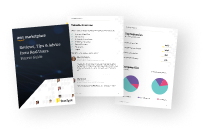
Buyer guide
Gain valuable insights from real users who purchased this product, powered by PeerSpot.
Financing for AWS Marketplace purchases
AWS Marketplace now accepts line of credit payments through the PNC Vendor Finance program. This program is available to select AWS customers in the US, excluding NV, NC, ND, TN, & VT.

Pricing
Pricing is based on actual usage, with charges varying according to how much you consume. Subscriptions have no end date and may be canceled any time. Alternatively, you can pay upfront for a contract, which typically covers your anticipated usage for the contract duration. Any usage beyond contract will incur additional usage-based costs.
Additional AWS infrastructure costs may apply. Use the AWS Pricing Calculator to estimate your infrastructure costs.
If you are an AWS Free Tier customer with a free plan, you are eligible to subscribe to this offer. You can use free credits to cover the cost of eligible AWS infrastructure. See AWS Free Tier for more details. If you created an AWS account before July 15th, 2025, and qualify for the Legacy AWS Free Tier, Amazon EC2 charges for Micro instances are free for up to 750 hours per month. See Legacy AWS Free Tier for more details.
Dimension | Cost/hour |
|---|---|
m4.xlarge Recommended | $2.95 |
t2.micro | $2.95 |
cc2.8xlarge | $2.95 |
c4.8xlarge | $2.95 |
c4.large | $2.95 |
x1.16xlarge | $2.95 |
c3.8xlarge | $2.95 |
m3.medium | $2.95 |
c3.large | $2.95 |
d2.8xlarge | $2.95 |
Vendor refund policy
We do not currently support refunds, but you can cancel at any time.

Legal
Vendor terms and conditions
Upon subscribing to this product, you must acknowledge and agree to the terms and conditions outlined in the vendor's End User License Agreement (EULA) .
Content disclaimer
Vendors are responsible for their product descriptions and other product content. AWS does not warrant that vendors' product descriptions or other product content are accurate, complete, reliable, current, or error-free.
Delivery details
64-bit (x86) Amazon Machine Image (AMI)
Amazon Machine Image (AMI)
An AMI is a virtual image that provides the information required to launch an instance. Amazon EC2 (Elastic Compute Cloud) instances are virtual servers on which you can run your applications and workloads, offering varying combinations of CPU, memory, storage, and networking resources. You can launch as many instances from as many different AMIs as you need.
Version release notes
The Server has been updated with latest Security updates,Best practices and performance recommendations including updated instructions.
Additional details
Usage instructions
To begin using this image, connect via RDP. Until you connect RDP into the instance and validate your credentials, you will not be able to access the Software. To connect to the operating system, use RDP and the username Administrator. For instructions on using RDP to connect to your Windows instance, see the AWS EC2 documentation: http://docs.aws.amazon.com/AWSEC2/latest/WindowsGuide/connecting_to_windows_instance.html . Please note, this image may take upwards of 20 minutes to instantiate. Access the Software by clicking on Software Desktop icon. Installation path for Software is C:\ProgramData\Microsoft\Windows\Start Menu\Programs\Microsoft SharePoint 2016 Products. For application specific usage instructions or details, see "How it Works."
Resources
Vendor resources
Support
Vendor support
Cognosys provides technical support for Solution issues in multiple ways.Support can be availed by: 1. Email to Support@SecureAnyCloud.com (Preferred) 2. Live Support on
AWS infrastructure support
AWS Support is a one-on-one, fast-response support channel that is staffed 24x7x365 with experienced and technical support engineers. The service helps customers of all sizes and technical abilities to successfully utilize the products and features provided by Amazon Web Services.
Updated weekly
By Cognosys Inc Hardened Images
By Oracle America, Inc.

By Cockroach Labs
Top
100
In Source Control, Project Management
Top
10
In Data Warehouses, Databases & Analytics Platforms, Databases
Top
25
In Financial Services, Databases
Sentiment is AI generated from actual customer reviews on AWS and G2
Functionality
Ease of use
Customer service
Cost effectiveness
Positive reviews
Mixed reviews
Negative reviews
AI generated from product descriptions
Business Collaboration Platform
SharePoint 2016 Standard provides business collaboration application capabilities for enterprise environments.
Identity and Access Management
Configurable identity controls to manage authentication and authorization across the deployment.
Network Security Controls
Network controls configuration options to enforce security policies and manage traffic within the environment.
Backup and Disaster Recovery
Backup and recovery configuration capabilities to protect data and enable business continuity.
Monitoring and Logging Infrastructure
Logging and monitoring configuration support for operational visibility and audit trail maintenance.
High Availability Architecture
Oracle Real Application Clusters (RAC) with high availability architecture across multiple Amazon Availability Zones and Amazon S3 for database backups designed to exceed 11 9s of durability
AI Vector Search Capability
Oracle Database 23ai AI Vector Search functionality for enhancing application intelligence and enabling vector-based search operations
Exadata Hardware Infrastructure
Oracle Exadata Database Service on Dedicated Infrastructure and Oracle Autonomous Database on Dedicated Exadata Infrastructure running on optimized Oracle Exadata hardware
Zero-ETL Data Integration
Zero-ETL integrations to unify data across Oracle and AWS for analytics, machine learning, and generative AI workloads
Multi-Console Provisioning and Management
Provisioning through AWS Management Console, CLI, or API with database instance creation and management through OCI console
Distributed SQL Database Architecture
Cloud-native, distributed SQL database with multi-region deployment capabilities and Postgres-compatible SQL interface supporting ACID transactions.
High Availability and Fault Tolerance
99.99% availability SLA for single-region deployments and 99.999% for multi-region deployments with automatic failover across nodes, availability zones, and AWS regions.
Security and Encryption Controls
Customer-managed encryption keys (CMEK), egress perimeter controls, private connectivity including AWS PrivateLink, and advanced security controls in Mission Critical edition.
Elastic Scalability and Storage Model
Usage-based storage billing with provisioned compute, elastic scalability across regions, and automatic scaling without manual resizing requirements.
Change Data Capture and Replication
Data Sync add-on providing change data capture to downstream systems and Data Replication capabilities metered only during active use.
Standard contract
No
No
Customer reviews
Nishant Chauhan
Centralized document libraries have streamlined daily collaboration and improved team productivity
Reviewed on Jun 16, 2026
Review provided by PeerSpot
What is our primary use case?
I have been using Sharepoint 2016 Standard for the last four years.
My main use case is that we are using Sharepoint 2016 Standard for the site's storage and the document libraries, including team sites, wikis, blogs, documents, and co-authoring. We are also using it for search purposes, such as standard search, but not the advanced enterprise search center. We are also using it as a part of business intelligence, including services such as Excel services, Visio services, and SSAS services. These are the types of services we use primarily for collaboration purposes. Basically, we are storing all our artifacts and documents in one Sharepoint folder path, which is accessible to all our team members so they can access it directly.
Using Sharepoint on a daily basis helps our team collaborate faster. If I have created a document or video and I have shared that path to another team member, and in the future my team member wants to access that video, they do not need to request it from me. They will go into that Sharepoint URL and will directly take the video from there and use it for their own purpose.
The main use case for Sharepoint 2016 Standard regarding collaboration is that it has saved my time and made things easier.
We use Sharepoint 2016 Standard as an on-premises solution where our servers are located in our data center. We have full control and are responsible for handling patches and backups, which is typical for the classic 2016 Standard setup. We have deployed many of our artifacts according to user requirements, with various colleagues sharing numerous items in our private cloud environment.
What is most valuable?
The best features for Sharepoint 2016 Standard include some main features that people use the most. The first one is the modern document libraries plus co-authoring, which means multiple people can edit Word, Excel, and PowerPoint at the same time. Version history is built-in, so you can roll back if someone makes a mistake. The next feature is Team Sites plus subsites, which means you can create a site per project and per department in two clicks. Permissions, document libraries, and lists all come pre-wired. Sharepoint Lists is an important feature that functions as Excel but smarter. You can track issues, PTO requests, inventory, and more, and add alerts so you get emailed when something changes, replacing tons of manual tracking. Search is fast, which is one of the important features, as it allows for a way faster full-text search across documents, sites, and people. The Standard edition does not have the fancy result sources of Enterprise, but the basic search is still solid for finding files quickly. Another important feature is workflows, which include approval flows, document routing, and reminders that need no Power Automate. You can create them in Sharepoint Designer or even in the browser for simple ones. Additionally, you get mobile view plus OneDrive for Business sync, allowing you to sync libraries to your laptop and work offline, then it syncs back.
The usage of the co-authoring feature for my team happens in different ways. The first one is real-time editing in Office documents, which means when we are dealing with Word, Excel, or PowerPoint stored in document libraries, everyone opens the same file from Sharepoint, not from email attachments. You will see colored flags plus the names of who is in the document, and changes are saved automatically. The second usage is locking rules to avoid conflicts. Sharepoint 2016 locks by paragraph in Word and by cell range in Excel. If you and I edit different sections, there are zero issues. If we hit the same paragraph or cell, the second person gets a read-only prompt until the first person moves. The third usage is about the best team habits I have ever seen, which is one document and one link, meaning never save as and email, just share the Sharepoint link. We can also use comments, track changes, and get feedback without overwriting content. Co-authoring works great for DOCX, XLSX, and PPTX files. Old documents in ODF format do not allow real-time collaboration. The work happens in both the browser and desktops, but the Office desktop application gives the smoothest work experience.
Regarding Sharepoint 2016 Standard's governance and security, I find the centralized control is a strong point. We can perform site collections management, manage data, manage metadata, and maintain term store consistency across the farm. It stops HR documents from causing human resource chaos by utilizing permissions inheritance, allowing us to break inheritance at site, library, or folder level, but we aim to break as little as possible to avoid support nightmares. Site policies plus retention, such as auto-deleting or archiving sites after a set number of days, help avoid issues with numerous dead term sites. Governance does not create ROI but protects it. Audit logs also help track who viewed, edited, or deleted important documents, making them useful for compliance. In terms of security, strengths include claim-based authentication and Active Directory integration with Azure directory, providing standard enterprise security. It works with ADFS for single sign-on, supporting rights management on documents that can block downloads or printing from Office. SSL and HTTPS encryption plus farm-level encryption for data at rest keep our information secure. Secure store allows credentials for external data connections to be stored safely.
What needs improvement?
In terms of improvements for Sharepoint 2016, I see how it can be improved regarding performance tweaks. Limiting view columns plus items is important because each extra column adds approximately 0.5 seconds of render time for 1,000 items. I keep default views under five to six columns and fewer than 1,000 items, utilizing filters such as "today" and "me". The next point is to avoid Group By on large lists as it adds HTML and slows rendering. Collapsed groups can make it worse, but using datasheet view for bulk edits renders faster than the standard view. Implementing minimum roles plus zero downtime patching, which is built into the 2016 setup, means we should configure minimum roles correctly so web front end, application server, and search servers can do only their job and speed up farms. In terms of user experience with adoption, governance and naming can be improved. Outdated sites plus inconsistent navigation make people revert to email. Setting naming rules, archive policies, and owners helps governance protect ROI. Ensuring optimized search queries, avoiding wildcards, and limiting results will lead to three times faster answers. Pushing OneDrive for Business sync will enable people to work offline. 2016 added durable links so links do not break when files move. Cutting customizations will make non-customized pages load much faster, so removing heavy web parts and custom JavaScript on homepages is essential. Reducing IT tickets can still be enhanced within these improvements.
In addition to the needed improvements regarding user training, integrations, and support, I would stress the importance of these areas. Achieving a perfect ten for Sharepoint 2016 Standard would involve addressing a few issues. The mobile user experience feels clunky versus modern, and the absence of Power Automate makes some workflows feel dated. While search is good, it is not comparable to Google for intranet use. Additionally, support ending in 2026 is a ticking clock that needs consideration.
For how long have I used the solution?
I have been using Sharepoint 2016 Standard for the last four years.
What do I think about the stability of the solution?
Sharepoint is very stable in nature, and I see it as reliable. I use it on a daily basis for most of my tasks, and I have not faced any stability issues, which reinforces my belief in its stability.
What do I think about the scalability of the solution?
Sharepoint's scalability handles our organization's growth and increased usage easily. Since it supports end on July 14, I recognize important scalability features such as content scale. We can manage around 30 million documents per library and two billion items per site collection with effective metadata navigation. In real-world scenarios, the average organization runs smoothly with one hundred thousand to five hundred thousand documents per site collection. If we hit a million or more items, we need good indexing folders, or else views will slow down. Microsoft has tested 2016 for scalability at fifty thousand concurrent users per farm with proper minimum roles. In real-world circumstances, five thousand to ten thousand active users are comfortable on a three or four-server farm. Bottlenecks usually occur with SQL rather than Sharepoint web front end. MinRoles in 2016 is a significant improvement, as we have dedicated servers for web application, search, and distributed cache, allowing us to avoid slowness. Zero downtime patching means adding servers or patching can be done without weekend outages. Sharding can split content databases by department or year to keep database sizes fewer than 200 GB for performance optimizations.
How are customer service and support?
Customer support for Sharepoint 2016 Standard in my experience has been responsive. I usually contact the support team, and there was a time when I searched for a file I stored earlier but was unable to find it.
When I contacted the support team, they helped me recover the file in a very efficient and supportive way, which reflects positively on my experience with customer support.
Which solution did I use previously and why did I switch?
I did not use any different solution before Sharepoint 2016 Standard, but I recognize various alternatives were available in the market. I chose to use Sharepoint because of the cloud deployment options it provides, such as on-premises, private cloud, and hybrid cloud, along with its frequent updates such as those planned for July's end of support along with future versions such as 2019 and 2021. This versatility is a major benefit and reason for my continued usage of this solution.
How was the initial setup?
My advice for anyone looking at Sharepoint 2016 Standard is to be honest about timelines because support is ending on July 14, and no more security patches will be released after that. Only choose 2016 if you have a clear upgrade hybrid plan before 2026 and do not start any new 2016 projects unless they are planned for fewer than two years of use with air-gapped security. Setting it up correctly is crucial as it can feel like a five out of ten if installed incorrectly. Using MinRoles from day one, with web, application, and search on separate servers is necessary. Avoid an all-in-one installation for production. SQL sizing is critical since Sharepoint's performance relies on SQL speed. Therefore, using SSDs plus proper TempDB management can greatly enhance performance. Planning the content structure early is key. The 5,000 list threshold will impact you, thus using metadata plus folders from the very start is advised. Expectations should be managed regarding modern features as well.
What about the implementation team?
In terms of how Sharepoint 2016 Standard has impacted our organization positively, I see improvements in productivity, collaboration, and other areas.
There are three areas I can focus on regarding productivity for our organization. The first is productivity. It eliminates the email attachment loop. One document library will be equal to one version of truth, plus version history plus check-in/check-out means less time lost to final version confusion. OneDrive sync lets people work offline, then it catches up. The second benefit is collaboration. Team sites plus subsites give each department project their own space without needing IT tickets. Co-authoring in Word and Excel means three people could edit a proposal at once instead of passing it around. Alerts on lists notify people instead of making them chase updates. Other areas changed include governance. Centralized permissions replace random shared folders. Search allows finding documents across the whole farm to happen much faster than digging through drives, which reduces Shadow IT since teams stopped using random tools because Sharepoint libraries plus lists covered 80 percent of their needs. The trade-off back then was that setup maintenance was on IT and the mobile experience was clunky compared to today's Sharepoint Standard.
There are some real numbers out there showing improvements. Although Sharepoint 2016 Standard specific studies are limited, since most ROI data brands versions, here is what organizations have actually measured. Time saved productivity metrics means tasks that used to take a week now get resolved in one to two days with Sharepoint 2016 Standard, saving approximately five to seven days per request. The second point is findability or search time. Using Sharepoint search plus navigation, people found answers 83 percent of the time. With Sharepoint agents plus curated content, they found answers 100 percent of the time and 2.9 times faster on average, so approximately three times faster lookups. General intranet usage, according to SWOOP Analytics of around 170,000 employees, shows an average of 16 minutes spent per day on Sharepoint intranets versus fewer than six minutes in another study. If content is structured correctly, people get what they need fast instead of hunting. Time spent locating information is flagged as the number one productivity metric. Employees spending around 2.6 hours per day searching mail shows that if intranet plus document libraries cut this by six hours per week per employee, it translates to around $600 per month in savings per $25 per hour employee. Regarding IT tickets and support metrics, they dropped according to Microsoft's own customer zero story. After moving to modern Sharepoint with better user experience, IT fielded numerous fewer questions weekly. The intuitive experience drastically reduced the volume of inquiries plus service requests but was not quantified. The driver was fewer customizations plus better navigation. According to AWS review, I do not need to rely on external technical support as I can resolve them internally. Cost savings versus the previous document system are 25 percent to 30 percent lower, with fewer tickets because setup is straightforward. Workflow consolidation also shows fewer third-party tools after consolidating to Sharepoint resulted in fewer integration support tickets.
What was our ROI?
There are some real numbers out there showing improvements in ROI. Although Sharepoint 2016 Standard specific studies are limited since most ROI data brand versions, here is what organizations have actually measured. Time saved productivity metrics means tasks that used to take a week now get resolved in one to two days with Sharepoint 2016 Standard, saving approximately five to seven days per request.
The second point is findability or search time. Using Sharepoint search plus navigation, people found answers 83 percent of the time. With Sharepoint agents plus curated content, they found answers 100 percent of the time and 2.9 times faster on average, so approximately three times faster lookups. General intranet usage, according to SWOOP Analytics of around 170,000 employees, shows an average of 16 minutes spent per day on Sharepoint intranets versus fewer than six minutes in another study. If content is structured correctly, people get what they need fast instead of hunting. Time spent locating information is flagged as the number one productivity metric. Employees spending around 2.6 hours per day searching mail shows that if intranet plus document libraries cut this by six hours per week per employee, it translates to around $600 per month in savings per $25 per hour employee.
Regarding IT tickets and support metrics, they dropped according to Microsoft's customer zero story. After moving to modern Sharepoint with better user experience, IT fielded numerous fewer questions weekly. The intuitive experience drastically reduced the volume of inquiries plus service requests but was not quantified. The driver was fewer customizations plus better navigation. According to AWS review, I do not need to rely on external technical support as I can resolve them internally. Cost savings versus the previous document system are 25 percent to 30 percent lower, with fewer tickets because setup is straightforward. Workflow consolidation also shows fewer third-party tools after consolidating to Sharepoint, resulting in fewer integration support tickets.
What's my experience with pricing, setup cost, and licensing?
My advice for anyone looking at Sharepoint 2016 Standard is to be honest about timelines because support is ending on July 14, and no more security patches will be released after that. Only choose 2016 if you have a clear upgrade hybrid plan before 2026 and do not start any new 2016 projects unless they are planned for fewer than two years of use with air-gapped security. Setting it up correctly is crucial as it can feel like a five out of ten if installed incorrectly. Using MinRoles from day one, with web, application, and search on separate servers is necessary. Avoid an all-in-one installation for production.
SQL sizing is critical since Sharepoint's performance relies on SQL speed. Therefore, using SSDs plus proper TempDB management can greatly enhance performance. Planning the content structure early is key. The 5,000 list threshold will impact you, thus using metadata plus folders from the very start is advised. Expectations should be managed regarding modern features as well.
Which other solutions did I evaluate?
I did not evaluate other options aside from Sharepoint 2016 Standard. The reasons include the cloud deployment features that offer multiple versions, and the continuous upgrades available to ensure adaptability such as the coming 2019 and 2021 versions. It also has hybrid features which work best for both 2016 users while keeping 2016 on-premises for compliance and using Sharepoint Online for collaboration, search, and OneDrive. I have considered options such as Google, Box, and Jira, but I preferred Sharepoint the most.
What other advice do I have?
My final wrap-up points for Sharepoint 2016 Standard for future users or tech buyers include that it should be bought if compliance or regulatory information must be kept on-premises. If stable document management and version control are essential while not requiring a shiny user experience, it is suitable. Ensure you have IT staff who can manage patches and setup properly, as well as SQL with MinRoles. If your timeline is fewer than three years, having a build plan before July 14, 2026 is critical. You should skip it if you require integrated artificial intelligence and co-pilot features, Teams integration, or modern mobile experiences, and avoid it if you expect Google-like search without engaging in substantial metadata work. Lastly, if your starting point today spans a five-plus-year horizon, I advise you to consider these points before making a decision.
Regarding Sharepoint 2016 Standard's artificial intelligence capabilities, I think that it offers smart features although it is more advanced than true artificial intelligence. In terms of accuracy, I rate it a seven out of ten because it is better than 2013, and it uses machine learning for result ranking based on user clicks. Its reliability depends on how well content is tagged. Without managed metadata, it can miss important context. Delve and Office Graph, while not included in the standard, require Sharepoint server enterprise plus Office 365 profile sync, and if available, it efficiently shows documents people around you are working on. I would rate that accuracy as six out of ten, good for trending documents, but often surfaces old ones, as it relies heavily on user activity. For structured queries, the Content Search web part plus result sources can achieve an accuracy rate of eight out of ten if Keyword Query Language is written correctly, but lacks natural language artificial intelligence searches. The accuracy for eDiscovery plus in-place hold is nine out of ten for legal compliance, finding exactly what you ask for, though it is not artificial intelligence, just precise indexing. I would rate this product overall at a nine out of ten.
Ayodeji Bayo-Makinde
Centralized document management has improved collaboration but still needs simpler upgrades
Reviewed on Jun 12, 2026
Review provided by PeerSpot
What is our primary use case?
Sharepoint 2016 Standard is typically used as a storage point for design documents that need to be shared across different teams within the organization. It functions as a library to hold documents and documentation for different designs and documents that relate to different applications within the organization.
Recently, a client brought us a use case that involved the development team, the developers, the DevOps engineers, the SRE team, and the product managers or product owners all working together. In that case, Sharepoint 2016 Standard was used to hold most of the requirements documents. Even within the application itself, some parts of the application and some documentation within the application had links in Sharepoint 2016 Standard. The information was stored in Sharepoint 2016 Standard, and then the link was added in the application itself for access.
What is most valuable?
One of my major reasons for using Sharepoint 2016 Standard is that it is very capable when it comes to document management, and it also integrates very well with Microsoft Office.
The best features Sharepoint 2016 Standard offers include its widespread adoption across several enterprise environments, which makes it easy to migrate across departments, teams, and organizations. It also has very detailed permission control, which is something I appreciate. The deep integration it has with Microsoft Office is also a huge advantage.
Sharepoint 2016 Standard gives us a standardized way to manage, store, and categorize documents. An advantage or benefit is that since we have adopted Sharepoint 2016 Standard, it has been easier to access documents. It is no longer difficult to search for documents or figure out where a particular document is located. It gives us a central point to store all required documents within the organization.
With the permission control in Sharepoint 2016 Standard, we have the opportunity to streamline access because it holds several documents and information that are not intended for everyone. We can create a certain group and grant them access. We can grant access by groups to certain documents. Whoever we do not want to have access to a document, we can put them in a group to disable their access to that document. Likewise, if we want to give access, we can also create groups to grant access to documents within Sharepoint 2016 Standard.
What needs improvement?
One thing about Sharepoint 2016 Standard is that the user interface feels dated compared to others. When we want to perform upgrades or migration, the process is complex. I would prefer it if the migration and upgrade process were simpler. It also requires significant admin overhead to manage the on-premise resources. These are the aspects that I do not prefer about it.
Sharepoint 2016 Standard requires significant infrastructure to work. If it could be made lighter and less demanding on the hardware itself, that would be another improvement.
For how long have I used the solution?
I have used Sharepoint 2016 Standard for about three years now.
What do I think about the stability of the solution?
Sharepoint 2016 Standard is as stable as it can be. While we do have the occasional crash, that is probably due to hardware overload or issues with the hardware. So far, it has been good. I have not found any bugs myself, so for me, Sharepoint 2016 Standard is pretty stable.
What do I think about the scalability of the solution?
Sharepoint 2016 Standard is highly scalable. For what it is as a document management tool, its scalability is adequate.
How are customer service and support?
I have had to use customer support for Sharepoint 2016 Standard maybe once. The response was quite swift, the engineers were quite knowledgeable, and they were able to resolve my issue in the shortest possible time.
Which solution did I use previously and why did I switch?
From day one, I have always used Sharepoint 2016 Standard. I have not had to try another solution yet because I have not found a use case to want to try another solution.
There was no evaluation of other options before choosing Sharepoint 2016 Standard. There was just a consensus on using Sharepoint 2016 Standard because it is one of the most popular solutions and is widely adopted across enterprise environments. It was a natural choice to use Sharepoint 2016 Standard.
How was the initial setup?
Sharepoint 2016 Standard does save time because the time that would have been spent trying to organize and file documents is eliminated with the use of Sharepoint 2016 Standard. Definitely, it does save time.
What other advice do I have?
I rate the customer support for Sharepoint 2016 Standard a nine out of ten.
If you plan on using Sharepoint 2016 Standard on-premise, you should really plan ahead and plan substantial infrastructure for the on-premise deployment. It also makes it better if you make use of Microsoft Office within your organization because Sharepoint 2016 Standard integrates really well with that. I highly recommend Sharepoint 2016 Standard.
So far, Sharepoint 2016 Standard has proven to be one of the best, if not the best, document management platforms that can be used in hybrid environments.
From what I have observed, Sharepoint 2016 Standard appears to protect and encrypt information and data well. It is not open to unauthorized users. I am satisfied with the governance and security capabilities within Sharepoint 2016 Standard.
Sharepoint 2016 Standard's accuracy is about eighty to eighty-five percent of the time. There are still instances where it does not get things exactly correctly, but that is still a work in progress.
I did not set up Sharepoint 2016 Standard, so I do not know much about the licensing. However, I do have a fair idea of the pricing, and from what I have seen, it does seem fair compared to other tools and cloud service providers. It seems in line with the other ones price-wise and cost-wise.
My overall rating for this review is seven out of ten.
reviewer2715654
Central hub for fifty teams has simplified collaboration and keeps shared documents organized
Reviewed on Jun 07, 2026
Review provided by PeerSpot
What is our primary use case?
My main use case for Sharepoint 2016 Standard is as a platform to keep numerous folders where different departments from a company, our client, can collaborate and see every source, every piece of information, and collaborative documents such as Excel sheets in one place.
For a project that we had, different teams used Sharepoint 2016 Standard for collaboration. Fifty teams collaborated on a single project using Sharepoint 2016 Standard. Those teams used Sharepoint 2016 Standard together by sharing different folders, videos, informative videos, collaborative Excel sheets, presentations, and all of these teams were accessing it to use it as a central hub of information.
What is most valuable?
Sharepoint 2016 Standard offers the best features in that we can make it a central hub, and it is also on Microsoft Windows. Sharepoint 2016 Standard has positively impacted my organization as it is a great central hub for collaboration.
Having a central hub has improved collaboration for my teams by saving time and making finding information easier as it served as a central hub for more than fifty different teams.
What needs improvement?
Sharepoint 2016 Standard could be improved in terms of design. I would like to see improvements in the design of Sharepoint 2016 Standard, specifically in the center. Customization is the key for the needed improvements. Customization is important.
For how long have I used the solution?
I have been using Sharepoint 2016 Standard for around one year.
What do I think about the stability of the solution?
Sharepoint 2016 Standard is stable.
What do I think about the scalability of the solution?
Sharepoint 2016 Standard's scalability is great as a central hub.
Which solution did I use previously and why did I switch?
I did not use a different solution before Sharepoint 2016 Standard.
What was our ROI?
I was not looking for a return on investment from using Sharepoint 2016 Standard.
What's my experience with pricing, setup cost, and licensing?
I was not focused on the pricing, setup cost, and licensing for Sharepoint 2016 Standard.
Which other solutions did I evaluate?
I did not evaluate other options before choosing Sharepoint 2016 Standard.
What other advice do I have?
I do not have anything else to add about how my teams use Sharepoint 2016 Standard. Regarding Sharepoint 2016 Standard's AI capabilities, I think it is very secure. Regarding Sharepoint 2016 Standard's AI capabilities, I think it is very reliable. I would rate this review an 8.
Vedant Wani
Collaborating on shared documents has become seamless and now streamlines our daily reviews
Reviewed on May 31, 2026
Review provided by PeerSpot
What is our primary use case?
I started using Sharepoint 2016 Standard when I joined my current role because all of the files that we work on in collaboration with my teammates are stored on Sharepoint. It is quite a useful platform for using various Microsoft tools and is super easy to navigate through. I have been using it since I joined and we use it quite frequently.
It is mainly Excel sheets. Whatever projects we are working on, we keep all those records of sheets on Sharepoint. Everyone is able to see each other's work and it becomes easy to review and move forward. I would love to know what other file types or what kind of data we can upload on Sharepoint or access. I would like to know more about the platform so that we can use it more holistically.
I actually missed highlighting one more application that we use on Sharepoint, which is PowerPoint presentations. The company training material is also stored there. Your answer gave me more use cases of Sharepoint, so I am going to start using it for more applications. It is quite a useful tool.
What is most valuable?
We are easily able to create different folders in Sharepoint 2016 Standard, similar to how we create folders on our personal desktop. These folders can be easily accessed by various parties and I have control over who can access those folders. If I am the creator of any folder on Sharepoint, I can add people to the folders based on the projects they are involved in rather than having everyone able to access all folders. That is quite a useful feature. Sharepoint 2016 Standard is fast and I do not face any lagging issues. It is pretty easy to navigate through.
When I and another teammate are working in the same Excel sheet on Sharepoint, a big green line appears over the tabs or cells that my teammate is editing at the moment so that I can understand what the other person is working on. There is also a little icon or toggle which shows the initials of the person who is working on those cells. Although it is a very small feature, because we use Sharepoint 2016 Standard with multiple people, it is good to have so that we can easily distinguish which cells not to touch at the moment.
Whenever there is an audit going on, I prepare files to present to the audit. If my management wants to see the progress tracking on those files or presentations, I work on the files that are stored on Sharepoint and management is able to see the progress. Once the files are finalized, we can share the link of the same folder with the audit team or add the members of the audit team in Sharepoint in that particular folder so that the final work is easily shared with the concerned party.
Sharepoint 2016 Standard has definitely saved a lot of time. Management can track the progress on a real-time basis rather than following up with me on mail or chat and having me share the files with them on email. Sharepoint 2016 Standard makes it real-time. The use case is quite visible and it has saved a lot of time and back and forth.
I find Sharepoint 2016 Standard dependable for my needs in terms of accuracy and reliability of output.
What needs improvement?
I do not think there is anything missing in Sharepoint 2016 Standard. It is a vast platform and whatever use I plan to have on Sharepoint, I can navigate through it or search things on Google or any other AI chatbots and they give me the solution of where to find something or whether something can be done on Sharepoint. Whatever use case I have been involved in or whatever additional things that I needed, I have always been able to find those on Sharepoint 2016 Standard. I do not think I have anything to add as an additional feature.
Regarding Sharepoint 2016 Standard's AI capabilities, I do not think my organization has implemented the AI functionality of Sharepoint so far. I have not used or seen AI playing a role in Sharepoint application or software.
For how long have I used the solution?
I have been working in my current field for six months.
What do I think about the stability of the solution?
Sharepoint 2016 Standard is very stable. I have not seen any crashes or downtimes so far.
What do I think about the scalability of the solution?
It has been good so far with Sharepoint 2016 Standard.
Which solution did I use previously and why did I switch?
There was no other solution before Sharepoint 2016 Standard. This was the new thing that got introduced when I joined the organization.
What was our ROI?
Time saved is definitely a benefit with Sharepoint 2016 Standard. Money savings or fewer employees needed have not been affected by this platform. Time has definitely been saved by the use case of Sharepoint 2016 Standard, approximately half an hour on a daily basis.
What other advice do I have?
I think I have highlighted most of the information. Just check out the platform of Sharepoint 2016 Standard. My review rating for this product is ten out of ten.
Trevors Misigo
Cloud file sharing has transformed secure collaboration and protected our data after cyber attacks
Reviewed on Mar 19, 2026
Review from a verified AWS customer
What is our primary use case?
My main use case for Sharepoint 2016 Standard is that it is the best alternative to traditional physical hard drives. It is very safe to store files, which makes it more secure and less likely to get lost. We have implemented this across our organization after a major cyber attack that happened to our company back in 2017.
What is most valuable?
The best features Sharepoint 2016 Standard offers, in my opinion, are that it organizes our documents and other materials into folder libraries within a custom website and provides sharing tools and rules specific to that site. It integrates well with other Microsoft products through Office 365. Adding and removing users is easy for administrators. Its simple document structure makes it clear where to best store documents.
Out of those features, I find myself appreciating the integration with Office 365 the most, which makes it easier to share files and collaboration.
I would also like to highlight that features such as version control to view any changes made and access control over any file or folder stand out to me. Additionally, the intuitive mobile application for easy access on the go enhances our experience.
Sharepoint 2016 Standard has positively impacted my organization because since we had a cyber attack in 2017 and implemented this tool, it has been a secure and easy way to store files and access files for the people who are given permission. It can be accessed from anywhere as long as you have an internet connection. Collaboration has been made easier between departments and also with remote employees and clients.
What needs improvement?
Sharepoint 2016 Standard can be improved because the user interface slows down productivity for our staff at times; it is very slow. Granting access to outsiders and guests is also difficult.
Another improvement needed for Sharepoint 2016 Standard is that it does take some work to get your setup to be as graphical as modern design tends to be.
For how long have I used the solution?
I have been using Sharepoint 2016 Standard for the same amount of time.
What do I think about the stability of the solution?
Sharepoint 2016 Standard is very stable.
What do I think about the scalability of the solution?
Sharepoint 2016 Standard is highly scalable as it has continued to grow with my organization's needs.
How are customer service and support?
The customer support for Sharepoint 2016 Standard is very active and responsive.
How would you rate customer service and support?
Positive
Which solution did I use previously and why did I switch?
I previously used Trello and OneDrive before switching to Sharepoint 2016 Standard.
What was our ROI?
I have seen a return on investment because it is certainly a time-saver. You can stop paying for other tools if you are willing to move to Sharepoint 2016 Standard. It has enhanced collaboration in my organization and made it very easy for remote workers to collaborate. Additionally, security has increased, especially for files and data, with no noticeable data breaches of late.
What's my experience with pricing, setup cost, and licensing?
My experience with pricing, setup cost, and licensing for Sharepoint 2016 Standard has been that it offers very competitive price plans, which are good for business.
Which other solutions did I evaluate?
Before choosing Sharepoint 2016 Standard, I evaluated other options, specifically OnBase by Hyland.
What other advice do I have?
A specific example of how I use Sharepoint 2016 Standard in my day-to-day work is that it works in the cloud, so it can be accessed from anywhere. It has a dedicated mobile application for easy access. It organizes files very neatly and tidily.
Sharepoint 2016 Standard is used across my whole organization through a subscription to Microsoft Office 365. We primarily use Sharepoint 2016 Standard to store and share documents on a per-department basis, with some Sharepoint 2016 Standard being available to the whole staff.
If you are looking into using Sharepoint 2016 Standard, my advice is that if you work with teams of people and need a good way to work collaboratively, then I would easily recommend Sharepoint 2016 Standard. It makes working remotely seamless. It helps to share, save, store, and edit files live with any users on your team, thus promoting collaboration. I also love that Sharepoint 2016 Standard is very easy to use. Organizing information and creating a structure is done in a way that even novice users can manage with little assistance.
I would rate Sharepoint 2016 Standard a nine out of ten based on my user experience. I chose a nine out of ten because it has improved collaboration between departments and also for those working remotely, making working remotely seamless. You can share, save, store, and edit files live with any users on your team. You can keep on track with project calendars. It is a great tool for project management and planning.
Which deployment model are you using for this solution?
Hybrid Cloud
If public cloud, private cloud, or hybrid cloud, which cloud provider do you use?
Amazon Web Services (AWS)