Sold by: 1NCE
Prepaid IoT connectivity
4.3
Overview
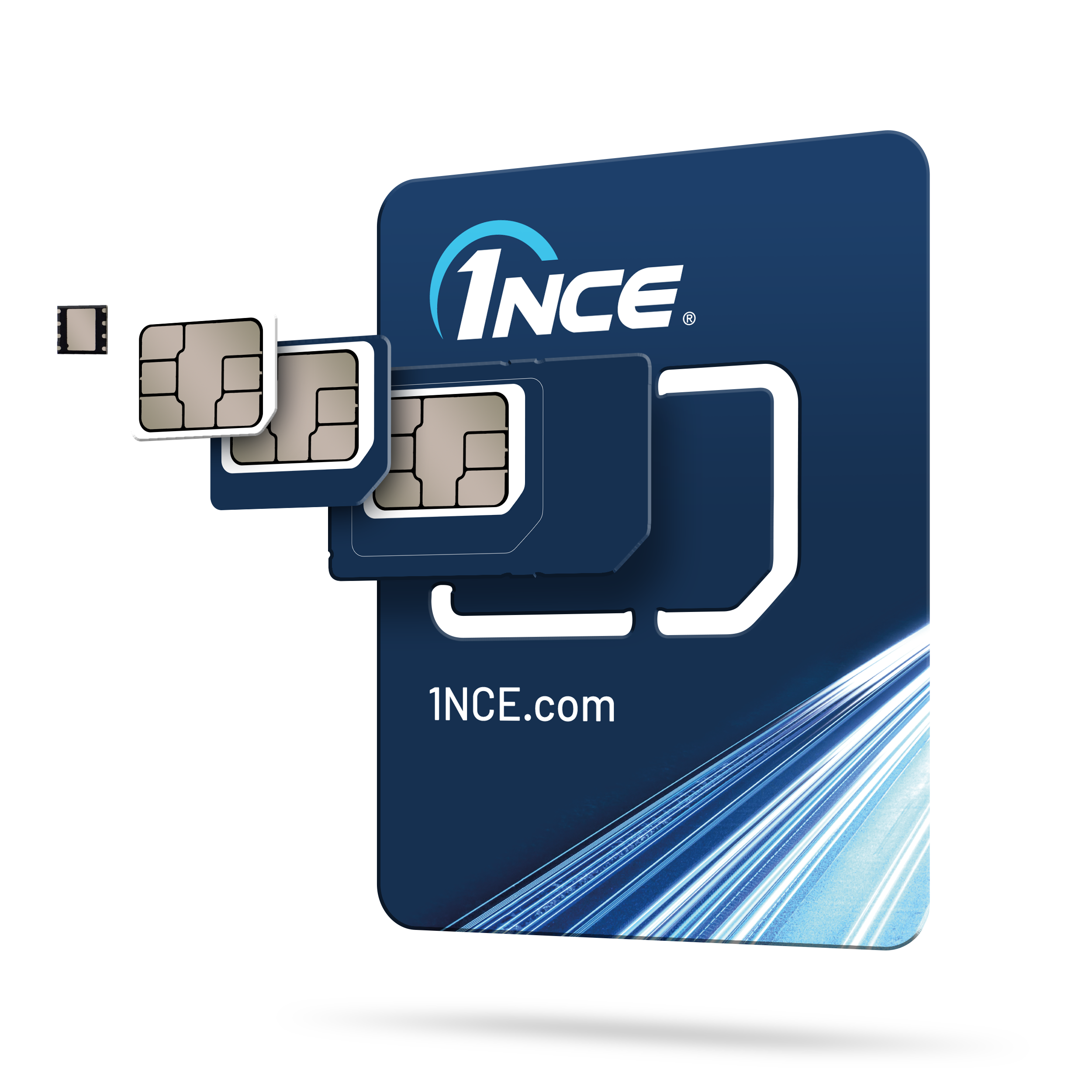
1NCE offers the world's first IoT Flat Rate plan with an all-inclusive pre-paid pricing model providing cellular connectivity for IoT devices for up to 10 years. The price for the 1NCE IoT Flat Rate is $10 per unit for the 1NCE IoT Flex Connectivity, and $12 per unit for the 1NCE IoT eSIM, which is available only to AWS marketplace customers. The tariff includes 500 MB data allowance, and 250 SMS as well as all the necessary features like APN, VPN, and API, Data Streamer, and Connectivity Suite over the 10 years. Seamless bearer support for 2G, 3G, and 4G. NB-IoT and LTE-M where and if available. See further details on the included features, bearer support and country coverage on the 1NCE website. Please note, Flex Connectivity requires a SIM to operate; SIM can be procured directly from 1NCE.
The offer can exclusively be used by business customers only.
The IoT Flat Rate allows connecting IoT devices in more than 100 countries, including all US, Europe, China, Australia, Japan, and Singapore.
Highlights
- The 1NCE IoT Flat Rate is an all-inclusive price model for managed cellular IoT connectivity
- 1NCE IoT Flat Rate can be used in more than 100 countries, including Europe, China, Japan, Australia, Singapore and USA
- Seamless bearer support for 2G, 3G, and 4G. NB-IoT and LTE-M where and if available.
Details
Sold by
Delivery method
Deployed on AWS
New
Introducing multi-product solutions
You can now purchase comprehensive solutions tailored to use cases and industries.

Features and programs
Buyer guide
Gain valuable insights from real users who purchased this product, powered by PeerSpot.

Financing for AWS Marketplace purchases
AWS Marketplace now accepts line of credit payments through the PNC Vendor Finance program. This program is available to select AWS customers in the US, excluding NV, NC, ND, TN, & VT.

Pricing
Pricing is based on actual usage, with charges varying according to how much you consume. Subscriptions have no end date and may be canceled any time.
Additional AWS infrastructure costs may apply. Use the AWS Pricing Calculator to estimate your infrastructure costs.
Dimension | Description | Cost/unit |
|---|---|---|
IoT SIM Card Business | IoT Lifetime Flat Subscription, including IoT SIM Card Business | $15.00 |
IoT SIM Chip Industrial (100 pcs) | IoT Lifetime Flat Subscription, including IoT SIM Chip Industrial (100 pcs) | $16.50 |
1NCE IoT Volume Top-up, 500 MB and 250 SMS | Top-Up (500 MB and 250 SMS) | $10.00 |
Dimensions summary
You buy connectivity as a one-time payment that covers 10 years of IoT service per unit, with no monthly fees. Two of the three options are SIM subscriptions: the IoT SIM Card Business is a standard 3-in-1 SIM sold per unit, while the IoT SIM Chip Industrial is a ruggedized chip for soldering, sold in packs of 100. Each unit includes 500 MB of data and 250 SMS over its lifetime. The third option is a usage add-on top-up that adds 500 MB and 250 SMS when a device needs more allowance.
Top-of-mind questions for buyers
The lifetime subscription includes 500 MB of data and 250 SMS per unit. If a device needs more, you buy the volume top-up, which adds 500 MB and 250 SMS. Top-ups are purchased separately as needed, so your cost rises only when you choose to add allowance.
For the IoT SIM Card Business, one unit is a single 3-in-1 SIM card. The IoT SIM Chip Industrial is sold in packs, so one unit equals 100 soldered chips. The top-up is counted as one allowance package of 500 MB and 250 SMS.
No. You pay once per unit, and that payment covers 10 years of service. There are no monthly charges and no roaming fees in covered countries. You only pay again if you choose to buy a top-up to extend data or SMS allowance.
1nce.com+1
Helpful?
Vendor refund policy
Refunds are not available as this is a prepaid IoT connectivity product for business customers.

Legal
Vendor terms and conditions
Upon subscribing to this product, you must acknowledge and agree to the terms and conditions outlined in the vendor's End User License Agreement (EULA) .
Content disclaimer
Vendors are responsible for their product descriptions and other product content. AWS does not warrant that vendors' product descriptions or other product content are accurate, complete, reliable, current, or error-free.
Delivery details
Software as a Service (SaaS)
SaaS delivers cloud-based software applications directly to customers over the internet. You can access these applications through a subscription model. You will pay recurring monthly usage fees through your AWS bill, while AWS handles deployment and infrastructure management, ensuring scalability, reliability, and seamless integration with other AWS services.
Resources
Vendor resources
Support
Vendor support
Contact Help Center
AWS infrastructure support
AWS Support is a one-on-one, fast-response support channel that is staffed 24x7x365 with experienced and technical support engineers. The service helps customers of all sizes and technical abilities to successfully utilize the products and features provided by Amazon Web Services.
Updated weekly
By 1NCE

By Domatica IoT Technology

Top
10
In Smart Home & City, Industrial IoT, Device Connectivity
Top
10
In Industrial, Industrial IoT, Device Connectivity
Top
50
In Smart Home & City
Sentiment is AI generated from actual customer reviews on AWS and G2
Functionality
Ease of use
Customer service
Cost effectiveness
Positive reviews
Mixed reviews
Negative reviews
AI generated from product descriptions
Cellular Network Technology Support
Seamless bearer support for 2G, 3G, and 4G with NB-IoT and LTE-M where available
Global Coverage
Connectivity available in more than 100 countries including United States, Europe, China, Australia, Japan, and Singapore
Data and Messaging Allowance
500 MB data allowance and 250 SMS included over the service period
Included Connectivity Features
APN, VPN, API, Data Streamer, and Connectivity Suite capabilities
Long-term Service Duration
Prepaid cellular connectivity for IoT devices with up to 10 years of service coverage
Industrial Protocol Support
Supports multiple industrial protocols including Modbus, OPC DA, OPC UA, Siemens S7, ETHERNET/IP, PROFINET, BACnet, MQTT, and REST for seamless connectivity with legacy and modern systems.
Edge Data Processing
Performs high-performance data processing at the edge to minimize latency, enable real-time insights, and reduce operational complexity.
No-Code Application Development
Provides an intuitive no-code interface that enables building, managing, and updating edge applications without specialized coding skills.
Cloud-Native Architecture
Built on a cloud-native foundation offering effortless scalability, streamlined remote management, and robust security measures.
Real-Time Analytics and Predictive Capabilities
Enables predictive maintenance, advanced analytics, and AI-driven decision-making through real-time data processing for operational optimization.
IoT Data Collection Infrastructure
Access to IoT infrastructure for collecting data from remote and hard-to-reach locations with perpetual ownership of collected data
AWS IoT Core Integration
SaaS API connector that enables connection of remote field data endpoints to AWS IoT Core
Device Administration Platform
SaaS software platform for configuring IoT endpoints and displaying collected data
Industrial-Grade Sensor Support
Support for 14 types of industrially-rated sensors including temperature, humidity, vibration, pressure, current, and motion detection
Multi-Stream Data Subscription
Capability to subscribe to multiple concurrent IoT datastreams with unlimited usage of Asset Monitoring IoT devices
Standard contract
No
No
Customer reviews
Beau Eads
Predictable connectivity costs have transformed budgeting and now power use is far more efficient
Reviewed on Oct 10, 2026
Review provided by PeerSpot
What is our primary use case?
My main use case for 1NCE is the access point name, or APN. I used the API and access point name as the bridge between our hardware cellular modem and 1NCE's global core network, and it required manual configuration in our device's firmware.
How has it helped my organization?
1NCE has positively impacted our organization by providing predictable costs and low power efficiency, which allowed us to use power more efficiently.
That power efficiency affected our products and workflow by allowing our hardware to sleep more hours, wake up and send a payload, and shut down without wasting any energy negotiating prolonged cellular handshakes, resulting in much better battery life after switching.
What is most valuable?
The best features 1NCE offers are very predictable costs, which I think was one of the best features from a financial perspective, as it basically changed our unit economics and allowed us to treat our cellular connectivity as an upfront hardware bill of materials cost.
Treating the connectivity as a bill of materials impacted our budgeting positively because now when we sell a device to a customer, the lifetime connectivity is baked directly into the product price, so accounting loves it because there are zero surprise monthly bills.
What needs improvement?
To improve 1NCE, I think it takes a little bit long on starting up, specifically the first connection when the module registers on LTE-M. That was the annoying part.
For how long have I used the solution?
I have been using 1NCE for a couple of years on and off.
How was the initial setup?
For the APN settings, I pulled up some old notes and I used the AT command when I was configuring the APN in the hardware, specifically AT+CGDCONT equals one, so I set the flag to one, and then IP, the second parameter is IP, and then the third parameter, iot.1nce.net, is an example command that we used for our Quectel cellular modem.
What other advice do I have?
I would rate 1NCE an eight on a scale of one to ten. I chose an eight because it did not allow us to completely drop our monthly telecom bills, but we dropped them a little bit.
Regarding 1NCE's AI capabilities, I think its governance and security are clean and functional, checking SIM status, IP addresses, and data usage, and I think it is secure with the REST API. I find 1NCE's AI capabilities pretty accurate with its output.
My advice for others looking into using 1NCE is to not use it solely for global roaming.
Samuele Minniti
Integrated IoT projects have improved device tracking and now support faster team workflows
Reviewed on Aug 28, 2026
Review from a verified AWS customer
What is our primary use case?
My main use case for 1NCE is internally and for some customers. A specific example of how I'm using 1NCE for my customers is in project management and organization of projects about customers, user interface, and process flows. 1NCE fits into my project management and user interface work by assisting with data management and tracking devices on the inventory. 1NCE helps me accomplish this very quickly, with some considerations around user interface mechanics.
What is most valuable?
The best features 1NCE offers in my experience include IoT management with very fast speed of integration with other systems. The integration with other systems works well for me as it is easy to connect other software and IoT integrations, although it is more difficult to integrate IoT of external production systems. 1NCE has positively impacted my organization by improving efficiency for less skilled persons within the organization. It has improved efficiency by enhancing connectivity and helping teams work better internally.
What needs improvement?
1NCE can be improved regarding connectivity and simple tasks inside the product. The wireless connectivity to IoT devices should be improved. Regarding 1NCE's AI capabilities, I think its governance is better than security, but I believe the security should be improved. In terms of 1NCE's AI capabilities, it is needed to improve the accuracy, but the reliability is acceptable for the output.
For how long have I used the solution?
I have been using 1NCE for about two years.
What other advice do I have?
My advice for others looking into using 1NCE is to implement IoT on the PCE product in the industry, mechanical, and automotive systems. 1NCE is deployed in my organization using a hybrid cloud setup with some on-premise and some private cloud infrastructure. For the hybrid or private cloud setup, I use AWS and Azure Microsoft. I would rate 1NCE a nine out of ten because of the simplification of installing and integrating the systems around it.
Vishal Deshmukh
Centralized connectivity management has improved monitoring and reduced operational effort
Reviewed on Jul 06, 2026
Review from a verified AWS customer
What is our primary use case?
1NCE is used to manage IoT connectivity for distributed devices across multiple locations. It provides reliable cellular connectivity for remote monitoring, device management, and data transmission. The simplicity of deployment, predictable pricing, and the ability to manage a large number of IoT devices through a single platform without worrying about complex telecom contracts are the most appreciated aspects.
A practical use case involved connecting remote environmental monitoring devices deployed across multiple sites. 1NCE SIMs were used to transmit sensor data such as temperature, humidity, and equipment status back to a central dashboard. The platform made it easy to manage connectivity, monitor SIM usage, and troubleshoot devices remotely without needing on-site intervention. This reduced operational effort and helped identify issues quickly.
What is most valuable?
The most valued feature is the combination of predictable pricing and centralized SIM management. With traditional connectivity providers, costs can be difficult to forecast, especially as the number of devices grows. 1NCE's pricing model makes budgeting much simpler and removes a lot of uncertainty. The centralized management platform is another standout feature because it provides visibility into all connected devices in one place. Connectivity status can be monitored, SIMs can be managed, and issues can be troubleshot remotely without having to deal with multiple carrier portals.
The platform mainly helps simplify connectivity management. Having a single platform to monitor SIMs, troubleshoot issues, and track usage saved time and reduced operational overhead, making day-to-day IoT device management much more efficient.
The biggest benefit has been improved operational efficiency. Less time is spent managing connectivity, there is better visibility into device status, and many issues can be resolved remotely. The predictable pricing and centralized management have also helped control costs and scale IoT deployments with greater confidence.
What needs improvement?
While the overall experience with 1NCE has been positive, there are a few areas where it could improve. The main area for improvement would be advanced analytics and reporting. Additional monitoring, alerting, and integration capabilities would also be helpful, especially for larger IoT deployments. Overall, the platform is easy to use and reliable, but these enhancements would make it even stronger.
For how long have I used the solution?
1NCE has been used for more than one year.
What do I think about the stability of the solution?
1NCE is very stable. The AI outputs have been generally very accurate and consistent in our experience. While human validation is still important for critical use cases, the platform has been proven reliable, and the availability of multiple models through a single interface is a very significant advantage.
What do I think about the scalability of the solution?
1NCE is quite flexible and supports a wide range of IoT devices and connectivity needs. The same platform can be used across different deployments, which simplifies management and makes it easier to scale as new devices and requirements are added.
How are customer service and support?
The customer service team is very supportive.
How was the initial setup?
The setup was quite easy because 1NCE is a managed cloud service. Devices were able to be connected and SIM management started quickly without significant infrastructure or configuration work. The platform is intuitive, and deployment was smoother than many traditional connectivity solutions. The customer support team was very helpful with the initial configuration and setup.
What was our ROI?
A positive return has been seen through improved efficiency. Roughly 20 to 30% less time is spent on connectivity management tasks, along with fewer site visits and better cost predictability. The biggest benefit has been operational savings and the ability to manage more devices without increasing administrative effort.
What's my experience with pricing, setup cost, and licensing?
The pricing is very transparent and easy to understand. No unexpected charges or hidden costs have been experienced, and the predictable billing model makes it easier to manage budgets and plan for future IoT deployments.
The experience with the pricing has been very positive. One of 1NCE's biggest strengths is its straightforward and predictable price model. It is much easier to understand than traditional telecom pricing structures, which helps with forecasting and budget planning. As regards price, setup, and licensing, the experience has been very positive. Costs are transparent, setup is straightforward, and the licensing model is very easy to understand with no unexpected charges.
What other advice do I have?
The ease of integration and responsive support team should be highlighted. The platform is simple to use, reliable, and removes much of the complexity of managing IoT connectivity at scale, which has been a significant advantage.
The integration experience has been very positive, as 1NCE fit into the existing IT ecosystem without significant complexity, and its centralized management capability made it easy to incorporate into current monitoring and device management workflows.
Onboarding new devices and retiring old ones is relatively easy, as the centralized platform simplifies SIM activation, connectivity management, monitoring, and deactivation, making device lifecycle management more efficient and scalable.
Though a formal analysis was not conducted, connectivity management tasks are estimated to require only 20 to 30% less administrative effort now than before. The ability to monitor devices remotely and manage SIMs from a single dashboard has improved response time and reduced the need for manual intervention, resulting in a more efficient operation.
My advice is to clearly define your IoT use case and growth plans before deployment. If you value simplicity, predictable pricing, and centralized device management, 1NCE is a strong option. It is easy to deploy, scales efficiently, and helps to reduce the day-to-day effort of managing IoT connectivity. I would rate this product 9 out of 10.
Which deployment model are you using for this solution?
Public Cloud
If public cloud, private cloud, or hybrid cloud, which cloud provider do you use?
Amazon Web Services (AWS)
Tassavour Shaikh
Global connectivity has improved remote monitoring and reduces effort for managing dispersed devices
Reviewed on Jun 21, 2026
Review from a verified AWS customer
What is our primary use case?
1NCE is used to provide IoT connectivity for remote devices such as sensors, trackers, and smart monitoring systems. We use 1NCE to provide cellular connectivity for remote monitoring sensors to send real-time temperature and humidity data to our cloud platform.
In addition to sensors and smart monitors, 1NCE is also used for asset tracking devices in remote areas where reliable cellular connectivity is required.
What is most valuable?
1NCE's best features are global IoT connectivity, easy SIM management, wide network coverage, and cost-effective connectivity.
The IoT Connect Management feature makes it easy to monitor SIM usage, manage devices, and troubleshoot connectivity issues from a single platform. The wide network coverage helps us keep devices connected across different regions without needing multiple connectivity providers.
The platform is easy to use, provides good visibility into device connectivity, and integrates well with existing IoT platforms.
1NCE has helped improve our organizational efficiency and productivity.
We have seen reduced connectivity expenses compared to traditional mobile plans and saved time through centralized SIM management. For example, device provisioning now requires significantly less administrative effort.
What needs improvement?
1NCE can be improved with more advanced analytics, enhanced reporting capabilities, and additional customization options within the management portal.
Better API documentation and more integration guides would be helpful. Faster response times for complex support cases would also improve the overall experience.
For how long have I used the solution?
1NCE has been used for around six months.
What do I think about the stability of the solution?
1NCE is deployed as a public cloud solution in our organization.
1NCE has been stable in our environment, providing reliable service.
Since we primarily use 1NCE for IoT connectivity, we have limited experience with its AI capabilities. However, from a reliability standpoint, the platform has been stable and has consistently delivered accurate connectivity and device management data.
What do I think about the scalability of the solution?
1NCE scales well and allows us to add new devices and deployments without significant operational overhead or performance issues.
How are customer service and support?
The customer support from 1NCE has been responsive and helpful, particularly for troubleshooting connectivity issues.
Which solution did I use previously and why did I switch?
We previously used traditional mobile carrier IoT SIM solutions. We switched to 1NCE for its simplified pricing model, global coverage, and better device management.
What was our ROI?
We have seen a positive return on investment from this product. We estimate connectivity costs were reduced by around 20 to 30 percent and centralized device management saved several hours of administrative effort each month.
What's my experience with pricing, setup cost, and licensing?
Our experience with 1NCE pricing and licensing has been positive. The pricing is straightforward and cost-effective, and the setup costs were relatively low compared to other IoT connectivity solutions.
Which other solutions did I evaluate?
We evaluated solutions from Aeris, KORE Wireless, and Vodafone IoT services before choosing 1NCE.
What other advice do I have?
1NCE is recommended to organizations looking for cost-effective IoT connectivity with global coverage. Plan your device deployment requirements early and take advantage of the management platform to simplify ongoing operations.
We did purchase 1NCE through the AWS marketplace.
Our use of 1NCE is primarily focused on IoT connectivity rather than AI capabilities. From a security perspective, we find the platform provides appropriate security measures.
This review has an overall rating of 8.
reviewer2857998
Lifetime connectivity has transformed how I manage global IoT sensors and trackers
Reviewed on Jun 17, 2026
Review from a verified AWS customer
What is our primary use case?
My main use case for 1NCE is for IoT devices. I use 1NCE like eSIMs in my IoT devices, which function as sensors, trackers, and manage their connectivity of IoT devices globally. This eliminates the need to worry about monthly billings and similar administrative tasks. 1NCE works in over 100 countries, which is beneficial. Since I use 1NCE for IoT devices, it has significantly changed IoT device management and everything related to it.
What is most valuable?
The best feature that 1NCE offers is the lifetime flat fee. I get it one time and I am set. SIM management is easy, SIM support is straightforward, power consumption is low, and it works great. I find myself relying on the one-time payment feature the most, and SIM compatibility in over 100 countries truly stood out for me.
The management of my devices has changed significantly. The dashboard access is globally accessible, so no matter if my devices move from one location to another, I always have access and can monitor everything.
What needs improvement?
1NCE has a 500 MB lifetime cap, which is tight for some IoT devices that use more data. Additionally, 1NCE is limited to IoT devices only, and sometimes the coverage cost can be surprising.
For how long have I used the solution?
I have been using 1NCE for about three to four years.
What do I think about the stability of the solution?
1NCE is stable.
What do I think about the scalability of the solution?
1NCE's scalability handles my growing needs well for my organization.
How are customer service and support?
The customer support is good, and I have had positive experiences with it.
Which solution did I use previously and why did I switch?
I have not used a different solution before 1NCE. I compared multiple options such as Twilio Super SIM and Aeris IoT connectivity, and I chose 1NCE.
How was the initial setup?
My experience with pricing, setup cost, and licensing is straightforward and easy.
What was our ROI?
I don't have metrics, but I have seen a return on investment from using 1NCE.
What's my experience with pricing, setup cost, and licensing?
My experience with pricing, setup cost, and licensing is straightforward and easy.
Which other solutions did I evaluate?
Before choosing 1NCE, I evaluated other options such as Aeris IoT connectivity and Twilio Super SIM.
What other advice do I have?
If you need one-time headache relief, get the one-time payment option with 1NCE, and you will be set for the rest of your life. I gave this review a rating of 10.
Which deployment model are you using for this solution?
Public Cloud
If public cloud, private cloud, or hybrid cloud, which cloud provider do you use?
Amazon Web Services (AWS)