Sold by: Nexulon INC
Deployed on AWS
AWS Free Tier
This product has charges associated with it for security hardening, preconfigured deployment, automated first-boot provisioning, and support services provided by Nexulon INC.
Overview
This is a repackaged open-source software product wherein additional charges apply for security hardening, preconfigured deployment, automated first-boot provisioning, and support services provided by Nexulon INC.
WHAT YOU ARE PAYING FOR
Production-ready Penpot deployment with all services preconfigured Automated first-boot provisioning with unique secrets and credentials for every instance Security hardening applied at the operating system and application level Clean image with no preloaded user data, sessions, or shared keys Technical support for deployment and configuration
ABOUT PENPOT
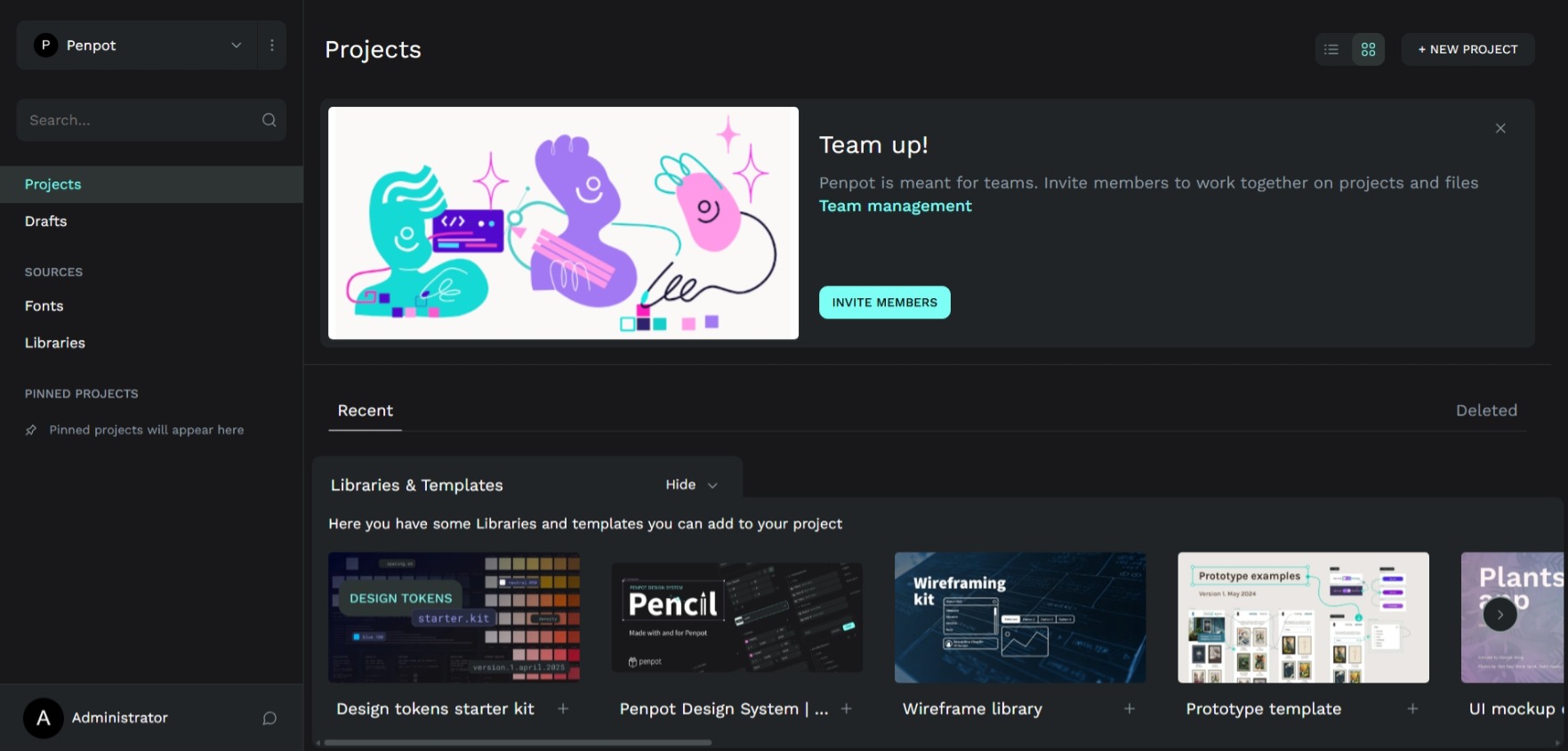
Penpot is an open-source design and prototyping platform built for collaboration between designers and developers. It runs entirely in the browser and works with open web standards such as SVG, CSS, and HTML, so design files remain portable and easy to hand off to development teams.
With Penpot, product teams can create interfaces, build interactive prototypes, maintain shared component libraries and design systems, and inspect ready-to-use code directly from the design, all within a platform hosted on infrastructure you control.
KEY FEATURES
Browser-based interface design with vector editing tools Interactive prototyping with flows, transitions, and overlays Real-time collaboration with multiple users editing the same file Shared libraries for components, colors, and typography Design tokens for consistent design systems Flex and Grid layouts that reflect how interfaces are built in code Inspect mode with ready-to-use CSS, SVG, and HTML output Team and project organization with role-based access Comments and feedback directly on designs Export to PNG, JPEG, SVG, and PDF Webhooks and API access for integration with development workflows
TECHNICAL SPECIFICATIONS
Penpot 2.18 (Latest Stable Release) Ubuntu 24.04 LTS (Noble Numbat) Docker Engine with Docker Compose PostgreSQL 15 database Valkey for real-time notifications and job queues Dedicated exporter service for rendering design exports Local file storage for design assets in a persistent Docker volume All container images preloaded in the image for fast first boot without external downloads All services configured to start automatically after reboot EC2 Instance Metadata Service v2 (IMDSv2) is required and used for instance configuration. No user-provided credentials are required.
SECURITY HARDENING
Public self-registration disabled; only administrators can create accounts Unique application secret key generated on first boot for every instance Unique database password generated on first boot for every instance Unique administrator password generated on first boot for every instance Database contains no data in the image and is initialized fresh on first launch Only the web interface is published to the network; database, cache, and internal services are reachable only on the internal container network Development mail service and AI integration service removed from the deployment Telemetry disabled so no usage data leaves the instance Root SSH login disabled SSH password authentication disabled, key-based access only UFW firewall enabled with only ports 22, 80, and 443 open Shell history, SSH host keys, machine identifiers, and logs cleared before image creation
HOW IT WORKS
- Launch the instance from AWS Marketplace with your EC2 key pair
- Allow three to four minutes for the first-boot configuration to complete
- Connect via SSH and retrieve your unique administrator credentials
- Open the public IP address of the instance in your browser
- Log in with the generated credentials and start designing
PRODUCT LIMITATIONS
HTTPS is not configured by default and requires a domain name and SSL certificate configured by the customer. Email delivery is disabled by default. Inviting users by email and password recovery require the customer to configure an SMTP provider. Self-registration is disabled for security; additional user accounts are created by the administrator. Migration of design files from other design platforms is not included in the support scope. High availability, clustering, and automated backups are not configured by default.
SUPPORT
Contact: info@nexulon-inc.com Website: https://nexulon-inc.com
ABOUT NEXULON INC
Nexulon INC delivers secure, production-ready software solutions on AWS, specializing in hardened deployments, automated provisioning, and professional support services for businesses of all sizes.
PENPOT LICENSE AND TRADEMARK
Penpot is free and open-source software licensed under the Mozilla Public License 2.0. Source code is available at https://github.com/penpot/penpot . Penpot is a trademark of Kaleidos. Nexulon INC is not affiliated with, endorsed by, or sponsored by Kaleidos. Charges on this listing apply exclusively to the security hardening, preconfigured deployment, automated provisioning, and support services provided by Nexulon INC.
Highlights
- Production-ready Penpot 2.18 design and prototyping platform on Ubuntu 24.04 LTS with PostgreSQL, Valkey, and all services preconfigured in Docker, ready to use within minutes of launch.
- Every instance generates its own unique application secret key, database password, and administrator credentials on first boot, with no shared keys, preloaded data, or default passwords in the image.
- Security hardened deployment with public registration disabled, only the web interface exposed to the network, telemetry disabled, root SSH login disabled, UFW firewall enabled, and IMDSv2 enforced.
Details
Sold by
Categories
Delivery method
Delivery option
64-bit (x86) Amazon Machine Image (AMI)
Latest version
Operating system
Ubuntu 24.04
Deployed on AWS
Features and programs
Financing for AWS Marketplace purchases
AWS Marketplace now accepts line of credit payments through the PNC Vendor Finance program. This program is available to select AWS customers in the US, excluding NV, NC, ND, TN, & VT.

Pricing
Pricing is based on the duration and terms of your contract with the vendor. This entitles you to a specified quantity of use for the contract duration. If you choose not to renew or replace your contract before it ends, access to these entitlements will expire.
Additional AWS infrastructure costs may apply. Use the AWS Pricing Calculator to estimate your infrastructure costs.
Dimension | Description | Cost/month |
|---|---|---|
Penpot Design Platform 2.18 on Ubuntu 24.04 LTS | One instance of Penpot Design Platform 2.18 on Ubuntu 24.04 LTS with automated credential generation, security hardening, and support by Nexulon INC. | $400.00 |
Vendor refund policy
This product is billed based on the subscription plan selected at the time of purchase. You may cancel your subscription at any time to stop future charges. No refunds are issued for subscription periods already billed or partially used. For billing questions or disputes, contact info@nexulon-inc.com before opening a claim through AWS Marketplace.

Legal
Vendor terms and conditions
Upon subscribing to this product, you must acknowledge and agree to the terms and conditions outlined in the vendor's End User License Agreement (EULA) .
Content disclaimer
Vendors are responsible for their product descriptions and other product content. AWS does not warrant that vendors' product descriptions or other product content are accurate, complete, reliable, current, or error-free.
Delivery details
64-bit (x86) Amazon Machine Image (AMI)
Amazon Machine Image (AMI)
An AMI is a virtual image that provides the information required to launch an instance. Amazon EC2 (Elastic Compute Cloud) instances are virtual servers on which you can run your applications and workloads, offering varying combinations of CPU, memory, storage, and networking resources. You can launch as many instances from as many different AMIs as you need.
Version release notes
Initial release of Penpot Design Platform 2.18 on Ubuntu 24.04 LTS by Nexulon INC.
SOFTWARE VERSIONS
Penpot 2.18 (Latest Stable Release) Ubuntu 24.04 LTS (Noble Numbat) with all security updates applied at build time Docker Engine with the Docker Compose plugin PostgreSQL 15 Valkey 8.1 All Penpot container images preloaded in the image
FEATURES INCLUDED IN THIS RELEASE
Production deployment based on the official Penpot Docker configuration Web interface published on port 80 for direct browser access Automated first-boot provisioning that waits until the backend is fully ready before creating accounts Unique application secret key, database password, and administrator password generated for every instance Administrator account created with onboarding screens skipped for immediate use Instance ID and public IP address detected automatically through IMDSv2 Application public address configured automatically based on the instance address Credentials file created at /home/ubuntu/credentials.txt with secure file permissions Environment file created at /opt/penpot/.env readable only by root All containers configured to restart automatically after reboot First-boot process protected by a lock file so credentials are never regenerated after a restart
SECURITY HARDENING
IMDSv2 required at the image level; IMDSv1 requests are rejected Public self-registration disabled Development mail service removed from the deployment AI integration service removed from the deployment Telemetry disabled Internal management interface bound to localhost inside its container only Database, cache, admin console, and exporter reachable only on the internal container network Root SSH login disabled SSH password authentication disabled, key-based access only UFW firewall enabled with only ports 22, 80, and 443 open
IMAGE CLEANUP PERFORMED
All containers and data volumes removed; database is initialized fresh on first launch No user accounts, design files, sessions, or secret keys included in the image SSH host keys removed and regenerated uniquely on each launch Machine identifier cleared and regenerated uniquely on each launch Cloud-init state reset so every instance runs a clean first boot Shell history cleared for all users System and journal logs cleared Package manager cache removed
VALIDATION PERFORMED
First-boot provisioning tested on newly launched instances Administrator login verified through the web interface Self-registration confirmed disabled All containers verified running after launch and after reboot Credentials verified unchanged after reboot Only port 80 confirmed published by the container runtime IMDSv1 rejection verified on launched instances SSH configuration and firewall rules verified
KNOWN LIMITATIONS
HTTPS requires a customer-provided domain name and SSL certificate; setup steps are included in the usage instructions Email delivery requires the customer to configure an SMTP provider Recommended instance type is t3.large
Additional details
Usage instructions
-
Launch the instance using the recommended instance type t3.large with your EC2 key pair.
-
Configure the security group to allow inbound traffic on the following ports: Port 22 (SSH) from your IP address only Port 80 (HTTP) from 0.0.0.0/0 Port 443 (HTTPS) from 0.0.0.0/0
-
Wait three to four minutes after the instance reaches the running state. The first-boot process initializes the database, generates unique secrets, and creates your administrator account.
-
Connect to the instance via SSH: ssh -i your-key.pem ubuntu@INSTANCE_PUBLIC_IP
-
Retrieve your administrator credentials: cat ~/credentials.txt
-
Open your browser and navigate to: http://INSTANCE_PUBLIC_IP
-
Log in with the email and password shown in credentials.txt.
-
Change your administrator password immediately after the first login from the account settings.
CREATING ADDITIONAL USERS
Public registration is disabled. To create a user, run: cd /opt/penpot sudo docker compose exec -T penpot-backend python3 manage.py create-profile -e user@example.com -n "Full Name" -p "StrongPassword1!" --skip-tutorial --skip-walkthrough
ENABLING HTTPS (RECOMMENDED FOR PRODUCTION)
Point your domain name to the instance public IP address using a DNS A record, then:
a) Bind Penpot to localhost only by editing /opt/penpot/docker-compose.yaml and changing the frontend port line from "80:8080" to "127.0.0.1:8080:8080".
b) Install Nginx and Certbot: sudo apt update && sudo apt install -y nginx certbot python3-certbot-nginx
c) Create /etc/nginx/sites-available/penpot with a server block for your domain that proxies to http://127.0.0.1:8080 , sets client_max_body_size 350m, and forwards the Upgrade and Connection headers for WebSocket support. Enable it and remove the default site.
d) Obtain a certificate: sudo certbot --nginx -d yourdomain.com
e) Edit /opt/penpot/.env and set PENPOT_PUBLIC_URI=https://yourdomain.com
f) Edit /opt/penpot/docker-compose.yaml and remove disable-secure-session-cookies from PENPOT_FLAGS.
g) Apply the changes: cd /opt/penpot && sudo docker compose up -d
SERVICE MANAGEMENT
Check container status: cd /opt/penpot && sudo docker compose ps
Restart Penpot: cd /opt/penpot && sudo docker compose restart
View backend logs: cd /opt/penpot && sudo docker compose logs penpot-backend --tail 100
First-boot log: sudo cat /var/log/penpot-first-boot.log
Support
Vendor support
Technical support for this product is provided by Nexulon INC.
Support contact: Email: info@nexulon-inc.com Website: https://nexulon-inc.com
Support scope includes: Instance launch and first-boot troubleshooting Credential retrieval and administrator access issues Creating additional user accounts Container and service startup guidance HTTPS and SSL certificate setup guidance SMTP configuration guidance
Support scope does not include: Design work or design system creation Custom Penpot development or plugin creation Migration of files from other design platforms Third-party integration debugging
Response times may vary based on request complexity and business hours.
AWS infrastructure support
AWS Support is a one-on-one, fast-response support channel that is staffed 24x7x365 with experienced and technical support engineers. The service helps customers of all sizes and technical abilities to successfully utilize the products and features provided by Amazon Web Services.
Similar products
This product has charges associated with it for security hardening, preconfigured deployment, automated first-boot provisioning, and support services provided by Nexulon INC.

This product has charges associated with it, which includes support and maintenance. Our AMI solutions are built on top-notch technology which makes sure that your business is future-ready! We implement the latest advancements into AMIs thus enhancing adaptability and sustainability.

This product has charges associated with it for the Kali-AI v2 automated penetration testing platform. Kali-AI v2 automates penetration testing across 20 targets in parallel using a 7-tool pipeline and Claude AI, delivering white-label PDF reports for MSSPs and red teams.

This product has charges associated with it for product support and updates. Connect to a full-featured Ubuntu 22.04 LTS Desktop environment through your browser or natively using a Remote Desktop client. Securely access Jupyter, RStudio Server or a Terminal session directly from your browser. Ships with the latest versions of Google Chrome, Jupyter, RStudio Server, VS Code.
Customer reviews
No customer reviews yet
Be the first to review this product . We've partnered with PeerSpot to gather customer feedback. You can share your experience by writing or recording a review, or scheduling a call with a PeerSpot analyst.