
Sold by: ScyllaDB, Inc
Deployed on AWS
Free Trial
ScyllaDB Enterprise NoSQL database
4.5
Overview
ScyllaDB Enterprise is the high-performance NoSQL database for real-time big data workloads. It is a wide-column store with APIs compatible with Apache Cassandra CQL and Amazon DynamoDB. ScyllaDB Enterprise is self-tuning upon installation and self-optimizing in production, which means users get optimal performance without spending time constantly tweaking the system. It just runs consistently fast, with consistent low latency. ScyllaDB is designed to take full advantage of NUMA multiprocessor architectures and fast storage, such as those found in AWS I3, i3en, and i4i series instances.
Highlights
- Build highly scalable, highly performant NoSQL-based applications that can support high-throughput (millions of transactions per second per database node) and maintain consistent low single-digit millisecond latencies.
- APIs compatible with Apache Cassandra CQL and Amazon DynamoDB.
- With ScyllaDB hardware efficiency and predictable pricing, users reduce their TCO up to 70% without compromising performance.
Details
Sold by
Categories
Delivery method
Delivery option
64-bit (x86) Amazon Machine Image (AMI)
Latest version
Operating system
Ubuntu 22.04
Deployed on AWS
New
Introducing multi-product solutions
You can now purchase comprehensive solutions tailored to use cases and industries.

Features and programs
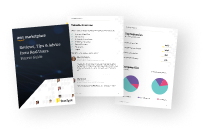
Buyer guide
Gain valuable insights from real users who purchased this product, powered by PeerSpot.
Financing for AWS Marketplace purchases
AWS Marketplace now accepts line of credit payments through the PNC Vendor Finance program. This program is available to select AWS customers in the US, excluding NV, NC, ND, TN, & VT.

Pricing
Free trial
Try this product free for 7 days according to the free trial terms set by the vendor. Usage-based pricing is in effect for usage beyond the free trial terms. Your free trial gets automatically converted to a paid subscription when the trial ends, but may be canceled any time before that.
Pricing is based on actual usage, with charges varying according to how much you consume. Subscriptions have no end date and may be canceled any time. Alternatively, you can pay upfront for a contract, which typically covers your anticipated usage for the contract duration. Any usage beyond contract will incur additional usage-based costs.
Additional AWS infrastructure costs may apply. Use the AWS Pricing Calculator to estimate your infrastructure costs.
Dimension | Cost/hour |
|---|---|
i3.4xlarge Recommended | $1.63 |
Dimensions summary
You pay one hourly rate tied to a single instance size, the i3.4xlarge. This is usage-based billing, so charges accrue for each hour the instance runs. There are no separate tiers, add-ons, or fixed commitments in this listing. Your total cost scales with how many hours you run and how many instances you deploy. The software license and enterprise support are bundled into the hourly rate. Because pricing follows actual runtime, you can start and stop the instance to control spending, with no long-term contract required.
Top-of-mind questions for buyers
The i3.4xlarge is an AWS instance type that pairs multiple CPU cores with local NVMe SSD storage. The database uses a shard-per-core design, so each core handles a dedicated slice of data and memory. You run the database on this fixed hardware size and pay per hour it runs.
The software rate meters running time only. When you stop the i3.4xlarge instance, the hourly software charge stops accruing. Underlying AWS charges, such as storage for stopped instances, may still apply separately. You control software spending by starting and stopping the instance as needed.
No. Billing is tied only to instance-hours, not individual read or write requests. The shard-per-core architecture gives you the throughput capacity of the underlying hardware. You are not metered per operation, so request volume does not add separate line items to your bill.
www.scylladb.com+2
Helpful?
Vendor refund policy
Custom pricing options
Request a private offer to receive a custom quote.

Legal
Vendor terms and conditions
Upon subscribing to this product, you must acknowledge and agree to the terms and conditions outlined in the vendor's End User License Agreement (EULA) .
Content disclaimer
Vendors are responsible for their product descriptions and other product content. AWS does not warrant that vendors' product descriptions or other product content are accurate, complete, reliable, current, or error-free.
Delivery details
64-bit (x86) Amazon Machine Image (AMI)
Amazon Machine Image (AMI)
An AMI is a virtual image that provides the information required to launch an instance. Amazon EC2 (Elastic Compute Cloud) instances are virtual servers on which you can run your applications and workloads, offering varying combinations of CPU, memory, storage, and networking resources. You can launch as many instances from as many different AMIs as you need.
Version release notes
Additional details
Usage instructions
Resources
Vendor resources
Support
Vendor support
Scylladb Enterprise support ensures that users have access to the engineers who develop Scylla via the channels they prefer - the web support, email, Slack, etc. https://www.scylladb.com/scylladb-support-policy/
For additional information, custom pricing, or a private contract, please contact info@scylladb.com .
AWS infrastructure support
AWS Support is a one-on-one, fast-response support channel that is staffed 24x7x365 with experienced and technical support engineers. The service helps customers of all sizes and technical abilities to successfully utilize the products and features provided by Amazon Web Services.
Updated weekly
By ScyllaDB, Inc
By MongoDB, Inc

By Couchbase
Top
10
In Databases, Databases & Analytics Platforms
Top
10
In Databases & Analytics Platforms, Generative AI
Top
10
In Data Analysis, Databases & Analytics Platforms, Databases
Sentiment is AI generated from actual customer reviews on AWS and G2
Functionality
Ease of use
Customer service
Cost effectiveness
Positive reviews
Mixed reviews
Negative reviews
AI generated from product descriptions
Wide-Column Store Architecture
NoSQL database with wide-column store design supporting high-throughput workloads and real-time big data processing
API Compatibility
Compatible with Apache Cassandra CQL and Amazon DynamoDB APIs
Self-Tuning and Self-Optimizing
Automatic performance tuning upon installation and continuous optimization in production without manual system configuration
NUMA Architecture Optimization
Designed to leverage NUMA multiprocessor architectures and fast storage devices including AWS I3, i3en, and i4i series instances
Low-Latency Performance
Consistent single-digit millisecond latencies with support for millions of transactions per second per database node
Vector Search and Semantic Search
Integrated vector search and semantic search capabilities enabling unified operational data with vector embeddings for AI-powered applications
Multi-Region Clustering with Auto-Scaling
Horizontal and vertical auto-scaling with multi-region cluster deployment maintaining low latency and 99.995% uptime SLA
Retrieval-Augmented Generation (RAG)
Built-in RAG capabilities with Voyage AI-powered retrieval and long-term memory for stateful AI agents
Native Encryption and Compliance
Native encryption for sensitive data protection with comprehensive compliance certifications and industry-leading security controls
AI Agent Execution and Governance
Atlas Agent Engine providing unified execution layer, memory management, and governance enforcement with real identity and org-level policy controls for production AI agents
Multi-Model Data Support
Supports key-value, JSON documents, SQL queries, vectors, and full-text search capabilities within a single database platform
Real-Time Analytics Engine
Provides zero ETL JSON-native analytics architecture for real-time data processing
Geo-Aware Clustering
Enables data reliability and distribution across geographically distributed clusters
Advanced Security Controls
Implements role-based access control (RBAC) with encryption for data in transit and at rest
Mobile Data Synchronization
Offers fully managed data sync to edge devices with offline support and peer-to-peer synchronization capabilities
Standard contract
No
No
Customer reviews
Abhilash N.
Low-Latency, Write-Heavy Performance with CQL Compatibility and Scalability
Reviewed on Aug 26, 2026
Review provided by G2
What do you like best about the product?
It delivers strong write-heavy performance with low latency. The main use cases for me are IoT and gaming. I also value its CQL compatibility, along with horizontal scalability and high availability.
What do you dislike about the product?
ScyllaDB lacks a native, polished management dashboard out-of-the-box comparable to some competitors. some niche integrations or modern cloud-native tools may not have first-party support or optimized drivers for ScyllaDB specifically, requiring extra configuration.
What problems is the product solving and how is that benefiting you?
ScyllaDB addresses high latency, scalability, and throughput challenges in distributed databases. It delivers faster query performance, more efficient resource utilization, and smooth horizontal scaling. For me, this translates into better application reliability, support for growing workloads, fewer operational bottlenecks, and more predictable performance during traffic spikes, while also simplifying overall database infrastructure management.
Anonymous
Efficient for High Write Volumes, But Needs Easier Deployment
Reviewed on Aug 26, 2026
Review provided by G2
What do you like best about the product?
I use ScyllaDB as the session store for my agent runtime, and it handles write-intensive traffic really well, which is essential for our agent swarm service as we need to write to the session store as the agent progresses. I like the strong availability ScyllaDB offers. Additionally, the natural partitioning based on the key aligns perfectly with my service's session ID and client's namespace as partition keys, which helps a lot. The initial setup on ScyllaDB Cloud was pretty easy.
What do you dislike about the product?
I wish the self-deployment could be easier. Having a one-click deployment feature on Google Cloud would be perfect.
What problems is the product solving and how is that benefiting you?
I use ScyllaDB for handling write-intensive traffic due to its strong availability and natural key-based partitioning. We switched from Postgres to ScyllaDB as our write volume grew.
Rishabh S.
ScyllaDB is a High-Performance Choice for IoT
Reviewed on Aug 26, 2026
Review provided by G2
What do you like best about the product?
I like ScyllaDB's ability to handle high throughput workloads while maintaining consistently low latency. The horizontal scalability makes it easy to accommodate increasing data volumes and traffic without major performance degradation. I appreciate ScyllaDB's low latency performance, which remains consistent even when workload and traffic increase. The shard per core architecture is a big advantage because it minimizes resource contention and allows the database to make efficient use of available CPU, memory, and storage. Additionally, I find the initial setup straightforward, as we used Docker Compose to set up a 3-node cluster across different physical nodes in the same network. ScyllaDB integrates well with our existing technology stack, helping us manage high-volume data workloads without significant changes to the application architecture.
What do you dislike about the product?
I find the learning curve to be challenging, especially around data modeling, partitioning, and cluster tuning. For new teams, it can be tough to understand data modeling and partitioning best practices and how to design tables around application access patterns. I think more practical examples, guided tutorials, and real-world production scenarios would make this easier.
What problems is the product solving and how is that benefiting you?
We use ScyllaDB to handle high-volume data ingestion and low-latency access with horizontal scalability. It's great for real-time events and time-series data, and it manages high throughput while maintaining consistent low latency, efficiently using CPU, memory, and storage.
Rishabh S.
High Performance, Low Latency, but Setup Could Be Easier
Reviewed on Jul 30, 2026
Review provided by G2
What do you like best about the product?
I like how ScyllaDB makes large-scale distributed data feel simple and allows me to work with its design patterns effortlessly. I really appreciate the automatic distribution and the hot reload performance of 1 million operations per second. One thing I especially like about ScyllaDB is its high performance and predictable low latency, even under heavy workloads. I also value its compatibility with the Cassandra ecosystem, which makes migration and integration straightforward. Features like shard-aware drivers, horizontal scalability, and efficient resource utilization work particularly well for large-scale, high-throughput applications like ours.
What do you dislike about the product?
Overall, my experience with ScyllaDB has been positive, but there are a few areas that could be improved. Initial cluster setup and tuning can be complex, especially for production deployments. Troubleshooting shard-awareness and networking issues also required a good understanding of the architecture. I also think the documentation could include more end-to-end examples and performance tuning guides for large-scale deployments. I would like to see more built-in observability and performance diagnostics. Additionally, although I use ScyllaDB with GUI tools like DataGrip and DBeaver for querying data, browsing tables, and schema management, I feel these tools are often paid and limit users for a better experience interacting with ScyllaDB.
What problems is the product solving and how is that benefiting you?
I use ScyllaDB for managing large-scale distributed storage, automatic distribution, and high throughput reloads without cluster degradation. It handles even data distribution, sub-millisecond latencies on read-heavy workloads, and offers compatibility with Cassandra for easy migration, enhancing our scalability and resource utilization.
Chandana B.
Exceptional Throughput and Predictable Sub-Millisecond Latency with ScyllaDB
Reviewed on Jul 29, 2026
Review provided by G2
What do you like best about the product?
ScyllaDB provides exceptional throughput and sub-millisecond, predictable latency. Because it is written in C++ rather than Java, we completely eliminated garbage collection pause issues and saw a massive performance boost over Cassandra with far fewer nodes.
What do you dislike about the product?
ScyllaDB delivers high performance, but its ecosystem of third-party monitoring plugins and integrations is still a bit smaller than what you’ll find with older databases such as Apache Cassandra.
What problems is the product solving and how is that benefiting you?
Before we started using ScyllaDB for our distributed systems coursework and hackathon prototypes, we often ran into severe latency spikes and unpredictable Garbage Collection (GC) pauses with traditional Java-based NoSQL databases such as Cassandra, especially under high concurrent loads. ScyllaDB removed that bottleneck by leveraging its C++ architecture along with a shared-nothing, shard-per-core design.
By avoiding JVM overhead, our applications can keep sub-millisecond, predictable latency even when traffic suddenly spikes. And as students working with minimal cloud resources and strict hardware budgets, we’ve found that ScyllaDB delivers much higher throughput on a significantly smaller footprint, helping us maximize single-node CPU and RAM utilization without needing expensive multi-node clusters.
By avoiding JVM overhead, our applications can keep sub-millisecond, predictable latency even when traffic suddenly spikes. And as students working with minimal cloud resources and strict hardware budgets, we’ve found that ScyllaDB delivers much higher throughput on a significantly smaller footprint, helping us maximize single-node CPU and RAM utilization without needing expensive multi-node clusters.