
Sold by: Tines
Deployed on AWS
Free Trial
AWS Free Tier
Partners only. No-code automation for Security and IT teams. Companies like Box, McKesson, Coinbase, and Sophos trust Tines to run their mission-critical workflows, ranging from classic SOAR use cases like Endpoint Detection and Phishing Response, to Employee Onboarding and Slackbots, and far beyond.
4.1
Overview
Partners only. Tines is a radically different approach to automation, for Security & IT teams. The world's best companies - from startups to the Fortune 10 - trust Tines to manage their mission-critical workflows. Designed for and by security/IT practitioners, Tines helps you automate workflows of endless complexity by breaking them down into simple steps. What makes us different? Tines is an exceptionally powerful and flexible platform, capable of automating the most complex workflows. However, it's also no-code - meaning that frontline team members can build and maintain automation themselves, without depending on the development team. Typical automation workflows that our customers deploy: - endpoint detection & response alerts - abuse response - phishing response - employee onboarding - vulnerability management - threat intel enrichment - fraud response - suspicious login alerts - Slack/Microsoft Teams bots For custom pricing, EULA, or a private contract, please contact AWS-Marketplace@tines.com , for a private offer. This includes inquiries relating to single tenant environments, on-premise deployment, static IP, and custom domains.
Highlights
- Powerful and flexible. The typical customer automates 20 workflows within their first year on the platform. For the whole team. Allows frontline team members to build automation themselves, leveraging their expert knowledge of the workflow, and eliminating lengthy development cycles. Enterprise-grade. All of the compliance you need and all of the features you'd expect. From SSO to role-based access control.
Details
New
Introducing multi-product solutions
You can now purchase comprehensive solutions tailored to use cases and industries.

Features and programs
Trust Center

Access real-time vendor security and compliance information through their Trust Center powered by Drata or Vanta. Review certifications and security standards before purchase.
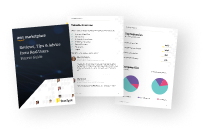
Buyer guide
Gain valuable insights from real users who purchased this product, powered by PeerSpot.
Financing for AWS Marketplace purchases
AWS Marketplace now accepts line of credit payments through the PNC Vendor Finance program. This program is available to select AWS customers in the US, excluding NV, NC, ND, TN, & VT.

Pricing
Free trial
Try this product free according to the free trial terms set by the vendor.
Pricing is based on the duration and terms of your contract with the vendor. This entitles you to a specified quantity of use for the contract duration. If you choose not to renew or replace your contract before it ends, access to these entitlements will expire.
Additional AWS infrastructure costs may apply. Use the AWS Pricing Calculator to estimate your infrastructure costs.
Dimension | Description | Cost/12 months |
|---|---|---|
Custom Pricing | Custom: Contact aws-marketplace@tines.io for custom pricing | $250,000.00 |
Dimensions summary
This listing uses a single custom pricing dimension. You do not select from preset tiers or fixed quantities. Instead, you contact Tines to arrange pricing built for your needs. The final price and terms are agreed directly with the vendor. This structure fits organizations that want deploy options and usage scoped to their workflows. To get a quote, reach out through the contact address shown in the pricing table.
Top-of-mind questions for buyers
You agree on a package built for your organization. Pricing reflects your deploy options and how you use workflows. Because the platform supports unlimited users, spaces, and connectors, your scope centers on workflows and hosting rather than seat counts. Contact the vendor to define the exact terms.
The platform offers unlimited users, spaces, and connectors, so adding people or integrations does not change your unit count. Your custom price is set with the vendor based on your deployment and workflow needs. Any change to scope would be discussed directly with the vendor.
Flexible hosting and deploy options are available to fit your organization. You can also bring your own AI model. These choices shape the terms you agree on with the vendor. Discuss which hosting arrangement works best when you request pricing.
www.tines.com
Helpful?
Vendor refund policy
All fees are non-cancellable and non-refundable except as required by law.

Legal
Vendor terms and conditions
Upon subscribing to this product, you must acknowledge and agree to the terms and conditions outlined in the vendor's End User License Agreement (EULA) .
Content disclaimer
Vendors are responsible for their product descriptions and other product content. AWS does not warrant that vendors' product descriptions or other product content are accurate, complete, reliable, current, or error-free.
Delivery details
Software as a Service (SaaS)
SaaS delivers cloud-based software applications directly to customers over the internet. You can access these applications through a subscription model. You will pay recurring monthly usage fees through your AWS bill, while AWS handles deployment and infrastructure management, ensuring scalability, reliability, and seamless integration with other AWS services.
Resources
Vendor resources
Support
Vendor support
We provide multiple support touch-points. Our primary support structure for customers is through dedicated Slack channels and our account management team alongside our technical team. In addition to this we have extensive documentation, tutorials and other resources on our website. hello@tines.io
AWS infrastructure support
AWS Support is a one-on-one, fast-response support channel that is staffed 24x7x365 with experienced and technical support engineers. The service helps customers of all sizes and technical abilities to successfully utilize the products and features provided by Amazon Web Services.
Similar products

Tines powers intelligent workflows that enrich, triage, and remediate alerts from AWS and beyond. Security and IT teams use Tines to connect data, tools, and people across their entire ecosystem and reduce manual work. In short, AWS brings the signal and Tines powers the action.
Companies like GitLab, McKesson, Coinbase, and Sophos trust Tines to run their most important workflows.

Greenplum for Regulated Industries

Advantage Partners provides seamless, efficient SOC 2 attestations to small and start-up technology companies. We deliver a frictionless, end-to-end customer experience so businesses receive their SOC 2 report as quickly and easily as possible.

S3's Revised Short Interest and Securities Finance data provide the necessary tools to view how Short Interest, Financing Rates, and crowded trades affect price action. Clients rely on this unique dataset for accurate Short Interest analytics and to identify crowded long and short trades.
The dataset is refreshed on each dissemination date, incorporating the most recent Short Interest (SI) figures as reported directly by the relevant exchanges.
Customer reviews
Amrit Dash
Automated student data pipelines have protected records and now require simpler SaaS connectors
Reviewed on Jun 04, 2026
Review provided by PeerSpot
What is our primary use case?
Our main use case for Tines is to orchestrate high-stakes data pipelines where a single broken API connection or silent error would corrupt student records. Specifically, we built an automated offboarding and data purging workflow for student accounts. When a user requested account deletion, Tines hit our internal database, pulled the user ID, and scrubbed their personal info across four different external tool APIs simultaneously. If any single API rate-limited us or timed out, Tines paused, retried with exponential backoff, and alerted our backend team via a secure webhook.
What is most valuable?
Tines offers incredible error handling capabilities. If an external API fails or blinks, Tines does not crash and burn the way simpler automation tools do. Instead, it pauses the event, saves the exact payload state, and retries automatically without losing data. Another massive advantage is how it handles webhook and HTTP requests. We do not need a pre-built app module because Tines makes working with raw APIs incredibly clean. You can easily call a command straight into the builder or auto-configure a step. For our engineering team, it meant we could build complex, multi-layered loops and conditions without guessing what was happening under the hood.
Tines has impacted our organization positively because it forced us to tighten our engineering standards around data flows. Because Tines makes you configure new raw APIs instead of hiding them behind friendly UI buttons, our team actually mapped out every single error path and edge case. During our pilot phase, it dropped our webhook error rates to zero. Whenever our external certification vendor went down for maintenance, Tines caught the failure and queued them automatically. We did not lose a single student log. It proved that we could build enterprise-grade reliability into our backend without writing a line of custom Python script. This worked as a very good infrastructure that we could base our other systems on. Having built our own custom LMS system, this helped us do proper data integration and validity checks on it.
What needs improvement?
Tines has a steep onboarding curve. If you are not a developer, there will definitely be a struggle. They need better documentation and templates for standard business apps, not just deep security tools. Building basic things takes too long. On Make.com, connecting Slack or Google Sheets takes two clicks. In Tines, we have to look up the API docs, paste the authorization header, and manually format the payload body. They should add a middle ground and give us quick pre-built connectors for the everyday SaaS stack so we do not have to reinvent the wheel for a simple notification. It is greatly useful in the case where you have your own platform running with API endpoints exposed. It helps as a good testing tool for the platform. However, for pre-existing SaaS software, it becomes a nightmare.
We bypassed Tines's AI tools entirely during our trial. When you are dealing with core infrastructure and student data pipelines, we want to be absolutely sure and not rely on any guesswork. There becomes a compliance issue with sharing student data with a platform that we are just trialing. We did not do any generative output that might hallucinate on an edge case. We mapped everything out using their hardcoded logical blocks instead. For us, reliability meant strict deterministic API paths. We never gave the AI features a chance to prove themselves one way or the other.
For how long have I used the solution?
I have been working in the current automation field for almost four and a half to five years.
What do I think about the stability of the solution?
Tines is pretty stable.
What do I think about the scalability of the solution?
Tines is quite scalable. We can use it as an enterprise app, and it scales directly without any hassle.
How are customer service and support?
We never had a chance to connect with customer support.
Which solution did I use previously and why did I switch?
Tines actually helped us get a better picture of what should be the workflow for error management. This, in turn, helped us build our own custom error handling tool that we are currently using with Make.com. There were other options available, but this was also just an option.
How was the initial setup?
Tines required no setup cost since we just used their cloud tier and built everything with internal engineering resources. We did not need to hire an external consultant to get it running.
What about the implementation team?
Tines has a steep onboarding curve. If you are not a developer, there will definitely be a struggle. They need better documentation and templates for standard business apps, not just deep security tools.
What was our ROI?
We just did a trial run with Tines, and to be quite honest, we were not exploring it for a return on investment. We did not see proper value in it, whereas other platforms would have given much higher value for us. Therefore, we shifted to use those instead.
What's my experience with pricing, setup cost, and licensing?
Tines required no setup cost since we just used their cloud tier and built everything with internal engineering resources. We did not need to hire an external consultant to get it running.
Which other solutions did I evaluate?
We used Tines heavily for about three months during a tool evaluation phase last year. We had it running in a staging environment to see if it could handle our core infrastructure pipelines before we ultimately chose a few alternatives. One of the top competing candidates was Make.com.
Shadrach Godwish Chukwu
Automation has replaced repetitive tasks and helps my team organize workflows in real time
Reviewed on May 27, 2026
Review provided by PeerSpot
What is our primary use case?
My main use case for Tines has been automation. My main use has been automating simple workflows, such as moving data between tools, sending alerts, and handling routine tasks. This work gets faster and becomes much more organized.
This is the most common use case for Tines. Another use case I have utilized is automating follow-ups, such as follow-up messages after submissions. The user gets an instant reply without having to do it manually.
What is most valuable?
I think the best features Tines offers are the easy workflow builder, very strong app integrations, and real-time automations for data updates and alerts.
The workflow builder in Tines is very simple and visual. You just connect steps together as if you are building blocks. It is very easy to see what happens next, even without much coding.
What stands out mostly about Tines's features is the integrations. It connects easily with tools such as Slack, emails, and spreadsheets, and it makes data moves automatically without much work. In real-time automation, Tines is very strong and things run very instantly when an event happens, such as a form submission or an update.
Tines has impacted my organization and my work positively by making my work faster, and tasks that used to be manual now run automatically, such as data updates and alerts. It has also reduced mistakes and helped teams get updates in real-time, so that decisions can be made as soon as possible.
What needs improvement?
Tines is overall good, but the setup can feel a bit technical at first. More templates for common workflows would make it much easier to start quickly without building everything from scratch.
I can say that the documentation could be much simpler and mainly example-based, showing real workflows. Faster support responses would also help, especially when someone is building a very complex workflow so they can easily get support responses at any point.
The setup time is considerable. It takes time to set it up, and the learning curve is steep. It is not hard once you know it, but getting started takes a whole lot of time and effort and slows new users down considerably.
I will heavily dwell on a few things. More ready-made templates would help so you do not always start from scratch. A simpler onboarding flow for new users would also make it much easier to get started very quickly. Better in-app guidance when building workflows would also be helpful.
For how long have I used the solution?
I have used Tines for roughly two years.
What do I think about the stability of the solution?
Tines is very stable. There have been no major downtime or issues from what I have used so far. Workflows can run very smoothly once set up. I can say that it is very stable and I prefer it over a whole lot of tools out there.
What do I think about the scalability of the solution?
Tines can handle bigger workflows or more users easily. It scales very well. You can build bigger workflows and add more users even without breaking anything. It is built for growing teams and has more complex automation capacity. It is built for growing teams and handles much bigger and more complex automations.
How are customer service and support?
I did not actually contact the support directly. However, from a whole lot of things that I saw, there were help documents and resources that were available. It is very great, and most issues were handled internally by the team.
Which solution did I use previously and why did I switch?
I did not personally switch to any other tool. However, in the workflow that I work with, most processes were manual before, such as spreadsheets and normal basic emails and normal basic task handling. Tools such as Tines were then automatically introduced, and once it was introduced, we started using it to automate all these things, and we started reducing a whole lot of manual work.
How was the initial setup?
The setup can feel a bit technical at first. More templates for common workflows would make it much easier to start quickly without building everything from scratch.
What was our ROI?
I actually do not work on the finance side. I do not actually know the exact ROI numbers. However, generally, it felt that times were saved on repetitive tasks, and it has saved a lot of repetitive tasks so that teams could focus more on actual work instead of just manual processes. Tines saves a whole lot of time. A whole lot of manual and repetitive tasks have been reduced, and people can now focus on something much better.
What's my experience with pricing, setup cost, and licensing?
I did not handle the purchasing side, so I did not actually know the exact pricing or the licensing details. From what I saw, Tines was more of an enterprise tool. Access was already set up by the organization, and I was able to use it.
Which other solutions did I evaluate?
I was not actually part of the selection, so I did not actually evaluate other tools. I just started using Tines after it was already set up by the organization. However, I believe it is better than most tools out there that are used in automations.
What other advice do I have?
My advice would be to start simple. The main thing is that you need to build small workflows first. When you build small workflows, you understand how it works on a bigger and more complex side. If you understand how simple automations work, then you can move into complex automations. This saves you a whole lot of time later on. The main thing is to start with simple things and then keep going.
Tines is a very solid tool overall. Once you get used to it, it makes work much easier and saves a whole lot of time. The main thing is getting comfortable with building workflows at the start. Once you understand it, it becomes much easier and you enjoy it. Tines does the job very well for automation and keeping things organized. I would rate this review an eight out of ten.
reviewer2835651
Automation has transformed threat response and audit workflows but intelligent AI orchestration still needs work
Reviewed on May 04, 2026
Review provided by PeerSpot
What is our primary use case?
My main use case for Tines has been flexible automation. Tines also has a very strong internal engineering mindset. It is very good with respect to traditional SOAR and very flexible, and I would say it is one of the most mature and powerful automation platforms I have used so far in the market.
I use Tines for threat intelligence. I find threat intel from various sources and also implement phishing response automation. When I find phishing information, Tines helps me automatically triage it and respond to reported phishing emails, such as using report emails via Outlook add-ins, sending the indicators via emails, and enriching those emails using VirusTotal or domain reputation tools. If there is any malicious content, I proceed with it, and if it is clean, I close the case. All these activities have been completely automated using Tines. We also had a clear SOC notification embedded into this.
We also use Tines for suspicious login investigations, automating responses to risky login alerts. When someone is traveling to impossible travel locations, Tines helps us alert that to our SIEM while also using geopolitical or GeoIP location reputations. We also used it for GRC evidence collection to automate audit evidence collection for ISO 27001 and SOC 2.
How has it helped my organization?
Tines has positively impacted my organization because automation has brought a lot of changes, reducing a lot of effort and providing fast time to value. There are no heavy deployments; we do not have to build workflows that take a longer time. This was accomplished in minutes. ROI was immediate with huge time savings, faster onboarding, and everyone was happy to use it. Automation has spread across various organizations, not just at one particular domain in an organization, but across all areas.
In my team, the top picks for me would be API-first integration, no-code workflow builders, and audit plus control, because it was aligned with GRC controls. This has potentially saved a lot of time because I do not want to create separate evidence for running this since it was already built-in.
The percentage of improvement is at least twenty to twenty-five percent of effort that has improved. With onboarding speed, it is faster. As I said, it is almost minutes to create a workflow. In a day, I could actually have two or three workflows created just by adding APIs, and that works seamlessly. We track improvements using certain boards where we can actually track the improvements. The improvement in human versus Tines has been significant, but I cannot provide exact numbers; it has significantly improved.
What is most valuable?
The best features Tines offers are automation and flexibility. That is something which I really appreciate in Tines. There are also a lot of integrations available in Tines, which is something that should really be noted. It is more likely no-code, meaning I do not have to create any code or API-first integration. There is also a lot of automation as I mentioned, and AI Copilot workbench available so I can actually create everything within one click. An example would be resetting user passwords in Okta and executing it automatically. It also bridges the human, automation, and AI workflows. Those are some of the best features which I have actually found.
I can tell you more about the AI Copilot workbench, which helps me bridge the human, automation, and AI workflow. Natural language interaction with workflows is a standout feature. AI also assists in some of the decision-making and can trigger actions such as resetting passwords and fetching logs. If I want to reset a password in Okta, it could just execute by itself without anything required from my end. That is something which really stood out, and there is built-in case management with AI-assisted case management, which is not as heavy as traditional SOAR, but good enough for most of the SOAR workflows we have and reduces tool switching because normally we need to maintain multiple tools for the cases. This will actually be covered in this with AI Copilot.
What needs improvement?
The areas where Tines can be improved include the human, AI, plus automation model. That is something which needs real improvement, especially at the intelligent workflow layer. I think they need to add more intelligence to the workflow layer because, depending upon what they have right now, it could be possible for Claude or Copilot or ChatGPT to have that feature quickly. Those are the things they need to consider having.
I do not think user experience is a problem, but I would also say they should expand beyond security. Based on my view, I see a lot of focus on security, but Tines should not just be a security-focused solution; they should focus more on everywhere in security, not just on SecOps. The UI is great; I do not have any issues with user experience; it is very good, and they do not need to improve anything on that, at least for now.
For how long have I used the solution?
I have been using Tines for the last one year.
What do I think about the stability of the solution?
Tines is stable.
What do I think about the scalability of the solution?
Tines's scalability is pretty good. From the workloads we have, it can scale for different workflows and add more workflows, so I do not see a challenge with scalability.
How are customer service and support?
The customer support is very good. I would rate the customer support a ten on a scale of one to ten.
Which solution did I use previously and why did I switch?
We did not have a solution for workflow management; this is the first one.
What was our ROI?
We were able to see ROI right after implementing Tines because we observed at least twenty percent of improvements. In some domains, we were in a position to actually let go of people, meaning at least two people have been reduced from one team, which saves a lot of cost for the organization. We measure ROI based on the time it actually takes to get to market; that is something we take into consideration.
What's my experience with pricing, setup cost, and licensing?
My experience with pricing, setup cost, and licensing is very good. I had a dedicated account manager available, and everything was seamless with very good discussions.
Which other solutions did I evaluate?
We did not evaluate other options; Tines was one of the best options we had. I had a fantastic demo with them, and that really influenced our decision to choose this platform.
What other advice do I have?
My advice for others looking into using Tines is to not just look at Tines as a SOAR solution. Instead, view it more as an automation engine that amplifies whatever maturity you already have. Tines is not a detection tool; it is not even a replacement for SIEM or an EDR solution.
One thing which stood out for Tines was its flexibility, usability, and control. That is a good aspect of Tines. I would rate this review a seven out of ten.
Mahesh P Iyer Mahesh
Automation has transformed alert triage and now powers AI-driven security operations
Reviewed on Mar 25, 2026
Review from a verified AWS customer
What is our primary use case?
In the cybersecurity engineering and security automation field, we use Tines to automate the enrichment and analysis of different use cases, including IOC enrichment and bringing AI-powered capabilities into our workflows.
The primary use case is automating our detection use cases. Whenever we create a new detection, the alert is sent to a webhook in Tines, and from that webhook we create a workflow that automates the primary job of the L1 analyst, which is the initial triage of that particular alert. Tines will then create a ticket in our ticketing platform that will be sent directly to the customer, so the initial manual effort after that alert has been created is automated through Tines.
Regarding the scope of impact, we have about 12,000 customers using our product, and for each customer, we generate roughly about five alerts per day. Ninety percent of these alerts are automated through Tines, which is going to reach 100% pretty soon. For each of these alerts, the initial triage costs about 30 minutes to one hour per analyst, and the entire work is being done through Tines, which includes time-consuming enrichment. For example, we have a particular module in Tines that takes in a malicious IP that was seen in a particular alert and drives that IP through different OSINT tools—about seven different OSINT tools—and consolidates the results and generates a risk score for that IP based on all the results. For an analyst, it would take at least one hour to two hours to get the result with this much perfection, but with Tines, it happens instantaneously. Including the enrichment of different IOCs, the workflow does the initial triage of the alert and creates a ticket that has sufficient information that would take a significant amount of time for an analyst to compile manually for each alert. In perspective of 12,000 customers with each customer having about roughly two to five alerts per day, that much alert volume is completely automated through Tines.
Beyond this primary use case, we also use Tines for integrating different tools and making the SOC AI powered. We have a different AI model that we integrate with Tines to bring AI capacity and GenAI capabilities into our day-to-day activities, including detection creation, ticket management, and change control management. We have integrations with GitHub to use this in the DevOps field. However, all of these are smaller use cases compared to the SIEM rules automation, which is the primary one, but we cover a broad spectrum across many different fields.
How has it helped my organization?
Our team, the Security Automation Engineering team, had a primary role to do platform management for Tines. Initially we could only focus on Tines or trying to automate these use cases, but eventually we brought in so much automation that other teams started to pitch in. We only needed to do platform management and we got fewer in numbers because the level of automation got so large that we are now focusing on many different projects and not just level two SOC operations.
What is most valuable?
The API capabilities are what I find most valuable. I have used other SOAR platforms before, and the integration and API capabilities in those other SOAR platforms are relatively difficult to use when compared to Tines. In Tines, if I want to build an integration or API connectivity within different platforms, it is much easier. There are two very helpful actions: one is called Webhook and another is called HTTP Actions. We can use these two, so the webhook will literally accept traffic from the internet and the HTTP action makes it so much easier to send an HTTP request or an API request to different platforms. Using these two actions, we can very easily have interconnectivity, which really adds to the orchestration part when we are using SOAR.
The second feature I find really attractive is called Pages. By using Pages, instead of just creating a workflow, we can also use Pages to add a UI for anyone who is not a builder but who can actually use the workflows. For example, I am creating ten different workflows, and I can connect them through Pages so that someone from my team who is not a builder or a developer can actually use these workflows if I create for them a nice UI using Pages.
What needs improvement?
There are three things that I would say could be better. The first is the Change Control UI. I have noticed that the UI for Change Control is a bit difficult to navigate and assess, but I know that Tines is working on that and so hopefully we will see results soon.
The second thing is the action called Implode. The issue with the Implode action is that once we get a certain number of events into the Implode action, we lose context of all the events except the last one that came in, so it is a bit difficult to send data back once it goes through the Implode action. I have raised this up with Tines, but I do not know if they are working on this or not.
The third thing is the capacity to debug. If my story is not attached to a case, it is a bit difficult to debug if I run into an error. I have to identify the exact event that caused the error and then start debugging from there, so that is not entirely user-friendly. These are the three downfalls that I have noticed with Tines.
For how long have I used the solution?
I have been actively using Tines for about two years.
What do I think about the stability of the solution?
Tines is stable. I cannot speak for the answer to that question before we chose Tines because ever since I joined my organization, Tines has already been there.
What do I think about the scalability of the solution?
Tines has an auto-scaling feature that clearly provides the metrics about the number of workers that have been deployed and the amount of workload that these workers are carrying. We have the capacity to increase and decrease the number of workers to some extent manually, and it has to some extent an auto-scaling feature as well. We can put a ceiling on the permitted auto-scaling so as not to blow up. Whenever this became insufficient, we could easily reach out to the Tines team where they immediately gave us a remedy or fixed the issue. When things felt going off the roof, they have themselves reached out to us saying that these stories are causing issues and we could think of optimizing them or something.
How are customer service and support?
I had direct interactions and the experience was great. The customer support is extremely active and they have an AI-powered customer support that is really, really good. The customer support engineers are extremely friendly. We had an open Slack where we could reach out whenever we wanted clarifications or had requests. We would get a response within six hours in my experience. We would get an AI-powered response immediately, and if that was not sufficient, we could connect to a manual person within six hours and they were really friendly. They were willing to get on call, assess the problem, and provide whatever we needed. We had review meetings every month and we could bring up whatever we thought would be an improvement on our side and they would immediately start prioritizing it and working on that. They also gave us a heads up on whatever new features they were thinking of rolling out.
Whenever we hit roadblocks or issues with the platform or story, even if it was our mistake, the people from the most senior engineering team of Tines immediately were willing to get on call with us to try to solve the issue, and they were also willing to temporarily scale the platform just to accommodate the issue that was going on and then temporarily bring it back down. All of these I have had experience with and it was great.
Which solution did I use previously and why did I switch?
Tines was the first SOAR solution in my organization, but in a different organization, I have worked with different SOAR solutions before.
How was the initial setup?
Tines is a great product. I have used multiple SOAR platforms before and I would say that, I do not know about the cost factor, but otherwise it is a great product and it is amazing to use with its user-friendly features. It is constantly improving, and that is a great thing, so I would highly recommend it.
What was our ROI?
I can speak for fewer employees needed because we used to require many analysts to deal with all the alerts that we were generating, but now we have about 90 to 95% of the alerts already automated through Tines, which requires tremendous time saved and a ton of reduction in the number of analysts required.
What other advice do I have?
We are not in control of the deployment anymore. Initially we were using an S3 bucket to deploy Tines, but now Tines is taking care of the deployment. It used to be Amazon before, but now Tines is in control of that. The overall rating I give this review is 8 out of 10.
VikramSingh8
Automation simplifies workflows with no code and excellent support
Reviewed on Jan 03, 2025
Review provided by PeerSpot
What is our primary use case?
I am Vikram Singh, I work for top service based multinational brand and I am responsible for delivering Tines services. Essentially, I am working on it, and I am leading one of the source services for a client who uses Tines.
What is most valuable?
The best advantage is the no-code automation, excellent customer support services, and ease of integration with other tools. API integration simplifies the process. It is very compatible to integrate with other tools. We are utilizing Tines for various automation like incident creation, IOC enrichment, IOC blocking, and containment of various other automations. It helps in streamlining our security operations effectively and efficiently without requiring coding knowledge. Tines almost saves about one hour of effort because it automates numerous tasks that would otherwise be performed manually.
What needs improvement?
Reporting and dashboards could be more advanced for deeper analysis. Tines has its own dashboard, which displays information like how many stories have been created and how many automations have taken place. However, the reporting and dashboard are not advanced; they are quite basic, with fewer customizable options. The look and feel of the dashboard could be enhanced. Another area for improvement is in terms of documentation, as every tool and company has its own knowledge base.
For how long have I used the solution?
I have been using Tines for more than one and a half years.
What do I think about the stability of the solution?
The accuracy is very good, with very little downtime, and the tool is stable up to ninety-nine point nine percent.
What do I think about the scalability of the solution?
The solutions are very scalable and adaptable.
How are customer service and support?
The support and engineering team is quick to resolve bugs and respond promptly, showing great scalability.
How was the initial setup?
I rate Tines a nine out of ten due to the exceptional support. As a managed service, we were not directly involved, but when Tines was deployed, the support was outstanding. The team first understood the environment and quickly overcame technical limitations, deploying the solution efficiently.
What about the implementation team?
I was not part of the implementation because a different expert team from Tines was engaged. However, the Tines team was integral to the process, while we were on the support side.
What other advice do I have?
When you start working with Tines, ensure you pursue the Tines certifications. They offer these free certifications when they become your partner. Overall, I would rate Tines a nine out of ten.