AWS Compute Blog
Serverless ICYMI Q3 2026
In this 34th quarterly recap post, discover the most impactful AWS serverless launches, features, and resources from Q3 2026 that you might have missed.
In case you missed our last ICYMI, read about what happened in Q2 2026.
Figure 1: 2026 Q3 calendar
Amazon EventBridge
Amazon EventBridge relaunched the Custom event bus for organizations where many teams share events. A central team creates one bus, shares it across accounts with AWS Resource Access Manager, and controls who can publish and subscribe. Application teams create Subscribers in their own accounts instead of chaining forwarding rules between buses. The new bus keeps events for a retention period you choose, preserves order within a key the publisher sets, and accepts Avro, Protocol Buffers, and JSON, including CloudEvents. It runs alongside the classic bus, so adoption is incremental.
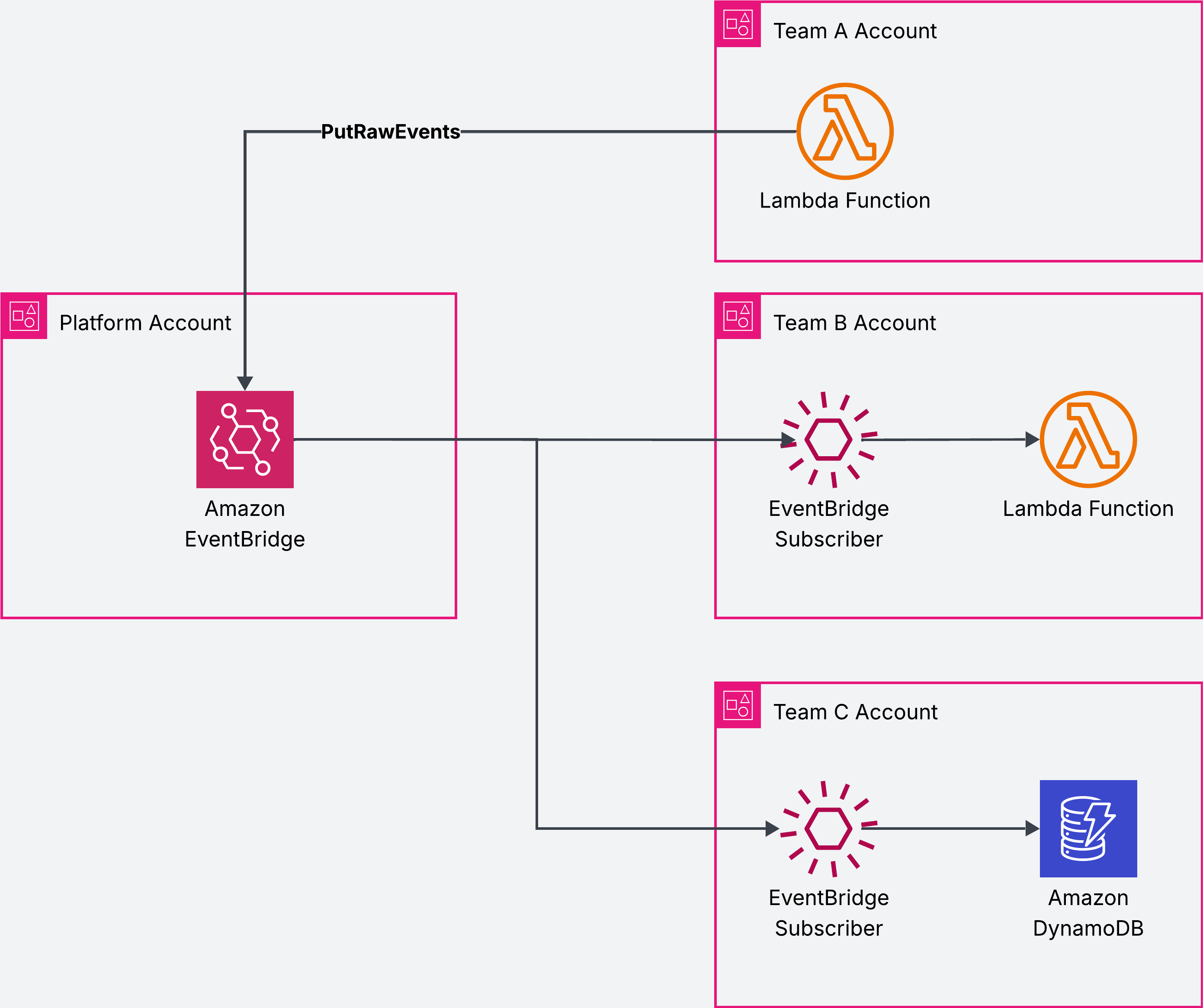
Figure 2: Shared Custom event bus with subscribers in team accounts
More services now publish directly to Amazon EventBridge. AWS Secrets Manager sends an event when a secret value changes, and Amazon Simple Storage Service (Amazon S3) Event Notifications now include system-generated tags, so one rule can match events from thousands of buckets. Scheduling email campaigns at scale with Amazon EventBridge Scheduler shows a high-volume scheduling pattern.
AWS Lambda
AWS Lambda functions outside an Amazon Virtual Private Cloud (VPC) with 2 GB of memory or more now get scalable network bandwidth. The bandwidth increases from 625 Mbps at 2 GB up to 3,000 Mbps at 10 GB. Functions that pull large amounts of data from Amazon S3 or external sources finish sooner, as the ETL fan-out pattern in the post shows.
SnapStart now supports container images, cutting startup for larger images from several seconds to as low as sub-second. Provisioned mode for Amazon Simple Queue Service (Amazon SQS) event source mappings now scales to 10,000 event pollers, five times the previous limit, for up to 100,000 concurrent invocations. Lambda can also read function code from your own S3 bucket. Lambda skips copying the package to its own storage, so code storage quotas stop being a concern and functions activate faster after updates.
Lambda Managed Instances
AWS Lambda Managed Instances, a capability of AWS Lambda, now supports a 90-minute timeout for asynchronous and event source mapping invocations, six times the 15-minute limit. This longer timeout can help for jobs such as media transcoding, Monte Carlo simulations, and batch inference. You can run on AWS Graviton-powered C9g, C9gd, M9g, and M9gd instances with up to 25% better performance than Graviton4. Capacity providers now publish logs to Amazon CloudWatch, showing scaling activity and instance lifecycle operations. Eliminating Java cold starts with AWS Lambda Managed Instances covers latency-sensitive Java functions.
Durable functions
The Durable Execution SDK for .NET is generally available, joining TypeScript, Python, and Java. You can now bring your own SDK for any runtime, checked against an open source conformance test suite. The Pydantic AI integration makes each model and tool call a durable step, so an interrupted agent resumes where it stopped instead of repeating expensive calls. If your data governance policies require keys you control, you can encrypt execution data with your own AWS Key Management Service (AWS KMS) key. Observability best practices for Lambda durable functions covers dashboards, alarms, and tracing. Durable functions is also now available in the AWS European Sovereign Cloud.
Lambda MicroVMs
The following video shows stateful game servers running on Lambda MicroVMs.
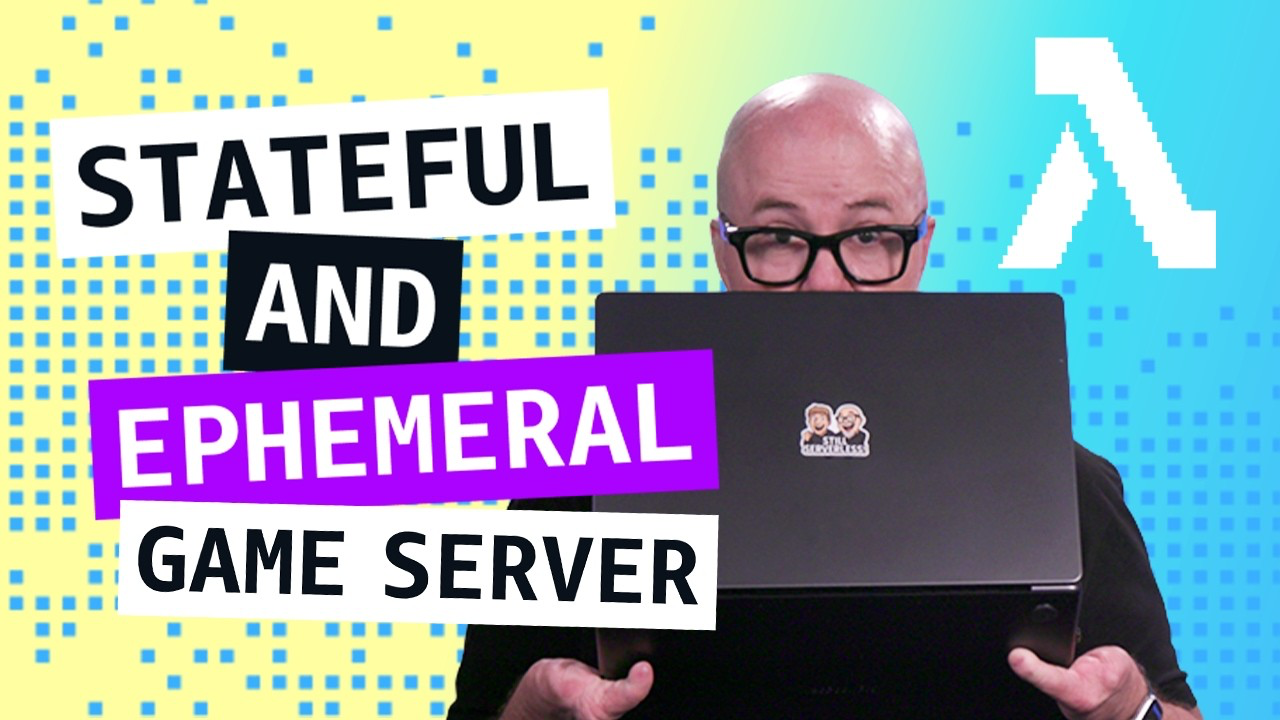
Figure 3: Building multiplayer game servers with AWS Lambda MicroVMs
Secure code execution for AI agents explains how each Lambda MicroVMs user or job gets its own Firecracker-isolated environment that keeps state for up to 8 hours. MicroVMs is now available in 10 Regions and supports AWS PrivateLink, without exposing traffic to the public internet. Other posts cover CPU and memory metrics and custom domains with an Application Load Balancer, and the AWS Developers channel shows stateful game servers on MicroVMs.
Running self-hosted AI agent sandboxes gives every agent session its own MicroVM in your account, with separate credentials, file system, and network boundary. Each MicroVM launches from a pre-captured snapshot, so new sessions skip application initialization.
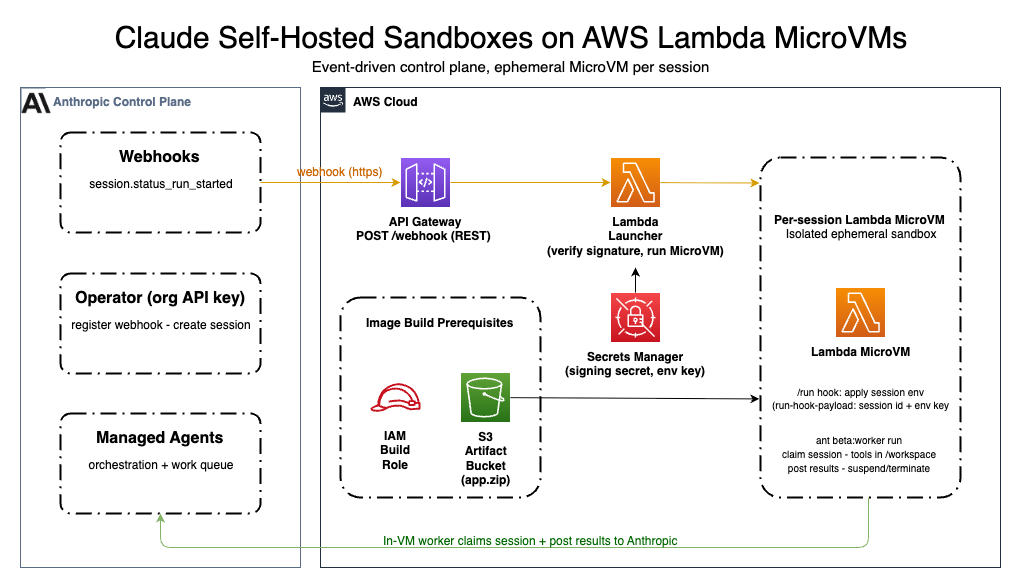
Figure 4: Self-hosted agent sandboxes on AWS Lambda MicroVMs architecture
Other Lambda updates
Lambda now offers public preview runtimes, starting with Node.js 26 and Python 3.15, so you can test your workloads before general availability. Java 8, 11, and 17 now run on Amazon Linux 2023, because Amazon Linux 2 reached end of life in June. You can move off Amazon Linux 2 without changing Java version at the same time. Functions support full AWS Identity and Access Management (AWS IAM) resource-based policies, and recursive loop detection is in all available commercial Regions. With S3 Files, you can configure direct reads from high-performance storage for lower latency or from your bucket for higher throughput. To change function behavior without redeploying, see Implementing dynamic feature flags with AWS AppConfig on AWS Lambda.
AWS Step Functions
AWS Step Functions now adds SDK integrations for new services automatically within weeks of release, starting with Lambda MicroVMs. A workflow can launch a MicroVM to run agent-generated code in isolation. Validating multi-agent decisions with Step Functions and Amazon Bedrock AgentCore fans work out to several agents with a Distributed Map and checks their decisions before acting.
Amazon SNS and Amazon API Gateway
Amazon Simple Notification Service (Amazon SNS) now supports message payloads up to 1 MiB, four times the previous limit. Set the MaximumMessageSize topic attribute to publish larger messages without splitting them, following the 1 MB increase across other serverless services in January. Amazon API Gateway now supports backend mTLS with your own client certificate and configurable destinations for execution logs.
Amazon S3
Amazon Elastic Container Service (Amazon ECS) on Amazon Elastic Compute Cloud (Amazon EC2) now supports S3 Files, and Amazon S3 Vectors, a capability of Amazon S3, adds metadata pre-filtering, returning up to 5 times more matches on selective filters. You can move objects to S3 Standard-IA on the day you create them instead of waiting 30 days. Object Lock adds event holds for retention that starts with a future event, such as a contract closing.
Building with AI
The Lambda console has a one-step setup prompt that configures your coding agent with AWS Serverless skills and the Serverless MCP server. The console-to-IDE integration now includes Kiro and Cursor and can convert your function to an AWS Serverless Application Model (AWS SAM) template. Set up your AI coding agent to build with AWS Step Functions does the same for workflows.
Agent Toolkit for AWS
The AWS MCP Server in the Agent Toolkit for AWS added a serverless capability that inspects a Lambda function and its connected resources, so your agent can diagnose issues in place. New skills cover Amazon Cognito, Amazon DocumentDB (with MongoDB compatibility), Amazon OpenSearch Service, and Amazon Redshift. The AWS Command Line Interface (AWS CLI) can now check for and update all skills in one command.
Amazon Bedrock AgentCore
The new AgentCore runtime, a capability of Amazon Bedrock AgentCore, reclaims unused memory during a session, so you pay for what you use, and keeps cold starts consistent. Runtime instances run agents on Amazon EC2 instance types you choose, much as Lambda Managed Instances does for functions. AgentCore payments, a capability of Amazon Bedrock AgentCore, is generally available, and temporal policies authorize tool calls based on what the agent already did in the session.
AgentCore memory, a capability of Amazon Bedrock AgentCore, added JSON payload extraction, fine-grained access control, flexible namespaces, and direct ingestion. AgentCore Identity, a capability of Amazon Bedrock AgentCore, has a managed consent portal for OAuth flows, and AWS Agent Registry is generally available. Amazon Bedrock Managed Agents, powered by OpenAI is in preview. New models include Claude Fable 5.1, Claude Opus 5.5, Claude Sonnet 5.5, GPT-6 Astra, GPT-6 Sol and Luna, and Kimi K3.
Strands Agents
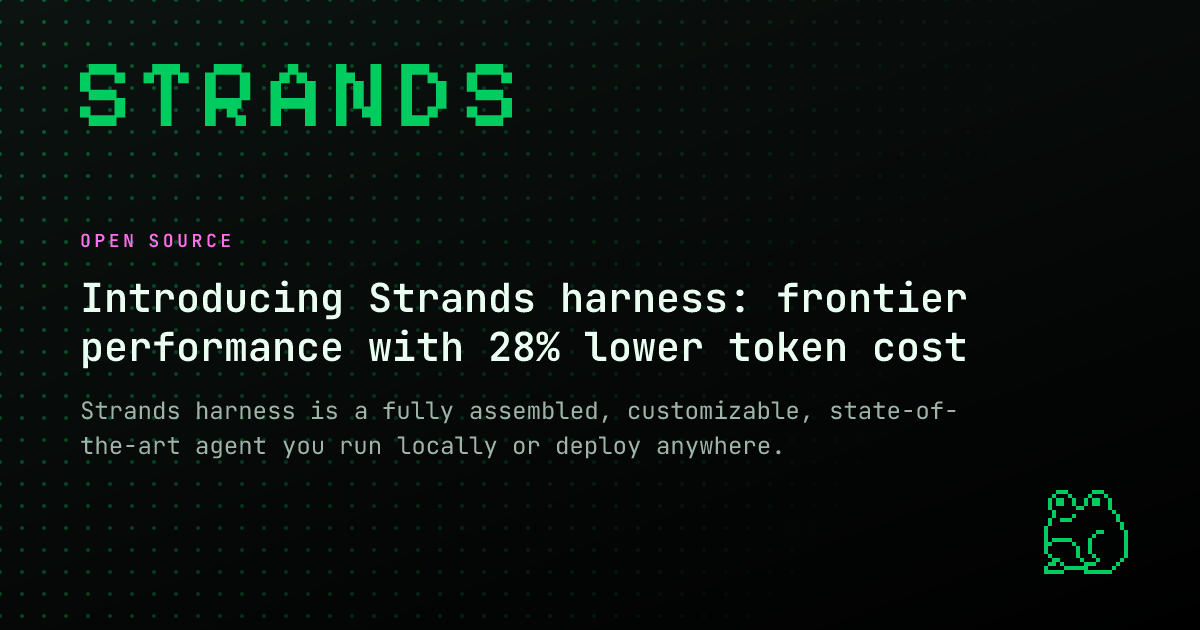
Figure 5: Introducing Strands harness
Strands harness is an open source, general-purpose agent you start with one line of Python or TypeScript and run locally or deploy anywhere. Across six benchmarks using the same models, it cost 28% less than other popular harnesses with similar accuracy, mostly because of its default context management. Harness Optimizer tunes prompts, tool descriptions, and skills automatically, strands-dynamodb-storage adds durable agent storage on Amazon DynamoDB, and Strands Evals now evaluates agents built with other frameworks.
Kiro
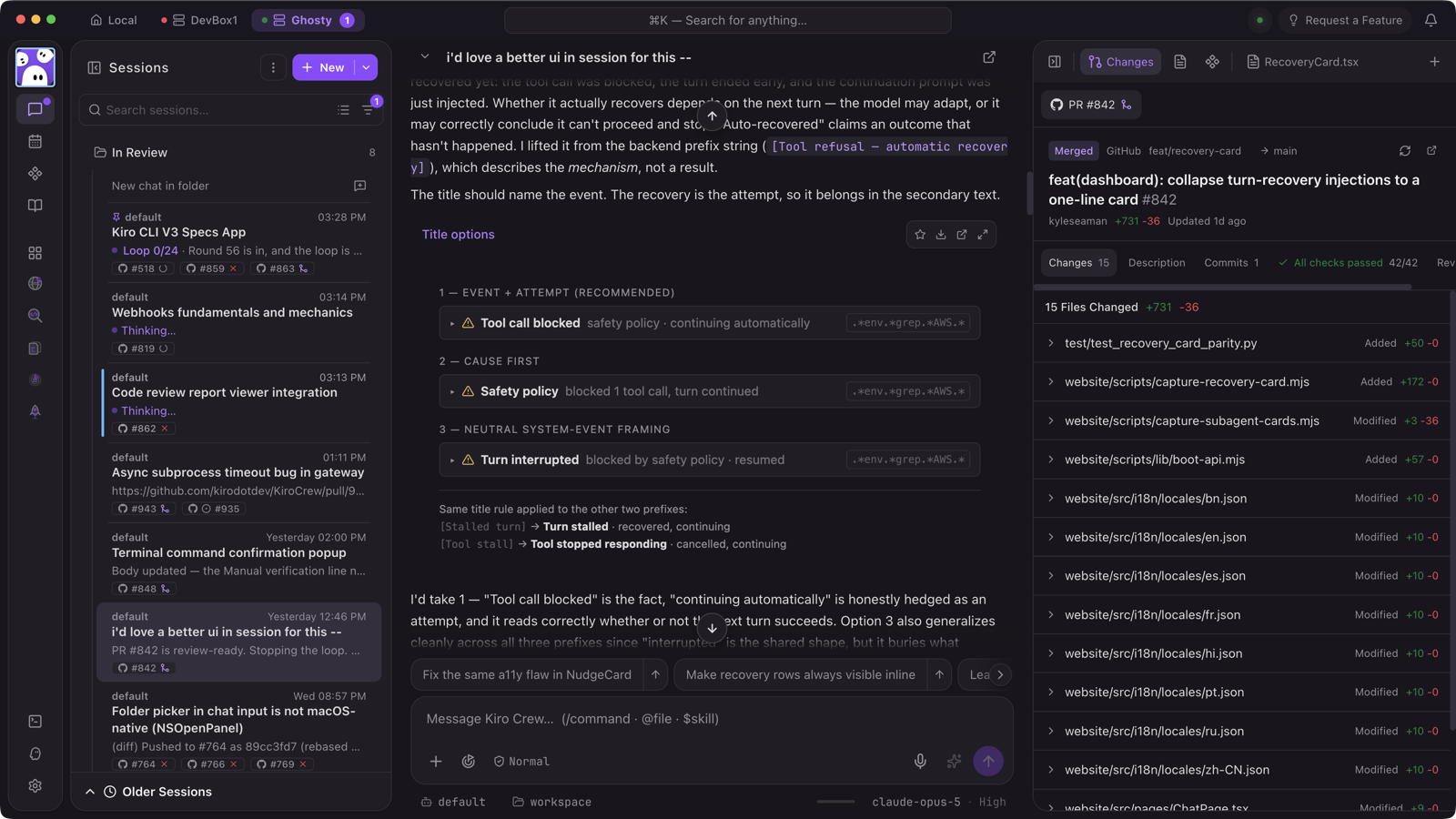
Figure 6: Kiro Crew session view
Kiro Crew is an open source workspace that runs agent work across sessions, schedules, and subagents from a desktop app, web dashboard, or terminal. Kiro on the web is generally available, cloud sessions keep CLI and IDE tasks running after you close your laptop, and workflows run multi-step plans across several agents in the background.
Serverless blog posts
Here are the Q3 2026 serverless blog posts, grouped by the month they published.
July
- Announcing Lambda MicroVMs: serverless compute environments with VM-level isolation and near-instant startup.
- Secure code execution for AI agents with AWS Lambda MicroVMs.
- Eliminating Java cold starts with AWS Lambda Managed Instances.
- Introducing self-managed Amazon S3 buckets for AWS Lambda function code.
August
- Low-latency, high-throughput SQS event processing with AWS Lambda provisioned mode.
- Collecting CPU and memory metrics for AWS Lambda MicroVMs.
- Observability best practices for Lambda durable functions.
- Implementing dynamic feature flags with AWS AppConfig on AWS Lambda.
- Introducing public preview runtimes on AWS Lambda, starting with Node.js 26 and Python 3.15.
- Set up your AI coding agent to build with AWS Step Functions.
September
- Scheduling email campaigns at scale with Amazon EventBridge Scheduler.
- Bring your own client certificate for backend mTLS in Amazon API Gateway.
- Announcing 90-minute function timeout on AWS Lambda Managed Instances.
- Customize Amazon API Gateway destinations for execution logs.
- Validating multi-agent decisions with Step Functions and Bedrock AgentCore.
- Running self-hosted AI agent sandboxes with AWS Lambda MicroVMs.
- Adding custom domains to AWS Lambda MicroVMs with Application Load Balancer.
- Improving Lambda function latency with scalable network bandwidth.
- Building event-driven applications at scale with Amazon EventBridge.
- Implementing customer managed keys for AWS Lambda durable functions with Terraform.
Still looking for more?
The Serverless landing page has overall information about building serverless applications. The Lambda resources page contains case studies, webinars, whitepapers, customer stories, reference architectures, and even more Getting Started tutorials.
You can also follow the Developer Advocacy team to get the latest news, follow conversations, and interact with the team.
- Julian Wood: @julian_wood, https://www.linkedin.com/in/julianrwood/.
- Eric Johnson: @edjgeek, https://www.linkedin.com/in/singledigit/.
- Erik Hanchet: @ErikCH, https://www.linkedin.com/in/erikhanchett/.
- Salih Gueler: @salihgueler, https://www.linkedin.com/in/salihgueler/.
- Marcia Villalba: @mavi888uy, https://www.linkedin.com/in/marciavillalba.
And finally, visit Serverless Land for your serverless needs.