
Sold by: Automation Anywhere, Inc.
Deployed on AWS
Automation Anywhere achieved Agentic AI, Generative AI and Conversational AI Competencies and transacts solely through Private Offer. The pricing is quoted based on software customization. Pricing stated in this listing is for reference only. Agentic Process Automation from Automation Anywhere unlocks entirely new levels of business capability, value, and innovation through agentic automation. It delivers end to end intelligent execution with centralized governance and control that works across any agent, model, or system of record, both legacy and modern and one of the first 100 companies worldwide to earn ISO/IEC 42001:2023 certification, the international standard for responsible AI governance.
Deployment Options:
1) Software as a service (SaaS) automation application that is centrally hosted and uniformly managed by AAI
2) Self Managed
3) Certified for AWS WorkSpaces
4.5
Overview
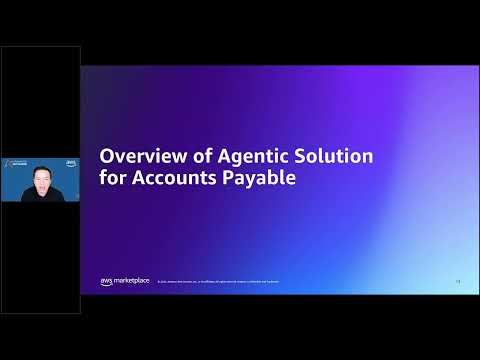
Automation Anywhere platform features
The Process Reasoning Engine (PRE) is the AI brain behind the Agentic Process Automation (APA) System and agentic solutions, securely orchestrating AI agents, automations, and people to run complex, cross functional business processes at scale. https://www.automationanywhere.com/products/process-reasoning-engine
Mozart Orchestrator manages decisions, dependencies, context, and exceptions, enabling AI agents to plan, reason, and collaborate across bots, systems, data, and human touchpoints and delivers resiliency at enterprise scale. https://www.automationanywhere.com/products/mozart-orchestrator
AI Agent Studio allows you to securely build powerful Agents capable of learn, make decisions and perform deep analysis. https://www.automationanywhere.com/products/ai-agent-studio
Automation CoPilot transforms how your team works with an AI powered automation assistant that lives right inside your existing apps, now with advanced natural language capabilities. https://www.automationanywhere.com/products/automation-co-pilot
Document Automation reimagines your document heavy processes with Intelligent Document Processing (IDP) without limits, powered by the industry first Process Reasoning Engine (PRE) instantly extract, validate, and route data from any document type. https://www.automationanywhere.com/products/document-automation
Automation Workspace is one stop shop for creating and managing agentic automations at high speed. https://www.automationanywhere.com/products/automation-workspace
Automation Cloud Service runs your automation workloads serverless on the Automation Anywhere AWS Cloud and get faster executions while spending less on automation infrastructure (drives consumption on Automation Anywhere tenants). https://www.automationanywhere.com/products/cloud-service
CoE Manager, from discovery to ROI tracking, is the command center for governing, scaling, and optimizing automation across the enterprise. https://www.automationanywhere.com/products/coe-manager
Automation Anywhere Code captures intent from any input format and generates structured plans outlining steps, data flows, and error handling for your review and refinement, and finally builds the agentic process automations for you. https://www.automationanywhere.com/products/automation-anywhere-code
UI Agent agentically automates complex workflows across web and Citrix environments, with unparalleled adaptability when things change. https://docs.automationanywhere.com/r/automation-generative-ai-overview/ui-agent-web-pkg
Autonouous IT Aisera AI for ITSM transforms legacy ITSM into an intelligent, agentic AI service management platform ushering in the era of next-gen ITSM. Aisera AIOps (AI for IT operations) predicts major incidents and automates remediations to minimize downtime and reduce operational costs with AIOps. Aisera AI for IT Service Desk reduces service desk tickets, boosts employee self-service, and improves agent productivity. Autonomous HR Unlock the full potential of your HR team with agentic AI that delivers instant self-service across the enterprise through channels like Microsoft Teams, Slack, and Email. Connected to business applications like Workday and ADP, Automation Anywhere AI agents seamlessly deliver knowledge, answers, and actions in real time helping HR scale support without scaling costs, giving teams time back for higher value work, and boosting employee productivity with instant answers through 24 x 7 self service. https://www.automationanywhere.com/solutions
Highlights
- Digital Acceleration and Instant-On Ease Of Use - Cloud automation bypasses the legacy barriers (rigid delivery models, technical complexity, and unfriendly user experience) to automation adoption and application across the enterprise. Open any web browser, log in, and automate. Intuitive experience optimized for every user type.
- Lower Total Cost Of Ownership - One of the biggest benefits of automating with cloud Agentic Automation is the lower total cost of ownership (TCO). Move from a CAPEX to OPEX model and streamline ongoing maintenance activities. Cloud automation eliminates setup time, infrastructure, and maintenance costs while enabling organizations to realize the cost benefits of public cloud.
- Agentic Automation For Every Enterprise Process - Built-in AI skills with intelligent screen recording and drag-n-drop actions. Agentic Automation surfaces automation tools, including artificial intelligence and Generative AI technologies, to more of the business. Bedrock, AgentCore, SageMaker Integrations and joint solution with Amazon Quick and Automation Co-Pilot are generally available.
Details
Sold by
Delivery method
Deployed on AWS
New
Introducing multi-product solutions
You can now purchase comprehensive solutions tailored to use cases and industries.

Features and programs
Buyer guide
Gain valuable insights from real users who purchased this product, powered by PeerSpot.
Financing for AWS Marketplace purchases
AWS Marketplace now accepts line of credit payments through the PNC Vendor Finance program. This program is available to select AWS customers in the US, excluding NV, NC, ND, TN, & VT.

Pricing
Pricing is based on the duration and terms of your contract with the vendor. This entitles you to a specified quantity of use for the contract duration. If you choose not to renew or replace your contract before it ends, access to these entitlements will expire.
Additional AWS infrastructure costs may apply. Use the AWS Pricing Calculator to estimate your infrastructure costs.
Dimension | Description | Cost/12 months |
|---|---|---|
Automation 360 | Agentic Process Automation System Sample Solution | $126,000.00 |
Dimensions summary
This listing has one pricing dimension billed under a contract model. You buy Automation 360 in Units, which represent the Agentic Process Automation System Sample Solution. Pricing scales with the number of Units you commit to, so you choose a quantity that matches your automation needs. There are no separate tiers or instance sizes to compare. Within that single Unit-based structure, you get the platform's ability to build and orchestrate AI agents, automations, and document processing across enterprise workflows.
Top-of-mind questions for buyers
A Unit maps to the Agentic Process Automation System Sample Solution. You count Units by the quantity you commit to under the contract. Pricing scales directly with that quantity, so more Units means more capacity to build and run AI agents, automations, and document processing across your workflows.
Cost scales with the number of Units you commit to. To expand automation, you add more Units at the per-Unit contract rate. There are no separate tiers or instance sizes, so growth means increasing your Unit quantity rather than moving between plans.
Your Unit-based contract covers the platform's ability to build and orchestrate AI agents, create automations, and process documents across enterprise workflows. These capabilities fall under the single Unit structure. Note that connecting to outside AI models relies on your own accounts with those model providers.
www.automationanywhere.com+1
Helpful?
Vendor refund policy
disabled
Custom pricing options
Request a private offer to receive a custom quote.

Legal
Vendor terms and conditions
Upon subscribing to this product, you must acknowledge and agree to the terms and conditions outlined in the vendor's End User License Agreement (EULA) .
Content disclaimer
Vendors are responsible for their product descriptions and other product content. AWS does not warrant that vendors' product descriptions or other product content are accurate, complete, reliable, current, or error-free.
Delivery details
Software as a Service (SaaS)
SaaS delivers cloud-based software applications directly to customers over the internet. You can access these applications through a subscription model. You will pay recurring monthly usage fees through your AWS bill, while AWS handles deployment and infrastructure management, ensuring scalability, reliability, and seamless integration with other AWS services.
Resources
Vendor resources
Support
Vendor support
Email and Calls
AWS infrastructure support
AWS Support is a one-on-one, fast-response support channel that is staffed 24x7x365 with experienced and technical support engineers. The service helps customers of all sizes and technical abilities to successfully utilize the products and features provided by Amazon Web Services.
Updated weekly
By Automation Anywhere, Inc.

By IBM Software

Top
10
In Finance & Accounting, Procurement & Supply Chain, Legal & Compliance
Top
10
In Human Resources, Customer Support, Sales & Marketing
Top
25
In Data Integration
Sentiment is AI generated from actual customer reviews on AWS and G2
Functionality
Ease of use
Customer service
Cost effectiveness
Positive reviews
Mixed reviews
Negative reviews
AI generated from product descriptions
AI-Powered Process Orchestration
Process Reasoning Engine (PRE) orchestrates AI agents, automations, and people to execute complex, cross-functional business processes at scale with centralized governance and control.
Intelligent Document Processing
Document Automation with Intelligent Document Processing (IDP) capabilities to extract, validate, and route data from any document type without limits.
Agentic Workflow Automation
UI Agent automates complex workflows across web and Citrix environments with adaptive capabilities for handling dynamic changes.
Natural Language Intent Processing
Automation Anywhere Code captures intent from any input format and generates structured plans with steps, data flows, and error handling for agentic process automation.
Enterprise AI Governance Certification
ISO/IEC 42001:2023 certification for responsible AI governance, ensuring compliance with international standards for AI management and control.
AI Agent Orchestration
Coordinates AI agents to automate tasks across HR, sales, procurement, and customer service systems from a unified platform, enabling cross-system workflow execution and action triggering.
Multi-System Integration
Connects to 700+ applications and systems including CRM, ERP, and AWS services through APIs, connectors, and visual integration builders for enterprise workflow automation.
Dual Development Paradigm
Supports both no-code visual builders for business users and pro-code development with APIs and agent development kit for developers to build and customize AI agents.
AWS Native Integration
Integrates with Amazon S3 for data storage, AWS Lambda for event-driven automation, API Gateway for connectivity, IAM for access control, and CloudWatch for monitoring and observability.
Hybrid and Multi-Cloud Deployment
Enables orchestration of workflows across cloud and on-premises systems, supporting hybrid and multi-cloud environments without requiring infrastructure replacement.
Multi-System Integration
Connects 700+ enterprise systems through maintained connectors for process automation, data integration, API management and intelligent document processing on a unified data model.
Native AI on Bedrock
Integrates with Amazon Bedrock to run LLM steps for classification, summarization, field extraction and PII tokenization without storing data or using it for model training.
AI Gateway and Policy Management
Provides centralized control point to route LLM calls, apply policies, monitor usage and cost across AI operations.
Multi-Model Support
Enables connection to multiple LLM providers including Amazon Bedrock, Anthropic, OpenAI, Google and Azure OpenAI with per-step model selection.
Enterprise Security and Compliance
Implements role-based access control, audit trails, PII tokenization, enterprise SSO, managed authentication and compliance certifications including SOC 1 Type II, SOC 2 Type II, HIPAA, GDPR and CCPA with multi-region hosting.
Standard contract
No
No
No
Customer reviews
Subba Rao
Automation has boosted my productivity and supports complex document and workflow automation
Reviewed on Oct 21, 2026
Review provided by PeerSpot
What is our primary use case?
I am a Senior Enterprise Architect still working for a company, using Automation Anywhere myself. Mainly SAP is integrated with Automation Anywhere, where I have used SAP mostly, and Salesforce as well, but not completely. Most of the tools I have integrated and interacted with is the SAP application mainly and web apps. Desktop apps are not too many, but web apps is another area where we have used heavily along with SAP. This is my experience from working with customers.
How has it helped my organization?
Automation Co-pilot has improved my productivity a lot. I think it has increased by 60% in terms of the tasks that I put forth when I log in and log out, and all the tasks will be done quickly. Even the next week activities I would be completing. My productivity has increased and it is growing steadily and gradually. As of now, I see my productivity has been enhanced by 60% using the Copilot features. Automation Co-pilot has helped free up staff to work on other projects and has helped me considerably.
What is most valuable?
I love Document Understanding in Automation Anywhere, especially IQ Bot; those are very good features to work with because of the needs and there is a potential opportunity for all companies to do these sorts of document processing, document extraction, and document learning. These are very good features in automation that I love to work with. The API is another way of working. In Automation Anywhere, IQ Bot is very good, which is comparable to Documentum. Automation Anywhere also has agentic AI solutions, which are very good in terms of minimal development and no overhead on deployment. I can easily plug and play in the organization's client ecosystem and spin up these solutions quickly. I love to work with these features repeatedly.
I assess Automation Co-pilot's ability to integrate with the organization's day-to-day applications as very good. This is very much applied in our job day-to-day at work. We see how the prompts can be enhanced and how to get low-code solutions and quickly spin up the POCs. Our complete knowledge base and ontology is very good in terms of using them in Automation Co-pilot. We are planning to drive a delivery strategy for one of our customers through this Copilot, which will orchestrate the workflows, orchestrate the agents, and orchestrate the bots so that we will have a complete end-to-end autonomous automation from an operations perspective. I love to do that. This is very good, delivering things driven by automation and Copilot features.
I assess the integration of automation into my workflows, APIs, business applications, and documents as very good. There are no words, but very good in terms of integration—fantastic and one of the standards and best practices. You can easily integrate with it. The ease of use is where I have seen improvement from the developers' perspective, because I interact with the developers and they keep telling me these are all integration points that Automation Anywhere offers in its capabilities and I think they are very easy to use. The integration of automation with other products, technologies, and tools across the world industry is one of the best.
What needs improvement?
I don't think Automation Anywhere is easy to use for business users who do not have technical skills. Though they have the feature, compared to other products, I don't see a lot of capability that Automation Anywhere has from a citizen developer's point of view or for non-technical folks. If you are very smart and you know how to use Automation Anywhere, it is all easy. But for basic folks and even non-technical users, 95% of them will be business users, and I don't see Automation Anywhere having the same capability comparatively. Power Platform, especially Power Apps, Power Automate, and Copilot Studio products and agents, are pretty good. I have seen this through my own experience and I regularly interact with business users teams for several engagements and have seen their feedback. They liked Power Platform very much compared to any other product, possibly Automation Anywhere. I have seen most of the users clinging to Power Platform in terms of ease of use, usability, and ease of doing any sort of development from their perspective.
Automation Anywhere can be improved by adding more built-in models, especially for standards across countries such as the United Kingdom, India, and Japan, regarding the way of passports, the way of invoicing, and supporting double-byte languages. More built-in models should be there instead of relying on custom models. Today, they are very good, but somehow they are not going to help or support our client engagements completely. We have to build a custom model. If we had specific models, country-specific, supporting every standard one, such as US passport or India passport, and supporting double-byte languages, more product capabilities would be exposed to the outside world and more users of Automation Anywhere bots across the world would benefit. I see this as an area where UiPath has advanced because they have good built-in models that you can train and retrain. I have seen one or two customers switching from Automation Anywhere to UiPath just because of the many built-in models available. If Automation Anywhere has this, I think the product will be very complete. I am sure the product team will be considering these facts based on customer feedback from organizations and partners.
I don't think any customer has asked for something which Automation Anywhere has not supported. I am just thinking about what could be the best improvement. Everything is there. Readymade solutions are available in the marketplace. Document understanding is there. Models are there, and you can develop and customize. Automation Anywhere also has IDP, though I think IDP needs some improvement.
For how long have I used the solution?
I have been dealing with Automation Anywhere for almost three and a half years, almost three and a half years.
How are customer service and support?
I would rate their technical support as nine out of ten. They are very quick and they go deep into troubleshooting. They come up with resolutions. I have not had to contact support more than five times in my time with Automation Anywhere, but whatever I have done or interacted with the team, I think they are very good. They consult deeply, get the logs, troubleshoot the diagnosis, use the diagnosis report, and then they are able to resolve it quickly. The support has always been good.
How was the initial setup?
The deployment of Automation Anywhere is not at all complex; it is very good. We deploy bots gracefully and we do not have to take down anything. Everything is done through our DevOps. We do it without disrupting the business. It is mostly a graceful method that we have adopted and we are continuing to do this because nothing has impacted us. There are some things one or two here and there, but overall, it is very good in terms of deployment and not disturbing the business.
What was our ROI?
Automation Anywhere has helped me save time and costs. I think there is great value, especially from a developers' perspective when they are working on very strong, complex automation projects. We see how Automation Anywhere helps us in terms of spinning up the bots. The workload management is very perfect. I know this is a feature that has been around for a while, but it is helping me to manage the work because we have the multi-bot architecture concepts here where multiple bots work together. The whole thing is very helpful and quite helpful. I am very excited to use that technology everywhere in every organization wherever I am working with the client ecosystem.
What's my experience with pricing, setup cost, and licensing?
I find the pricing of Automation Anywhere reasonable because of the value it brings to the table, the features, the capabilities, and how it supports the business processes, workflows, and the needs of the business and the client. I think it is worth the pricing. The features, the product capabilities, and how it benefits the customer is more important than the cost, considering the ROI. It is worth it based on its value and business value.
What other advice do I have?
I would rate Automation Anywhere overall as nine out of ten. Automation Anywhere is undoubtedly the pioneer in the market. All three that I have experienced are the contenders, and in fact, the Microsoft platform also, I would rate it as nine out of ten. All of them I rate nine out of ten—not just Automation Anywhere, but all of them—because I have seen them through my own experience and I have interacted and used them in my career with several organizations and client organizations. Some people are interested in Blue Prism, some in Microsoft Power Platform, some in Automation Anywhere, and some in UiPath. It is all based on how they want to proceed and based on the business case they have done for their organization. I would rate all four of them as nine out of ten because they are supported for every need.
Suddapalli A.
Quick Photo-Based Answers, but Inconsistent Results
Reviewed on Oct 14, 2026
Review provided by G2
What do you like best about the product?
I like that I don’t need to type. I can take a photo and ask, and it will reply. For quizzes, I can take a photo on my phone to get answers. I also found the setup easy.
What do you dislike about the product?
I don't always get perfect replies, and a few are irrelevant. When I try to modify a photo, it gives me an unknown photo instead of mine. Replies about PDFs and documents are also irrelevant.
What problems is the product solving and how is that benefiting you?
I use it for coding, quizzes, and general information. For quizzes, I can take a photo with my phone instead of typing and get answers.
Siddhartha S.
Keeps Issues and PRs Aligned for a Smooth, Reviewable Workflow
Reviewed on Oct 13, 2026
Review provided by G2
What do you like best about the product?
It really helps me keep all my issues and PRs aligned in a single commit, so I can make the changes, review everything in one place, and move on with building. I can also automate my application workflows within a single PR, then review it thoroughly and merge it whenever I’m ready.
What do you dislike about the product?
Sometimes it generates junk code that I have to review carefully before committing; otherwise, it can cause issues and create conflicts with my existing workflow. It also hallucinates many times to generate extra stuff that's not required.
What problems is the product solving and how is that benefiting you?
I use it for all my everyday coding workflows that I would normally handle with other generative AI tools. At this point, I’ve mostly moved on from those and only go back to them when the agent fails to deliver.
Vaibhav S.
Efficient Workflow, Needs Minor Tweaks
Reviewed on Oct 11, 2026
Review provided by G2
What do you like best about the product?
I like the schedulers in Automation Anywhere Agentic Process Automation, which helps maintain smooth workflow. I also appreciate the use of Langsmith, as it allows continuous monitoring and evaluation of responses, helping us improve our processes. The integration of guard rails is another aspect I value, along with the human intervention required to ensure the model evolves and learns over time. Moreover, I find the data retrieval capabilities from the ITR portal and the ability to send notices and mail to users particularly valuable.
What do you dislike about the product?
I ran into some issues with Automation Anywhere Agentic Process Automation when trying to fetch live data from the internet for real-time business planning. The process sometimes creates an infinite loop, leading to a timeout, which is pretty annoying. Also, the accuracy of the output wasn't always reliable, showing some hallucination that didn't match what I needed. I think those areas definitely need improvement.
What problems is the product solving and how is that benefiting you?
Automation Anywhere Agentic Process Automation fetches daily financial data, converts it to structured form for better analysis, saving time for CAs by avoiding manual data search.
Nikhil raman K.
Automation Anywhere experienced based review
Reviewed on Oct 09, 2026
Review provided by G2
What do you like best about the product?
I like how Automation Anywhere Agentic Process Automation aligns with business requirements and reduces manual workflows in daily activities. It enables teams to focus on more valuable tasks and offers workflow automation, chat assistance, and multimodal capabilities that simplify sharing blockers and resolving issues promptly.
What do you dislike about the product?
Some parts of using Automation Anywhere Agentic Process Automation can be a bit challenging. I've found that tracing and debugging issues can be hard and time-consuming at times. It would be really helpful if there were more detailed execution logs available to assess problems quickly. Also, it seems like the system could benefit from having more memory to remember past sessions, which would make troubleshooting easier. Additionally, the initial setup, especially the configuration part, took a significant amount of time, which was a bit of a hassle.
What problems is the product solving and how is that benefiting you?
I use Automation Anywhere Agentic Process Automation to automate time-consuming tasks like testing API endpoints, reducing manual workflows, and enabling my team to focus on more valuable projects. Its workflow automation and multimodal capabilities make issue resolution quicker.