
Sold by: IBM Software
Deployed on AWS
Free Trial
AWS Free Tier
IBM Turbonomic® automates application resource management in real time, ensuring performance and reducing costs by allocating compute, storage, and network resources.
4.5
Overview


Video
Automate cloud spend decisions and boost ROI

Video
IBM Turbonomic Cloud Optimization Demo

Video
IBM Turbonomic Kubernetes Optimization Demo

Video
IBM Turbonomic - Maximize the potential of VMware

Image
G2 Badges for IBM Turbonomic
IBM Turbonomic facilitates advanced, app-centric, demand-driven analysis that enables secure automation across hybrid multi-cloud environments. It helps businesses transform their operations by managing cloud costs, optimizing Kubernetes, unlocking better GPU utilization, and containing costs by rightsizing and increasing host density in hypervisors.
Continuously optimize spend across various cloud environments
- Optimize cloud spend while assuring application performance by automating resource provisioning. You can plan cloud migrations and optimize on-premises workloads before determining the optimal cloud configuration. Supports all major public clouds.
Put VMware optimization on autopilot
- Automate virtualized, private, and hybrid cloud infrastructures maximizing performance and data center investments.
Supports all major hypervisors.
Maximize ROI of next-generation Kubernetes platforms
- Optimize Kubernetes environments by automating resource management, unlocking elasticity at every layer.
Supports all major container management platforms.
Unlock true performance with GPU optimization
- Optimize GPU workloads at the lowest cost for resource-intensive workloads.formaximum efficiency without sacrificing performance.
Highlights
- Automates responses to performance issues by addressing resource utilization and overprovisioning to prevent issues before they happen
- Complete visualization of your application resources from the application layer to network levels to understand the underlying compute, storage and network resource health
- Real-time insights that empowers teams to make informed decisions to ensure applications have the resources they need when they need them
Details
Sold by
Delivery method
Deployed on AWS
New
Introducing multi-product solutions
You can now purchase comprehensive solutions tailored to use cases and industries.

Features and programs
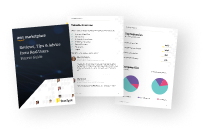
Buyer guide
Gain valuable insights from real users who purchased this product, powered by PeerSpot.
Financing for AWS Marketplace purchases
AWS Marketplace now accepts line of credit payments through the PNC Vendor Finance program. This program is available to select AWS customers in the US, excluding NV, NC, ND, TN, & VT.

Pricing
Free trial
Try this product free according to the free trial terms set by the vendor.
Pricing is based on the duration and terms of your contract with the vendor, and additional usage. You pay upfront or in installments according to your contract terms with the vendor. This entitles you to a specified quantity of use for the contract duration. Usage-based pricing is in effect for overages or additional usage not covered in the contract. These charges are applied on top of the contract price. If you choose not to renew or replace your contract before the contract end date, access to your entitlements will expire.
Additional AWS infrastructure costs may apply. Use the AWS Pricing Calculator to estimate your infrastructure costs.
Dimension | Description | Cost/12 months | Overage cost |
|---|---|---|---|
Turbonomic SaaS | price for 200 managed virtual servers | $37,909.82 |
Vendor refund policy
All orders are non-cancellable and all fees and other amounts that you pay are non-refundable. If you have purchased a multi-year subscription, you agree to pay the annual fees due for each year of the multi-year subscription term.

Legal
Vendor terms and conditions
Upon subscribing to this product, you must acknowledge and agree to the terms and conditions outlined in the vendor's End User License Agreement (EULA) .
Content disclaimer
Vendors are responsible for their product descriptions and other product content. AWS does not warrant that vendors' product descriptions or other product content are accurate, complete, reliable, current, or error-free.
Delivery details
Software as a Service (SaaS)
SaaS delivers cloud-based software applications directly to customers over the internet. You can access these applications through a subscription model. You will pay recurring monthly usage fees through your AWS bill, while AWS handles deployment and infrastructure management, ensuring scalability, reliability, and seamless integration with other AWS services.
Resources
Support
Vendor support
IBM Turbonomic for AWS Marketplace offers robust support options designed to build customer confidence and ensure successful deployment and operation. Here are some key details:
AWS infrastructure support
AWS Support is a one-on-one, fast-response support channel that is staffed 24x7x365 with experienced and technical support engineers. The service helps customers of all sizes and technical abilities to successfully utilize the products and features provided by Amazon Web Services.
Updated weekly
By IBM Software

By CloudHealth

Sentiment is AI generated from actual customer reviews on AWS and G2
Functionality
Ease of use
Customer service
Cost effectiveness
Positive reviews
Mixed reviews
Negative reviews
AI generated from product descriptions
Real-time Resource Automation
Automates application resource management in real time by addressing resource utilization and overprovisioning to prevent performance issues before they occur across compute, storage, and network resources.
Multi-cloud Cost Optimization
Optimizes cloud spend across all major public clouds through automated resource provisioning, supporting cloud migration planning and on-premises workload optimization.
Kubernetes Resource Management
Automates resource management in Kubernetes environments across all major container management platforms, enabling elasticity optimization at every layer.
Hypervisor Infrastructure Optimization
Automates virtualized, private, and hybrid cloud infrastructure management across all major hypervisors through rightsizing and host density optimization.
GPU Workload Optimization
Optimizes GPU workloads for resource-intensive applications by balancing performance and cost efficiency through automated resource allocation.
Multi-Cloud Cost Visibility
Report and analyze cloud spend across multiple cloud providers with dynamic business grouping and custom reporting capabilities.
Resource Optimization and Rightsizing
Provide recommendations for infrastructure rightsizing and management of Reserved Instances and Savings Plans to eliminate wasted spending.
Policy-Based Governance Engine
Implement dynamic policies and automated actions to enforce continuous optimization, including resource termination, budget adherence, and anomaly detection.
Infrastructure Analysis and Reporting
Analyze cloud infrastructure through customizable business groups with rich data visibility for multi-cloud environment management.
Cost Chargeback and Showback
Enable accurate cost allocation and reporting through chargeback and showback mechanisms for budget adherence tracking.
Agentless Discovery and Profiling
Agentless data collector provides application discovery, infrastructure resource utilization tracking, workload profiling, and dependency mapping without requiring agent installation.
Workload Placement and Migration Planning
Delivers application migration intelligence including infrastructure right-sizing recommendations, cloud instance suggestions, migration complexity analysis, and cross-cloud cost forecasting.
Cloud Cost Optimization
Continuous bill analysis with real-time alerting on unexpected cost changes, per-instance visibility into programmatic discounts and data transfer fees, and proactive optimization recommendations.
Policy-Based Right-Sizing Engine
Advanced 'What If' analysis engine enables management of performance, risk, and cost balance through policy-driven right-sizing decisions.
Multi-Tenant Microservices Architecture
Secure, federated, multi-tenant platform built on microservices and containers-based architecture for modularity, scalability, and flexibility across hybrid cloud environments.
Standard contract
No
No
No
Customer reviews
Jai P.
Efficient Automation, But Setup Can Be Challenging
Reviewed on Feb 23, 2026
Review provided by G2
What do you like best about the product?
I like IBM Turbonomic for its intelligent automation that automatically rightsizes resources to maintain performance while reducing cloud costs. It continuously analyzes application demand and adjusts CPU, memory, and cloud instance sizes in real time. This helps prevent performance bottlenecks, eliminates over-resourcing, and maintains SLAs.
What do you dislike about the product?
It can be complex to set up, has a learning curve, and licensing can be expensive for larger environments. Setup has been complex due to integration with multiple cloud platforms, hypervisors, and permission configurations. Initial setup is quite challenging because it required configuring integrations, permissions, and policies across environments which took some time to get right.
What problems is the product solving and how is that benefiting you?
IBM Turbonomic automatically optimizes application performance and infrastructure costs, solving issues like over-provisioning and cloud cost waste by rightsizing resources across environments.
Tushar P.
Reliable Infrastructure Optimization for Modern DevOps Teams
Reviewed on Feb 23, 2026
Review provided by G2
What do you like best about the product?
I like that Turbonomic goes beyond basic monitoring by providing automated resource optimization. It helps ensure applications get the right amount of CPU and memory, while also avoiding over-provisioning. Its Kubernetes and cloud integrations make it especially useful in modern DevOps environments.
What do you dislike about the product?
The learning curve can feel steep at first, and making sense of all the optimization actions takes some familiarity with infrastructure and Kubernetes. For beginners, the interface and underlying concepts may come across as complex and a bit overwhelming initially.
What problems is the product solving and how is that benefiting you?
IBM Turbonomic helps address over-provisioned and under-utilized infrastructure by continuously analyzing application demand and automatically optimizing how resources are allocated. Rather than manually tweaking CPU, memory, or scaling policies, the platform recommends or can execute actions that keep performance steady while cutting unnecessary cloud and infrastructure costs. For me, this means less time spent on manual tuning and more confidence that my applications are running efficiently without overspending.
Arjun G.
AI-Driven Efficiency, But Steep Learning Curve
Reviewed on Feb 22, 2026
Review provided by G2
What do you like best about the product?
I really appreciate how IBM Turbonomic reduces the bill for our clients without them needing to get involved in all the technical details. It's pretty neat how this tool has helped us build trust with our clients, enabling them to scale their companies with more tools from us. In a sort of indirect way, this has boosted growth for both our business and our clients' businesses.
What do you dislike about the product?
So I think the biggest hurdle with it is its steep learning curve and initial configuration complexity which can delay the time-to-value for clients when they always expect instant results. While the core of the platform, which is AI, is really awesome, but the reporting and dashboarding thing is really rigid, making it difficult for me to present some high-level business-centric KPIs that I have to mostly present and is asked for. So I need a lot of manual data work to do while implementing and generating KPIs. Similarly, the licensing cost is really high and tough for those small-scale Salesforce implementations that makes me unable to pitch this tool for them.
What problems is the product solving and how is that benefiting you?
IBM Turbonomic's AI-driven autopilot optimizes resource allocation in real-time, balancing performance and cost-efficiency. It eliminates over-provisioning guesswork, reduces client cloud bills, and maintains high application speed, fostering client trust and business growth while ending 'war room' culture.
sudhanshu r.
AI-Driven Automation That Optimizes Hybrid Cloud Resources with IBM Turbomic
Reviewed on Feb 22, 2026
Review provided by G2
What do you like best about the product?
The AI-driven automation that continuously optimizes resource allocation across our hybrid cloud environment. We used to multiple iterations of performance testing to find the optimised value of CPU, Memory threesholds for our HPA which can be avoided now by leveraging IBM Turbomic in production.
What do you dislike about the product?
Steep learning curve and requires significant configuration time to get started. The interface could be more intuitive for new users. For Eg - Datadogs or ArgoCD dashboards are more intutive.
What problems is the product solving and how is that benefiting you?
For every application or service that we want to deploy, we use HPA for the scaling part in production. We have to do multiple iterations of performance testing to find the threeshold values of CPU and memory utilisation and min, max replica to provide to devops which they can configure in the HPA for the application to scale in production. This is a very resource and cost intensive process as we have to simulate the production traffic scenario multiple times this is replaced by IBM Turbonomic as it directly predicts these values based on previous utilization metrics of other applications and only 1-2 iterations are sufficient to come to the optimum configuarion.
Abhishek P.
Optimizes Resources with Actionable Insights
Reviewed on Feb 21, 2026
Review provided by G2
What do you like best about the product?
I like IBM Turbonomic for its clear actionable recommendations, not just metrics. I also appreciate how accurate the recommendations are and how confidently we can automate the actions. It helps us with application resource optimization and cost control, right-sizing VMs and containers to prevent performance issues before users notice them and reducing costs by identifying over-provisioned resources. We also use it for capacity planning and automatic resource scaling.
What do you dislike about the product?
The UI feels complex at first and the initial setup time takes more time.
What problems is the product solving and how is that benefiting you?
I use IBM Turbonomic for application resource optimization and cost control. It helps prevent CPU and memory contention, right-size VMs and containers, and reduce unnecessary costs by identifying over-provisioned resources.