
Sold by: Commvault
Deployed on AWS
Commvault Cloud is focused on enabling cyber resilience - the industrys
first platform for true cloud data security that empowers businesses to
secure data, predict risks, minimize damage, and rapidly recover.
4.4
Overview

Image
AWS Storage Partner of the Year

Video
Product video
Foundational Protection includes Commvaults leading backup and recovery capabilities - offering the industrys most secure platform with the fastest and most scalable recovery at dramatically lower TCO. Plus, Foundational Protection supports more hybrid enterprise workloads than any other data security offering. It includes data security features like Zero Trust Architecture and immutable storage to ensure critical data is protected and recoverable. This solution can be delivered as customer-managed software, as SaaS, or a mix of the two to meet the requirements of hybrid enterprises worldwide.
Highlights
- Complete protection for your Amazon EC2, EBS, EKS, EKS-D, Red Hat OpenShift, S3, Aurora, RDS, RDS on VMware, Redshift, DynamoDB, DocumentDB, EFS, FSx and Amazon Outposts workloads. Store data in S3, Glacier, and AWS Snow family for migration.
- Simplify app migration into AWS native services. Cost optimize storage, network egress and compute runtime using intelligent orchestration. Replicate critical VMs, DBs, and file-systems and automatically trigger Disaster Recovery so you can sleep.
- Provide cost and risk reduction relating to storing, migrating, and consolidating data. Identify sensitive data risks, perform remediation, and support regulatory compliance, including GDPR and CCPA. Comply with information requests via eDiscovery.
Details
New
Introducing multi-product solutions
You can now purchase comprehensive solutions tailored to use cases and industries.

Features and programs
Trust Center

Access real-time vendor security and compliance information through their Trust Center powered by Drata or Vanta. Review certifications and security standards before purchase.
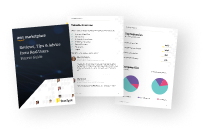
Buyer guide
Gain valuable insights from real users who purchased this product, powered by PeerSpot.
Financing for AWS Marketplace purchases
AWS Marketplace now accepts line of credit payments through the PNC Vendor Finance program. This program is available to select AWS customers in the US, excluding NV, NC, ND, TN, & VT.

Pricing
Pricing is based on the duration and terms of your contract with the vendor. This entitles you to a specified quantity of use for the contract duration. If you choose not to renew or replace your contract before it ends, access to these entitlements will expire.
Additional AWS infrastructure costs may apply. Use the AWS Pricing Calculator to estimate your infrastructure costs.
Dimension | Description | Cost/12 months |
|---|---|---|
Commvault Foundational Protection | Price is list price per TB for a 1 year, Up-Front Payment. | $1.00 |
Dimensions summary
This listing has one pricing dimension: Commvault Foundational Protection, billed per terabyte (TB). You pay a list price for each TB of data you protect. Billing runs on a 1-year contract with a single up-front payment. Your total cost scales with the amount of data you protect. To estimate your commitment, multiply the per-TB price by the number of terabytes you plan to cover. There are no separate tiers or instance sizes to choose from; the single per-TB rate applies across your protected data volume.
Top-of-mind questions for buyers
You are billed per terabyte of data you protect across covered workloads. This includes virtual machines, containers, databases, applications, endpoints, and files, whether they run in the cloud, on-premises, or in hybrid environments. Your total TB count reflects the volume of protected data, not the number of machines or accounts.
Your cost scales with the number of terabytes you protect. As your data footprint grows, you cover more TB, and your commitment rises with that volume. There are no separate tiers or instance sizes; the single per-TB rate applies uniformly across all protected data.
The per-TB price covers Foundational Protection backup and recovery. Commvault offers storage options across public cloud providers, including the choice to bring your own storage. Underlying cloud storage fees for where backups are held may apply separately from this software commitment. Contact the vendor to confirm storage arrangements for your setup.
www.commvault.com
Helpful?
Vendor refund policy
This product is purchased with a Commvault license. Any and all refunds are subject to your EULA

Legal
Vendor terms and conditions
Upon subscribing to this product, you must acknowledge and agree to the terms and conditions outlined in the vendor's End User License Agreement (EULA) .
Content disclaimer
Vendors are responsible for their product descriptions and other product content. AWS does not warrant that vendors' product descriptions or other product content are accurate, complete, reliable, current, or error-free.
Delivery details
Software as a Service (SaaS)
SaaS delivers cloud-based software applications directly to customers over the internet. You can access these applications through a subscription model. You will pay recurring monthly usage fees through your AWS bill, while AWS handles deployment and infrastructure management, ensuring scalability, reliability, and seamless integration with other AWS services.
Resources
Support
Vendor support
Premium Support is included with your AWS Marketplace purchase. Support level may be uplifted via the Commvault Enterprise Support Professional Services product. Commvault's Maintenance Advantage (MA) e-Support portal is available 24x7x365. It includes a comprehensive knowledge base, software updates, and incident tracking, and many other capabilities. Don't forget to share your support details via Product Support Connection (PSC), to activate your Premium Support benefits. You can access PSC at https://aws.amazon.com/marketplace/support-contacts?ref_=aws-mp-console-side-nav Contact Customer Support Toll Free: +1 877-780-3077
AWS infrastructure support
AWS Support is a one-on-one, fast-response support channel that is staffed 24x7x365 with experienced and technical support engineers. The service helps customers of all sizes and technical abilities to successfully utilize the products and features provided by Amazon Web Services.
Similar products
Commvault Cloud Air Gap Protect provides isolated, immutable, indelible storage to protect mission critical backup data from ransomware, cyberattacks, and other threats. Backups copies stored in Air Gap Protect are protected from unauthorized access and deletion, adding another layer of recoverability even if primary environments are compromised.
The Commvault Cloud Access Node (or Backup Gateway) is a specialized data mover (or proxy) that facilitates efficient, secure, and scalable backup/restore operations, especially in virtualized or cloud environments. It offloads data processing from source systems and ensures optimized data flow to backup storage. This is an infrastructure component of the Commvault software and requires an existing Commvault Cloud control plane to be used.
Fully managed service delivering enterprise-class cyber resilience and data protection. Optimized protection for native AWS workloads with guided onboarding and automated workload discovery so you can get started in minutes. Stay ahead of ransomware and cyberthreats and deliver fast, clean recovery of workloads - whether they are traditional datacenter apps or cloud-native - when it matters most.
Commvault Cloud is an enterprise-grade platform built for unified cyber resilience across cloud-native, AI, and traditional datacenter applications to meet the demands of the hybrid enterprise in the face of ransomware and other cyber threats. Commvault Cloud unifies the best data security with the fastest recovery, advanced AI, and the power of a broad partner ecosystem to help the world's largest organizations reduce risk, minimize downtime, and keep business moving forward.
Customer reviews
Retail
Commvault Cloud 11.42.80: Clear daily reports and more tasks without relying on the Java console
Reviewed on Sep 23, 2026
Review provided by G2
What do you like best about the product?
Our usage of Commvault Cloud—specifically version 11.42.80—has increased; previously, we handled almost everything via the Java console, but since this update, we perform many tasks directly within Commvault Cloud. Key advantages include daily backup reporting—which helps us meet our client's requirement for weekly reports—and the ability to clearly see what succeeded and what didn't. Within these reports, we utilize the "Calendar Job Summary" to view daily job execution by system; this allows us to identify failures without impacting business operations or onboarding processes, while also simplifying support and dashboard management.
What do you dislike about the product?
They release a lot of patches that fail to pass validation, which ends up impacting operations; although they are simple to install, something unexpected always comes up, forcing us to open a support case. In the version we use, we identified a bug involving AIX 7.2 and Oracle RAC. Another thing we dislike is that support is very disconnected—there is no one to coordinate or link the various issues together; they view things in silos, and we aren't entirely happy with that approach.
What problems is the product solving and how is that benefiting you?
With the new version, we achieved integration with Oracle Cloud Infrastructure and successfully integrated backups for OpenShift; the client is very pleased with this achievement—being able to back up the system after having been unable to do so for over a year with a different platform.
Construction
Excellent Backup and Recovery solutions with Great Customer Support
Reviewed on Sep 23, 2026
Review provided by G2
What do you like best about the product?
Easy to navigate user interface, good structure with useful information. Excellent customer support.
What do you dislike about the product?
The ongoing price is quite high and difficult to justify to the management. Some of the reporting can be improved to meet customer's requirements.
What problems is the product solving and how is that benefiting you?
Its immutable backup serves as one of our key strategies in ransomware attack scenario.
Automotive
Easy, High-Performance Agent-Based Backups with Great Cloud storage Integration
Reviewed on Sep 21, 2026
Review provided by G2
What do you like best about the product?
This has been my best experience with agent-based backups compared to other backup systems. It offers a lot of control while still being easy to use, for example when backing up databases such as SQL Server or PostgreSQL. I’ve also seen a very good deduplication ratio and high backup/copy performance. The integration with mixed and archive tiers of Cloud Storage (like OCI Archive Storage) is another plus. Support has been helpful as well.
What do you dislike about the product?
Expensive licensing, especially for workloads like M365. There are also some inconsistencies between the CommCell Console and Command Center. Command Center lacks some of the functionality that is available in the CommCell Console.
What problems is the product solving and how is that benefiting you?
Maintaining business continuity while handling day-to-day administrative issues.
Easy to handle and reliable in operation
Reviewed on Sep 21, 2026
Review provided by G2
What do you like best about the product?
Easy to handle and reliable in ongoing operation.
What do you dislike about the product?
Permission management could be clearer.
What problems is the product solving and how is that benefiting you?
Simple and straightforward backup of M365 data for us and our customers.
Food & Beverages
Strong Multi-Platform Support, Especially for IBM Power Systems
Reviewed on Aug 25, 2026
Review provided by G2
What do you like best about the product?
It supports multiple platforms, specifically IBM Power Systems.
What do you dislike about the product?
The user interface feels more complicated than I expected, and it takes some time to adapt to it.
What problems is the product solving and how is that benefiting you?
I can use Commvault to back up an SAP HANA database on IBM Power Systems.