
Sold by: Palo Alto Networks
Deployed on AWS
Quick Launch
Fully managed, cloud-native firewall service with threat prevention, app control and advanced URL filtering that integrates with AWS Firewall Manager, CloudWatch and more.
4.3
Overview

Product Overview
Cloud Next-Generation Firewall (CNGFW) for AWS delivers best-in-class network security powered by artificial intelligence and machine learning, stopping zero-day exploits faster than traditional platforms. This fully managed turnkey cloud-native firewall service with 99.99% availability removes the complexity of managing firewall infrastructure in AWS. It lets you immediately turn on the next-generation firewall features and scale your security, ensuring seamless protection for your applications in the AWS environment.
Cloud NGFW extends your threat prevention capabilities across AWS environments and seamlessly integrates with key AWS services like AWS Firewall Manager, CloudWatch, Kinesis Firehose, and more. It provides real-time insights, automated security workflows, and granular traffic control for robust network protection. Recent enhancements include Strata Cloud Manager integration for centralized visibility and firewall-as-code enhancements.
Benefits
-
Effortless Deployment and Zero-Operational Burden: Palo Alto Networks Cloud NGFW takes care of the complex operational tasks, allowing for seamless firewall deployment and management in AWS. It streamlines processes such as certificate management, software upgrades, patch management and multi-dimensional scaling to ensure 99.99% availability. By eliminating the challenges of managing and scaling firewalls yourself, you can deploy robust cloud protection in just a few clicks, without worrying about infrastructure management.
-
Advanced Threat Prevention. Secure your AWS VPC traffic from zero-day attacks and unknown command-and-control traffic using Cloud-Delivered Security Services (CDSS) powered by Precision AI as well as Unit 42 Threat Research, enabling detection and mitigation 180x faster than traditional platforms.
-
Real-Time Threat Detection. Protect your applications with advanced AI and ML-powered threat prevention, leveraging intelligence derived from 70,000+ global customers to stop zero-day exploits, DNS threats, and web-based threats before they impact your network. This extensive threat intelligence network continuously learns and adapts, providing unparalleled protection that evolves with the latest attack vectors.
-
Granular Traffic Control. Gain visibility and precise control over your network traffic based on workloads, users, and applications with patented Layer 7 classification. Reduce attack surfaces and safeguard your AWS environment from malicious traffic.
-
Centralized Visibility. Simplify security operations with centralized management using Strata Cloud Manager or Panorama. Gain comprehensive visibility into applications, users, and threats for more efficient security management, faster threat resolution, and optimized policy creation.
-
Improved Metrics & Monitoring. Leverage AWS CloudWatch to monitor NGFW health, performance, and usage patterns in real-time, ensuring your security operations run at peak efficiency.
-
Firewall-as-Code Enhancements. Automate your firewall deployment, policy enforcement and account management workflows with the support of APls, CloudFormation and Terraform. Eliminate manual interventions and streamline your security operations.
-
Cloud NGFW is the Firewall-as-a-Service. Choose either AWS Firewall Manager or Palo Alto Networks Panorama for consistent policy management across multiple AWS accounts, enabling flexible control and seamless security across your cloud environments.
Activate your 30-Day free trial and create up to two next-generation firewall resources on your existing AWS VPCs, securing up to 100GB of traffic. After the free trial, you'll transition to a pay-as-you-go model, and you can check your subscription status on the Subscription Management page.
Highlights
- Deploy your next-generation firewall with one-click, automated provisioning that auto-scales to match your network traffic. Leverage Palo Alto Networks Panorama or Strata Cloud Manager for unified security management, ensuring you maintain control and visibility across your cloud infrastructure without the complexity of managing infrastructure.
- Integrate seamlessly with AWS-native services like CloudWatch, Kinesis Firehose, and AWS Firewall Manager, providing real-time insights, granular traffic control, and enhanced security capabilities. Backed by Palo Alto Networks Unit 42 Threat Research, the service delivers cutting-edge threat prevention and faster mitigation of zero-day exploits.
- Cloud NGFW supports automated onboarding of AWS environments and workflow automation through APIs, CloudFormation, and Terraform, enabling quick deployment and consistent operations. Gain comprehensive visibility and management across multiple AWS accounts with centralized security operations using Strata Cloud Manager or Panorama.
Details
Sold by
Categories
Delivery method
Deployed on AWS
New
Introducing multi-product solutions
You can now purchase comprehensive solutions tailored to use cases and industries.

Features and programs
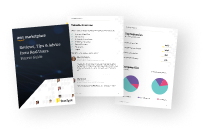
Buyer guide
Gain valuable insights from real users who purchased this product, powered by PeerSpot.
Financing for AWS Marketplace purchases
AWS Marketplace now accepts line of credit payments through the PNC Vendor Finance program. This program is available to select AWS customers in the US, excluding NV, NC, ND, TN, & VT.

Quick Launch
Leverage AWS CloudFormation templates to reduce the time and resources required to configure, deploy, and launch your software.
Pricing
Pricing is based on actual usage, with charges varying according to how much you consume. Subscriptions have no end date and may be canceled any time.
Additional AWS infrastructure costs may apply. Use the AWS Pricing Calculator to estimate your infrastructure costs.
Dimension | Cost/unit |
|---|---|
Base NGFW - incl. 3 AZs (1unit=1 usage hour), addt'l AZ 0.33 unit/hr | $1.50 |
Traffic Secured - First 15 TB / month (1 unit = 1 GB) | $0.065 |
Traffic Secured - Next 15 TB / month (1 unit = 1 GB) | $0.045 |
Traffic Secured - Above 30 TB / month (1 unit = 1 GB) | $0.03 |
Add-Ons (1 unit = 1 Cloud NGFW Credit) (refer to page bit.ly/cngfwaws) | $0.012 |
Dimensions summary
You pay only for what you use, with no upfront commitment. Your bill combines separate charges. A firewall charge is based on usage hours; the base covers three availability zones, and each extra zone adds a fraction of an hour per hour. A traffic charge applies per gigabyte inspected, tiered by monthly volume: the first 15 TB, the next 15 TB, and anything above 30 TB. Optional add-ons draw on Cloud NGFW Credits. The trial runs 30 days, then converts to this pay-as-you-go billing. Charges scale with your actual deployment size and traffic.
Top-of-mind questions for buyers
One unit equals one hour of running the base firewall service across three availability zones. Each additional availability zone adds 0.33 unit per hour on top of the base. So a fourth zone raises your hourly rate proportionally. Charges accrue only while the firewall runs.
Traffic is metered per gigabyte inspected and grouped into monthly tiers. The first 15 TB bills at one rate, the next 15 TB at another, and volume above 30 TB at a third. Only the gigabytes within each band bill at that band's rate, not your whole volume.
Both bill independently and add together on one invoice. Firewall hours scale with how many zones run and for how long. Traffic charges scale with gigabytes inspected each month. High-throughput deployments tend to see traffic charges dominate; low-traffic always-on setups lean toward the hourly firewall charge. Add-ons draw separately from Cloud NGFW Credits.
www.paloaltonetworks.com
Helpful?
Vendor refund policy
We do not currently support refunds, but you can cancel at any time.
Custom pricing options
Request a private offer to receive a custom quote.

Legal
Vendor terms and conditions
Upon subscribing to this product, you must acknowledge and agree to the terms and conditions outlined in the vendor's End User License Agreement (EULA) .
Content disclaimer
Vendors are responsible for their product descriptions and other product content. AWS does not warrant that vendors' product descriptions or other product content are accurate, complete, reliable, current, or error-free.
Delivery details
Software as a Service (SaaS)
SaaS delivers cloud-based software applications directly to customers over the internet. You can access these applications through a subscription model. You will pay recurring monthly usage fees through your AWS bill, while AWS handles deployment and infrastructure management, ensuring scalability, reliability, and seamless integration with other AWS services.
Resources
Vendor resources
Support
Vendor support
"Premium support is now included with the product: https://www.paloaltonetworks.com/resources/datasheets/premium-support . To help you get started with your deployment such as how-to videos, deployment guides and reference architectures, please visit: https://live.paloaltonetworks.com/t5/cloud-ngfw-help-center/ct-p/Cloud_NGFW . For post-sales support, you can use the following options: 1) Open a case by following the steps here: https://www.paloaltonetworks.com/services/support/customer-support-plan . 2) Call us at 1 (866) 898-9087"
AWS infrastructure support
AWS Support is a one-on-one, fast-response support channel that is staffed 24x7x365 with experienced and technical support engineers. The service helps customers of all sizes and technical abilities to successfully utilize the products and features provided by Amazon Web Services.
Updated weekly
By Palo Alto Networks
By Forcepoint
By Check Point Software Technologies
Sentiment is AI generated from actual customer reviews on AWS and G2
Functionality
Ease of use
Customer service
Cost effectiveness
Positive reviews
Mixed reviews
Negative reviews
AI generated from product descriptions
AI and Machine Learning-Powered Threat Prevention
Artificial intelligence and machine learning-powered threat prevention leveraging Precision AI and Unit 42 Threat Research to detect and mitigate zero-day exploits 180x faster than traditional platforms.
Layer 7 Application Classification and Control
Patented Layer 7 classification enabling granular traffic control based on workloads, users, and applications with precise visibility and malicious traffic filtering.
Cloud-Delivered Security Services Integration
Cloud-Delivered Security Services (CDSS) powered by threat intelligence from 70,000+ global customers providing real-time detection of zero-day exploits, DNS threats, and web-based threats.
Infrastructure as Code and Automation Support
Support for automated deployment and policy management through APIs, CloudFormation, and Terraform enabling firewall-as-code workflows and infrastructure automation.
AWS Native Service Integration
Seamless integration with AWS services including AWS Firewall Manager, CloudWatch, Kinesis Firehose, and Strata Cloud Manager for centralized management and real-time monitoring.
Intrusion Prevention System
Leading Intrusion Prevention System (IPS) integrated into unified security solution for threat detection and prevention
Advanced Evasion Technique Detection
Capability to identify and stop Advanced Evasion Techniques (AETs) with superior performance compared to other security devices
Application Layer Security
Advanced application control with application layer exfiltration security and dynamic security controls
Sandboxing and Malware Analysis
Sandboxing technology for identifying zero-day attacks and advanced malware threats
Centralized Management Console
Unified management console for streamlined security administration across data center, office, and branch firewalls
Advanced Threat Prevention Capabilities
Includes firewall, Data Loss Prevention (DLP), Intrusion Prevention System (IPS), application control, IPsec VPN, URL filtering, antivirus, and anti-bot features for multi-layered network security.
Traffic Inspection and Control
Inspects and controls encrypted data flows between on-premises networks and AWS VPCs, including North-South traffic entering and exiting private subnets and East-West traffic between VPCs.
Infrastructure-as-Code Integration
Integrates with infrastructure-as-code tools including Terraform and Ansible for policy automation, with dynamic security policy adaptation based on real-time cloud metadata.
AWS Service Integration
Supports integration with AWS Transit Gateway, Gateway Load Balancer, AWS Security Hub, VPC Ingress Routing, AWS Traffic Mirroring, AWS Outposts, and Amazon Macie.
Centralized Security Management
Provides unified, centralized management through Check Point Security Management Server with consistent policy, logging, and reporting across AWS, hybrid, and on-premises environments.
Standard contract
No
No
No
Customer reviews
neha w.
Robust, Scalable Cloud NGFW with Strong Threat Prevention and Centralized Policy Control
Reviewed on Oct 14, 2026
Review provided by G2
What do you like best about the product?
I value security solutions that combine robust threat prevention, architectural scalability, and operational simplicity. This NGFW delivers strong security solutions for cloud environments, particularly for enterprises looking to implement consistent network security controls without the operational overheads of managing the traditional firewall infrastructure. One of the key strengths of cloud NGFW is its intelligence of advanced security capabilities, including app ID-based application visibility and controls, threat prevention, intrusion detection and prevention, URL filtering, and protection against known and emerging threats. These capabilities help organizations enforce granular security policies and strengthen their overall cloud security posture. From an architecture and deployment perspective, its integration with cloud-native networking services enables organizations to secure traffic flows across cloud workloads while maintaining scalability and high availability. Centralized policy management, detailed logging, and visibility into network traffic are particularly valuable for troubleshooting, security monitoring, and maintaining compliance in complex enterprise environments. From a technical leadership standpoint, I appreciate the ability to align security enforcement with cloud networking architecture while reducing the burden of routine firewall infrastructure management. This allows engineering teams to focus more on security policy optimization, traffic analysis, incident investigation, and overall network resilience.
What do you dislike about the product?
The main area I would like to see improved is the depth of technical troubleshooting and traffic diagnostics. More granular packet-drop visibility, clearer session-level insights, and better correlation between traffic logs and threat logs would help engineers identify the root cause of issues faster. Improved real-time performance telemetry during high traffic loads would also be valuable for technical analysis and troubleshooting.
What problems is the product solving and how is that benefiting you?
Palo Alto Networks Cloud NGFW helps solve the challenge of securing cloud network traffic against cyber threats while maintaining visibility and control over application traffic. It provides advanced threat prevention, application-level inspection, and centralized security policy enforcement without requiring teams to manage the underlying firewall infrastructure. From a technical perspective, it benefits me by improving threat detection, enabling granular traffic analysis, and simplifying security operations. It also helps reduce the operational overhead of firewall maintenance, allowing me to focus more on security monitoring, troubleshooting, and maintaining a strong security posture.
Anonymous
Security-Focused, Needs More Free Trials
Reviewed on Oct 13, 2026
Review provided by G2
What do you like best about the product?
I like that Palo Alto Networks Cloud NGFW provides a secure way of handling data, which is really important for my needs. The uniqueness of its network also stands out to me. Additionally, I'm familiar with the G2 service for maintaining network security, and Palo Alto Networks Cloud NGFW helps manage the data with security as a priority. It's pretty straightforward to use since it behaves like a regular cloud service but with enhanced security. I find setting it up easy, considering it feels like an open source service.
What do you dislike about the product?
I feel like the current pricing is an issue because even for basic use, it charges for free trials. I think they should offer more free trials to attract users and let them explore the product more effectively. That's really the only thing that comes to mind.
What problems is the product solving and how is that benefiting you?
Palo Alto Networks Cloud NGFW helps in managing and securing data, enhancing cloud security which I find crucial.
Jai T.
Excellent Threat Management, Needs Better Visibility
Reviewed on Oct 10, 2026
Review provided by G2
What do you like best about the product?
I like that Palo Alto Networks Cloud NGFW handles encrypted malicious traffic very well. It is especially good at firewall management, which I find effective in managing my network security. Additionally, I found the initial setup process to be very good and easy-going, which was a pleasant surprise. Overall, its ease of use and functionality make it very likely that I would recommend it to others. Giving it a score of 10 on a recommendation scale really reflects my satisfaction with this tool.
What do you dislike about the product?
I think the visibility and monitoring could be improved. It would be better if it provided a unified view of traffic threats.
What problems is the product solving and how is that benefiting you?
Palo Alto Networks Cloud NGFW solves cyberattacks, unauthorized access, app-based threats, data theft, and malicious websites.
Shikhar M.
Good cloud security features, but configuration could be simpler
Reviewed on Oct 09, 2026
Review provided by G2
What do you like best about the product?
What I like most is the level of control it provides over network security, especially when I’m managing cloud workloads. The traffic visibility and threat-prevention features are genuinely useful, and being able to manage security policies from a single place makes day-to-day administration much easier. I also appreciate that it integrates well with cloud environments like AWS and Azure. Overall, the security capabilities feel strong, without needing to manage separate firewall solutions for every environment.
What do you dislike about the product?
The initial setup and configuration can feel a bit complicated, especially when you’re just getting started. There are quite a few settings to work through, and troubleshooting certain issues isn’t always straightforward. I also think the pricing is on the higher side, particularly for smaller environments. The documentation is decent overall, but adding more practical, real-world examples would make the process much easier.
What problems is the product solving and how is that benefiting you?
The main problem it helps solve is managing security across cloud workloads without having to handle everything separately. It gives clearer visibility into network traffic, helps identify potential threats, and makes firewall policy management more centralized. As a result, it can save time when monitoring and maintaining security across different environments. It also helps keep security policies consistent, which becomes especially useful as the cloud infrastructure grows and expands.
Aryan S.
Centralized, Scalable Cloud Security with Palo Alto Networks Cloud NGFW
Reviewed on Oct 06, 2026
Review provided by G2
What do you like best about the product?
Palo Alto Networks Cloud NGFW is that it delivers centralized, scalable network security for cloud environments without creating significant additional operational overhead.
What do you dislike about the product?
One area I find challenging with Palo Alto Networks Cloud NGFW is the initial configuration and learning curve. Setting up policies, routing, integrations, and troubleshooting traffic flows can require a good understanding of both cloud networking and Palo Alto security concepts.
What problems is the product solving and how is that benefiting you?
Palo Alto Networks helps us address two key security challenges. On the endpoint side, it provides secure global VPN connectivity for devices, so users can safely connect to corporate and cloud resources before they start work. On the cloud side, Cloud NGFW adds another layer of protection for applications and workloads running in AWS by controlling and inspecting network traffic and enforcing security policies.
For me, this means secure access to the infrastructure I work on, while also helping protect our cloud applications and services from unauthorized or potentially malicious network traffic. Overall, it gives us a consistent security layer across both user access and cloud environments.
For me, this means secure access to the infrastructure I work on, while also helping protect our cloud applications and services from unauthorized or potentially malicious network traffic. Overall, it gives us a consistent security layer across both user access and cloud environments.