
Sold by: dbt Labs
Deployed on AWS
dbt Platform is a hosted service that helps data analysts and engineers product-ionize dbt deployments. It comes equipped with turnkey support for scheduling jobs, CI/CD, serving documentation, monitoring & alerting, and an Integrated Developer Environment (IDE).
4.7
Overview

dbt is an open source data transformation tool that allows anyone comfortable with SQL to author their own data pipelines. dbt Platform provides a stable, professional grade environment for building and orchestrating dbt projects. It's the fastest and most reliable way to deploy dbt.
Find out if dbt Platform works with your data base or data warehouse here: https://docs.getdbt.com/docs/available-adapters
Sign up for a free, 14-day trial here: https://www.getdbt.com/signup/
Highlights
- Save time with an IDE built for dbt, including a SQL Runner capable of running Jinja; and guided process to enforce version control best practices, even for users new to git
- Set up custom schedules to run production jobs including incremental testing upon change or before deployment.
- dbt Platform provides professional grade support and security for the enterprise (SOC2, Type II compliance, SSO, role-based access)
Details
Sold by
Delivery method
Deployed on AWS
New
Introducing multi-product solutions
You can now purchase comprehensive solutions tailored to use cases and industries.

Features and programs
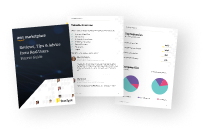
Buyer guide
Gain valuable insights from real users who purchased this product, powered by PeerSpot.
Financing for AWS Marketplace purchases
AWS Marketplace now accepts line of credit payments through the PNC Vendor Finance program. This program is available to select AWS customers in the US, excluding NV, NC, ND, TN, & VT.

Pricing
Pricing is based on the duration and terms of your contract with the vendor, and additional usage. You pay upfront or in installments according to your contract terms with the vendor. This entitles you to a specified quantity of use for the contract duration. Usage-based pricing is in effect for overages or additional usage not covered in the contract. These charges are applied on top of the contract price. If you choose not to renew or replace your contract before the contract end date, access to your entitlements will expire.
Additional AWS infrastructure costs may apply. Use the AWS Pricing Calculator to estimate your infrastructure costs.
Dimension | Description | Cost/12 months |
|---|---|---|
dbt Platform | dbt Platform Plan: 10 Develop Licenses | $48,000.00 |
Dimension | Cost/unit |
|---|---|
Additional overages as defined in contract | $0.01 |
Dimensions summary
This listing bills on a contract basis with two dimensions. The core dbt Platform Plan includes 10 Develop Licenses, which cover the developer seats your team uses to build and run data models. The second dimension covers additional overages, billed as defined in your contract when usage goes beyond what the base plan includes. Together, these let you commit to a set license count while allowing room to grow. The base plan sets your committed capacity, and overages handle extra consumption without requiring a new contract.
Top-of-mind questions for buyers
A Develop License is one developer seat. It covers a person who builds and runs data models in the platform. The base plan includes 10 such seats. Each seat maps to one individual using the development tools, not to a project or a data model.
Your base plan sets committed capacity for 10 Develop Licenses. Overage charges apply only when your usage goes beyond what that base plan includes. The two dimensions bill independently: the base plan is your fixed commitment, and overages are added as defined in your contract when extra consumption occurs.
The overage dimension is defined by your contract, so specific triggers depend on your agreed terms. In general, the platform meters items like developer seats and models built. Consumption above your committed amounts can create overages. Review your contract for the exact metrics and thresholds that apply to your account.
www.getdbt.com
Helpful?
Vendor refund policy
All fees are non-cancellable and non-refundable except as required by law.
Custom pricing options
Request a private offer to receive a custom quote.

Legal
Vendor terms and conditions
Upon subscribing to this product, you must acknowledge and agree to the terms and conditions outlined in the vendor's End User License Agreement (EULA) .
Content disclaimer
Vendors are responsible for their product descriptions and other product content. AWS does not warrant that vendors' product descriptions or other product content are accurate, complete, reliable, current, or error-free.
Delivery details
Software as a Service (SaaS)
SaaS delivers cloud-based software applications directly to customers over the internet. You can access these applications through a subscription model. You will pay recurring monthly usage fees through your AWS bill, while AWS handles deployment and infrastructure management, ensuring scalability, reliability, and seamless integration with other AWS services.
Resources
Support
Vendor support
Complete documentation is available at https://docs.getdbt.com/docs/dbt-cloud/cloud-overview/ . support@getdbt.com
AWS infrastructure support
AWS Support is a one-on-one, fast-response support channel that is staffed 24x7x365 with experienced and technical support engineers. The service helps customers of all sizes and technical abilities to successfully utilize the products and features provided by Amazon Web Services.
Updated weekly
Top
10
In Data Analytics, ELT/ETL, Business Intelligence & Advanced Analytics
Top
100
In Analytic Platforms
Top
100
In Databases & Analytics Platforms
Sentiment is AI generated from actual customer reviews on AWS and G2
Functionality
Ease of use
Customer service
Cost effectiveness
Positive reviews
Mixed reviews
Negative reviews
AI generated from product descriptions
Integrated Development Environment
IDE built for dbt with SQL Runner capable of executing Jinja templates and guided version control enforcement for git best practices
Job Scheduling and Orchestration
Custom scheduling capabilities for production jobs with incremental testing triggered on change or before deployment
CI/CD Pipeline Support
Continuous integration and continuous deployment functionality for automated dbt project workflows
Enterprise Security and Compliance
SOC2 Type II compliance certification, single sign-on (SSO) authentication, and role-based access control
Monitoring and Alerting
Built-in monitoring and alerting capabilities for tracking job execution and system health
AI-Native Code Development Environment
Integrated development environment with AI capabilities for coding data pipelines using dbt and Python, featuring built-in warehouse access and column-level lineage context.
State-Aware Pipeline Scheduling
Scheduler supporting state-aware execution of dbt and Python data pipelines with column-level impact analysis for CI testing.
Warehouse Cost Optimization
AI-agent system operating continuously to monitor and optimize data warehouse costs through intelligent resource management.
Data Pipeline Orchestration
Orchestration capabilities to sequence Fivetran data ingestion, data transformation pipelines, and downstream application refreshes including Tableau and PowerBI.
Column-Level Data Lineage Tracking
Lineage tracking system providing column-level visibility and impact analysis across data transformations and dependencies.
Massively Parallel Processing Architecture
Full-featured MPP (Massively Parallel Processing) engine with elastic scalability for distributed data processing across multiple nodes.
SQL Compatibility and Standards Compliance
ANSI SQL compliant with ACID transaction support and industry-standard connectivity via ODBC and JDBC interfaces for ETL and BI tool integration.
Flexible Data Model Support
Support for both row and column-oriented table formats with ability to intermix row and column tables in queries without restrictions.
Schema-Agnostic Processing
Schema-agnostic architecture that places no constraints on data organization or placement, requiring minimal to no performance tuning.
High-Volume Data Ingestion
Cloud-scale engine optimized for continuous high-volume data ingestion and complex data pipeline processing with support for large multi-terabyte datasets.
Standard contract
No
Customer reviews
Anish G.
Simple SQL-Driven Materializations with Powerful Lineage
Reviewed on Jun 21, 2026
Review provided by G2
What do you like best about the product?
It’s very simple to use. All we really need to know is SQL, and it’s easy to create different types of materializations in it. Most importantly, it has a lineage feature.
What do you dislike about the product?
The UI could use a bit of improvement. After opening different models, it starts to look a little messy and cluttered. Cortex can be added by default to add models using AI.
What problems is the product solving and how is that benefiting you?
It helps me create different types of models in Snowflake or any other warehouse. I can write simple CTE-based SQL, and dbt generates the underlying code and creates the tables in Snowflake or other databases.
Aneesh T.
Great UI Makes Data Lineage and Flow Easy to Understand
Reviewed on Jun 12, 2026
Review provided by G2
What do you like best about the product?
Great UI—it's easy to see the lineage and the data flow.
What do you dislike about the product?
Lineage isn’t exactly easy to follow when it’s rendered. I wish there were a better explorer so I could view the lineage properly.
What problems is the product solving and how is that benefiting you?
dbt is our primary data transformation tool, it is helping us model data to out needs
Praveen K.
Simplifying Data Transformations
Reviewed on Jun 02, 2026
Review provided by G2
What do you like best about the product?
Easy SQL-based data transformations and testing.
What do you dislike about the product?
Large projects can become difficult to manage.
What problems is the product solving and how is that benefiting you?
DBT automates data transformations, testing, and documentation, improving data quality and pipeline reliability, and development efficiency.
reviewer2846985
Data pipelines have grown in complexity and now support automated tests and rich documentation
Reviewed on May 28, 2026
Review provided by PeerSpot
What is our primary use case?
My main use case for dbt is data pipelines. I build data transformations and usually construct analytics pipelines.
What is most valuable?
I use dbt to handle transformations because it is really good at generating automatic documentation. dbt orchestrates and automates workflows, and it provides visualization of the data. dbt generates documentation from the code automatically. I also use tests where I can define automatic tests that will run.
dbt has positively impacted my organization by allowing us to expand the ceiling of complexity because once we have written the SQL, we can manage significantly more complexity since we are not spending all of our time doing it ourselves.
What needs improvement?
dbt can be improved by introducing Python. Ideally, I would want to be able to orchestrate across the DAG and have both Python and SQL combined. The last time I used it, it was not able to visualize that on the DAG.
The main issue I have had with dbt is that when I start a project inside dbt, the structure I have to use is somewhat strict. In terms of reusability and abstraction, it is really good inside a project, but as soon as I try to create a package, something that others could use or make my work reusable, it was not very good. dbt was not very good at package management.
For how long have I used the solution?
I have been using dbt for four years.
What do I think about the stability of the solution?
dbt is stable.
What do I think about the scalability of the solution?
dbt's scalability is probably where it shines the most; it is really scalable compared to using just SQL.
How are customer service and support?
I have not had to use customer support for dbt. dbt has a very strong community. I would rate the customer support as really good since I have never had to use it; I can go on the forums and get most of my questions answered.
Which solution did I use previously and why did I switch?
I did not previously use a different solution before dbt; every time I have used dbt, it was always embedded.
What was our ROI?
I have seen a return on investment from using dbt. I would say that you needed fewer people. You take your time, but I do not have concrete metrics.
What's my experience with pricing, setup cost, and licensing?
My experience with pricing, setup cost, and licensing for dbt is that dbt is open source for its core modules, so the pricing, setup, and everything was really good.
Which other solutions did I evaluate?
I did not evaluate other options before choosing dbt.
What other advice do I have?
My advice for others looking into using dbt is to read the documentation; it is not that difficult to use. I would rate this review an 8 out of 10.
Health, Wellness and Fitness
Scalable, Easy-to-Use Data Pipelines That Shine with Snowflake
Reviewed on May 19, 2026
Review provided by G2
What do you like best about the product?
its capabilities to put features of development pipelines into the data pipelines. The interface is fairly easy to use. Its scalability and performance, as it can handle very big workloads by pushing it into the DW. It works wonderfully integrated with Snowflake. Pricing is predictable.
What do you dislike about the product?
It requires very high skills to use effectively. Should have much more AI capabilities.
What problems is the product solving and how is that benefiting you?
Cleaning and preparing the data for all other processes