
Sold by: Azul
Deployed on AWS
Azul Platform Prime delivers optimizes Java application performance and drives cloud cost efficiency.
4.5
Overview

Azul Prime (Zing) Builds of OpenJDK is the best JVM for Java Workloads. Prime builds upon Java's advantages by delivering a robust, highly scalable Java Virtual Machine (JVM) that provides great ROI and reduces infrastructure spending to run existing workloads through greater carrying capacity, lower latency, and the elimination of garbage collection-related outliers. Azul Prime Builds of OpenJDK is a fully compliant and certified Java SE version, verified by the OpenJDK Technology Compatibility Kit (TCK) (JDK) and requires no recompilation or coding changes to use.
Supporting newly-developed microservice-based applications in addition to long-running legacy systems, Azul Platform Prime is the best JVM choice for all Java workloads, including online retail, SaaS or Cloud-based deployments, insurance portals, low-latency trading systems, multi-user gaming platforms, or Big Data.
Azul Prime JDK provides a predictable, low latency runtime that ensures smooth operation anywhere predictable, glitch-free Java is essential. For information about AWS Private Offer and Azul Prime annual pricing visit: (https://www.azul.com/products/pricing/ ) or contact an Azul Java Expert here: (https://www.azul.com/contact/ ) and we can put together a Java solution to meet your specific needs, leveraging your Amazon EDP spend.
Highlights
- Get going faster: built-in ReadyNow technology accelerates Java warm-up times and gets you going faster
- Faster machine code: Falcon is an optimized LLVM-based JIT compiler. Fewer instructions are needed to improve latency SLA targets
- Eliminate latency outliers: C4 Collector used to run 2-5X more transactions through your infrastructure - without pauses, jitters, or timeouts
Details
Sold by
Delivery method
Delivery option
64-bit (x86) Amazon Machine Image (AMI)
Latest version
Operating system
Ubuntu 22.04
Deployed on AWS
New
Introducing multi-product solutions
You can now purchase comprehensive solutions tailored to use cases and industries.

Features and programs
Trust Center

Access real-time vendor security and compliance information through their Trust Center powered by Drata or Vanta. Review certifications and security standards before purchase.
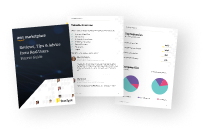
Buyer guide
Gain valuable insights from real users who purchased this product, powered by PeerSpot.
Financing for AWS Marketplace purchases
AWS Marketplace now accepts line of credit payments through the PNC Vendor Finance program. This program is available to select AWS customers in the US, excluding NV, NC, ND, TN, & VT.

Pricing
Pricing is based on actual usage, with charges varying according to how much you consume. Subscriptions have no end date and may be canceled any time. Alternatively, you can pay upfront for a contract, which typically covers your anticipated usage for the contract duration. Any usage beyond contract will incur additional usage-based costs.
Additional AWS infrastructure costs may apply. Use the AWS Pricing Calculator to estimate your infrastructure costs.
Dimension | Cost/hour |
|---|---|
t2.medium Recommended | $0.075 |
Dimensions summary
You pay for this product by the hour on a single dimension tied to the t2.medium instance type. Billing is usage-based, so charges accrue for each hour the software runs on that instance size. There are no upfront commitments or fixed terms in this listing. Your cost scales directly with how many hours you keep the instance running. This dimension covers the Azul Zing Builds of OpenJDK, a high-performance Java runtime, deployed on the t2.medium size.
Top-of-mind questions for buyers
You pay for the software running on one t2.medium instance, a general-purpose size with two virtual CPUs and roughly 4 GB of memory. The hourly rate covers the Azul Zing Builds of OpenJDK runtime on that single instance. Add more instances to run more copies.
Software charges accrue only while the instance runs. Stopping or powering off the instance halts the hourly software fee. Underlying AWS storage or other AWS resources may still bill separately, but the software meters running hours only.
You get the Azul Zing Builds of OpenJDK, a TCK-compliant JVM based on OpenJDK. It includes the C4 pauseless garbage collector, the Falcon JIT compiler, and ReadyNow warmup optimization. No code recompilation is required to run your existing Java workloads.
docs.azul.com
Helpful?
Vendor refund policy
There are no refunds or cancellations

Legal
Vendor terms and conditions
Upon subscribing to this product, you must acknowledge and agree to the terms and conditions outlined in the vendor's End User License Agreement (EULA) .
Content disclaimer
Vendors are responsible for their product descriptions and other product content. AWS does not warrant that vendors' product descriptions or other product content are accurate, complete, reliable, current, or error-free.
Delivery details
64-bit (x86) Amazon Machine Image (AMI)
Amazon Machine Image (AMI)
An AMI is a virtual image that provides the information required to launch an instance. Amazon EC2 (Elastic Compute Cloud) instances are virtual servers on which you can run your applications and workloads, offering varying combinations of CPU, memory, storage, and networking resources. You can launch as many instances from as many different AMIs as you need.
Version release notes
Additional details
Usage instructions
Once the instance is running, connect over ssh using your private key. For example, ssh -i privatekey.pem ubuntu@ec2-22-22-222.compute-1.amazonaws.com . Run any Java application using $JAVA_HOME/bin/java. For more information, consult the Azul Platform Prime online documentation: https://docs.azul.com/prime/
Resources
Support
Vendor support
Support terms are defined by AZUL SUPPORT AND MAINTENANCE SERVICES,
AWS infrastructure support
AWS Support is a one-on-one, fast-response support channel that is staffed 24x7x365 with experienced and technical support engineers. The service helps customers of all sizes and technical abilities to successfully utilize the products and features provided by Amazon Web Services.
Updated weekly
By Apps4rent LLC

By Supported Images
Sentiment is AI generated from actual customer reviews on AWS and G2
Functionality
Ease of use
Customer service
Cost effectiveness
Positive reviews
Mixed reviews
Negative reviews
AI generated from product descriptions
JIT Compilation Optimization
Falcon LLVM-based JIT compiler that reduces instruction count to improve latency SLA targets
Garbage Collection Technology
C4 Collector that eliminates garbage collection pauses and jitters while enabling 2-5X higher transaction throughput
Java Warm-up Acceleration
ReadyNow technology that accelerates Java application warm-up times
Java SE Compliance
Fully compliant and certified Java SE version verified by OpenJDK Technology Compatibility Kit (TCK) requiring no recompilation or coding changes
Low Latency Runtime
Predictable low latency runtime environment designed for applications requiring glitch-free Java execution
Java Runtime Environment
OpenJDK17 pre-installed and configured on the virtual machine image
Operating System
Ubuntu 22.04 LTS with long-term support
Pre-configured Machine Image
Ready-to-use Amazon Machine Image with pre-installed Java environment requiring minimal setup
Technical Support and Maintenance
Ongoing technical support and maintenance services provided by Apps4Rent
Rapid Deployment
Virtual machine image designed for quick initialization and deployment of Java applications within minutes
Java Platform Implementation
OpenJDK 21 implementation of Java Platform, Standard Edition (Java SE) with support for Java SE development tools and libraries
Security Hardening
Core STIG hardened image with security enhancements aligned with industry standards and hardening process documentation
Framework Compatibility
Compatibility with Java frameworks including Spring, Hibernate, and Java EE for enterprise application integration
Cloud Optimization
Optimization for AWS EC2 infrastructure with system performance tuning, flexible scaling capabilities, and seamless AWS ecosystem integration
Microservices Support
Support for microservices architecture, web services, and cloud-native applications with enterprise-level scalability
Standard contract
Customer reviews
Mohakhan Khan
Real-time charging has stayed consistent and cuts GC incidents while reducing cloud costs
Reviewed on Sep 29, 2026
Review from a verified AWS customer
What is our primary use case?
We run a large in-memory data grid to store millions of customers -- clusters of up to 30-40 JVMs, each with ~90GB heap, deployed across a variety of infrastructure including Azure, AWS, and on-prem. Azul Zing avoids full GC impact, giving us better latency and higher throughput for our online charging system.
How has it helped my organization?
With non-Azul JVMs we saw frequent crashes, CPU spikes, and hangs from stop-the-world GC pauses. With Zing, GC-related incidents are almost zero. We get lower transaction latency and cost savings — same TPS with fewer machines, which cuts our cloud (EC2/Azure) spend significantly.
What is most valuable?
The best features Azul Zing offers include no stop-the-world during the full GC.
No stop-the-world pauses during full GC, and we hit higher TPS with fewer JVMs -- a real win for maintenance and cost. As an online charging system, we can't afford crashes or latency spikes. Before Zing, JVMs would hang and drop from the grid on missed heartbeats. GC tuning is also out-of-the-box -- no more time consuming manual tuning like with Oracle/OpenJDK with no significant outcome.
What needs improvement?
Nothing major, but one nuance: Zing auto-adjusts internal config based on available CPUs, which can cause brief CPU spikes every few minutes. These are harmless, but can give ops/monitoring teams a false alarm. Better visibility or documentation on this behavior would help.
For how long have I used the solution?
I have been using Azul Zing for more than six years.
What do I think about the stability of the solution?
Very stable. Before Zing, we faced frequent JVM crashes, hangs, and CPU spikes from stop-the-world GC pauses, requiring planned restarts every few days just to avoid unplanned failures. Since moving to Zing, that operational overhead is gone — incidents are almost zero, and our JVMs stay up reliably across 30-40 node clusters running 24/7 for our online charging system.
What do I think about the scalability of the solution?
Scalability has been excellent. We run clusters of 30-40 JVMs, each with ~90GB heap, across many productions of varying sizes on AWS, Azure, and on-prem. We've never hit a scalability limit with Zing — it consistently handles our growth in TPS and customer volume without needing to add more JVMs, which also keeps our infrastructure and licensing costs in check.
How are customer service and support?
Excellent. Support is just a mail away — they respond quickly, and queries are handled in a friendly, down-to-earth way. You don't need to be deeply technical to get help; they meet you where you are and resolve issues efficiently.
Which solution did I use previously and why did I switch?
Yes, we previously used Oracle JDK/JRE and OpenJDK. We switched due to full GC stop-the-world pauses causing crashes, latency spikes, and operational pain (planned restarts, constant GC tuning)
How was the initial setup?
Initial setup was mostly straightforward — well documented, and licensing was simple. Some tuning was needed initially, but notably not GC parameter tuning, which was a big relief compared to Oracle/OpenJDK where GC tuning was a constant, ongoing effort. Overall, a smooth transition with minimal operational burden.
What was our ROI?
Yes, clear ROI. We achieve the same TPS with fewer JVMs/machines than before, directly cutting cloud infrastructure costs across AWS, Azure, and on-prem. We also eliminated the manpower spent on planned JVM restarts every few days, and reduced production incidents and night-time support calls significantly. Given we run this across many productions, large and small, the savings compound.
What's my experience with pricing, setup cost, and licensing?
Setup cost isn't significant, the documentation is clear and straightforward, and licensing is simple. I'm not directly involved in pricing negotiations, but given we run it across many production environments, both large and small, I'd consider it affordable with a strong ROI.
What other advice do I have?
9/10 — for a real-time system, GC pauses aren't acceptable, and Zing solves this out-of-the-box. It eliminated planned restarts, cutting operational overhead and night-time incident calls dramatically. One note: on JVM startup, deoptimization causes higher CPU utilization for the first few seconds — worth knowing but not a real problem.
My advice: if you can't afford full GC pauses, JVM hangs, or latency spikes, go with Zing.
Which deployment model are you using for this solution?
Hybrid Cloud
If public cloud, private cloud, or hybrid cloud, which cloud provider do you use?
Amazon Web Services (AWS)