
Sold by: Veeam
Deployed on AWS
Our premier product, Veeam Data Platform, is a unified solution that goes deeper on security, gets you back faster when it matters most, and expands workload protection across hypervisors and applications.
4.6
Overview
Going beyond backup with best-in-class security, Veeam Data Platform is engineered to tackle the realities of the modern threat landscape. Deep threat detection backed by AI and a broad threat detection surface give your teams the business-critical tools they need to defend against evolving cyberattacks.
With unmatched multi-cloud portability and expansive workload support, you gain the flexibility to move across hybrid and multi-cloud environments without disruption or lock-in. It is protection for where you are, not where you were.
For organizations looking to simplify deployment, Veeam Software Appliance gives you a pre-built, hardened, and highly available option that expands the strength of your team without adding headcount.
These capabilities (and more) are what makes Veeam the #1 leader in data resilience, trusted by over 550,000 customers worldwide, including 82% of the Fortune 500.
Check out product reviews on G2 https://www.g2.com/products/veeam-data-platform/reviews and TrustRadius https://www.trustradius.com/products/veeam-data-platform/reviews
Highlights
- Keep your business running with no disruptions, data loss, or surprises. Recover quickly and confidently when threats strike.
- Stay compliant, secure, and in control. With built-in proactive threat detection, your data remains safe from ransomware.
- No more tech constraints - just flexibility, speed, and control. Achieve migration with the freedom to choose the best for your business.
Details
Sold by
Delivery method
Deployed on AWS
New
Introducing multi-product solutions
You can now purchase comprehensive solutions tailored to use cases and industries.

Features and programs
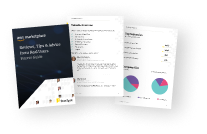
Buyer guide
Gain valuable insights from real users who purchased this product, powered by PeerSpot.
Financing for AWS Marketplace purchases
AWS Marketplace now accepts line of credit payments through the PNC Vendor Finance program. This program is available to select AWS customers in the US, excluding NV, NC, ND, TN, & VT.

Pricing
Pricing is based on the duration and terms of your contract with the vendor. This entitles you to a specified quantity of use for the contract duration. If you choose not to renew or replace your contract before it ends, access to these entitlements will expire.
Additional AWS infrastructure costs may apply. Use the AWS Pricing Calculator to estimate your infrastructure costs.
Dimension | Description | Cost/12 months |
|---|---|---|
Data Platform Premium | 10 instance pack plus 24/7 support | $2,275.00 |
Data Platform Advanced | 10 instance pack plus 24/7 support | $1,970.00 |
Data Platform Foundation | 10 instance pack plus 24/7 support | $1,630.00 |
Backup for Microsoft 365 | 1 user license plus 24/7 Support, 1yr billed up-front. Minimum purchase of 10 licenses per order. | $25.50 |
Kasten K10 Enterprise | Per node License for K10 Data Management Platform plus Basic Support | $2,250.00 |
Dimensions summary
Pricing splits into separate product lines, each billed under a contract. The Data Platform comes in three editions — Foundation, Advanced, and Premium — sold in 10-instance packs with 24/7 support. The editions step up in capability, so you pick the one matching your recovery and resilience needs. Backup for Microsoft 365 bills per user license, prepaid for one year, with a 10-license minimum per order. Kasten K10 Enterprise bills per node for the K10 data management platform with Basic Support. You buy only the lines and quantities you need.
Top-of-mind questions for buyers
One license covers a single user across their email, file storage, and collaboration services combined. You count each user once, even when they use multiple services. Shared and resource mailboxes do not need a license. External users do not need a license either.
Kasten K10 Enterprise bills per node, so your cost scales with the number of nodes you license for the K10 data management platform. The Data Platform editions instead bill per 10-instance pack, and Backup for Microsoft 365 bills per user. Each line meters a different unit.
You must purchase at least 10 user licenses per order. Each license is billed up front for one year. Beyond the minimum, you add licenses in the quantity matching your user count, since every Microsoft 365 user should be protected.
www.veeam.com+1
Helpful?
Vendor refund policy
All Sales are Non-Refundable
Custom pricing options
Request a private offer to receive a custom quote.

Legal
Vendor terms and conditions
Upon subscribing to this product, you must acknowledge and agree to the terms and conditions outlined in the vendor's End User License Agreement (EULA) .
Content disclaimer
Vendors are responsible for their product descriptions and other product content. AWS does not warrant that vendors' product descriptions or other product content are accurate, complete, reliable, current, or error-free.
Delivery details
Software as a Service (SaaS)
SaaS delivers cloud-based software applications directly to customers over the internet. You can access these applications through a subscription model. You will pay recurring monthly usage fees through your AWS bill, while AWS handles deployment and infrastructure management, ensuring scalability, reliability, and seamless integration with other AWS services.
Resources
Vendor resources
Support
Vendor support
Contact us to learn more via https://veeam.com/salesinc.html Visit our forums at https://forums.veeam.com for community support
AWS infrastructure support
AWS Support is a one-on-one, fast-response support channel that is staffed 24x7x365 with experienced and technical support engineers. The service helps customers of all sizes and technical abilities to successfully utilize the products and features provided by Amazon Web Services.
Updated weekly

Top
10
In Backup & Recovery, Healthcare & Life Sciences, Collaboration & Productivity
Top
10
In Data Governance, Storage, Backup & Recovery
Top
25
In Backup & Recovery, Storage
Sentiment is AI generated from actual customer reviews on AWS and G2
Functionality
Ease of use
Customer service
Cost effectiveness
Positive reviews
Mixed reviews
Negative reviews
AI generated from product descriptions
Threat Detection and Prevention
Deep threat detection backed by artificial intelligence with broad threat detection surface to defend against evolving cyberattacks and ransomware
Multi-Cloud Workload Support
Expansive workload protection across hypervisors and applications with multi-cloud portability enabling movement across hybrid and multi-cloud environments
Recovery and Business Continuity
Rapid recovery capabilities with minimal data loss and downtime when security incidents or failures occur
Pre-Built Appliance Deployment
Software Appliance option providing pre-built, hardened, and highly available deployment configuration
Compliance and Data Protection
Built-in proactive security controls to maintain compliance requirements and protect data from ransomware threats
Global Source Deduplication
Reduces network bandwidth and storage utilization across cloud storage tiers through global source deduplication technology.
Automated Tiering and Cold Storage Archival
Automatically tiers unique blocks to cold storage or backs up large files directly to AWS S3 Glacier for long-term retention.
Multi-Workload Protection
Protects files (Windows, Linux, Amazon FSx, Amazon EFS), virtual machines (VMware, Hyper-V, Amazon EC2, Azure VM), databases (Oracle, MS-SQL), and NAS storage across remote offices, data centers, and cloud environments.
Zero-Trust Security Architecture
Implements zero-trust architecture with SSH access elimination to production nodes, TLS encryption in-flight, AES-256 encryption at rest with customer-controlled unique keys.
Automated Cloud Disaster Recovery
Provides automated and orchestrated failover and failback with capability to launch Amazon EC2 instances from backup snapshots for VM recovery in under 30 minutes, including unlimited testing.
Immutable Backup and Ransomware Protection
Air-gapped backups with API-level immutability and Wasabi Compliance Lock integration for multi-layered ransomware defense
Automated Disaster Recovery and Failover
One-click disaster recovery across AWS regions, accounts, and clouds with cross-region and cross-account capabilities for EC2, RDS, EKS, and S3
Intelligent Data Lifecycle Management
Automated tiering of EBS snapshots to Amazon S3 tiers including Glacier Instant Retrieval, Azure Blob, and Wasabi Hot Cloud Storage with up to 92% cost optimization
Multi-Cloud and Multi-Service Support
Backup and recovery for AWS EC2, EBS, RDS, Redshift, Aurora, EFS, FSx, S3, EKS, DynamoDB, DocumentDB, and Azure VMs with unified dashboard management
Compliance and Audit Capabilities
Automated environmental disaster recovery drills, compliance-ready audit trails, multi-tenant support, and multicloud DR testing with reporting for regulatory standards
Standard contract
No
No
No
Customer reviews
Munichandra G
Backup policies have strengthened security and replication but still need flexible long-term retention
Reviewed on Oct 22, 2026
Review provided by PeerSpot
What is our primary use case?
I came across a request for the customer to choose Veeam Data Platform. During the implementation, I faced a lot of challenges. Veeam Data Platform has some limitations similar to other tools. When I engaged the support team or during implementation, I personally felt that there are many more limitations and enhancements needed on Veeam Data Platform.
How has it helped my organization?
From a security standpoint, I can give a good rating. When it comes to replication, Veeam Data Platform is good. The instant recovery in Veeam Data Platform is also good. However, retention extension or customization to meet banking or customer requirements is lacking. We do not have direct features, and it would be beneficial if Veeam Data Platform could concentrate more on this.
The alerting is minimal and cannot be customized in Veeam Data Platform. I cannot enable alerts only for success for one application and only for failure for another application. No such customization is supported. Other enterprise tools offer minimal features that allow customization for alerts and report configurations. In Veeam Data Platform, this aspect is not up to the mark, limiting us from opting for the features offered.
What is most valuable?
Veeam Data Platform is good at VM replication. When it comes to enterprise solutions like Oracle backup or MySQL, PostgreSQL, HANA, and similar databases, the features in Veeam Data Platform are not as impressive as those in other tools. For VM replication and if you are looking for redundancy for the primary site, Veeam Data Platform is good. However, to deal with enterprise databases or multiple applications, Veeam Data Platform presents some challenges.
The instant recovery is a feature I noticed in Veeam Data Platform, and it is good. Regarding ransomware protection, I can give a good rating in terms of ransomware because it allows us to enable immutability and also gives us an option for malware detection. We can use our own custom encryption if required, so from the security standpoint, Veeam Data Platform offers good features.
I feel policy-driven data management is good, as it follows the GFS retention, such as grandfather, father, and son. It restricts us to choose a specific data backup as a GFS one, but that is acceptable. I do not find any challenges concerning the policy-driven concept. The backups are retained according to the retention policy and age appropriately when they meet the retention period.
What needs improvement?
The support and compatibility are areas of concern. When it comes to Azure workloads, Veeam Data Platform has limitations with only MS SQL database and Cosmos, and no other databases are supported by Veeam Backup for Azure.
The main challenge I noticed is that enterprise customers may have a requirement to retain backups for 10 years or 15 years with monthly and weekly backups. In Veeam Data Platform, we do not have customization or compatibility to retain specific data backups as monthly and yearly. The retention schedule is fixed. For instance, it is the first Friday of the backup or the last Friday of the month. If it is weekly, it should be one of the weeks. If it is monthly, it should be the last Friday. For yearly, it is the last Friday of that respective month in that year. However, this should not be the case. When a customer confirms, 'Please go and take an EOD backup and retain it for 10 years,' Veeam Data Platform does not support this sort of customization. I even raised a case with Veeam Data Platform and they clearly stated that Veeam Data Platform only accepts the GFS policy according to the retention defined, and there is no customization available. This is a significant limitation.
I should have the customization to go and take a backup of a specific date, month, or year, but Veeam Data Platform does not allow this and restricts me to only the policy supported.
For example, if I take any backup, I do not have an option to extend the retention. If a customer asks, 'Please take a backup,' and later requests, 'No, it is very critical. Can you please extend the retention for 15 years?' Veeam Data Platform does not support this. Veeam Data Platform does not allow me to extend the retention in the way other tools do. These are limitations I came across in my experience, and I feel these are minimal requirements. The same features are offered by other third-party backup tools available in the market.
From the analytics point of view, I personally feel some challenges. Veeam Data Platform has two different products: VBR and Veeam Backup for Azure. As we are running on cloud platforms, if we are in Azure, we must go for Veeam Backup for Azure. If we need to create copy jobs, I must again come to VBR. However, Veeam ONE is not capable enough to integrate both platforms. For instance, if I am taking backup of workloads through Veeam Backup for Azure, I could not find an option to integrate it into Veeam ONE for reports and analytics. It is only limited to VBR. Whatever jobs we created in VBR are displayed there, but Veeam Backup for Azure does not integrate, at least from what I have explored, and it should not be this way. Veeam ONE should support all Veeam Data Platform products.
For how long have I used the solution?
I have been working with Veeam Data Platform for close to three years.
How are customer service and support?
On a scale of one to ten, I would rate the tech support lower. In my personal experience, whatever cases I raised were escalated to the next level. I did not get direct support. It is very rare that I received direct support from the assigned engineer. Most cases got escalated to the next level. They also came up with an answer that whatever is defined in the documentation must be reviewed. However, it does not provide a concrete solution in one single link. I really have to redirect to multiple links, even if the request pertains to one particular application such as VMs, Oracle, or databases. I must go through numerous links. There is no consolidated view of the limitations, features, and only the options available. I really must go through several KB articles to understand the respective functionality.
Which solution did I use previously and why did I switch?
I have experience with Commvault primarily, and I also worked with NetBackup. Recently, I worked on Networker. Along with Veeam Data Platform, I am responsible for cloud-native backups such as Azure backup, AWS, OCI, and GCP native backup solutions as well.
How was the initial setup?
When it comes to VBR, the initial setup is very straightforward. However, for Veeam Backup for Azure, dealing with cloud requires full control on RBAC and networking concepts. Although it is straightforward, some knowledge about networking, security, and RBAC is necessary, particularly with cloud technologies.
What was our ROI?
I do not feel that Veeam Data Platform's license is that expensive. It is affordable for enterprise customers. I think we are good in that aspect. However, I noticed that some licensing in other enterprise backup solutions available in the market is somewhat more expensive.
What's my experience with pricing, setup cost, and licensing?
Regarding the pricing aspect, setup cost, and licensing part of Veeam Data Platform, I think we are good on the licensing part, regardless of whether you choose a point-based or capacity-based model. Veeam Data Platform is good in this regard. Whatever workloads you need to enable, you should ensure that the licenses are available before enabling protection for those specific workloads.
Which other solutions did I evaluate?
The key differences between Veeam Data Platform and other technologies depend on the requirement. As I mentioned earlier, the minimal customization aspects in Veeam Data Platform such as alerting, report configuration, or extending backups to define monthly and yearly backups per customer need are significant. These basic features are critical and supported by other tools. If a customer requests, 'Can you please extend the retention for this backup job?' Veeam Data Platform does not allow me to choose this option directly, though alternatives exist but involve complex procedures. From a security standpoint, most tools are at a similar level now, especially with cloud technologies. Everyone is focusing more on security, whether in enabling encryption, immutability, malware detection, or air-gap technology, such as having backup copies in isolated locations.
What other advice do I have?
Given my experience with Veeam Data Platform, I would recommend that especially in the cloud era, Veeam Data Platform should support backups for all cloud workloads. Currently, I am dealing with a project where we have Cosmos DB, PostgreSQL, MySQL, MS SQL, and HANA, but Veeam Backup for Azure is limited solely to MS SQL and Cosmos DB. None of the other databases are supported. From the customer standpoint, I would prefer a unified backup solution for all workloads. However, since some workloads are not supported by Veeam Data Platform, we must resort to other third-party tools or choose native cloud backup features if available.
Computer & Network Security
Simple, Reliable Workload Protection with Fast Backup and Recovery
Reviewed on Sep 17, 2026
Review provided by G2
What do you like best about the product?
Veeam Data Platform offers a simple, reliable way to protect business workloads. What I like most is the centralized management, along with the fast backup and recovery, which makes it easier to stay on top of protection and restore data quickly when needed.
What do you dislike about the product?
The main drawbacks are the complexity involved in some advanced configurations and the licensing costs for larger environments. The reporting and troubleshooting experience could also be improved, as that would make day-to-day administration smoother and more straightforward. Overall, though, these feel like minor concerns compared with the value the platform provides.
What problems is the product solving and how is that benefiting you?
Veeam Data Platform helps us protect critical business data and recover quickly from system failures, accidental deletions, and other disruptions. It reduces downtime, makes backup management easier, and strengthens overall business continuity and operational resilience.
Banking
Easy to Install and Feature-Rich, with Broad Compatibility
Reviewed on Sep 10, 2026
Review provided by G2
What do you like best about the product?
Easy to install, configure and use. Many features in same product, compatible with major solutions
What do you dislike about the product?
High resource consumption during initial backup trigger
What problems is the product solving and how is that benefiting you?
Disaster preparedness, Creating immutable solutions and fulfilling compliance requirements
Dharmesh P.
Bulletproof Ransomware Resilience and Instant VM Recovery at Scale—Veeam Data Platform Delivers
Reviewed on Aug 24, 2026
Review provided by G2
What do you like best about the product?
The standout quality of Veeam Data Platform is its reliability and flexibility. It is completely storage-agnostic, offers bulletproof ransomware protection through native immutable repositories (S3 Object Lock / Hardened Linux), and provides near-zero RTO with Instant VM and Database Recovery. It simply works when you need to restore. Veeam integrates effortlessly with our hypervisors (VMware, Hyper-V, Proxmox), enterprise storage appliances, and S3-compatible cloud tiers. Native API and VSS coordination ensure zero friction with running databases, and Scale-Out Backup Repositories make hybrid on-premise and cloud storage management simple.
What do you dislike about the product?
The main downsides are architectural complexity and rising licensing costs. Sizing proxies and repository gateways for large-scale environments requires continuous manual tuning, job failure error messages can be vague and require tedious log digging, and licensing scales aggressively for large mixed workloads.
What problems is the product solving and how is that benefiting you?
Veeam Data Platform solves the risk of ransomware encrypting backup copies, eliminates slow restore times during outages, and simplifies the management of hybrid/multi-platform backup infrastructure. It gives us complete confidence in our disaster recovery posture through automated SureBackup verification and immutable storage tiers (Object Lock/Linux). It has reduced our Recovery Time Objectives (RTO) to minutes and streamlined our storage costs with automated lifecycle tiering.
Computer Hardware
Standard IT for data protection: full integration and fast restore
Reviewed on Aug 13, 2026
Review provided by G2
What do you like best about the product?
It is a unified and well-known platform that integrates with all hypervisors, including the less common ones. In the IT world, it is considered a standard for data protection. Easy to manage, with a clear and organized interface. Fast in managing and restoring systems (even cross-platform).
What do you dislike about the product?
The current product management system through distributors is unclear. Considering that you are industry leaders, it seems to me that there is not much attention towards resellers, even in terms of channel protection.
What problems is the product solving and how is that benefiting you?
It is the tool that allows us to sleep soundly, knowing that our users' data is protected.