
Sold by: Agiloft, Inc.
Deployed on AWS
As the most trusted global leader in data-first contract lifecycle management (CLM) software, Agiloft connects contractual commitments to real business outcomes using its flexible Data-first Agreement Platform. The only platform with AI on the Inside, Agiloft helps close contracts quickly and collaboratively, and leveraging the data they hold for a competitive advantage. Employing powerful, pragmatic artificial intelligence as a legal force multiplier, and robust integration capabilities as a data liberator, organizations around the world trust Agiloft-certified implementers to deliver connected, intelligent, and autonomous solutions across the entire contract lifecycle.
4.3
Overview

The Agiloft Data-first agreement platform is the only Contract Lifecycle Management (CLM) with AI on the Inside. Unlimited in its ability to bring your toughest contracting workflows to life, Agiloft combines liberated data, practical AI solutions, and deeply rich integrations to completely transform the contracting process. With a no-code architecture that puts users in charge, extensive security certifications, and unparalleled dependability, Agiloft is the contract you keep.
The Data-first agreement platform is
-
Data-wise: unleashes the data in all your contracts to help you agree and thrive
-
Smart: equipped with practical AI solutions that allow users to focus on what matters
-Collaborative: connects seamlessly to Microsoft and Google office apps and to keep data moving, and teams in their comfortable environment
-
Connected: point and click integrations for over 1,000 business systems that drive adoption and transparency, organization-wide
-
Intuitive: configurable by business users through our unique No Code interfaces
-
Safe and secure: from SOC1 and SOC2 to ISO2700, no other CLM system protects your data better
-
Dependable: used by over a thousand organizations around the world over more than 30 years, Agiloft is the safe choice
With Agiloft, contracting processes move faster, contract data flows throughout the organization, and organizational goals are reliably met.
Highlights
- AI on the Inside - https://resource.agiloft.com/featured-content/ai-on-the-inside
- Data-first Agreement Platform - https://resource.agiloft.com/data-sheets/agiloft-data-first-agreement-platform
- Integration Hub https://resource.agiloft.com/all-content/integration-hub-datasheet
Details
Sold by
Delivery method
Deployed on AWS
New
Introducing multi-product solutions
You can now purchase comprehensive solutions tailored to use cases and industries.

Features and programs
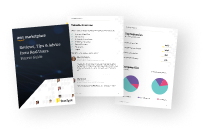
Buyer guide
Gain valuable insights from real users who purchased this product, powered by PeerSpot.
Financing for AWS Marketplace purchases
AWS Marketplace now accepts line of credit payments through the PNC Vendor Finance program. This program is available to select AWS customers in the US, excluding NV, NC, ND, TN, & VT.

Pricing
Pricing is based on the duration and terms of your contract with the vendor. This entitles you to a specified quantity of use for the contract duration. If you choose not to renew or replace your contract before it ends, access to these entitlements will expire.
Additional AWS infrastructure costs may apply. Use the AWS Pricing Calculator to estimate your infrastructure costs.
Dimension | Description | Cost/12 months |
|---|---|---|
Core Platform | Pricing shown includes 20 Power User licenses and 1 Admin license. This configuration reflects a common commercial-size deployment. For tailored license counts or customized quotes, please contact our Sales Team using our website | $25,000.00 |
Dimensions summary
This listing has one pricing option: the Core Platform, billed as a contract. It bundles a fixed license set of 20 Power User licenses and 1 Admin license. This configuration reflects a common commercial-size deployment. Pricing is a single commitment for the whole platform rather than separate usage or add-on charges. If you need different license counts, you contact the Sales Team for a tailored quote. So pricing scales by adjusting the number of licenses in a custom configuration, not through preset tiers on this listing.
Top-of-mind questions for buyers
A Power User license covers a person who works inside the platform, such as creating, reviewing, negotiating, and tracking contracts across teams like Legal, Procurement, Sales, and Finance. The single Admin license covers configuration work: setting up workflows, approvals, data models, and automations without writing code. The bundle includes 20 Power User seats and 1 Admin seat.
The listing sells one fixed configuration of 20 Power User and 1 Admin license. Seat counts are not adjusted through preset tiers here. To add or reduce licenses, you contact the Sales Team for a tailored quote. Cost changes come from a custom license count, not automatic overage on this listing.
The listing price covers the Core Platform license bundle. Support is arranged separately through tiered support plans that vary by response speed, coverage hours, and named contacts. Standard and higher tiers differ in weekend coverage and integration support. Confirm which support tier applies with the Sales Team when configuring your purchase.
www.agiloft.com+2
Helpful?
Vendor refund policy
Please discuss the refund policy with the Agiloft team.

Legal
Vendor terms and conditions
Upon subscribing to this product, you must acknowledge and agree to the terms and conditions outlined in the vendor's End User License Agreement (EULA) .
Content disclaimer
Vendors are responsible for their product descriptions and other product content. AWS does not warrant that vendors' product descriptions or other product content are accurate, complete, reliable, current, or error-free.
Delivery details
Software as a Service (SaaS)
SaaS delivers cloud-based software applications directly to customers over the internet. You can access these applications through a subscription model. You will pay recurring monthly usage fees through your AWS bill, while AWS handles deployment and infrastructure management, ensuring scalability, reliability, and seamless integration with other AWS services.
Resources
Vendor resources
Support
Vendor support
Customers can contact Agiloft's Support team 24 hours a day, 7 days a week via our support portal. https://www.agiloft.com/support-login.htm
AWS infrastructure support
AWS Support is a one-on-one, fast-response support channel that is staffed 24x7x365 with experienced and technical support engineers. The service helps customers of all sizes and technical abilities to successfully utilize the products and features provided by Amazon Web Services.
Updated weekly
By Agiloft, Inc.

By AppViewX
By airSlate
Sentiment is AI generated from actual customer reviews on AWS and G2
Functionality
Ease of use
Customer service
Cost effectiveness
Positive reviews
Mixed reviews
Negative reviews
AI generated from product descriptions
Artificial Intelligence Capabilities
Embedded AI solutions integrated throughout the platform to automate contract analysis, review, and decision-making processes
Data Extraction and Management
Contract data liberation and extraction capabilities that enable organizations to access and leverage contractual information across the enterprise
Integration Framework
Point-and-click integration connectors supporting over 1,000 business systems including Microsoft and Google office applications
No-Code Configuration
Business user-configurable platform architecture enabling workflow customization without requiring code development
Security and Compliance Certifications
Compliance with SOC1, SOC2, and ISO 27001 security standards for data protection and governance
Certificate Discovery and Inventory Management
Smart discovery and centralized inventory capabilities for identifying and cataloging certificates across hybrid multi-cloud environments
Automated Lifecycle Workflows
CA-agnostic, closed-loop automation workflows supporting multiple Certificate Authorities with end-to-end certificate lifecycle orchestration
Policy-Driven Compliance Engine
Zero-touch policy enforcement and compliance engine for automated certificate management with role-based access control
Actionable Insights and Monitoring
Dashboards providing actionable insights including Google 90-Day TLS compliance, Post-Quantum Cryptography (PQC) readiness, and Enterprise Crypto-Scoring with alerting, reporting, and logging capabilities
Secure Key Management
Secure key management functionality integrated with certificate lifecycle management across PKI infrastructure
Document Field Configuration
Support for adding fillable fields to documents with ability to assign roles to recipients and establish signing order
API Integration and Developer Tools
Complete SDKs available in five languages (PHP, .Net, Java, Python, Node.js) with detailed API documentation and video guides
Security and Compliance Certifications
Compliance with SOC 2 Type II, 21 CFR Part 11, PCI DSS, CCPA, and GDPR standards with password protection options
Audit Trail and Document Tracking
Court-admissible Audit Trail for all documents with real-time status tracking capabilities
Service Reliability
99.9% uptime guarantee with 24/7 API monitoring
Standard contract
No
No
No
Customer reviews
Tanya G.
Feature-Rich and Customizable, but Attachment Renaming Is Missing
Reviewed on Sep 21, 2026
Review provided by G2
What do you like best about the product?
Vast features set and customization ability
What do you dislike about the product?
In-ability to re-name attachments. Limited options to export attachments in a logical way.
What problems is the product solving and how is that benefiting you?
Centralized repository and workflow authorization for our contracts.
Rayza Vieira Dantas
Centralized contract control has improved traceability and supports daily compliance decisions
Reviewed on Sep 18, 2026
Review provided by PeerSpot
What is our primary use case?
My responsibilities include contract administration, documents management, contractual compliance, monitoring milestone claims, variations, deadlines, and technical correspondence. At Agiloft Contract Lifecycle Managment (CLM), I use it to register, organize, track, and retrieve contractual and technical documents.
In my main use case of using Agiloft Contract Lifecycle Managment (CLM) day-to-day, it is to keep captured information organized and traceable. Agiloft registers and organizes documents, tracks the status, monitors deadlines, and responsibility. For me, Agiloft Contract Lifecycle Managment (CLM) is not just an archive; it is a control and follow-up tool that improves collaboration, provides reliable information, and supports contract administration and decision making. Everyone here uses Agiloft Contract Lifecycle Managment (CLM) every day and it works.
What is most valuable?
The best features Agiloft Contract Lifecycle Managment (CLM) offers are centralized contract management, automated workflows, deadline alerts, document traceability, approval control, and easy access to contract information through the entire life cycle.
Document traceability is most valuable in my daily work because we work with a lot of documents. What stands out most about Agiloft Contract Lifecycle Managment (CLM) features is the strong traceability and centralized access to information.
Agiloft Contract Lifecycle Managment (CLM) has improved documents organization, traceability, collaboration, control over contractual obligations, and helps us access reliable information more quickly, monitor deadlines, and support claims, variation, and compliance analysis more efficiently.
What needs improvement?
If I could improve one aspect, I would make the workflows and reports more customizable for specific project needs. Agiloft Contract Lifecycle Managment (CLM) can be improved through more customizable workflows, better integration with other project management systems, and more intuitive dashboards and reports. Additional automation and user training could also make the platform easier to use and increase efficiency.
An additional improvement for Agiloft Contract Lifecycle Managment (CLM) would be better support for project-specific templates and bulk actions, which would make repetitive tasks faster, reduce manual data entry, and improve consistency. Clearer user guides and training materials would also help new users adopt the system more quickly.
For how long have I used the solution?
I have been using Agiloft Contract Lifecycle Managment (CLM) for almost three years, which is approximately the same time I have worked at Acciona.
What do I think about the stability of the solution?
Agiloft Contract Lifecycle Managment (CLM) has been stable and reliable for our day-to-day contract and document management activities, providing constant access to information and supporting workflows without significant disruption.
What do I think about the scalability of the solution?
Agiloft Contract Lifecycle Managment (CLM) is scalable and can support a large volume of contracts, documents, users, and workflows, and it can also be adapted to different project requirements as the organization grows.
How are customer service and support?
My experience with customer support has been positive.
What was our ROI?
We have not conducted a formal calculation for return on investment, so I cannot provide exact figures for money or time saved. However, Agiloft Contract Lifecycle Managment (CLM) has generated clear operational benefits by reducing document search time, minimizing manual errors, improving compliance, and increasing visibility of contractual obligations. The main benefit has been greater efficiency for the existing team rather than a reduced headcount.
What's my experience with pricing, setup cost, and licensing?
My experience with pricing, setup cost, and licensing was acceptable.
What other advice do I have?
I would recommend defining the organization workflows and information requirements before implementing Agiloft Contract Lifecycle Managment (CLM). It is also important to configure the system according to the project's needs, provide user training, and establish clear rules for document management and responsibilities. Starting with a pilot project can help ensure a smooth adoption and demonstrate monetary results. I rate this product an 8 overall.
reviewer2892714
Centralized contract approvals have streamlined lab operations and support faster purchasing
Reviewed on Aug 26, 2026
Review provided by PeerSpot
What is our primary use case?
My main use case for Agiloft Contract Lifecycle Managment (CLM) involves managing all vendor contracts, material transfer agreements, and creating vendor contracts, reviewing them, updating them, and maintaining the lifecycle of the contracts, as well as getting contract approvals. During this process, I work with different teams including legal teams, scientists, managers, and different vendors until we receive approvals on all material transfer agreements and vendor contracts so that we can purchase the items.
The main processes I manage with Agiloft Contract Lifecycle Managment (CLM) include all quote approvals, non-disclosure agreements approval, vendor contracts, material transfer agreements, and purchasing orders.
What is most valuable?
I appreciate working with Agiloft Contract Lifecycle Managment (CLM) because it offers user-friendly features. Uploading a draft of any contracts, material transfer agreements, NDAs, or quotes is easy, and it is also easy to work with multiple team members for them to review. I can request other team members to review and approve, and we can manage who is currently reviewing and who has approved it. Once the approval process is completed, we maintain all documents in one place, making them audit-ready. If we want to pull any documents from Agiloft Contract Lifecycle Managment (CLM), it is easy to do so. This provides central communication for managing all contracts.
During Agiloft Contract Lifecycle Managment (CLM) and approval processes, I find it user-friendly because I can assign approvals to primary approvers, secondary approvers, and final approvers. I can also track the exact status when I assign it to the primary approver. Once that is done, I can also send them reminders. If the team has not approved, I send them email reminders to speed up the approval process for the contracts or at least get back to me with any comments when I work with different teams.
Agiloft Contract Lifecycle Managment (CLM) has a positive impact on my organization because it is time-saving. As I mentioned before, it centralizes communication for all vendor contracts. We maintain all contracts, POs, quotes, different MTAs, and everything in one location. This process avoids going back and forth, and there is a place where other team members can look up what their tasks are, whether they need to review any contract, and whether they can approve the contract. For everyone, it is a place where we can all work to speed up the contract management approval process. This helps save considerable time for everyone. I work with different team members, and that was one aspect where we can communicate with different team members on one platform. Furthermore, we could speed up the vendor contract management process. This helps us to have smoother lab operations regarding sample procurement, any orders we want to do, any equipment we want to obtain, and vendor communications as well. Overall, we achieve improved efficiency in lab operations.
What needs improvement?
I feel there are always opportunities to improve Agiloft Contract Lifecycle Managment (CLM). For example, the process can be improved by standardizing contract intake, approval workflows, naming conventions, required fields, and renewal notifications.
It would be great if Agiloft Contract Lifecycle Managment (CLM) could integrate with NetSuite, an ERP purchasing system. That way, I would not need to upload all the approved contracts, quotes, and purchase orders to NetSuite. Additionally, during the approval process, this could have automated routing based on contract type, dollar value, and department.
For how long have I used the solution?
I have been using Agiloft Contract Lifecycle Managment (CLM) for two years when I was working at Thales Biomedical Corporation.
What do I think about the stability of the solution?
Agiloft Contract Lifecycle Managment (CLM) is stable.
What do I think about the scalability of the solution?
Agiloft Contract Lifecycle Managment (CLM) is definitely designed to be scalable as the number of contracts, users, departments, workflows, and integrations increases.
How are customer service and support?
My experience with customer support for Agiloft Contract Lifecycle Managment (CLM) was good.
Which solution did I use previously and why did I switch?
We did not use any different solution; we only used Agiloft Contract Lifecycle Managment (CLM).
What was our ROI?
With Agiloft Contract Lifecycle Managment (CLM), we could save money and also reduce the number of employees needed. Only a few important people from the executive team, the legal team, and the necessary scientific team, such as team leads and the lab operations, were required, as I was the one managing the contracts in Agiloft Contract Lifecycle Managment (CLM). For that purpose, it definitely worked well with Agiloft Contract Lifecycle Managment (CLM) managing it.
What's my experience with pricing, setup cost, and licensing?
My experience with the pricing, setup cost, and licensing for Agiloft Contract Lifecycle Managment (CLM) was good. The pricing and licensing were satisfactory because we used it. I was at that company for two years, and we were satisfied with Agiloft Contract Lifecycle Managment (CLM) pricing and working on Agiloft Contract Lifecycle Managment (CLM); we never considered switching to another solution.
Which other solutions did I evaluate?
Before I joined the company, Agiloft Contract Lifecycle Managment (CLM) was already in place, so I did not evaluate other options.
What other advice do I have?
I experienced a specific outcome with Agiloft Contract Lifecycle Managment (CLM) when I worked on the Bio-Rad equipment purchase, the DDPCR. During that time, we had to go through the terms and conditions on the quote. Given the urgency of acquiring this equipment as soon as possible, I uploaded and initiated the approval process. I could interact with different teams and also sent them reminders. One by one, I received all three approvals from different team members within two days, allowing me to purchase the equipment on time.
I rate Agiloft Contract Lifecycle Managment (CLM) an 8.5 out of 10 because it can improve with better integration into other ERP procurement platforms such as NetSuite, Ariba, Oracle, and Coupa. A better dashboard control would also enhance the experience.
I have never faced any security issues with Agiloft Contract Lifecycle Managment (CLM). I believe all vendor contracts, vendor information, and company information are well-protected in Agiloft Contract Lifecycle Managment (CLM.
Regarding Agiloft Contract Lifecycle Managment (CLM) and AI, I am fully satisfied with its accuracy and reliability of output.
I had a great experience working with Agiloft Contract Lifecycle Managment (CLM), and I definitely recommend it to any company or customers exploring options for vendor contract management systems because I had a great learning experience and very good experience working on Agiloft Contract Lifecycle Managment (CLM). Agiloft Contract Lifecycle Managment (CLM) is very organized, user-friendly, and serves as a single source to maintain all different contracts and all data related to workflows, renewals of contracts, and maintaining accurate contract records. It also helps to understand the roles of different teams and gives the necessary permissions. I definitely recommend it to others.
I have no additional thoughts about Agiloft Contract Lifecycle Managment (CLM); I just want to know how you are planning to improve the current Agiloft system in the future.
reviewer2891766
Automation has transformed contract workflows and now saves hours on reviews and renewals
Reviewed on Aug 25, 2026
Review provided by PeerSpot
What is our primary use case?
My main use case for Agiloft Contract Lifecycle Managment (CLM) is contracts management and execution. I use Agiloft Contract Lifecycle Managment (CLM) for receiving contracts, sending drafts to different teams, and then sending them to attorneys for review, creating DocuSign documents, and then creating a repository for the contracts.
I also manage renewal and expiration management, and obligation management, where I track contractual obligations such as deliverables, payment terms, insurance requirements, and terminations or indemnity clauses. I keep a tab on these clauses. I also manage vendor and supplier contracts, and conduct compliance audits for my contracts.
What is most valuable?
The best feature Agiloft Contract Lifecycle Managment (CLM) offers for me is contract lifecycle management, which manages contracts from initiation to end, including drafting, review, approval, and signatures. I love the workflow automation. It automatically routes the contract to legal, compliance, and finance people, so I don't have to go to everyone individually. It allows different approval paths based on the contract type. It also has an automated alert feature that helps me track renewals or notice periods, or if something is coming to an end, or if there are any fees related to that.
The automated alerts and approval paths save a lot of time so that I don't have to check a spreadsheet for renewal dates or expiration dates. I receive an alert as the contracts manager or contract lifecycle manager, and then the teams who are actually the owners of the contract also get a notification. Even if I sometimes forget or ignore the notifications, they have the notices and notifications, and they come to us indicating that a contract is expiring in X days, so that we can work on renewals, terminations, or stopping any auto-renewal. This is very helpful.
I really love the reporting dashboard of Agiloft Contract Lifecycle Managment (CLM), and when I can download all contracts in an Excel sheet format and correct any names or dates, at least I have something to see where I can find small mistakes. I also love the template management and e-signature integration. These are very exciting features.
Agiloft Contract Lifecycle Managment (CLM) has positively impacted my organization. The automation process has helped me to have better contact with my attorneys. They have their own alerts about the contract, so I don't have to remind them. That is the best feature; it helps me with a lot of manual follow-ups that are now automated. It acts as a centralized repository so that we don't have to go to everyone's desk or email to ask for documentation. It gives me real-time visibility of the status of a contract. It also has an automated approval workflow, which helps me a lot and saves a lot of time. If I was spending 10 hours on a contract, now I just spend four hours.
What needs improvement?
I feel Agiloft is a little bit less user-friendly than Conga. I used Conga in my previous experience, which was much more user-friendly than Agiloft. There are too many fields and steps that can discourage business users from submitting requests. It would be great if we could reduce the steps, such as making user intake forms more user-friendly. Automating more routine decisions, such as contract type, approval level, or risk category, or integrating Agiloft with ERP, CRM, or HR systems would also be great. Improving the dashboard a little bit would be beneficial; if it were more visually pleasing, that would be an improvement. Integrating some AI features, automating extraction, flagging unusual clauses, identifying contracts approaching renewal, or getting a summarized version of a contract would also be beneficial.
For how long have I used the solution?
I have been using Agiloft Contract Lifecycle Managment (CLM) for two years.
What do I think about the stability of the solution?
Agiloft Contract Lifecycle Managment (CLM) is stable.
What do I think about the scalability of the solution?
Agiloft Contract Lifecycle Managment (CLM) is highly scalable because it can accommodate increasing contract volumes, user departments, workflows, and integration. Its no-code architecture allows us to modify the workflow as business requirements evolve. The strong governance and standardization are important to prevent excessive customization from making the system difficult to maintain, so workflow scalability is great.
How are customer service and support?
The customer support for Agiloft Contract Lifecycle Managment (CLM) is great.
Which solution did I use previously and why did I switch?
We previously used Intelagree, which is a contract management system, and spreadsheets, which are not very useful. With Intelagree, their AI features were just coming up, and they were not great. Tracking the contract was also a little difficult, which is why we tried to use Agiloft.
How was the initial setup?
We are still trying to deploy Agiloft Contract Lifecycle Managment (CLM); we have not done it completely.
What was our ROI?
I certainly observe a return on investment with time saved and fewer employees needed, so ROI is good.
What's my experience with pricing, setup cost, and licensing?
I was not authorized to discuss pricing, setup cost, and licensing of Agiloft Contract Lifecycle Managment (CLM), but I think it was great; that's why we are having it.
Which other solutions did I evaluate?
Before choosing Agiloft Contract Lifecycle Managment (CLM), I evaluated Conga, Intelagree, and Smartsheet.
What other advice do I have?
I am trying to put together how much I have spent on a contract, how much other teams have spent, and how they remind me about any contract or how I remind them. Everything together, such as follow-up with procurement, finance, and attorney, shows a significant improvement.
My advice for others looking into using Agiloft Contract Lifecycle Managment (CLM) is to focus on business outcomes and process design, not just technology. Agiloft is highly configurable, so it's important to clearly define contracts, processes, approval requirements, roles, reporting needs, and other things. I would also recommend prioritizing integration, user adoption, and data quality.
Overall, I think Agiloft Contract Lifecycle Managment (CLM) is a strong contract management platform, particularly for organizations with great volume, many customers, and numerous suppliers. I would recommend starting with a clear contracting process rather than trying to automate every exception from day one. Another important consideration is long-term administration. I would rate this platform an 8 out of 10.
Capital Markets
Customizable and Intuitive
Reviewed on Aug 25, 2026
Review provided by G2
What do you like best about the product?
Easy to use. it is customizable and intuitive
What do you dislike about the product?
Contract terms extraction is not precise
What problems is the product solving and how is that benefiting you?
Management of all contract expirations and renewals