
Sold by: Productboard
Deployed on AWS
Contact aws-marketplace@productboard.com for private offer.
4.3
Overview
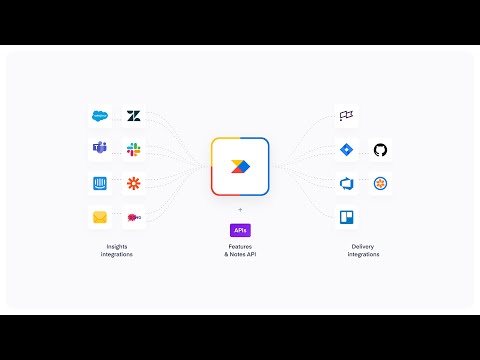
Productboard is the intelligent product management platform that helps future-ready product teams deliver exceptional products with clarity and confidence. Over 6,000 companies, including Zoom, One Medical, Cartier, Microsoft, and Korn Ferry, use Productboard to uncover customer needs, drive strategic alignment, and rally everyone around the roadmap. With offices in Prague and San Francisco, Productboard is backed by leading investors like Dragoneer Investment Group, Tiger Global Management, Index Ventures, Kleiner Perkins, Sequoia Capital, Bessemer Venture Partners, and Credo Ventures. For custom pricing or private offers, please reach out to us at aws-marketplace@productboard.com .
Highlights
- Empower Product Teams. Operate with greater velocity and purpose by having clear prioritization, standardized processes, centralized workflows, and visibility into progress across the team.
- Empower the Organization. Drive the business forward faster by inspiring everyone with the product vision and strategy and improving cross-functional collaboration.
- Empower the Customer. Create exceptional products rooted in customers actual needs, both current and future, by having the voice of the customer inform and validate every product decision.
Details
Sold by
Delivery method
Deployed on AWS
New
Introducing multi-product solutions
You can now purchase comprehensive solutions tailored to use cases and industries.

Features and programs
Buyer guide
Gain valuable insights from real users who purchased this product, powered by PeerSpot.

Financing for AWS Marketplace purchases
AWS Marketplace now accepts line of credit payments through the PNC Vendor Finance program. This program is available to select AWS customers in the US, excluding NV, NC, ND, TN, & VT.

Pricing
Pricing is based on the duration and terms of your contract with the vendor. This entitles you to a specified quantity of use for the contract duration. If you choose not to renew or replace your contract before it ends, access to these entitlements will expire.
Additional AWS infrastructure costs may apply. Use the AWS Pricing Calculator to estimate your infrastructure costs.
Dimension | Description | Cost/36 months |
|---|---|---|
Productboard | Contact aws-marketplace@productboard.com for private offer. | $1,000,000.00 |
Dimensions summary
This listing uses a single contract-based pricing option. You do not pick from set tiers on AWS Marketplace. Instead, you contact the vendor directly to arrange a private offer tailored to your needs. Pricing centers on the number of makers in your workspace. Makers are the product managers and leads who own strategy, create roadmaps, and manage insights. Contributors, who submit feedback and collaborate, do not count toward this total. The platform's AI features run on a monthly credit allocation. Because terms are negotiated privately, the quantity, subscription length, and included capabilities are set through your order form with the vendor.
Top-of-mind questions for buyers
Makers are the product managers and leads who own strategy, create roadmaps, prioritize features, and manage insights. Pricing is based on the number of makers in your workspace. Contributors submit feedback, tag insights, and collaborate through documents and comments. Contributors do not count toward your maker total.
Credits power the platform's AI features, from analyzing feedback to generating documents. Different tasks use different amounts based on complexity. If credits run out, you keep access to your workspace, documents, and feedback. You cannot use AI features until credits reset at your monthly renewal or you buy a top-up.
You can add makers at any time. Incremental fees are prorated over the remaining subscription term. If your maker use exceeds the purchased level, the vendor notifies you and you can correct it within 30 days without charge. AI credit overages are consumed on use and billed as one-time bundles.
www.productboard.com+1
Helpful?
Vendor refund policy
Please see MSA for refund related information

Legal
Vendor terms and conditions
Upon subscribing to this product, you must acknowledge and agree to the terms and conditions outlined in the vendor's End User License Agreement (EULA) .
Content disclaimer
Vendors are responsible for their product descriptions and other product content. AWS does not warrant that vendors' product descriptions or other product content are accurate, complete, reliable, current, or error-free.
Delivery details
Software as a Service (SaaS)
SaaS delivers cloud-based software applications directly to customers over the internet. You can access these applications through a subscription model. You will pay recurring monthly usage fees through your AWS bill, while AWS handles deployment and infrastructure management, ensuring scalability, reliability, and seamless integration with other AWS services.
Resources
Vendor resources
Support
Vendor support
Productboard is a product management tool that provides comprehensive support resources for its users. These resources include a help center with articles and tutorials, an academy with online courses and webinars, a community forum, email and chat support, a blog, and a YouTube channel. The resources cover a range of topics related to product management, including product strategy, prioritization, and roadmap planning. Productboard provides several options for users to contact their support team. The easiest way is through the Help Center, where users can search for articles, submit a request, or chat with support directly. Additionally, users can email their support team at support@productboard.com . Access the Help Center at
AWS infrastructure support
AWS Support is a one-on-one, fast-response support channel that is staffed 24x7x365 with experienced and technical support engineers. The service helps customers of all sizes and technical abilities to successfully utilize the products and features provided by Amazon Web Services.
Updated weekly


Top
50
In Project Management
Top
25
In Agile Lifecycle Management
Top
10
In Project Management, Agile Lifecycle Management, Collaboration & Productivity
Sentiment is AI generated from actual customer reviews on AWS and G2
Functionality
Ease of use
Customer service
Cost effectiveness
Positive reviews
Mixed reviews
Negative reviews
AI generated from product descriptions
Centralized Workflow Management
Provides centralized workflows and standardized processes for product team operations with visibility into progress tracking across team members.
Customer Feedback Integration
Incorporates voice of customer data to inform and validate product decisions based on actual customer needs.
Product Roadmap Collaboration
Enables cross-functional collaboration and alignment around product vision, strategy, and roadmap visibility across the organization.
Prioritization Framework
Offers clear prioritization mechanisms to support product decision-making and resource allocation.
Product Strategy Alignment
Facilitates strategic alignment and communication of product vision across product teams and organizational stakeholders.
Workflow Customization
Tailor product development processes around unique product strategy with customizable features for development teams
Task Automation
Automate task assignments, notifications, and workflow integrations with third-party tools such as Slack and GitHub
Cross-Department Collaboration
Unified collaborative platform that synchronizes across multiple departments to align entire organization
Agile Project Planning
Support for agile team planning and execution capabilities to deliver products faster
Workflow Integration
Integration capabilities with external tools and services to streamline development workflows
AI-Powered Automation
AI agents (Sidekicks) and visual workflows (Flows) automate complex processes including requirements generation, diagram creation, and prototype development from visual context.
Enterprise Knowledge Integration
Amazon Q Business integration surfaces enterprise knowledge directly on the canvas, and Amazon Bedrock powers AI workflows for intelligent automation.
AWS-Native Architecture Diagramming
Native architecture diagramming capabilities with AWS shape libraries, reference architectures, and AWS Cost Calculator integration for migration planning and cost estimation.
Model Context Protocol Connectivity
MCP server connectivity with Kiro maintains context throughout the development lifecycle and connects to execution tools.
Visual Collaboration Canvas
Intelligent canvas platform enabling distributed teams to visualize complex cloud infrastructures, align stakeholders, and compress project cycles from discovery through execution.
Standard contract
No
No
No
Customer reviews
reviewer2903070
Centralized feedback has strengthened roadmap decisions and clarified stakeholder priorities
Reviewed on Sep 26, 2026
Review from a verified AWS customer
What is our primary use case?
My main use case for Productboard is bringing customer feedback into one place and using it to inform roadmap priorities. I also use it to connect what customers are asking for with the product ideas we are considering while making the reasoning behind those priorities clear to stakeholders.
A specific example of how I have used Productboard to bring customer feedback together and connect it to my roadmap is when I spot recurring feedback from different conversations pointing to the same problem, I generally group those comments into Productboard, link them to the relevant product idea, and bring that evidence into the roadmap discussion, making it easier to explain both who was affected and why the work mattered.
Stakeholder alignment is one of the key features of using Productboard because having all those feedbacks connected to a roadmap item allows me to show leadership and the customer-facing teams why an idea is being considered, what we have prioritized, and what is still undecided. The shared context is the main value for me.
What is most valuable?
The best features of Productboard include the strongest feature being the link between customer feedback and product ideas, where I can open an idea and see the evidence behind it, including who raised it and how important it is to them. Roadmap views are also strong because they make those priorities easier to discuss with stakeholders, along with the customer portal and Jira integration that help extend the process of collecting feedback to communicating plans and tracking delivery.
I find myself using the customer feedback linkage the most because that is where I get the most day-to-day value, as I can go from a proposed feature back to the customer comments behind it and see whether the same need is coming up repeatedly, making better prioritization calls.
The biggest positive impact of Productboard on my organization or consulting work has been more defensible prioritization, as connecting feedback to a roadmap idea allows me to show stakeholders which customer needs informed it and have focused discussions about its impact. It also saves time when explaining a decision because the context and supporting feedback are there to refer back to. A relevant example of when clarity or defensible prioritization led to a better outcome is from a retail SaaS feedback project where we brought requests from the customer success, product, and engineering team into a structured intake process, which guided roadmap decisions and provided stakeholders with clearer reasons for our prioritization.
What needs improvement?
The main improvement I would focus on for Productboard is reducing the work required between collecting feedback and making decisions, as grouping similar comments and keeping the links to roadmap ideas accurate can take considerable effort as feedback volume grows.
I believe this covers most of what I would the team to work on regarding improvements, particularly if Productboard can make the feedback-to-decision step faster while keeping the evidence reliable. This would significantly enhance my workflow.
For how long have I used the solution?
I have been using Productboard for longer than a year.
What other advice do I have?
My advice to others looking into using Productboard is to trial it with real customer feedback and a real roadmap decision instead of judging it only from the demo, ensuring they bring in feedback from different channels and agree on who owns the feedback triage and how ideas are organized. I would rate Productboard an eight out of ten overall.
Which deployment model are you using for this solution?
Public Cloud
If public cloud, private cloud, or hybrid cloud, which cloud provider do you use?
Amazon Web Services (AWS)
Igor Oliveira
Kanban monitoring has improved sprint tracking and now supports faster data‑driven decisions
Reviewed on Sep 25, 2026
Review provided by PeerSpot
What is our primary use case?
Using Productboard, I can control the Kanban related to sprints, everything we map today related to the activities connected to product delivery.
A quick and specific example of how I use Kanban within Productboard in my day-to-day work is that we do all the sprint and backlog work, and by configuring its swimlanes, I can check from status to status where each activity is according to the team's progress across all areas: product, development, QA, all the way through to completion.
Weekly I issue reports to monitor the Kanban part and identify what we can leverage from the team's capacity, looking at some markdowns there to make decisions.
What is most valuable?
The best features that Productboard offers in my opinion include dashboards, quick tracking, and a simple platform that is easy to understand.
In the dashboards area, I can monitor in a very easy way the team's capacity, which is my main goal and my main focus when looking at the dashboard.
Productboard has had a positive impact on my organization as it was recommended to me and appeared as a platform different from the ones I was using at the time, but it came bringing an ease of monitoring the process.
After adopting Productboard, I have noticed concrete results such as having the dashboards available allowed me to make quick decisions regarding the sprint and things that happened related to deliveries that were going to be late, but ended up working out due to decision-making with the data being displayed there by the platform.
What needs improvement?
I believe Productboard can be improved by having more features, looking at current platforms like Jira and ClickUp, seeing the matter of tags and things of that nature, which I still find a bit neutral.
For how long have I used the solution?
I have been using Productboard for four years.
What do I think about the stability of the solution?
Productboard is stable; I have not had any blockers with the platform.
What do I think about the scalability of the solution?
I believe Productboard's scalability is good as I can scale the process in several ways, from the simplest cards to integration connections.
Which solution did I use previously and why did I switch?
Before switching to Productboard, we were using Jira and switched due to some financial circumstances and a remodeling of our current management platform.
How was the initial setup?
Productboard is implemented in my organization on-premises.
My experience with pricing, setup costs, and licensing is that the company paid for it, and I ended up not taking part regarding costs, but I believe it made sense for our current moment.
What was our ROI?
I have not gotten any return on investment yet; I know we had a reduction compared to our previous platform, but I do not have that more detailed data.
Which other solutions did I evaluate?
I did evaluate other options before choosing Productboard; we evaluated Trello and ClickUp.
What other advice do I have?
My advice for other people who are thinking about using Productboard is that I believe it is a great experience for those who are looking for financial relief in the company or for those who are looking for an easy product. I would rate this review an 8.
G Krish
Collaboration has improved as our teams manage roadmaps, dependencies, and Jira-linked work transparently
Reviewed on Sep 21, 2026
Review provided by PeerSpot
What is our primary use case?
My main use case for Productboard is using it to build my roadmap and show it to other stakeholders, making sure that all of the Jira tickets that we have are linked to it so that any other product leaders or leaders across the company, the engineering team, or design can take a look at what is currently being worked on as well as what is up next on the roadmap.
For most initiatives and features that I have built using Productboard, it always starts with creating a top-line level Productboard feature, and then from there, if there are any sub-features, I will break those down as well using the sub-feature component of Productboard. This has really helped particularly my engineering manager to see what is going on so that she can allocate work to her engineers.
What is most valuable?
The best features that Productboard offers include the connection to Jira, which we use the most, the ability to see features both in the timeline view as well as the list view, and being able to switch between the two. Furthermore, being able to look across the organization and link dependencies helps us make sure that we are being transparent and are not stepping on each other's toes.
I find myself relying on the Jira connection all the time. I will either make my tickets directly within Jira or I will make them in Productboard and port them over. Typically, I make them within Jira and then port them over, which helps keep everything in a timeline.
Productboard has impacted our organization positively by helping us become more transparent across all the different departments, particularly when it comes to dependencies that people have on other departments and other product managers. For example, I found that another product manager was building a very similar pricing feature that I was building because of Productboard, and as a result, we were able to collaborate on that and build one system instead of two that would work for both of our products, as well as making sure that there is not any code redundancy.
What needs improvement?
Regarding how Productboard can be improved, I think what I would want more of is perhaps some more keyboard shortcuts, as I feel sometimes it is a bit difficult to navigate around and I prefer to do things extremely quickly. Typically, Productboard is not where I am ideating; it is where I am putting in things that I already know. I may have already written a PRD and now I need to create a new item or feature on Productboard to indicate that this is now in progress or this is a potential thing on the roadmap. Sometimes I think Productboard really encourages putting all of the information in at one time, but often what I need to do is add a bunch of features and items in rapid succession. I almost feel that something closer to a spreadsheet view, which I know Productboard has, but something that works more in that manner where I can easily click into something and edit it as opposed to having to click into a very specific spot or having to click on something that takes a second for a dropdown to populate could probably be improved.
I would love for a feature in Productboard that alerts you if somebody else adds a similarly titled item so that you know when someone else is working on something. It would also be nice to improve the searching for features, which I feel is a bit difficult in Productboard because of all of the different views and the number of collaborations across the company.
For how long have I used the solution?
I have been using Productboard for three years and I was one of the first people at my company
to test and adopt it.
What do I think about the stability of the solution?
I find Productboard to be stable.
What do I think about the scalability of the solution?
Productboard's scalability is good as it allows work across basically every single person in an organization.
How are customer service and support?
Productboard's customer support is really good. We have had a few calls with customer support or customer success at Productboard, probably because we had a specific plan with them, and they were always very helpful in getting us up to speed and learning about all of the different features.
Which solution did I use previously and why did I switch?
Before using Productboard, we were just using Google Sheets, Google Docs, and PowerPoints to communicate our roadmaps across the company, which really put product managers into silos. Everyone was using different formats as opposed to one format.
How was the initial setup?
My advice for others looking into using Productboard is that it is very important to have a strong setup from the start. Part of what made it a bit difficult to use at first is that we did not have the Jira connection initially, nor the ability to see things in the table view as opposed to just the timeline view. Getting all of those things set up early on would make it really good for people to be able to get used to using it as soon as possible.
What was our ROI?
I have not seen a return on investment nor can I share relevant metrics as I am not the decision maker for purchasing Productboard. That being said, all of the things that I have mentioned in regards to collaboration definitely have seen notable improvements.
What other advice do I have?
Productboard is a good tool and I would recommend most companies use it, but the things that I have shared would be really helpful to improve. I would rate this product an eight out of ten.
Darrin E.
BE CAREFUL: ProductBoard will happily keep your annual payment and then break your integrations!!!
Reviewed on Sep 01, 2026
Review provided by G2
What do you like best about the product?
ProductBoard allowed us to catalog Insights from customers from a variety of locations - allowing us to crowdsource customer feedback across our team and acting as a database for that information. What we liked best was some of the integrations and the API. Unfortunately for us ProductBoard changed the API shortly after our renewal breaking our integrations... making this aspect of ProductBoard useless to us now.
What do you dislike about the product?
Unfortunately for us ProductBoard changed their APIs shortly after our renewal breaking our operational integrations. The investment to change our integrations didn't make sense compared to the cost of rehoming the Insights database to a newer internal app for Jobs to Be Done... making this aspect of ProductBoard and pretty much the only reason we use it useless to us now.
What problems is the product solving and how is that benefiting you?
We no longer use product board. We've decided to replace this with an internal app targeted toward precisely our need. Using things like Chat GPT and Claude we were able to do this in an afternoon and we have exactly what we need now!
Mudit R.
Accelerated Collaboration and Innovation with Intuitive UI
Reviewed on Aug 26, 2026
Review provided by G2
What do you like best about the product?
I really like the lightweight UI/UX and great speed of Productboard, which makes it super easy to collaborate with other product managers and engineering teams on roadmaps and tracking PRDs. Additionally, the integration with Slack is a huge plus, allowing me to work in Productboard via Slack and making the user experience quite frictionless. These features have significantly accelerated the pace of innovation for our team, as earlier it was difficult to collaborate across multiple PMs, but now everyone can easily see and provide input on each other's work.
What do you dislike about the product?
I find the help documents and the onboarding new user guide lacking. I think it needs a more modern tutorial for the first-time user.
What problems is the product solving and how is that benefiting you?
Productboard accelerates our innovation by making collaboration across multiple PMs easy. I love the fast performance and integration with Slack, which reduces usage friction.