
Sold by: Octave
Deployed on AWS
A proven cloud-based enterprise asset management solution
4.3
Overview
Video
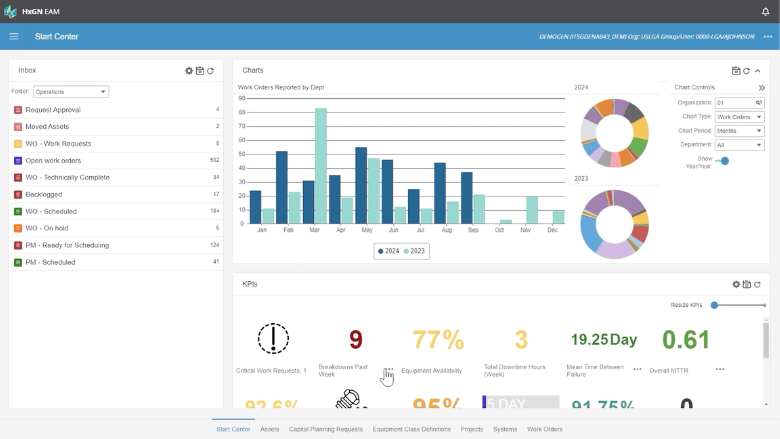
Octave Attune EAM Overview
Video
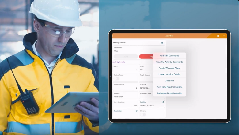
Octave Attune EAM Mobile
Proven benefits across every asset type: Across fleets, facilities, equipment and infrastructure, Octave Attune EAM (formerly HxGN EAM) equips you with the tools to operate with confidence - driving uptime, compliance and efficiency. With built-in AI assistance, mobile access and digital twin capabilities, Attune EAM enables teams to manage maintenance in context, reduce downtime and break down data silos.
- Complete asset lifecycle management from cradle to grave
- Optimized work execution and resource allocation
- AI-powered intelligence across operations
- Enterprise integration and data connectivity
Purchasing Attune EAM is meant to only be transactable via an AWS private offer. For custom contract terms, packages, pricing or additional features, please contact us: https://www.octave.com/products/asset-performance-management/attune/eam
Highlights
- ASSET MANAGEMENT: Track assets, build hierarchies and manage groups. Access detailed data, perform risk calculations and generate similar assets to streamline data management. WORK ORDER MANAGEMENT: Capture field data, automate work orders and schedule labor for cost tracking and efficiency. Ensure compliance with built-in calibration and manage work and resources with ease.
- INVENTORY MANAGEMENT: Manage requisitions, quotes and purchase orders. Streamline procurement processes and optimize stock levels to meet demand, minimizing working capital. MOBILITY: Access and update asset data on mobile devices for continuity and precise records. Submit work requests, receive notifications and conduct inspections on the go.
- INTEGRATIONS: Connect Attune EAM and your existing IT footprint through native enterprise integrations, including Workday ERP and an SAP Certified integration to S/4HANA. AI ASSISTANCE: Accelerate user adoption with an embedded AI assistant that guides you with prescriptive actions, classifies data and streamlines workflows.
Details
New
Introducing multi-product solutions
You can now purchase comprehensive solutions tailored to use cases and industries.

Features and programs
Buyer guide
Gain valuable insights from real users who purchased this product, powered by PeerSpot.

Financing for AWS Marketplace purchases
AWS Marketplace now accepts line of credit payments through the PNC Vendor Finance program. This program is available to select AWS customers in the US, excluding NV, NC, ND, TN, & VT.

Pricing
Pricing is based on the duration and terms of your contract with the vendor. This entitles you to a specified quantity of use for the contract duration. If you choose not to renew or replace your contract before it ends, access to these entitlements will expire.
Additional AWS infrastructure costs may apply. Use the AWS Pricing Calculator to estimate your infrastructure costs.
Dimension | Description | Cost/36 months |
|---|---|---|
Octave Attune EAM | Every customer has different needs that can't be answered by any one-size-fits-all plan. We work closely with our clients to price and package the most effective offering for their needs. Pricing is based on your specific requirements and eligibility. Request a private offer to receive a custom quote. If you would like to learn more about Octave Attune EAM, please contact: https://www.octave.com/products/asset-performance-management/attune/eam | $4,032.00 |
Dimensions summary
This listing uses a single custom pricing dimension billed by units under a contract. There are no fixed tiers or preset packages. Instead, Octave sets your price based on your specific requirements and eligibility. You request a private offer to receive a custom quote tailored to your needs. Because it is cloud-based, costs follow a subscription model rather than upfront capital expense. The unit-based structure lets pricing scale as your deployment grows, whether you support a single site or multiple locations. To scope your quote, you contact Octave directly through the product page.
Top-of-mind questions for buyers
The listing prices by units, but the specific mapping depends on your deployment. Octave sets units based on your requirements and eligibility, so the count reflects your site scope and usage. To confirm exactly what a unit covers for your case, request a private offer through the product page.
Because the product is cloud-based, it scales from a single site to multiple locations without disruption. The unit-based structure lets your price adjust as your deployment grows. Costs follow a subscription model rather than upfront capital expense, making budgets more predictable across added sites.
The contract covers asset management, work order management, and inventory management. You also get embedded AI assistance, mobile access, and digital twin support for 2D and 3D models. All features are included within the single unit-based dimension. To confirm scope for your quote, contact Octave.
www.octave.com
Helpful?
Vendor refund policy
No Refunds
Custom pricing options
Request a private offer to receive a custom quote.

Legal
Vendor terms and conditions
Upon subscribing to this product, you must acknowledge and agree to the terms and conditions outlined in the vendor's End User License Agreement (EULA) .
Content disclaimer
Vendors are responsible for their product descriptions and other product content. AWS does not warrant that vendors' product descriptions or other product content are accurate, complete, reliable, current, or error-free.
Delivery details
Software as a Service (SaaS)
SaaS delivers cloud-based software applications directly to customers over the internet. You can access these applications through a subscription model. You will pay recurring monthly usage fees through your AWS bill, while AWS handles deployment and infrastructure management, ensuring scalability, reliability, and seamless integration with other AWS services.
Resources
Support
Vendor support
Unmatched Support:
Octave is committed to your success with 24/7 customer support, ensuring you always have the help you need when you need it. Our dedicated team of experts is available to assist you with any questions or issues, providing quick and effective solutions.
Comprehensive Services:
Our comprehensive range of services is designed to maximize your product experience. From seamless onboarding and implementation to custom integrations and regular health checks, we ensure your system is optimized to meet your unique business needs.
Expert Training:
Empower your team with our expert training programs. We offer extensive training resources, including live webinars, detailed tutorials and personalized training sessions, ensuring your team is proficient and confident in using our platform to its full potential.
Learn more at the link below.
AWS infrastructure support
AWS Support is a one-on-one, fast-response support channel that is staffed 24x7x365 with experienced and technical support engineers. The service helps customers of all sizes and technical abilities to successfully utilize the products and features provided by Amazon Web Services.
Updated weekly

Sentiment is AI generated from actual customer reviews on AWS and G2
Functionality
Ease of use
Customer service
Cost effectiveness
Positive reviews
Mixed reviews
Negative reviews
AI generated from product descriptions
Asset Lifecycle Management
Complete asset lifecycle management from cradle to grave with capabilities to track assets, build hierarchies, manage groups, and access detailed asset data with risk calculations.
Work Order Management
Automated work order capture, scheduling, and labor cost tracking with field data collection, compliance management through built-in calibration, and resource allocation optimization.
Inventory and Procurement Management
Requisition, quote, and purchase order management with streamlined procurement processes and stock level optimization to minimize working capital.
Mobile Access and Field Operations
Mobile device access for asset data updates, work request submission, real-time notifications, and on-site inspection capabilities.
Enterprise Integration and AI Assistance
Native enterprise integrations including Workday ERP and SAP Certified S/4HANA integration, combined with embedded AI assistant for prescriptive actions, data classification, and workflow automation.
Asset Lifecycle Management
Complete asset lifecycle management from cradle to grave with capabilities to track assets, build hierarchies, manage groups, and access detailed asset data with risk calculations.
Work Order Management
Automated work order capture, scheduling, and labor cost tracking with field data collection, compliance management through built-in calibration, and resource allocation optimization.
Inventory and Procurement Management
Requisition, quote, and purchase order management with streamlined procurement processes and stock level optimization to minimize working capital.
Mobile Access and Field Operations
Mobile device access for asset data updates, work request submission, real-time notifications, and on-site inspection capabilities with precise record maintenance.
Enterprise Integration and AI Assistance
Native enterprise integrations including Workday ERP and SAP Certified S/4HANA integration, combined with embedded AI assistant for prescriptive actions, data classification, and workflow automation.
Asset Lifecycle Management
Integrated platform enabling remote maintenance and management of assets throughout their entire lifecycle, from acquisition to disposal within a single unified system.
Enterprise Asset Management and Reliability-Centered Maintenance
Entry-level configuration incorporating key EAM and RCM capabilities for asset and facilities management with enterprise-grade security.
AI and IoT Integration
Utilizes artificial intelligence and Internet of Things technologies to optimize equipment performance, extend asset lifecycles, and reduce operational downtime.
Mobile Enterprise Asset Management
Fully mobile EAM application enabling technician productivity and remote asset management capabilities.
Managed Cloud Infrastructure
Bundled subscription combining IBM Maximo software with AWS infrastructure, including installation, configuration, platform upgrades, database management, and Red Hat OpenShift application installation as fully managed services.
Standard contract
No
No
No
Customer reviews
Jazib Y.
Octave Attune EAM Centralizes Asset Management for Better Visibility
Reviewed on Oct 08, 2026
Review provided by G2
What do you like best about the product?
What I like the best about Octave Attune EAM is its ability to centralize asset management and maintenance activities in a single platform. It’s a great help to improve asset visibility.
What do you dislike about the product?
The learning profile is more challenging for new users. Moreover, some reporting and customization features could be more flexible. Streamlining work flows can also further improve user experience.
What problems is the product solving and how is that benefiting you?
Octave Attune EAM solves the challenge of managing assets, equipment performance, and maintenance activities across the organization. It helps reduce downtime by improving maintenance schedules.
Anonymous
Needs Improvement Despite Tool Variety
Reviewed on Oct 06, 2026
Review provided by G2
What do you like best about the product?
I like that Octave Attune EAM offers a wide variety of tools, which helps me better understand my problems and get to know my clients.
What do you dislike about the product?
Octave Attune EAM still needs improvements. It seems like it could offer a better understanding for users, which might indicate that some features aren't as intuitive or detailed as they could be. There's a suggestion that the services typically offered should be clearer or more accessible. So, there's room for improvement in terms of making the platform more user-friendly or comprehensive. The initial setup could also be better, which might affect new users getting started with it.
What problems is the product solving and how is that benefiting you?
Octave Attune EAM helps me better know my client and offers a wide variety of tools.
misho a.
Efficient Asset Tracking, Needs UI Enhancements
Reviewed on Oct 06, 2026
Review provided by G2
What do you like best about the product?
I like that Octave Attune EAM makes asset tracking simple and efficient. It makes it easier to organize equipment records and keep track of IT assets. The process of updating records and tracking equipment status is straightforward. The initial setup was easy and straightforward, allowing me to start using quickly.
What do you dislike about the product?
Overall, Octave Attune EAM works well, but the interface could be simpler and faster to use. Improvements in search and filtering would make it easier and quicker to find assets.
What problems is the product solving and how is that benefiting you?
I use Octave Attune EAM to make asset tracking easier and keep equipment records organized, updating records and tracking equipment status efficiently.
Afais Y.
Comprehensive Inventory & Materials Management With Real-Time Stock Tracking
Reviewed on Oct 05, 2026
Review provided by G2
What do you like best about the product?
Comprehensive Inventory & Materials Management
Optimized Stock Levels: Keeps track of spare parts, requisitions, and purchase orders in real time, preventing unexpected out-of-stock situations or over-purchasing.
Accurate Stock Movements: Simplifies receiving, issuing, and physical counts across warehouses so inventory numbers stay reliable.
Optimized Stock Levels: Keeps track of spare parts, requisitions, and purchase orders in real time, preventing unexpected out-of-stock situations or over-purchasing.
Accurate Stock Movements: Simplifies receiving, issuing, and physical counts across warehouses so inventory numbers stay reliable.
What do you dislike about the product?
Navigation & UI Complexity
• Steep Learning Curve: Because the software packs in so many features, the interface can feel dated or overly dense, making onboarding slower for new users.
Multi-Step Workflows: Accessing simple functions-like updating a work order status or retrieving detailed asset logs-often requires clicking through multiple sub-menus.
• Steep Learning Curve: Because the software packs in so many features, the interface can feel dated or overly dense, making onboarding slower for new users.
Multi-Step Workflows: Accessing simple functions-like updating a work order status or retrieving detailed asset logs-often requires clicking through multiple sub-menus.
What problems is the product solving and how is that benefiting you?
Eliminates Unplanned Equipment Downtime: Replaces reactive fixes with automated preventive maintenance schedules based on meter readings and time intervals, preventing sudden breakdowns.
Lodiong S.
Intuitive Asset Management with Room for UI Improvement
Reviewed on Oct 05, 2026
Review provided by G2
What do you like best about the product?
I really like the good maintenance tracking and centralized assets information that Octave Attune EAM offers. It's intuitive and easy to navigate, which makes it user-friendly. The initial setup was also very easy.
What do you dislike about the product?
I think the interface could be more streamlined in some areas, which would improve the overall user experience. Also, onboarding is important for new users, and it seems like that process could be enhanced to make it easier for newcomers.
What problems is the product solving and how is that benefiting you?
With Octave Attune EAM, I achieve accurate and timely asset management. The maintenance tracking is good, and it centralizes assets information, making the system intuitive and easy to navigate.