Overview
Mindtickle combines multiple solutions - including sales enablement and training, sales content management, conversation intelligence, sales coaching, and analytics - to create a unified approach to readiness. With Mindtickle, you can help your revenue teams be ready to build knowledge, analyze performance daily, and adapt to change.
Define excellence: Readiness index - capture & measure winning behaviors that close deals using CRM integration, and building programs that focus on them. Build knowledge: Sales enablement, training, practice & reinforcement - create continuous excellence with individualized onboarding and ongoing training, AI-driven spaced reinforcements and role-plays, microlearning, and gamification. Align content: Sales content management provides just-in-time access to training and content that's aligned with sales interactions. Additionally, the Mindtickle Sales Excellence series by BCI provides sales and sales enablement leaders with a proven foundation of training content to quickly launch and scale individualized readiness programs, ensuring base level competence in over 20 core selling and sales management skills. Analyze performance: Conversation intelligence & insights dashboard - gain insights into sales behaviors via meeting insights, theme, topic and sentiment analysis, and call scores that measure performance against winning behaviors. Optimize behavior: Transform insights about skills into performance through structured, individualized coaching feedback, qualitative scoring & analysis.
Mindtickle is built to improve sales performance through engaging, sales-focused activities that build & reinforce knowledge from onboarding all the way through every interaction with prospects.
For extended contract duration, custom package, additional features and custom pricing/private offer, please contact aws.sales@mindtickle.com
Highlights
- Our comprehensiveness: We provide enablement and training, coaching, partner-built content, content management, and conversation intelligence - all in one place.
- Our data-driven approach: Our team has deployed hundreds of complex, enterprise-wide readiness initiatives, bringing proven approaches to program design and development.
- World-class team of sales readiness experts: With hundreds of employees focused on product development and customer success, we continually improve our solutions based on quantitative research and customer feedback.
Details
Introducing multi-product solutions
You can now purchase comprehensive solutions tailored to use cases and industries.

Features and programs
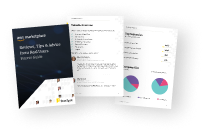
Buyer guide

Financing for AWS Marketplace purchases
Pricing
Dimension | Description | Cost/12 months |
|---|---|---|
Mindtickle | Contact aws.sales@mindtickle.com for a private offer. | $1,000,000.00 |
Vendor refund policy
We do not provide refunds.

How can we make this page better?
Legal
Vendor terms and conditions
Content disclaimer
Delivery details
Software as a Service (SaaS)
SaaS delivers cloud-based software applications directly to customers over the internet. You can access these applications through a subscription model. You will pay recurring monthly usage fees through your AWS bill, while AWS handles deployment and infrastructure management, ensuring scalability, reliability, and seamless integration with other AWS services.
Resources
Support
Vendor support
Basic & Premium Support available. In-platform chat, In-platform support ticket submission, In-app support (for mobile app Users) and Email support available. To know more about our support services visit https://www.mindtickle.com/support-services/ Help Centre: https://help.mindtickle.com support by email: support@mindtickle.com Standard business hours for Support Services during Daylight Standard are Sunday, 5:00 PM to Friday 5:00 PM (PST). Standard business hours for Support Services during Daylight Savings are Sunday, 6:00 PM to Friday 6:00 PM (PDT).
AWS infrastructure support
AWS Support is a one-on-one, fast-response support channel that is staffed 24x7x365 with experienced and technical support engineers. The service helps customers of all sizes and technical abilities to successfully utilize the products and features provided by Amazon Web Services.
Standard contract
Customer reviews
Centralized training has transformed how I build industry-ready ML communication skills
What is our primary use case?
My main use case for Mindtickle is centralized skill development and performance evaluation in a hybrid academic-industry learning environment. As a professor of machine learning, I use Mindtickle most often to bridge the gap between theoretical knowledge and real-world applications. While students may understand algorithms, model evaluation, matrices, and data pipelines conceptually, they often struggle to communicate insights effectively or may apply their knowledge in business-driven scenarios. Mindtickle provides a controlled, measurable environment where I can simulate such real-world situations. In practice, I frequently use the platform for three core purposes. The first one is applied learning and scenario-based training, as I design modules where learners must explain machine learning concepts in a simplified manner as if presenting to non-technical stakeholders. This helps build interpretability and communication skills critical in AI roles today. The second reason I am using it is for assessment and candidate readiness, as Mindtickle is my go-to tool for evaluating how industry-ready a student or professional is. I use its assessment framework, mock presentations, and role-play feature to test not just knowledge but clarity of thought, confidence, and problem-solving ability under realistic conditions. The third reason I am using it is for continuous feedback and skill improvement. What I use most often is the feedback loop system, as the ability to review submissions, provide structured feedback, and track improvement over time allows me to mentor learners at scale, transforming evaluation from a one-time activity into a continuous learning process.
A quick example that comes to mind is from the last time I used Mindtickle for the communication of machine learning insights to business stakeholders. In this scenario, I created a simulated project where a student acts as an ML consultant working for an e-commerce company. They were given a dataset and asked to build a customer churn prediction model. While the technical part was done outside the platform, the real focus inside Mindtickle was on communication and decision-making. Students had to record a five to seven minute presentation explaining their model outcomes, justifying why they selected a particular algorithm, translating matrices like accuracy, precision, and recall into business impact, and recommending actionable strategies such as target retention campaigns. I also designed a role play exercise where I acted as a business stakeholder asking questions including, why should we trust this model? What happens if the model is wrong? How does this impact revenue? The students had to respond in real time, testing not just their knowledge but also their clarity, confidence, and critical thinking. This stood out because of the ability to standardize evaluation across a large group, recording and replaying responses for detailed feedback, and tracking improvement over multiple iterations. Many candidates initially gave highly technical answers, but after the feedback cycle, they significantly improved their ability to simplify complex ML concepts into business-friendly language. As a result, by the end of the module, the students were not just able to build models, but they were also able to defend their decisions, communicate value, and think from a business perspective, which is exactly what the industry expects nowadays.
As for my experience using Mindtickle, a few of the features that I appreciate the most include the AI-powered role play and simulation capability, which is one of the most impactful features. Its AI role capability places users to practice real-world scenarios in a controlled environment. This is extremely valuable because it moves beyond passive learning into active skills demonstration. Learners can practice communication, objection handling, and decision-making, and the immediate AI-driven feedback helps refine both content and delivery. This aligns very well with how we evaluate applied ML skills, showing that explaining a model is just as important as building it. Another feature I appreciate the most is the readiness index and skill benchmarking, which is a standout feature for me for structured evaluation. It provides a measurable way to assess whether a learner is actually prepared for real-world scenarios. I particularly appreciate that it goes beyond the competition matrix and focuses on true capability, enabling benchmarking across individuals or teams while helping to identify specific skill gaps. For an academic, this is extremely useful in assessing industry readiness rather than just theoretical understanding. Another feature I appreciate the most is continuous learning and the reinforcement provided by Mindtickle because, unlike traditional LMS platforms, Mindtickle emphasizes continuous learning rather than one-time training. The key strength of this platform is the micro-learning module and reinforcement cycles, along with gamification elements that improve engagement and ensure ongoing assessment for knowledge retention.
Another feature I appreciate a lot about Mindtickle is the analytics and performance insight because the analytics layer is a major differentiator. It enables tracking of learning progress and skill development, and it correlates training with real-world performance, allowing for data-driven decision-making for program improvement. From a machine learning perspective, this is where the platform becomes particularly interesting as it creates a feedback loop between behavior, learning, and outcomes.
How has it helped my organization?
Mindtickle has impacted my organization very positively because the adoption of Mindtickle has significantly impacted my learning ecosystem, particularly in how we train, evaluate, and prepare individuals for real-world, industry-facing roles. The impact can be seen across multiple dimensions, such as bridging the gap between theory and real-world application. One of the most meaningful improvements has been the ability to translate theoretical knowledge into practical capabilities. In traditional academic settings, students often excel in understanding machine learning concepts but struggle with communicating insights, applying models in business contexts, handling ambiguity, and addressing stakeholder questions. Mindtickle addresses this by introducing scenario-based learning and role-play, which has led to a noticeable improvement in students' ability to explain complex ML outputs in simple terms, make data-driven recommendations, and think from a business impact perspective.
Another reason I believe it has positively impacted my organization is its ability to measure improvement in learner readiness, which is another major positive impact since evaluation was primarily subjective based on assignments, exams, or interviews. With Mindtickle, we now have structured scoring frameworks, and performance can be tracked across multiple dimensions. Improvement is visible through iterative submissions and feedback cycles, making our assessment process far more data-driven and objective, which is especially important when preparing candidates for industry roles. I also appreciate the stability, mentorship, and feedback, as it has positively impacted my institute. Before implementing Mindtickle, providing personalized feedback at scale was a significant challenge, but now recorded submissions allow for asynchronous evaluations, and standardized rubrics ensure consistency in feedback. Multiple evaluators can collaborate without redundancy, enabling us to mentor a large number of learners without compromising quality, which is a critical requirement in both our academic programs and corporate training environments.
I can provide some rough numbers to give a brief idea about how it has positively impacted our organization. Before using Mindtickle, our evaluation was largely theoretical, and readiness levels were inconsistent, but after implementation, average readiness scores improved by around thirty to forty percent over a six to eight week training cycle. Students who initially scored in the fifty to sixty percent range moved to seventy-five to eighty-five percent after iterative feedback and role-play practice, and consistency across learners improved significantly, reducing performance gaps within the course. One of the biggest operational improvements was in efficiency, showing a reduction in evaluation and feedback time of around forty to fifty percent per candidate due to recorded submissions and standardized rubrics. This ability to review asynchronously eliminated scheduling bottlenecks, allowing bulk evaluation workflows to scale assessments for larger batches. For example, what previously required two to three days of coordinated evaluations could now be completed within a few hours. We have also seen an increase in placement readiness and success rates, with around a twenty to twenty-five percent improvement in placement readiness and a noticeable increase in students clearing the final interview rounds, especially in client-facing or consulting roles. Recruiters' feedback has highly motivated us, improving communication clarity and confidence when explaining machine learning solutions along with structured thinking.
What needs improvement?
I believe Mindtickle can improve its platform by doing a few things. First, I think greater customization in AI feedback would be beneficial because the AI-driven feedback and role-play capabilities are powerful, but there is room for improvement in terms of customization and contextual depth. Currently, feedback can sometimes feel generic or template-driven, so more flexibility to define domain-specific evaluation criteria would enhance relevance. Allowing instructors to train or fine-tune the feedback model based on their own rubrics could significantly enhance the overall impact, especially for advanced users in technical domains. I also want to highlight that UI flexibility and personalization could be improved because while the interface is clean and structured, it can feel slightly rigid in certain scenarios, including limited ability to customize dashboards or workflows. Navigating across multiple modules can sometimes require extra clicks, and a more personalized learner dashboard would improve the user experience.
I would like to highlight the integration aspect as well. While Mindtickle supports many integrations, the depth of those integrations can vary. Some integrations are more data sync-focused rather than workflow-driven. A tighter, real-time integration with tools including CRMs or communication platforms would improve usability, and more plug-and-play connectors for academic tools and LMS platforms would expand its use cases. Improving the seamless workflow integration would reduce friction for end users.
For how long have I used the solution?
I have been using Mindtickle for the last one and a half years.
What do I think about the stability of the solution?
Mindtickle is quite stable in my experience. We have not seen any downtime, and in terms of reliability, my experience has been highly positive with only occasional non-critical issues. From a system perspective, Mindtickle has demonstrated enterprise-grade reliability, maintaining over ninety-nine point nine percent uptime as a part of its SLA commitments. In day-to-day usage, I have rarely encountered any major outages or disruptions, only occasional minor issues such as slight performance lag when handling larger datasets or complex modules. Overall, I would say that it is quite stable.
What do I think about the scalability of the solution?
Mindtickle is able to handle larger groups whenever needed. The scalability aspect is very good, and we have not seen any glitches or interruptions while performing live sessions, assessments, or online interviews for our candidates.
How are customer service and support?
I would rate Mindtickle's customer support as consistently positive, as it is one of the stronger aspects of this platform. Customer support queries are typically addressed quickly and efficiently, and for most day-to-day queries, the support team provides clear and actionable guidance. They demonstrate a very good understanding of platform features and use cases, guiding users through configurations, integrations, and troubleshooting while providing practical solutions rather than just generic responses.
Which solution did I use previously and why did I switch?
I have not previously used any different solution.
What was our ROI?
We have seen a return on investment with Mindtickle in terms of time saving, operational efficiency, and improved outcomes, rather than just direct headcount reduction. Regarding time savings, we have seen around a thirty to forty percent reduction in manual efforts related to tracking, coordination, and follow-ups. Daily evaluation and tracking time have reduced from two to three hours to one and a half hours now. If I talk about faster onboarding, we have seen that sales-enabling platforms such as Mindtickle reduce onboarding times by around forty to fifty percent, along with improved performance outcomes. The ROI is not just about cost; it is also about better results, and we have noticed improved win rates by around seven percent. These are a few rough data points I can share with you.
Which other solutions did I evaluate?
What other advice do I have?
As an experienced user and customer of Mindtickle, I have a few recommendations for those looking into using it. First, they should clearly define their outcomes before implementation and be very clear about what they want to achieve, focusing on onboarding, skill development, or performance improvement. They should also improve communication, domain expertise, or readiness for real-world scenarios. Additionally, they should create scenario-based learning modules instead of just theoretical content, using user role play and real-world simulations extensively. Furthermore, encouraging learners to record, review, and re-attempt, utilizing feedback loops to drive continuous improvement would be beneficial.
My final thoughts are that if users employ Mindtickle correctly, it significantly transforms how their organization approaches training and readiness. The key is to treat it as a performance-enabling system rather than just an LMS. Organizations looking to use it should focus on practical applications, continuous feedback, and measurable outcomes, which will yield the strongest return on investment for them. I would rate my overall experience with Mindtickle as an eight out of ten.
Structured training workflows have improved readiness and provide reliable analytics insight
What is our primary use case?
As a quality analyst, my main use case for Mindtickle is to ensure the quality, accuracy, and reliability of trainings and sales readiness programs before they are delivered to our end users. I primarily work on validating end-to-end learning workflow, including the course creation, content delivery, assessments, and certification processes. This involves testing different types of content such as videos, quizzes, and interactive modules to ensure that they function correctly across various scenarios and user roles. Another key part of my use case is verifying the accuracy of the analytics and reporting. Since business stakeholders rely heavily on performance data, I ensure that metrics such as completion rates, scores, and engagement insights are captured and displayed correctly. I also test the edge cases to make sure the system behaves consistently under different conditions. Additionally, I use Mindtickle to simulate user journeys by testing the role-based access, such as testing for admin, trainer, or learning roles. This helps me to ensure that each user type has the correct permissions and a seamless experience. Overall, my primary use case revolves around maintaining high-quality standards, minimizing defects, and ensuring that the platform delivers a smooth and reliable experience for both our learners and the administrator.
I would like to highlight a specific scenario where Mindtickle really helped me to achieve my goals during the rollout of a large-scale sales and training certification program for our distributed team. Multiple learning paths were created, including onboarding modules, product training, and certification assessments. My responsibility as a quality analyst was to ensure that the entire flow from content consumption to the final certification worked seamlessly for different user roles. Mindtickle played a crucial role by providing a centralized platform where I could validate the complete learner journey. I was able to test how users progressed through the courses, how assessments were triggered, and whether scoring logic and pass criteria were functioning correctly. This was especially important because certifications were tied to business outcomes and any inconsistency could really impact our decision-making. One of the key challenges in this project was ensuring accurate reporting, and stakeholders needed reliable data on learner progress, completion rates, and performance metrics. Using Mindtickle's analytics, I thoroughly validated the dashboards and reports to ensure that they reflected real-time and accurate information, and this helped me to build confidence among the stakeholders in the system's output. Additionally, the role-based access feature allowed me to simulate different user personas, such as trainers, managers, and admins. This ensured that the permission, visibility, and the user experience were aligned with business requirements. At the end, the program was launched smoothly with minimal post-creation issues, and the platform significantly reduced manual efforts and improved visibility into our learner's performance, and it ensured a consistent and scalable training experience.
What is most valuable?
As per my experience, there are many great features, but one of the best aspects of Mindtickle is that it brings multiple capabilities such as training, coaching, content, and analytics into a single unified platform. This makes it extremely effective for the organization looking to manage end-to-end sales readiness without relying on multiple tools. A standout feature is AI-driven training and role-play capabilities because the platform allows users to practice real-life sales scenarios using AI simulations, which helps the teams to improve their communication and selling skills in a safe environment before interacting with their actual customers. This significantly enhances learning effectiveness and preparedness. Another key strength is the comprehensive learning and assessment framework, because Mindtickle supports microlearning, gamification, certifications, and continuous reinforcement, which ensures that knowledge retention is high and training is engaging rather than static. The analytics and reporting dashboards are also a highly valuable feature because they provide deep insight into learner performance, engagement, and readiness levels. Features such as the readiness index help the organization benchmark skills and track improvement over time, and it also enables data-driven decision-making.
Regarding how the AI simulations work in practice for my team, in our team, the AI-driven simulations in Mindtickle are primarily used to replicate real-world sales conversations and help learners practice in a controlled and risk-free environment. From a practical standpoint, these simulations are designed as role-play scenarios where a learner interacts with AI personas that mimic a customer, and the scenarios are usually based on actual business situations such as product pitches, objection handling, and discovery calls. The learner responds either through voice or text, and the AI evaluates the response in real time. What makes it particularly useful is the instant feedback mechanism because the AI assesses multiple aspects such as communication clarity, keyword usage, confidence, and alignment with the expected responses. This provides structured feedback highlighting strengths and areas of improvement. As a quality analyst, I validate whether this feedback logic is consistent and aligned with the defined evaluation criteria. Another important aspect is the scenario customization where our team can configure different difficulty levels and use cases, which allow us to test how the AI adapts to the various inputs. For an example, I simulate both ideal responses and edge cases to ensure the system handles different user behaviors effectively. I also use these simulations to ensure scoring accuracy and fairness, since these scores can impact certifications or readiness assessments. I test whether similar responses yield a consistent score and whether the AI evaluations align with the expected benchmark.
What needs improvement?
After using Mindtickle, I feel that there are a few areas where Mindtickle could do better. One area is performance and responsiveness because at times, especially when dealing with large data sets or complex dashboards, the platform feels slightly slow to me and my team. Optimizing load times and improving responsiveness would make day-to-day usage smoother, particularly for analytics-heavy workflows. Another area for improvement is UI/UX simplification. Although the platform offers extensive functionality, some workflows feel a bit complex and require multiple steps. Streamlining the navigation and making commonly used actions more intuitive would improve usability for both new and experienced users. From a quality analyst perspective, better debugging and error visibility would be extremely helpful. When validating issues, having more detailed logs, clear error messages, and traceability would significantly reduce troubleshooting time and improve efficiency. Additionally, greater customization flexibility would be beneficial. While the platform supports configuration, more control over workflow, scoring logic, and UI elements would help organizations tailor the system more closely to their specific needs. Another potential improvement area is reporting customization. While the analytics are strong, enabling more flexibility, user-defined reports, and easier data extraction would enhance its usefulness for stakeholders who require specific insights.
Another improvement I would like to highlight is the documentation and onboarding resources. Mindtickle can improve documentation and onboarding resources, especially for advanced features such as AI simulation and integrations, which would really help teams adopt and utilize the platform more effectively.
One area is mobile experience optimization. While the platform is accessible on mobile devices, improving responsiveness and feature parity with the desktop version would make it more convenient for learners who prefer on-the-go access. Another improvement is integration depth and flexibility. Although Mindtickle supports integrations, making them more seamless and easier to configure, especially with CRMs and HR systems, would reduce setup effort and improve data synchronization.
For how long have I used the solution?
I have been using Mindtickle for the last two years.
What do I think about the stability of the solution?
After using Mindtickle, I feel that there are a few areas where Mindtickle could do better. One area is performance and responsiveness because at times, especially when dealing with large data sets or complex dashboards, the platform feels slightly slow to me and my team. Optimizing load times and improving responsiveness would make day-to-day usage smoother, particularly for analytics-heavy workflows.
What was our ROI?
If I have to rate it on a scale of one to ten, I would rate it an eight out of ten because the platform offers a comprehensive set of features, including training, AI-driven simulations, and analytics, which significantly improve sales readiness and learning outcomes. However, there are still areas for improvement, such as performance optimization, UI simplification, and advanced customization. These improvements could make the experience even better.
What other advice do I have?
I would like to provide a few recommendations as per my experience. My advice to an organization considering Mindtickle is to start with a clear strategy for how they want to structure their training and readiness program rather than just focusing on the tool itself. They have to understand that Mindtickle is a powerful platform, but its effectiveness depends heavily on how the content, learning paths, and assessments are designed. I would recommend investing time in defining clear learning objectives, certification criteria, and success metrics before implementation of Mindtickle in their system. It is very important to leverage the platform's full capabilities, especially features such as AI-driven role-plays, analytics, and continuous reinforcement. Many organizations initially use it only for basic training, but the real value comes from using it as a complete sales readiness and coaching solution. From an implementation perspective, I would suggest they start with a pilot program. This helps them identify gaps, refine the workflow, and gather feedback before scaling across the organization. Another key recommendation I would provide them is to involve cross-functional teams early, including their QAs, trainers, and business stakeholders. This ensures that the platform is configured correctly and meets both technical and business requirements.
Mindtickle stands out as a well-rounded and mature platform in the sales readiness space. It is effectively combining training, coaching, and analytics into a single ecosystem, which makes it highly valuable for organizations looking to scale their enabling programs. From my experience, one of the most notable aspects is how structured and reliable the platform is when it comes to delivering consistent learning experiences and measurable outcomes. It not only supports content delivery but also ensures that learning effectiveness can be tracked and improved over time. My overall rating for this platform is eight out of ten.
Which deployment model are you using for this solution?
If public cloud, private cloud, or hybrid cloud, which cloud provider do you use?
Structured training has improved placement readiness and supports data‑driven shortlisting
What is our primary use case?
I primarily use Mindtickle to structure and track training for students who are preparing for placements. On a day-to-day basis, for example, if I'm running a placement readiness program, I create modules around aptitude, communication, and interview skills. Students go through the content, complete assessments, and I can actually see where they are struggling. One very specific use case is during mock interview preparation. I assign role-based scenarios, and based on their responses and scores, I can identify who is ready for an actual company interview and who is still in need of improvement. It really helps me make a more informed decision rather than relying only on observation.
Mindtickle fits exceptionally well into the overall flow of placement preparation, not just isolated training. It is not just about assigning modules. It becomes a continuous process. For example, before a company drive, I usually create a focused learning path specific to that company's requirement, such as aptitude level, communication expectation, or role-specific skills. Students go through that in a structured way rather than random preparation. Another practical use case is reinforcement. After workshops or live training sessions, I use Mindtickle to assign follow-up content or short assessments. This helps me check whether students have actually understood and retained what we have discussed, instead of it being a one-time session. It also helps in maintaining consistency. When you are handling a large number of students, it is difficult to ensure everyone gets the same level of guidance. With Mindtickle, the baseline training becomes uniform, and then I can focus more on students who need extra attention. Overall, it becomes more of a support system in my workflow. It keeps things structured, measurable, and a lot more streamlined, especially during peak placement cycles.
What is most valuable?
When it comes to tracking progress with Mindtickle, I do not have to rely on just gut feeling anymore. Mindtickle gives a fairly clear view of how each student is performing across different modules. I usually look at things such as completion rates, assessment scores, and how consistently they are engaging with the content. One feature I tend to use a lot is the readiness or score-based tracking. It helps me quickly identify patterns. For example, if a group of students is doing well in aptitude but is struggling in communication or interview scenarios, that kind of visibility makes it easier to intervene early. I also refer to the analytics dashboard to compare progress over time. If a student initially improves, it gives me confidence that training is actually working. On the other hand, if someone is stagnant, I know they need more focused attention. Overall, the reporting is not just numbers for me. It directly helps in decision-making, especially when shortlisting students for actual placement opportunities.
Mindtickle has a variety of features which are really helpful. That is actually one of the reasons I have continued using Mindtickle. Some features genuinely stand out once you start using it regularly. The readiness tracking feature is a game-changer for me. What really stands out is the whole readiness concept. Instead of just checking whether a student completed a module, it also helps me understand whether they are ready. I have used this extensively during placement cycles, shortlisting students based on their preparedness rather than just attendance or scores. It gives a much more practical view of who can actually perform in interviews. This aligns with Mindtickle's readiness index, which benchmarks performance and learning levels. The structured training and assessment in one flow is also valuable. I appreciate how everything is connected, such as content, quizzes, assignments, and feedback. It is not scattered. In my workflow, I do not have to jump between tools. I can assign modules, evaluate performance, and track progress all in one place. It makes managing large student batches much easier.
Mindtickle also helps me with analytics and reporting, which is very practical in nature. The analytics are actually useful, not just numbers. I regularly check an individual's progress, batch-wise performance, or improvement over time. It helps me identify gaps early. For example, if students are consistently underperforming in communication or aptitude, I can immediately intervene. Mindtickle provides role-based dashboards and detailed reports on learning progress, engagement, and performance, which makes it easy for us to identify gaps early and work on them. The role-play aspect and practice-based learning is something I personally find very impactful. Instead of only theoretical learning, students can practice scenarios such as mock interviews or communication exercises. It brings a real-world element into training, which is very important for placements. Mindtickle supports AI-driven role plays and simulated scenarios with feedback. The continuous learning and reinforcement is also valuable. Training does not stop at one session. I use it to assign follow-up modules or reinforce concepts after a workshop to ensure consistency across the batches. It helps maintain continuity instead of one-time learning. Mindtickle supports ongoing learning through structured programs and reinforcement, which is very important to understand how the outcome can be achieved.
What needs improvement?
Mindtickle brings an important level of consistency across the different batches. When you are handling a large group of students, it is very easy for training quality to vary depending on session or timing. With Mindtickle, once a structure is set, that consistency is maintained, and it reduces a lot of manual dependency. That said, one thing I do feel could be better is the ease of customization on the go. Sometimes during placement season, requirements change quickly. Perhaps a company has a different expectation or timelines shift. At that moment, making quick edits or restructuring the learning paths is not always as smooth as I would prefer. A bit more flexibility there would really enhance the experience. It would also be great if there were more intuitive or student-friendly dashboards. While the back-end analytics are strong, a simpler view for students to clearly understand where they stand and what exactly they need to improve could make it even more impactful. Overall, these are more refinements, because in terms of core features, Mindtickle is already doing a solid job.
Mindtickle is doing an amazing job. While my overall experience with Mindtickle has been positive, there are definitely a few areas where I feel it can improve further. One area is flexibility and speed of customization. During the placement season, things can change very quickly with new companies, new requirements, different role expectations, and tighter timelines. In those situations, I sometimes feel that modifying an existing learning path or restructuring modules could be more intuitive and faster. Another aspect is the student-side experience. While the back-end analytics and admin control are quite strong, the learner interface could be made more engaging and simpler. If students had a clearer, more visual view of where they stand and what exactly they need to improve, it would drive even better participation. I also feel there is room for improvement in real-time feedback and interaction. Currently, most feedback is structured around assessments, but adding more instant or interactive feedback elements, especially during practice scenarios, would make the learning experience more dynamic. Lastly, the integration with other tools we commonly use in training and placements, such as communication or scheduling platforms, could be smoother. It would help in creating a more connected ecosystem rather than switching between multiple tools. That said, these are more enhancements rather than major gaps. Mindtickle's core functionality is strong, and it is just about making the experience more agile and user-friendly, especially in a fast-paced environment such as placements.
For how long have I used the solution?
I have been using Mindtickle for more than a year.
What do I think about the stability of the solution?
Before finalizing Mindtickle, we did look at a few other options, though not a very extensive formal comparison process. We explored some general learning and training platforms such as LinkedIn Learning and Udemy Business , mainly to understand how they handle content delivery and learner engagement. We also considered continuing with the tools we were already comfortable with, such as Google Workspace . However, we realized that those were more supportive tools rather than a complete training solution. Mindtickle was ultimately chosen because it offered a more structured, end-to-end approach, combining learning, practical assessment, and readiness tracking in one platform.
Mindtickle is a highly stable platform. I have been using it for a long time and have not faced much of a problem. In my experience, it has been consistently reliable in day-to-day usage. Over the time I have been using it, I have not faced major downtime or disruptions, even during peak placement periods where multiple students are accessing the platform simultaneously. Consistency is very important for us, especially when training is scheduled and assessments are tightly planned. Another reason I find it stable is the way it handles a large volume of users and content. Whether it is assigning modules, running an assessment, or tracking progress across the batches, the system performs smoothly without any lag or errors. Updates or changes on the platform do not tend to disrupt ongoing workflows, which is something I really appreciate. It continues to function reliably without requiring constant troubleshooting or support. Overall, from a practical, user-level perspective, Mindtickle is a dependable platform that you can rely on for continuous training without worrying about interruptions.
Which solution did I use previously and why did I switch?
Before moving to Mindtickle, we were not using a single dedicated platform. It was more of a combination of tools and manual processes. We relied heavily on things such as Microsoft Excel for tracking progress and scores, Google Drives, and occasional online tests or internal assessments conducted separately. Mindtickle main challenge with this setup was a lack of structure and visibility. Everything was scattered, with content in one place, scores in another, and feedback somewhere else. This made tracking consistency and actual readiness quite difficult, especially when handling large batches. We decided to move to Mindtickle primarily to centralize the entire training process and bring in structured training and learning paths instead of ad hoc sessions, to have clear visibility into performance and readiness, and also to reduce manual tracking and dependency on multiple tools.
What was our ROI?
In terms of return on investment, I have definitely seen a positive return on investment with Mindtickle, especially in terms of time and efficiency. From a practical standpoint, the biggest ROI has come from the time saved and better utilization of resources. The time spent on manual tracking and coordination and follow-ups has reduced by roughly thirty to forty percent during the peak placement period. What earlier took around two to three hours daily is now closer to one or one and a half hour. This represents a reduction in manual effort, not necessarily fewer people, but better use of them. We have not reduced head count, but the dependency on multiple people managing data and tracking progress has gone down. One person can now handle what earlier required more coordination across the team. Since the content is structured and reusable, we do not have to redesign training programs from scratch for every batch or placement cycle. That itself saves a lot of effort over time.
I have observed better outcomes in placement. While it is difficult to attach an exact monetary value, the improved readiness and more accurate shortlisting mean fewer mismatches during the interviews, which indirectly improves both placement success and saves time for both students and the recruiters. If I look at it holistically, the ROI is less about direct cost cutting and more about efficiency, consistency, and better outcomes.
On the completion rate, earlier when we were running training in a more informal way, through sessions or shared materials, or even Google Drive links, the consistency was quite low. Roughly about fifty to sixty percent of students would actually complete the assigned preparation end to end. Now, after moving to Mindtickle, because everything is structured, tracked, and visible, I have seen completion rates go up to around seventy-five to eighty-five percent, especially for placement-focused modules. Students are more accountable when they know their progress is being monitored and linked to actual opportunities. In terms of time saved, this has been quite noticeable for me personally. Earlier, I used to spend a lot of time maintaining separate trackers, attendance sheets, or assessment scores, and follow-ups, which would easily take me two to three hours per day during the peak placement season. With Mindtickle, since everything is centralized, that effort has reduced roughly to one or one and a half hour, representing a thirty to forty percent time saving in terms of coordination and tracking work.
What other advice do I have?
Mindtickle has impacted my organization really positively, and I have seen the most tangible impact in my workflow. From an organizational point of view, the biggest positive has been better visibility and more structured decision-making. For example, earlier, a lot of shortlisting and placement depended on a mix of test scores, faculty feedback, or personal judgment. Now with Mindtickle, I have a more data-backed approach. I can clearly see which students have consistently performed well across modules, assessments, and practical scenarios. In terms of outcomes, students are more prepared before they actually sit for interviews. You can see the difference in how confidently they handle mock interviews and assessments. Since the learning is structured and tracked, the students tend to take it more seriously. Completion rates and participation in training activities have definitely improved compared to earlier.
Mindtickle has brought a lot of time efficiency. A lot of manual tracking, such as maintaining a separate sheet for attendance or scores and feedbacks, has reduced significantly. I can access everything in one place, which saves a lot of time during the peak placement period. One specific change I have noticed is that during company drives, I am able to shortlist students based on consistent performance data rather than a one-time test. This has led to more reliable selections. The overall impact is quite visible in terms of a smoother process, better prepared students, and more confidence in placement decisions. Overall, Mindtickle has made the entire training-to-placement journey more structured and outcome-driven rather than just activity-based.
I rate Mindtickle an eight out of ten. The reason I am not giving it a full ten is mainly due to the areas we discussed, such as quicker customization or smoother navigation, and a more intuitive student-side experience. Otherwise, in terms of core functionality and impact, it does a very solid job. I rated it eight mainly because while it delivers really well on core functionality, there are a few practical gaps I have experienced in day-to-day usage. For me, the biggest reason is agility. In a placement environment, things move very fast, and last-minute changes in company requirements are common.
Which deployment model are you using for this solution?
If public cloud, private cloud, or hybrid cloud, which cloud provider do you use?
Empowers Sales Teams with Comprehensive Training
Great for Enablement Live Trainings, But On Demand Content and UI Need Improvement
When working with Mindtickle we found that they team was rather responsive to our notes and feedback. They were able to take our desired features into account while maintaining aspects of the platform that we liked.