
Sold by: CARTO
The world's leading Location Intelligence platform.
4.6
Overview
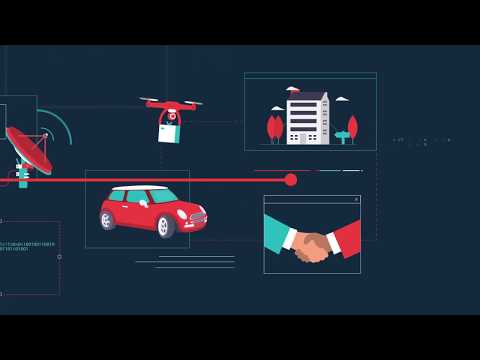
Unlock the power of spatial analysis. Data Scientists, Developers and Analysts solve spatial problems using CARTO's data and analysis to understand where and why things happen, optimize business processes, and predict future outcomes through the power of Spatial Data Science.
- Key use cases include:
- Site Selection
- Market Analysis
- Geomarketing
- Network Optimization
- Mobility Planning
- Environmental Analysis
- ... and much more (https://carto.com/solutions/ )
AWS and CARTO customers now have access to a powerful and versatile geospatial engine, combined with the cutting edge cloud computing services offered by AWS. In addition, CARTO can seamlessly import data from AWS Redshift, enabling data scientists to start analyzing their geospatial data quickly and efficiently.
For inquiries and pricing for our Enterprise platform through the AWS Marketplace, please contact aws-marketplace@carto.com
Highlights
- With more location data being generated than ever before, every single industry is investing in spatial analysis resources. Discover your use case today.
Details
Sold by
Delivery method
Deployed on AWS
New
Introducing multi-product solutions
You can now purchase comprehensive solutions tailored to use cases and industries.

Features and programs
Trust Center

Access real-time vendor security and compliance information through their Trust Center powered by Drata or Vanta. Review certifications and security standards before purchase.
Buyer guide
Gain valuable insights from real users who purchased this product, powered by PeerSpot.
Financing for AWS Marketplace purchases
AWS Marketplace now accepts line of credit payments through the PNC Vendor Finance program. This program is available to select AWS customers in the US, excluding NV, NC, ND, TN, & VT.

Pricing
Pricing is based on the duration and terms of your contract with the vendor. This entitles you to a specified quantity of use for the contract duration. If you choose not to renew or replace your contract before it ends, access to these entitlements will expire.
Additional AWS infrastructure costs may apply. Use the AWS Pricing Calculator to estimate your infrastructure costs.
Dimension | Cost/12 months |
|---|---|
Carto Enterprise Large | $89,000.00 |
Dimensions summary
This listing offers one pricing option: Carto Enterprise Large. You buy it as a contract, paid upfront for a committed annual term. Pricing is set by unit quantity, so you scale by choosing how many units your team needs. This committed structure gives you a fixed usage quota for the year rather than variable metered billing. It fits organizations that want predictable costs and access to the platform's spatial analytics capabilities. Because it is a single dimension, there are no separate add-ons or tiers to combine — you commit to the Enterprise Large quantity that matches your expected usage.
Top-of-mind questions for buyers
Usage units track platform operations like workflow runs, map loads, and analytics API calls. Each action carries a weighted unit cost. Location Data Services such as geocoding and routing bill per operation. Your committed quantity sets the yearly usage quota you draw down against.
Your committed contract includes a fixed usage quota for the annual term. Once you approach that quota, contact the vendor to adjust your commitment. You can monitor usage in real time from the platform dashboard and set spend alerts to track consumption against your quota.
The platform runs inside your cloud data warehouse. Data is never copied or transferred. Maps, workflows, and applications send live queries against your warehouse, and results are not stored. Deployment supports options such as running inside your own network with proxy or VPC controls.
carto.com+1
Helpful?
Vendor refund policy
No refunds except when required by law.

Legal
Vendor terms and conditions
Upon subscribing to this product, you must acknowledge and agree to the terms and conditions outlined in the vendor's End User License Agreement (EULA) .
Content disclaimer
Vendors are responsible for their product descriptions and other product content. AWS does not warrant that vendors' product descriptions or other product content are accurate, complete, reliable, current, or error-free.
Delivery details
Software as a Service (SaaS)
SaaS delivers cloud-based software applications directly to customers over the internet. You can access these applications through a subscription model. You will pay recurring monthly usage fees through your AWS bill, while AWS handles deployment and infrastructure management, ensuring scalability, reliability, and seamless integration with other AWS services.
Resources
Vendor resources
Support
AWS infrastructure support
AWS Support is a one-on-one, fast-response support channel that is staffed 24x7x365 with experienced and technical support engineers. The service helps customers of all sizes and technical abilities to successfully utilize the products and features provided by Amazon Web Services.
Updated weekly
By CARTO


By Mapbox
Sentiment is AI generated from actual customer reviews on AWS and G2
Functionality
Ease of use
Customer service
Cost effectiveness
Positive reviews
Mixed reviews
Negative reviews
AI generated from product descriptions
Spatial Data Analysis Engine
Geospatial analysis platform enabling spatial problem-solving through data-driven insights to understand spatial relationships and patterns.
Cloud Data Integration
Seamless integration with AWS Redshift for direct import and analysis of geospatial data within cloud computing infrastructure.
Location Intelligence Capabilities
Spatial data science tools for site selection, market analysis, geomarketing, network optimization, mobility planning, and environmental analysis.
Multi-User Analytics Platform
Support for data scientists, developers, and analysts to collaborate on spatial analysis and geospatial problem-solving.
Predictive Spatial Modeling
Capability to predict future outcomes and optimize business processes through spatial data analysis and forecasting.
Spatial Database Functions
WherobotsDB provides 300+ accelerated spatial functions covering vector geometry and raster processing with native Spark SQL support for tabular operations, based on Apache Sedona.
Planetary-Scale Computer Vision Inference
RasterFlow ingests satellite and aerial imagery, builds inference-ready mosaics, runs computer vision models at scale, and delivers structured spatial features to downstream applications.
Spatial AI Development Environment
Spatial AI Coding Assistant connects AI coding environments to spatial datasets via VS Code and MCP, enabling natural language queries, dataset discovery, and job execution against physical-world data.
Centralized Physical-World Asset Management
Global Hub provides a single location for organizing physical-world assets including data, notebooks, models, workflows, and recipes.
Serverless Spatial Processing
Serverless architecture enables spatial workload execution with pay-as-you-go pricing model, supporting notebook and job spin-up in minutes without cluster management or capacity planning requirements.
Vector Tile Rendering
Mapbox GL JS enables custom interactive map rendering for web applications using vector tiles technology for optimized performance.
Multi-Modal Routing
Directions API supports multiple transportation modes including walking, cycling, driving, and electric vehicle route calculation.
Geocoding Services
Forward and reverse geocoding capabilities with support for temporary, permanent, and batch geocoding operations for address resolution.
Real-Time Data Integration
Ingestion and aggregation of 2.1 billion miles of anonymized mobility data weekly from 45,000+ mobile applications and vehicle sensors combined with 150+ commercial, government, and open data sources.
Route Optimization
Vehicle pickup and delivery logistics optimization with travel time matrix calculations between multiple points and isochrone polygon generation for travel time analysis.
Standard contract
No
No
No
Customer reviews
Jia-Chien Pan
Accurate mapping has improved procedural insight and supports detailed remapping during cases
Reviewed on Oct 06, 2026
Review provided by PeerSpot
What is our primary use case?
I have been using CARTO for around a year and a half. I have also done other cases combined with CARTO recently for about another two years.
What is most valuable?
CARTO's mapping system itself is excellent, and the accuracy in locating is really nice. The features make the mapping quality exceptional. Since CARTO is a mapping system, I would say the accuracy is really good. The features showing where the electrodes are located and providing a visual of the map are quite well done and very easy to understand. The coherence of those features is also impressive. Remapping is particularly valuable and quite unique to CARTO. Other companies I have used do not have this remapping capability. This feature allows us to go back in time within cases and create a map after everything has already happened, which is a very beneficial aspect of the system.
What needs improvement?
CARTO has so many features that finding the specific feature needed instantly is difficult since everything is hidden in the top bar. There are many things requiring multiple clicks, and this often blocks the screen. Since we need to show doctors what we are doing on the screen, they frequently ask to use a specific feature, and we try to follow the process by opening the bars and accessing that feature. Finding the feature costs one or two seconds, and then the doctors in the surgery room request that we open the feature without blocking their screen. However, it is quite impossible for us not to block the screen simultaneously. This is the main concern I have when thinking about CARTO.
What do I think about the stability of the solution?
CARTO is a very complex system, and in order for it to run very smoothly with everything functioning properly, it requires many cables connecting. The PIU that CARTO depends on is frequently complained about by doctors because it is really easy to have a false alarm or sometimes it just stops working, and everything in the map becomes frozen. There is nothing we can literally do without turning everything off and on again. Sometimes we fix it, and sometimes we cannot. If we cannot fix it, the system thinks it is a different one, so we cannot use the previous map, which means we lose all the work we have already completed. The stability is super good when it is working, but once the PIU crashes, it becomes quite challenging during surgery.
How are customer service and support?
The customer support is not extensive on both sides.
Which solution did I use previously and why did I switch?
Currently there are four companies with similar mapping systems. I have also used two others. One competitor, Boston, is really nice when comparing them. Everything is designed well in terms of where things are located on the mapping system. It is much easier to open features without blocking the physician's view. The training process is also superior with Boston. For CARTO, to achieve accuracy, we need to put the catheter inside the system, inside the heart first, and then according to how the patient is breathing, we learn the breathing volume through the catheter itself. This requires waiting for thirty seconds to a minute for the system to pick up the respirations. With Boston's system, it calculates in the background, which saves considerable time. Sometimes if that feature fails on CARTO, we have to ask the physician to wait while we waste thirty seconds and need to try again. Boston is really nice with those two features and can show basically what physicians need without those extra steps.
How was the initial setup?
The learning time is quite long. I remember it took me about a year to fully understand everything. This question is challenging because throughout the training, there is also a lot of progress. Sometimes training includes not just the system but also features and some clinical information not directly related to the system itself. I am not certain whether the time period between learning different systems is comparable.
What other advice do I have?
I give CARTO an overall score of eight. CARTO is a really good system with only some minor detail things. It is a very good system, but it requires a lot of training, and once you are proficient with it, you can be really effective with it. The learning period is a bit longer than other competitors because everything is quite hidden. The understanding of every feature is also quite niche. If you do not understand things quite well, it is really easy to misinterpret the maps being created. CARTO is a system that is really nice to use and very accurate with very high density, providing everything needed inside the procedure. However, the learning phase and other aspects could be a little confusing sometimes. I am giving this product a rating of eight out of ten.
BhaumikPatel
Accurate 3D heart mapping has reduced radiation and enables safer ablation procedures
Reviewed on Sep 18, 2026
Review provided by PeerSpot
What is our primary use case?
My main use case for CARTO is to perform CARTO calibration. I help cardiologists diagnose arrhythmias by creating good pictures and 3D anatomy to help them locate their position inside the heart. My main role is the technical part.
I still remember one case of atrial fibrillation for which I used CARTO. A patient had been in atrial fibrillation for more than one year. At the time, CARTO was useful for us, making a PVS ablation cloud, and the doctor achieved a good result for the patient. We performed a good PV ablation, and in the end, the patient was in sinus rhythm. After one year, the patient remained in sinus rhythm throughout, which was a positive outcome from the 3D mapping.
What is most valuable?
When I was working with the BW division, I noticed that CARTO's main feature is that during a normal 2D system, we have to perform procedures under radiation. However, in CARTO, for the doctor, patient, and other colleagues, there is very little requirement for radiation or no requirement for radiation at all. We get the best picture and best results in terms of 2D procedures. CARTO is more valuable than 2D in terms of getting great results in the least amount of time without radiation.
At the moment, the quality of 3D mapping is most valuable for me. The quality of 3D mapping is useful to diagnose inside the heart more precisely. The doctor and I know where to go into the heart and which part needs ablation. With 2D mapping, we have to rely more on 2D radiation and pictures without a 3D cloud. Therefore, 3D mapping is more important.
CARTO has positively impacted my organization by giving us a positive attitude, especially in ablation procedures called VT PVCs and AVNRT. With AVNRT, we are very close to the His bundle area. If we do it in 2D, there is a high chance we can damage the AV node. However, in 3D, there is no chance to damage the AV node because we can make the His bundle cloud. Therefore, CARTO is more important for that.
What needs improvement?
At the moment, CARTO is performing really well, but in certain points such as AF ablation, they can improve the ablation point for scar VT base to reduce the time. The technology is absolutely fine.
From a support point of view, the company can improve because at the moment, there are few technicians around the world who can assist the doctor in terms of the physiologist. They can provide more training and train more people to use CARTO, in terms of doctors and physiologists.
There is a need for improvement. No one is perfect. They are nearly perfect but not 100%. There are still some things they have to improve in terms of the catheter. If they work on the catheter, they can reduce the time of special VT ablation, scar VT, and AF ablation.
For how long have I used the solution?
I have been using CARTO for more than two years since I was in India.
What do I think about the stability of the solution?
CARTO is stable in my experience.
What do I think about the scalability of the solution?
CARTO handles more users smoothly. It is user-friendly and smooth. There is no workload issue.
How are customer service and support?
CARTO customer support is fine. They have supported us a lot and there is no problem.
Which solution did I use previously and why did I switch?
We were not using any other different solution. We switched from 2D to 3D because it was taking more radiation and more time.
What was our ROI?
I am not sure if I have seen a return on investment from using CARTO in terms of time, money, or resources saved for my team.
What's my experience with pricing, setup cost, and licensing?
My experience with pricing, setup cost, and licensing seems to be easy and straightforward.
Which other solutions did I evaluate?
We know CARTO is the best, so that is why we chose CARTO.
What other advice do I have?
For AI, I am not sure, but I think AI can work more accurately than some alternatives. However, at some point, I am uncertain. AI may help us.
CARTO is directly installed at the hospital in our organization.
I believe the company is doing well at the moment.
For others looking into using CARTO, if they want more accurate results, they should use CARTO. I would give CARTO a rating of 9 out of 10.
Diana Hummel
Mapping atrial tachycardias has become precise and supports doubling patient volumes
Reviewed on Sep 18, 2026
Review provided by PeerSpot
What is our primary use case?
My main use case for CARTO is PVI. I use CARTO to make a map or a LAT map for focal tachycardias in the left atrium, and I am a pulmonary vein circumference in the left atrium and the roof.
How has it helped my organization?
CARTO has positively impacted my organization by being easy to use for nurses, better than NavX in the past, and it is also more tangible for the nurses. The evidence has significantly increased, the accuracy of CARTO is excellent, and the time savings depend on the procedure. With PFA, CARTO is better, and if you use the normal energy source, it takes a long time. However, the development of CARTO over the 20 years has been such that it makes the dots quickly. The conventional way 25 years ago was a horror.
The specific outcome that shows how CARTO has helped my team or hospital is that the number of patients has increased and has almost doubled.
What is most valuable?
The best features CARTO offers are PASO, Parallel Mapping, and the feature of propagation for the visualization of the Tachy. You see the way from the Tachy, which is very good.
Out of those features, I find myself using Propagation the most because you see the Tachy and the way from the Tachy on the atrium or the ventricle.
I would like to add that Pattern is a big future function from CARTO, and it is very nice.
What needs improvement?
CARTO cannot become better because CARTO is good. You cannot improve CARTO any further, as the current version is excellent. I started on the old XP more than 20 years ago, and for me, it is actually no longer improvable. It is simply really good the way it is.
One function is very difficult, which is switching from bipolar to LAT. If you have already set up the mapping in the LAT setup and only switch to LAT later, this so-called gap means all the presets are gone. That has always been the case and I personally do not like that.
For how long have I used the solution?
I have been using CARTO for about 20 years.
What do I think about the stability of the solution?
In my experience, CARTO is stable and very reliable.
What do I think about the scalability of the solution?
CARTO's scalability is very good, including for the eye, and that is important.
How are customer service and support?
The customer support is provided at least once a month.
Which solution did I use previously and why did I switch?
Before CARTO, we tried operating without PFA. The offer was too expensive. CARTO did not move and did not hurry, so we switched to Boston Scientific, which was a cheaper offer and simply more flexible. We now often also perform procedures with PFA from Biosense Webster, unfortunately.
What was our ROI?
I have not seen a return on investment with CARTO since it should not charge any more money if no support is provided. That does not work and is simply not acceptable. This is the case with St. Jude or Abbott as well, as with other companies. If the staff does the 3D themselves, the price has to be significantly lower. It is too high and it always has been.
Biosense Webster has always placed value on the fact that the staff they send once a week or once a month is refinanced through the purchase of catheters. That is not our problem. If they provide so much support, in my opinion, they have an extremely high density of support, then they must also finance that themselves, especially since I know some clinics where the staff has been operating the 3D themselves for years, and not any worse.
What's my experience with pricing, setup cost, and licensing?
My experience with pricing, setup cost, and licensing is that it is CARTO's biggest problem. It is much too expensive, and that would have to change in the future. Otherwise, it will be very difficult for CARTO or Biosense Webster Johnson & Johnson in the coming years. Good products are now produced by everyone, and there are hardly any weaknesses left.
The healthcare system will not be able to finance this in the long term.
Which other solutions did I evaluate?
Before choosing CARTO, I did not evaluate other options.
What other advice do I have?
Regarding CARTO's AI capabilities, it is hard to say. I actually do not need a computer to think because we can do all of that very well and we also have to be able to do it. If we leave that to an AI, we switch off the human element, and I do not think that is good in medicine. All the procedures we do actually also lead to a termination with tachycardias, whether they are SVTs or VTs. We do not need AI in the medical field with CARTO. We can and must do that ourselves. Otherwise, we do not need or should not operate the system and above all should not examine any patients.
I do not know the accuracy of CARTO and AI, and my CARTO version does not have AI in that sense. CARTO does what I want. I set it, I set the reference values, what it should see, what it should not see, what it should do and what it should not do, and it does exactly what I want because I use the system and define it exactly for it. In this way, I always reach the goal. My ablations are actually 100 percent successful. CARTO settings are for the ablation doctor, so to speak, and I do not need AI.
My advice to others looking into using CARTO is that more training courses for nurses would have to be offered again because medical training alone does not help in the German sector since the doctors do not operate it. This only happens in university hospitals or large hospitals. In smaller hospitals with approximately 500 to 800 patient beds, it is explicitly the nursing staff who does it. The focus has been on doctors for years, which does not work. The nursing staff would have to be much more integrated, trained, and further educated so that CARTO is simply operated because it is simple and easy for a nurse to use. CARTO would have to deviate from always only sending the doctors and also send the nurses.
I have given this review a rating of 10.
Arnauines Ines Marine
Geospatial analysis has transformed housing and wildlife risk insights across Catalonia
Reviewed on Sep 10, 2026
Review provided by PeerSpot
What is our primary use case?
I use CARTO mainly to make interactive map views and also for data analysis with geospatial data.
For example, I scraped data from real estate websites here in Catalonia and then compiled all the square meters of the houses, the price of the houses, the comarca of the houses, the city, and whether they are for rent or for sale. I put all these data points in geographical coordinates over a Catalonia map, allowing users to filter by province, comarca, city, price, rent or buy status, and square meters, making it easy to see which offers and which real estate websites offer these houses in a particular territory in Catalonia.
Our best insight while building that real estate map in CARTO was that the price of renting and also buying houses, particularly the price per square meter, was increasing significantly in Barcelona city and also in Girona city. All the cities and villages that were maybe 30 kilometers away from Barcelona were increasing at the same level, while the other cities that are not near Barcelona, more to the north or on the west or east, the prices remained regular compared to previous years.
The most interesting finding regarding my main use case in CARTO was the data analysis capability. I initially thought CARTO was only for showing interactive maps, but when I worked with CARTO, I realized it could do much more. One of those things is great data analysis, as I have data in silos in Databricks and CARTO has a native connector with Databricks, allowing me to make SQL analysis in the CARTO workflows and show the data frames or modified data automatically from my Databricks silo, which was great.
What is most valuable?
The best features CARTO offers, based on what I mentioned, include data analysis, native connectors with Databricks and other data platforms, and the workflows feature where I can easily perform data analysis without the need for coding knowledge.
The native connector with Databricks is quite easy to understand in the user interface, and while I would love to create folders in the interface to make it easier to view the maps and workflows, it is generally acceptable.
CARTO has positively impacted my organization by making it easier to conduct data analysis for many use cases. For instance, in Catalonia, there is a virus transmitted by wild pigs, and CARTO made it easy to locate the first corpse of a wild pig infected by this virus by its geographical coordinates. I could then map a 30 kilometers radius around this corpse to see which wild pig farms or pig farms were nearby and may be affected, a use case I could not achieve with other platforms, but I could do it with CARTO very easily.
I saw time savings and efficiency gains from using CARTO, but while I know I saved a lot of time and became more efficient, I do not have specific metrics to share.
What needs improvement?
I find CARTO could be improved by allowing users to create folders and adding more tags or tag filters in the user interface.
Support and documentation were both great, and no improvements are needed apart from what I mentioned regarding the user interface.
For how long have I used the solution?
I have been using CARTO for two and a half years, from 2023 to March 2026.
What do I think about the stability of the solution?
CARTO is stable in my experience.
What do I think about the scalability of the solution?
CARTO's scalability is really good, particularly because the native connection with Databricks makes it easier to scale and work with different schemas and data layers such as bronze, silver, and gold.
How are customer service and support?
The customer support for CARTO is really good; five individuals who worked with CARTO in Spain were able to communicate with support in Spanish, solving any problems we encountered.
Which solution did I use previously and why did I switch?
Before CARTO, I worked with QGIS, but I did not perform the same tasks as I did with CARTO; I only used QGIS for grouping GeoJSON and CSV files.
What was our ROI?
I have seen a return on investment from using CARTO, primarily through time saving and efficiency gains, although I do not have relevant metrics to share about this.
Which other solutions did I evaluate?
I did not evaluate other options before choosing CARTO; I decided to work with CARTO since I had been using it since the first version, believing it would be great, especially due to the support.
What other advice do I have?
My advice for others looking into using CARTO is that it is more than just an interactive map; the real potential of CARTO lies in geospatial data analysis.
Regarding CARTO's AI capabilities, I think the accuracy and reliability of output could be improved because I experienced latency, where simple queries took five or six minutes to process or sometimes the API became unresponsive.
CARTO is deployed in my organization using a Databricks private cloud. However, I do not have experience with CARTO's pricing, setup cost, and licensing because that is not my focus in the business.
I would rate this review 9 out of 10.
reviewer2884242
Long-term use has improved complex arrhythmia mapping precision and guided targeted ablation
Reviewed on Aug 25, 2026
Review provided by PeerSpot
What is our primary use case?
I have used CARTO for the last 12 years.
I use CARTO for three-dimensional mapping of complex arrhythmias, and I am the mapper, the one responsible for producing the mapping for the industry.
I set up CARTO in the operating room, wait for the patient to enter the room, connect the equipment to the patient, sit at the workstation helping the doctor with the production of the three-dimensional mapping, and after the procedure is finished, I disconnect the equipment from the patient, produce the mapping for the doctor to include in the report, and turn off the equipment and store this equipment in the equipment room.
I help the doctor in the production of the three-dimensional mapping with CARTO, and I keep telling the doctor if there is any part of the heart left to be mapped that has not yet been mapped and I point out to him where the arrhythmia seems to come from, so that the ablation can take place and the problem, the arrhythmia, is resolved.
What is most valuable?
I believe that the best offering of CARTO is in the stability of cardiac mapping, and I believe that CARTO has a great technology that adapts to all patients' arrhythmias.
Since I work for the industry, CARTO is a piece of equipment that helps in selling the consumable materials, so only through CARTO are we able to sell the catheters involved in mapping and ablation.
I believe that CARTO helps with the efficiency of the procedures and also with the decision of the ablation strategy in a more assertive way.
When we have a three-dimensional mapping with better quality, it is possible to see which group of cells is responsible for the arrhythmia, and making the most assertive decision for the patient's ablation becomes easier.
What needs improvement?
I believe that CARTO can be even better used according to the better performance of the mapper in the room.
CARTO is not connected to the data network, so it cannot suffer attacks relating to its security and the governance of its data.
CARTO today has few features that depend on artificial intelligence, and the features that are said to be artificial intelligence do not seem to me to be so, as there is still a lot to improve regarding the offering of artificial intelligence.
For how long have I used the solution?
I have been working in my current field for 12 years.
What other advice do I have?
CARTO is an excellent system and has great performance for electroanatomical mapping, and my advice is to choose an advanced mapper and you will be able to get the most out of the equipment. I would rate this product a nine out of ten.