
Sold by: D-Wave Commercial Inc.
D-Wave is the leader in the development and delivery of quantum computing systems, software, and services. Our mission is to unlock the power of quantum computing today to benefit business and society. The Leap™ quantum cloud service delivers immediate, real-time access to our quantum computers and hybrid solvers, all with enterprise class performance and scalability.
4.2
Overview
D-Wave is the leader in the development and delivery of quantum computing systems, software, and services. Our mission is to unlock the power of quantum computing today to benefit business and society. The Leap™ quantum cloud service delivers immediate, real-time access to our quantum computers and hybrid solvers, all with enterprise class performance and scalability.
About Leap™, the quantum cloud service
Interested in developing, deploying, and running quantum applications? Leap offers the fastest path to quantum computing by delivering real-time cloud access to D-Wave™ resources. Private offers are available; please contact us if you have questions or need additional information: https://www.dwavesys.com/contact-us-aws/
Leap features include:
- 4400+ qubit Advantage2™ quantum computers representing the latest and greatest advancements in D-Wave's superconducting qubit technology
- Quantum-classical hybrid solvers that accept production-scale problems with up to 2 million variables and 100,000 constraints
- Support for web-based integrated developer environments (IDE) fully loaded with the latest Python tools, D-Wave's open-source Ocean™ SDK, and many practical coding examples to help you get started developing and delivering your own quantum applications.
Availability
This offering is available to direct customers of D-Wave only; it is not available to resellers. Click https://support.dwavesys.com/hc/en-us/articles/360051869733-From-What-Countries-Can-I-Access-Leap- for a list of countries from which the Leap is available. Note that only users in the listed countries may use the service.
About D-Wave
D-Wave is a leader in the development and delivery of quantum computing systems, software, and services. We are the world's first commercial supplier of quantum computers, and the only company building both annealing and gate-model quantum computers. Our mission is to help customers realize the value of quantum, today. Our quantum computers, the world's largest, are available on-premises or via the cloud, supported by 99.9% availability and uptime. More than 100 organizations trust D-Wave with their toughest computational challenges. With over 200 million problems submitted to our quantum systems to date, our customers apply our technology to address use cases spanning optimization, artificial intelligence, research and more.
Highlights
- Real-time, secure access to quantum computing in the cloud
- Support for production-scale problems of up to 2 million variables
- Private offers are available; please contact us for more information: https://www.dwavesys.com/contact-us-aws/
Details
Sold by
Delivery method
Deployed on AWS
New
Introducing multi-product solutions
You can now purchase comprehensive solutions tailored to use cases and industries.

Features and programs
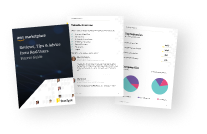
Buyer guide
Gain valuable insights from real users who purchased this product, powered by PeerSpot.
Financing for AWS Marketplace purchases
AWS Marketplace now accepts line of credit payments through the PNC Vendor Finance program. This program is available to select AWS customers in the US, excluding NV, NC, ND, TN, & VT.

Pricing
Pricing is based on the duration and terms of your contract with the vendor. This entitles you to a specified quantity of use for the contract duration. If you choose not to renew or replace your contract before it ends, access to these entitlements will expire.
Additional AWS infrastructure costs may apply. Use the AWS Pricing Calculator to estimate your infrastructure costs.
Dimension | Description | Cost/12 months |
|---|---|---|
Leap Access | Leap access | $70,000.00 |
Vendor refund policy
All orders are non-cancellable and all fees and other amounts paid are non-refundable.

Legal
Vendor terms and conditions
Upon subscribing to this product, you must acknowledge and agree to the terms and conditions outlined in the vendor's End User License Agreement (EULA) .
Content disclaimer
Vendors are responsible for their product descriptions and other product content. AWS does not warrant that vendors' product descriptions or other product content are accurate, complete, reliable, current, or error-free.
Delivery details
Software as a Service (SaaS)
SaaS delivers cloud-based software applications directly to customers over the internet. You can access these applications through a subscription model. You will pay recurring monthly usage fees through your AWS bill, while AWS handles deployment and infrastructure management, ensuring scalability, reliability, and seamless integration with other AWS services.
Resources
Vendor resources
Support
Vendor support
AWS infrastructure support
AWS Support is a one-on-one, fast-response support channel that is staffed 24x7x365 with experienced and technical support engineers. The service helps customers of all sizes and technical abilities to successfully utilize the products and features provided by Amazon Web Services.
Similar products
Connect approved cloud intent, current operating evidence and applicable controls to explain material risk, guide human-approved action and verify outcomes across multi-cloud environments.

D-Wave's mission is to unlock the power of quantum computing today to benefit business and society. In addition to building the quantum hardware and software solutions to achieve this mission, D-Wave’s professional services organization works with customers to deliver demonstrable and repeatable business value through a combination of technical enablement, products, and services.
FULCRUMHQ is an advanced Integrated Digital Delivery (IDD) platform for large scale construction and infrastructure.

Need independent, reliable and trusted random numbers for your software, experiments or simulations. We provide quantum numbers that are guaranteed random by the laws of physics.
Customer reviews
Juan Placher
Quantum experiments have accelerated genomic modeling but still need simpler setup and clearer logic
Reviewed on Oct 22, 2026
Review from a verified AWS customer
What is our primary use case?
My main use case for D-Wave Leap is to compare it to machine learning, so I was looking for use cases in the genetic genomics area mainly and I wanted to test the potential of the tool in terms of knowing which leverages or features influence more the output of different medical cases.
A quick, specific example of how I use D-Wave Leap for that comparison in a genomic scenario is that I have more than 100 machine learning models in production right now, with all the features, validations, evaluations, and everything. I simply check and use D-Wave Leap as a contrafactual, as another tool to see if I get the same results, and the most important thing for me is explainability. I want to know if the output is the same, which in most cases it is, but it changed the view of the features that have more weight in those outputs, and in many genomic diseases I have compared more than 10 machine learning models versus D-Wave Leap.
How has it helped my organization?
D-Wave Leap has impacted my organization positively, although I really choose the tools that we use. In this case, D-Wave Leap was an exploration I did by myself that I do not pass on to my team because the settings and use cases in our specific case, which is genomics, were not really clear, so we did not adopt the technology.
Since D-Wave Leap was not adopted by my team, I noticed personal benefits, where the main thing that came to my mind was the computational power and speed, allowing many experiments or models running at the same time. I think this is a main point for companies that want to develop different experiments in life sciences, and that is perhaps a change of paradigm.
What is most valuable?
The best feature that D-Wave Leap offers in my experience is computational power; that is why I initially tried it, and in that sense, it is great, but I think usability is the weakest part in my opinion.
Regarding computation power as a standout feature, D-Wave Leap has helped me with speed and handling complex data sets. I was really happy with the machine learning tools timeline since I start real computation and comparing different machine learning models. When I saw D-Wave Leap's speed in computation, it is much faster, making it the beauty of D-Wave Leap. Once everything is set, it could be really helpful, and explainability is also a little bit different from what I am using in machine learning and for life sciences, I think that is the most important part for me.
Regarding D-Wave Leap's AI capabilities, I think it has taken care of governance and security, which is a key part, especially in life science. Right now, it is a basic feature, so I see that it is covered, and it is okay.
What needs improvement?
I think that is the same situation that happened with AWS for machine learning, where you have to set up a complex environment and sometimes you give up, needing something that is ready to go and plug and play. That is the main barrier for using D-Wave Leap in my case.
D-Wave Leap can be improved in setup and usability. I did the courses available on your website, and for a scientist, especially in life science, we need to understand what the tool does and how it works since we do not appreciate black boxes. Maybe that could be improved, as you have done a good job explaining your tool, but it could be more specific and less in development.
Regarding improvements around documentation, support, or other aspects of D-Wave Leap, maybe it is understanding that quantum computing for the general population is still far from being a reality. Understanding what you are trying to do is crucial, so it is about perfecting the documentation and clarifying the future outcomes.
The accuracy and reliability of outputs from D-Wave Leap have me feeling uncertain. While I understand the core, I have doubts in some cases about the calculations and the science behind them, which is why I gave it a seven, wanting a deep knowledge of what is in the core and engine of the tool.
Those are the main drawbacks for D-Wave Leap.
For how long have I used the solution?
I knew about D-Wave Leap approximately 10 years ago, but I am more focused on machine learning, so I was interested. I have been using it in this period of 10 years, but not with the same intensity as some machine learning tools, but approximately five years in total.
What do I think about the stability of the solution?
D-Wave Leap is stable in my experience, functioning really well and everything, so I think it is a great product.
What do I think about the scalability of the solution?
As for scalability, we need to do big integrations with hospitals and different healthcare and life science actors, but we have not tried it on a larger scale. I was trying it at a small scale by myself, and while we have not tried API connections yet, it seems ready.
How are customer service and support?
The customer support of D-Wave Leap was efficient. I just had to use it for a little issue about the password, and it was fast and secure, everything was fine.
I would rate the customer support a nine.
Which solution did I use previously and why did I switch?
D-Wave Leap was the first tool I knew and it seemed to be the one I wanted to use, but right now it is not exactly what we need, and maybe in the future it will be.
How was the initial setup?
My main concern is the preliminary setting of the environment where I have to work, whereas in machine learning I directly start with the tool and start with the computation, calculations, and even data wrangling. With D-Wave Leap, I have to set up a certain environment that I think is a little bit rough and you lose some focus and time.
What's my experience with pricing, setup cost, and licensing?
My experience with pricing, setup cost, and licensing was all good because it was a long time ago, where there were really good offers, encouraging people to try it, and in that case, everything was smooth.
Which other solutions did I evaluate?
Before choosing D-Wave Leap, I did not evaluate other options, as I directly knew who was behind it, making it my first and only choice.
What other advice do I have?
On a scale of 1 to 10, I would rate D-Wave Leap a seven.
I give it a seven because the computation is really good, with great speed and time for analyzing and running models and calculations, but I do not go to 8, 9, or 10 because of the issues I already explained, such as setting up and really understanding the core and engine of the tool, which I believe is still in development and will become a great tool over time.
As for how D-Wave Leap is deployed in our organization, we have a private cloud and have changed different providers, but we have a private cloud, and for some specific projects, we have on-premise as well.
For our private cloud, we use AWS, and another part of the company uses Microsoft.
I would advise others looking into using D-Wave Leap to have clearly defined use cases and determine if they need real computational power, as that is when they would find D-Wave Leap really useful. If not, they might find a tool that is not for them.
Boris Yampolsky
Quantum workflow has improved project organization and simplifies building large optimization code
Reviewed on Oct 19, 2026
Review provided by PeerSpot
What is our primary use case?
I was using the hybrid quantum computer from D-Wave Leap for solving big and complex QUBO tasks.
I did not utilize D-Wave Leap's Hybrid Solver Service as I was working in code mostly.
I integrated the Ocean SDK in my workflow, though I do not remember the exact details of what we were using it for.
I would describe the benefits of using D-Wave Leap for optimizing supply chain operations by saying we had no such tasks.
I did not use the machine learning enhancements in D-Wave Leap.
What is most valuable?
What I appreciate about D-Wave Leap is that it is very easy to use. On Python, it is straightforward and easy to understand how to use, and easy to modify anything.
The key benefits that D-Wave brings to the table really help to structure everything and make for better organization. I was working with it from the start, so I cannot imagine how it would be without it, but without it, it would have been much harder to have an easy and organized scheme of the code and of the project.
What needs improvement?
The only problem that I encountered with D-Wave Leap is that you must send a whole task in one object. I understand that this was not the first priority for them, and I hope one day they will change this or provide documentation about the maximum object size, because my personal problem was that my QUBO task was about 500 gigabytes, and it is impossible to make 500 gigabytes as one object for computers since it is a QUBO task. However, it should be easy to divide a QUBO task into multiple objects.
Apart from the object and task constraints that I mentioned, I really enjoyed using D-Wave Leap and quantum computers. This was the only issue I could identify because my task was very large.
The course I received was not very informative because it covered basic computing concepts that one can learn in an hour through online resources.
For how long have I used the solution?
I have been working with D-Wave Leap for about a year and a half.
Currently, I am not working with D-Wave Leap because I am waiting for my project to be approved, but I worked with it previously on a startup.
My experience with D-Wave Leap was about half a year ago.
How are customer service and support?
I had a question for the technical support team at D-Wave Leap, and they answered me in approximately an hour, so it was very fast. I had a technical question about how large of tasks the model can accept, and the response was fast and included information that was not available on the website.
On a scale of 1 to 10, I would rate the technical support of D-Wave Leap 100 out of 100 because it was excellent.
Which solution did I use previously and why did I switch?
Prior to adopting D-Wave Leap, I have no experience working with any other solutions of the same kind.
How was the initial setup?
The deployment part of the initial setup took approximately 10 minutes to wait until the computing would be completed on the quantum computer and on the hybrid computer. There was always some queue, but it was acceptable. At one point, we discovered that it was better to run the processes at night, and this became easier and faster.
What's my experience with pricing, setup cost, and licensing?
I do not have information about the pricing, setup cost, or licensing aspects of D-Wave Leap, as my company paid for it. The only thing I received was a course from D-Wave, which I believe was for Leap 2, about quantum computing. The course was not very informative, but I now have a certificate.
What other advice do I have?
We purchased everything from D-Wave directly.
Given my experience working with D-Wave Leap, I do not have any specific advice or recommendation that I can share with other organizations considering D-Wave Leap. If they are considering D-Wave Leap, they need it for their project, and for using D-Wave Leap, it is better to use the best libraries and programs to work faster.
I would rate my overall experience with D-Wave Leap at 9.5 out of 10.
Alisa Kunapinun
Quantum optimization has advanced my medical research and supports innovative DNA search studies
Reviewed on Oct 17, 2026
Review provided by PeerSpot
What is our primary use case?
My main use case for D-Wave Leap is research, specifically anything about how to use D-Wave Leap for optimization. Currently, I use it for classifying whether post-COVID patients have problems or not, and I will soon expand its use to aquaculture systems and medical terms.
I chose to use D-Wave Leap for classifying post-COVID problems because of university support.
I normally want to apply it in machine learning as generative AI, but currently, I'm still not sure which application I can use because I only have twenty minutes per month and need to make sure the dataset is small enough for D-Wave Leap.
How has it helped my organization?
D-Wave Leap has positively impacted my organization by fostering innovation, allowing us to explore potential applications in new innovations such as DNA searching in drug systems.
What is most valuable?
One of the best features of D-Wave Leap is that it is excellent for optimization.
What stands out to me about the optimization feature is that it utilizes quantum annealing, which I believe is better than simulated annealing or tabu search. That is why I selected this option, although I remain uncertain about its superiority in the future.
Regarding D-Wave Leap's AI accuracy and reliability, it can track back and recheck using their energy output, so I can trust the results based on the energy, which is satisfactory.
What needs improvement?
I do not have enough experience to suggest improvements for D-Wave Leap since I only use about ten to twenty percent of the system. However, it would be beneficial if D-Wave Leap could support or provide functions similar to low-level quantum gate calculations, such as those available in IBM systems.
Regarding D-Wave Leap's AI governance and security, I think the security is good, but it is very difficult to select the right key since I keep renewing it and have many keys in the system. I am unsure which one to use.
For how long have I used the solution?
I started training in May of this year, and I began to work in my real job around the middle of June.
What do I think about the stability of the solution?
D-Wave Leap is stable based on my experience.
What do I think about the scalability of the solution?
D-Wave Leap's scalability is still small in my assessment.
How are customer service and support?
The customer support for D-Wave Leap is very good. I would rate the customer support a ten.
Which solution did I use previously and why did I switch?
I previously tried using IBM as a solution, but I found it difficult to use and did not continue because of the free license. I just wanted to try D-Wave Leap since quantum computing was just starting.
What was our ROI?
I have not seen any return on investment.
What's my experience with pricing, setup cost, and licensing?
I do not have experience with the pricing, setup cost, or licensing because everything is covered by grant funding, so I have not seen any pricing or setup costs.
Which other solutions did I evaluate?
Before choosing D-Wave Leap, I normally use AI and mathematical computing to evaluate everything. It was not a choice for me, but rather a new option.
What other advice do I have?
I would rate D-Wave Leap an eight or nine, around eight point five. I chose nine for my rating because everything in the system is high level and very easy to use, but there are limitations that prevent me from using it at full scale.
As far as I know, Florida Atlantic University provides D-Wave Leap computing inside the university, so I am uncertain if this is a public cloud or private cloud.
My advice for others looking into using D-Wave Leap is that if you want to solve optimization problems, selecting D-Wave Leap is a good option. Otherwise, you can use other methods such as AI calculations, machine learning, or mathematical optimization, as D-Wave Leap is still a small computation machine and high-priced. My overall rating for D-Wave Leap is nine out of ten.