Sold by: Ada
Deployed on AWS
Ada is an AI-native customer service automation company that makes it easy for businesses to automatically resolve the greatest number of customer service conversations - across channels and languages - with the least amount of effort.
4.6
Overview
When companies work with Ada, they hire an AI Agent that can immediately start resolving more than 83% of customer service inquiries, onboarded entirely using existing help center content.
Rather than maintaining scripted answers for every possible customer problem, the AI Agent uses knowledge of your products and data from your business systems to reason through and resolve customers specific questions. The AI Agent leverages generative AI capabilities to understand unique customer inquiries and provide relevant, safe, and accurate resolutions that do not require a human.
Generative AI applications are available throughout the platform for you to measure your AI Agents performance, identify quantifiable opportunities for improvement, and provide feedback to your AI Agent. The AI Agent improves over time and scales automatically as your business grows.
For custom pricing, EULA, professional services, or a private contract, please contact: msa-awsmarketplace@ada.support .
Highlights
- Easy to deploy: resolve complex customer inquiries without IT dependencies, powered by generative AI that reasons based on help center content and customer data.
- Extensible: trigger actions and automations using integrations with your agent platform and other business systems.
- Continuous improvement: onboard, train, and coach your AI Agent with AI-powered reporting tools, recommendations, and guidance.
Details
Sold by
Delivery method
Deployed on AWS
New
Introducing multi-product solutions
You can now purchase comprehensive solutions tailored to use cases and industries.

Features and programs
Trust Center

Access real-time vendor security and compliance information through their Trust Center powered by Drata or Vanta. Review certifications and security standards before purchase.
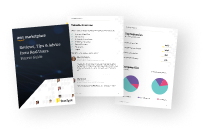
Buyer guide
Gain valuable insights from real users who purchased this product, powered by PeerSpot.
Financing for AWS Marketplace purchases
AWS Marketplace now accepts line of credit payments through the PNC Vendor Finance program. This program is available to select AWS customers in the US, excluding NV, NC, ND, TN, & VT.

Pricing
Custom pricing options
Pricing is based on your specific requirements and eligibility. Request a private offer to receive a custom quote. Sign in to view any offers that have been extended to you.

Legal
Content disclaimer
Vendors are responsible for their product descriptions and other product content. AWS does not warrant that vendors' product descriptions or other product content are accurate, complete, reliable, current, or error-free.
Delivery details
Software as a Service (SaaS)
SaaS delivers cloud-based software applications directly to customers over the internet. You can access these applications through a subscription model. You will pay recurring monthly usage fees through your AWS bill, while AWS handles deployment and infrastructure management, ensuring scalability, reliability, and seamless integration with other AWS services.
Resources
Vendor resources
Support
Vendor support
Need support? Reach out to our team: partnerships@ada.support . Need a demo? Visit this link here:
AWS infrastructure support
AWS Support is a one-on-one, fast-response support channel that is staffed 24x7x365 with experienced and technical support engineers. The service helps customers of all sizes and technical abilities to successfully utilize the products and features provided by Amazon Web Services.
Similar products
Ada is an AI-native customer service automation company that makes it easy for travel and hospitality brands to resolve the most complex trip disruptions such as rebooking, refunds, and vouchers. End to end, across channels and languages.

MaiAgent is an enterprise-grade AI agent platform that enables businesses to build, deploy, and manage intelligent chatbots across multiple channels. Powered by leading LLMs (including GPT-4 and Claude), MaiAgent helps teams automate customer support, internal Q&A, and business workflows 24/7, with no coding required.
Noca.ai is an AI Agent platform that lets users build business apps, workflows or "AI Agents" using plain language prompts, no programming required. It offers natural-language UI & logic, integrations with CRM and ERP systems, workflow automation, and enterprise-grade security.

Professional implementation and training consulting services for MaiAgent Enterprise AI Agent platform. We help and assist organizations deploy, and optimize AI-powered customer service or AI-powered knowledge management system solutions on AWS infrastructure with comprehensive support and knowledge transfer using MaiAgent.
Customer reviews
Biotechnology
AI-Driven MCP and Helpful Support, But Pricing and Release Communication Need Work
Reviewed on Oct 02, 2026
Review provided by G2
What do you like best about the product?
They are AI-driven and offers an MCP to easily connect to your local Claude sessions. This makes it easy to troubleshoot and make improvements without navigating their UI.
The team at Ada is very open to feedback and generally have a great support system. They'll walk you through onboarding and offer resources on how to connect any existing CRMs to their system. They try to make any connections straightforward and as simple as possible.
The team at Ada is very open to feedback and generally have a great support system. They'll walk you through onboarding and offer resources on how to connect any existing CRMs to their system. They try to make any connections straightforward and as simple as possible.
What do you dislike about the product?
Pricing could be more competitive for the services provided. Our team has provided lots of feedback on existing features and the lack of communication for upcoming product releases.
What problems is the product solving and how is that benefiting you?
Ada is helping us solve our customer support pipeline. That includes identifying areas of improvement, quickly responding to customers, and driving operational costs down.
Tassavour Shaikh
Automation has reduced repetitive support work and now improves customer satisfaction
Reviewed on Jul 04, 2026
Review from a verified AWS customer
What is our primary use case?
Ada is used to automate customer support, answer common inquiries, and reduce the workload on the support team.
It works best for handling FAQs, order status requests, account-related queries, and routing complex issues to the appropriate personnel.
Ada automatically resolves common queries and escalates complex or sensitive issues to a live agent, ensuring customers receive the right level of support without unnecessary delays.
What is most valuable?
The best features are AI-powered chatbot automation, natural language understanding, omnichannel support, workflow automation, and seamless integration with CRM and helpdesk platforms.
AI-powered chatbot automation has made the biggest difference for the team because it instantly handles routine customer inquiries, allowing the support team to focus on more complex issues.
One standout feature is the easy integration with existing support tools, making it simple to automate workflows without disrupting current processes.
Ada's AI governance and security are strong with robust access controls, secure data handling, and enterprise-grade compliance features that help protect customer information.
Its AI is highly accurate and reliable for understanding customer intent, answering common questions, and providing consistent responses with minimal errors.
It has impacted the organization positively by reducing support response times, improving customer satisfaction, increasing agent productivity, and reducing the volume of repetitive support tickets.
Faster first response times have been achieved, along with a noticeable reduction in repetitive support tickets and improved customer satisfaction with Ada resolving a significant portion of routine inquiries without agent intervention.
What needs improvement?
Ada could be improved with better handling of highly complex conversations, more customization for AI responses, and deeper integrations with third-party business applications.
For how long have I used the solution?
Ada has been in use for around six months.
What other advice do I have?
I would recommend starting with high-volume repetitive support use cases, training Ada with quality knowledge base content, and regularly reviewing conversations to improve accuracy over time.
Starting with repetitive support requests first to build confidence in Ada, then gradually expanding to more complex workflows is advisable. Additionally, keeping the knowledge base up to date, monitoring Ada's performance regularly, and defining clear escalation paths to human agents is essential.
I would rate this solution a 9.
Which deployment model are you using for this solution?
Public Cloud
If public cloud, private cloud, or hybrid cloud, which cloud provider do you use?
Amazon Web Services (AWS)
Shadrach Godwish Chukwu
Automated chat support has reduced ticket escalations and improves response times for complex issues
Reviewed on May 31, 2026
Review provided by PeerSpot
What is our primary use case?
My main use case is automating customer support chats, and I leverage it for various other tasks as well.
I have utilized Ada for customer support chats and handling customer questions, specifically by setting up responses for FAQs. When users inquire about pricing or basic support issues, Ada provides instant replies without needing a human agent.
I have used Ada for routing more complex questions so that when the bot cannot handle something specific, it automatically directs inquiries to the appropriate support team, making the whole support process smoother and more organized.
What is most valuable?
The best features that Ada offers include chatbot automations, smart routing, and the easy setup of FAQ responses. What stands out for me is its ability to handle conversations automatically while still passing complex issues to humans when needed without breaking the flow.
Smart routing sends each question to the right place based on what the user is asking. Simple issues remain with the bot, while complex ones reach the human team, resulting in much faster replies and a reduction in wrong escalations.
There was a clear improvement in how quickly customers got the answers they needed, as they received instant responses instead of waiting for an agent. Many simple questions no longer required human support, resulting in a significant reduction in escalated tickets and a faster support flow overall.
Ada has greatly improved response times because customers are getting answers almost instantly, which also reduces the workload on support agents. Most common questions are managed by the bot, allowing the team to focus on harder issues.
What needs improvement?
I think Ada could improve with more flexibility in customizing chatbot responses to feel more natural in varied situations. Better analytics would help by providing clearer insights into user inquiries and where the bot may be failing.
I would like to see smoother integrations with more third-party tools such as CRMs and help desk systems for easy data flow without extra setup, along with more pre-built integrations to help new users with faster setup.
An improvement would be having more ready-made templates for different industries to make setup faster for new users.
A wish list item for me would be to have a real-time preview when building chatbot flows to test changes more quickly, along with more industry-specific templates to streamline setup for different types of businesses.
For how long have I used the solution?
I have been working in the field of virtual assistance and using CRM tools along with automations and workflow support for about three or four years.
What other advice do I have?
My advice for others looking to use Ada is to start simple by setting up basic FAQs first, then gradually build more complex workflows as you understand the system better. Understanding the system is key to making onboarding easier and reducing mistakes.
Ada is a very solid tool overall; it effectively handles repetitive customer questions and improves response speed. Once properly set up, it significantly helps reduce pressure on the support team, allowing them to focus on more complex issues.
I would rate my overall experience with Ada an 8 out of 10.
Danielle G.
Ada’s Seamless Onboarding, Powerful Playbooks, and Rock-Solid Reliability
Reviewed on May 29, 2026
Review provided by G2
What do you like best about the product?
Their team has been great. They have a dedicated onboarding team, the process was very clear, and the drag-and-drop interface saved me hours of setup. They walk you through every step, so you stay in control while still having their support.
My favourite feature is the playbooks. You can write out what you want, and the Ada system takes your thoughts and turns them into an effective protocol for your chatbot to use. The Ada software also integrates seamlessly with our support ticketing platform. The UI is clean and simple.
I look forward to interacting with the Ada system daily, and the reporting helps me objectively review our processes and see what’s working. The Ada system has never failed us, and in the two years I’ve been using it, we’ve never had any noticeable downtime.
Our support team has seen an decrease in overall volume year over year despite our business increasing dramatically. This system is worth the cost as it has improved our support teams output.
My favourite feature is the playbooks. You can write out what you want, and the Ada system takes your thoughts and turns them into an effective protocol for your chatbot to use. The Ada software also integrates seamlessly with our support ticketing platform. The UI is clean and simple.
I look forward to interacting with the Ada system daily, and the reporting helps me objectively review our processes and see what’s working. The Ada system has never failed us, and in the two years I’ve been using it, we’ve never had any noticeable downtime.
Our support team has seen an decrease in overall volume year over year despite our business increasing dramatically. This system is worth the cost as it has improved our support teams output.
What do you dislike about the product?
I can’t find a single issue with Ada. I really like all of its features, and they’re constantly rolling out new ones—many that I didn’t even realize were missing or that were possible options for AI software. Overall, I feel like they’re at the top of the game. They dramatically stand out as the first choice for AI chatbot support.
Anytime I have come across an issue their dedicated accelerate team were able to resolve it instantly.
Anytime I have come across an issue their dedicated accelerate team were able to resolve it instantly.
What problems is the product solving and how is that benefiting you?
Ada is able to take on the small stuff. So much of support is made up of monotonous, easy-to-answer inquiries—how to make a purchase, how to interact with our software, and similar questions. Ada handles the majority of those inquiries, so our team is able to handle the big stuff. The real tough issues that require investigation and problem solving. Ada allows our agents to be available, and it has cut our teams response time into a third of what it was pre-Ada.
TusharGoel
Automation has reduced repetitive tickets and improves response time for customer support
Reviewed on May 25, 2026
Review from a verified AWS customer
What is our primary use case?
I have been using Ada for around two to three years mainly for customer support automation. I automate responses to common customer questions like order status and account troubleshooting.
What is most valuable?
Features such as easy bot training and seamless handoff to live agents stand out to me. Instant response stands out the most because it drastically reduces customer wait time. People get answers right away, which keeps satisfaction high.
The analytics dashboard is really very helpful as it gives insights into what customers ask most so we can keep improving. Ada reduced my organization's workload positively and improved efficiency by reducing the agent workload and speeding up customer solutions.
I want to mention that Ada reduced our response time by 40% and cut off repetitive tickets by around 30%, which improved customer satisfaction as we noticed.
What needs improvement?
Ada is quite a good and solid tool, but one area of improvement could be more advanced customization of the conversation flows to make it more flexible for complex scenarios.
Ada could improve with even deeper integration to niche CRM tools to give us more flexibility. Overall, it is a solid and really very good tool.
For how long have I used the solution?
I have been working with Ada for more than six years.
What do I think about the stability of the solution?
Ada is really stable. We found no major outages and disruptions, and it has been reliable.
What do I think about the scalability of the solution?
Ada's scalability is quite well and impressive. As our customer volume grew, it handled increased interactions without any hiccups.
How are customer service and support?
Ada's customer support was quite great, and they were quick to respond and knowledgeable whenever we needed help.
Which solution did I use previously and why did I switch?
We previously used a basic FAQ tool, but we switched to Ada because of its better automation, personalization, and stability and scalability.
How was the initial setup?
We did not purchase Ada through the marketplace. We went directly to Ada's own sales team for our setup.
What about the implementation team?
We are working as a customer only because there is no business relationship or vendor reseller arrangement. We do not have any special relationship. We are just a customer using Ada's platform with no partnership or reselling involved.
What was our ROI?
With Ada, we saw about a 20 to 25% reduction in repetitive support tickets, which allowed us to save on staff costs and free up agents for more complex tasks.
What's my experience with pricing, setup cost, and licensing?
The pricing, setup cost, and licensing for Ada were fair for the value provided. The setup was pretty smooth, and licensing was straightforward with their team guiding us.
Which other solutions did I evaluate?
We previously used a basic FAQ tool and evaluated other options such as Intercom and Zendesk bot. Compared to Ada, Ada offered strong customization and a more user-friendly setup.
What other advice do I have?
For using Ada, I suggest starting with small, common queries and then gradually building out more complex workflows. I also recommend involving the customer support team from the beginning so you can understand the tool properly because it is really very great and helpful. I would suggest the same to others. I gave this review a rating of 8 out of 10.
Which deployment model are you using for this solution?
Public Cloud
If public cloud, private cloud, or hybrid cloud, which cloud provider do you use?
Amazon Web Services (AWS)