
Sold by: Twilio Segment
Deployed on AWS
Twilio Segment is the world's leading customer data platform (CDP) that collects, cleans, and federates first-party data to AWS and hundreds of additional sources.
4.5
Overview
Twilio Segment is the world's leading customer data platform (CDP). Our platform democratizes access to reliable data for all teams, and offers a complete toolkit to standardize data collection, unify user records and route customer data into any system where it's needed. More than 20,000 companies like Intuit, FOX, Instacart, and Levi's use Segment to make real-time decisions, accelerate growth, and deliver compelling user experiences.
With Twilio Segment & AWS leading organizations
- Build fast with a reliable, performant, and compliant stack
- Enable customer-first decisions with data you can trust
- Personalize the customer experience without sacrificing privacy
For more information, visit https://segment.com .
For custom pricing, EULA, or a private contract, please contact bd@segment.com , for a private offer.
Highlights
- Twilio Segment is powered by AWS
- Collect and leverage first-party data to understand customers, redirect spend, and deliver real-time personalized experiences at scale
- Twilio Segment supports numerous AWS customers across all verticals to provide personalized experiences at scale
Details
New
Introducing multi-product solutions
You can now purchase comprehensive solutions tailored to use cases and industries.

Features and programs
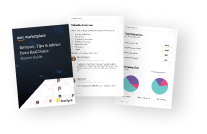
Buyer guide
Gain valuable insights from real users who purchased this product, powered by PeerSpot.
Financing for AWS Marketplace purchases
AWS Marketplace now accepts line of credit payments through the PNC Vendor Finance program. This program is available to select AWS customers in the US, excluding NV, NC, ND, TN, & VT.

Pricing
Pricing is based on the duration and terms of your contract with the vendor, and additional usage. You pay upfront or in installments according to your contract terms with the vendor. This entitles you to a specified quantity of use for the contract duration. Usage-based pricing is in effect for overages or additional usage not covered in the contract. These charges are applied on top of the contract price. If you choose not to renew or replace your contract before the contract end date, access to your entitlements will expire.
Additional AWS infrastructure costs may apply. Use the AWS Pricing Calculator to estimate your infrastructure costs.
Dimension | Description | Cost/12 months |
|---|---|---|
Segment CDP | Segment Connections - up to 1M MTUs/year | $108,000.00 |
Dimension | Cost/unit |
|---|---|
Additional Overages As Defined In The Order Form | $0.01 |
Vendor refund policy
All fees are non-cancellable and non-refundable except as required by law.

Legal
Vendor terms and conditions
Upon subscribing to this product, you must acknowledge and agree to the terms and conditions outlined in the vendor's End User License Agreement (EULA) .
Content disclaimer
Vendors are responsible for their product descriptions and other product content. AWS does not warrant that vendors' product descriptions or other product content are accurate, complete, reliable, current, or error-free.
Delivery details
Software as a Service (SaaS)
SaaS delivers cloud-based software applications directly to customers over the internet. You can access these applications through a subscription model. You will pay recurring monthly usage fees through your AWS bill, while AWS handles deployment and infrastructure management, ensuring scalability, reliability, and seamless integration with other AWS services.
Resources
Vendor resources
Support
Vendor support
Twilio Segment has a wealth of additional features and capabilities to support your use case. For additional questions and support, check out our product, Segment University, and full documentation. bd@segment.com
AWS infrastructure support
AWS Support is a one-on-one, fast-response support channel that is staffed 24x7x365 with experienced and technical support engineers. The service helps customers of all sizes and technical abilities to successfully utilize the products and features provided by Amazon Web Services.
Updated weekly
By Twilio Segment
By Tealium

By Contentsquare
Top
10
In CRM, ELT/ETL, Data Integration
Top
10
In Data Warehouses, Streaming solutions
Top
100
In Analytic Platforms
Sentiment is AI generated from actual customer reviews on AWS and G2
Functionality
Ease of use
Customer service
Cost effectiveness
Positive reviews
Mixed reviews
Negative reviews
AI generated from product descriptions
Customer Data Collection
Collects first-party data from multiple sources and standardizes data collection across systems
Data Unification
Unifies user records and consolidates customer data from disparate sources into a single platform
Data Routing and Federation
Routes and federates customer data to AWS and hundreds of additional destinations in real-time
Data Quality Management
Cleans and validates data to ensure reliability and trustworthiness for downstream applications
Real-time Data Processing
Processes and delivers customer data in real-time to enable immediate personalization and decision-making
Tag Management System
Manages and deploys tags across web, mobile, offline, and IoT devices for customer data collection
Customer Data Platform with Machine Learning
Unifies and enriches customer data from multiple sources using machine learning capabilities
API Hub
Provides API-based integration capabilities for connecting customer data across systems
AWS Service Integrations
Supports direct integrations with AWS services including EventBridge, Firehose, Redshift, SQS, and S3
Multi-Source Data Collection
Collects and consolidates customer data from offline and online sources to create a unified customer view
Multi-Session Journey Tracking
Provides complete view of customer journeys across multiple sessions, devices, and touchpoints including websites, apps, and branded experiences.
Mobile Application Analytics
Delivers powerful analytics capabilities specifically designed for understanding user behavior and engagement within mobile applications.
AI-Powered Insights Generation
Utilizes artificial intelligence to automatically analyze data and generate insights without requiring data expertise or manual analysis.
User Segmentation and Audience Analysis
Enables creation and analysis of distinct audience segments to understand end-to-end customer journeys and tailor experiences accordingly.
Session Replay and Heatmap Visualization
Offers session replay and heatmap tools to provide detailed context on user interactions, identify drop-off points, and visualize engagement patterns.
Standard contract
No
No
Customer reviews
RodrigoRodrigo
Managing audience orchestration has become costly and complex while automation now improves targeting
Reviewed on Aug 28, 2026
Review from a verified AWS customer
What is our primary use case?
I use Segment to orchestrate audiences and data with distribution channels such as email marketing, Google Ads, Facebook Ads, and other types of marketing outputs.
I used Segment's audience prediction tool to identify look-alikes and connect them through Meta Ads, Google Ads, and email marketing. In addition to that, I was able to create other types of audiences such as exclusion audiences that allowed me to save money on campaigns and not contact customers who had already purchased.
What is most valuable?
The data sources that I pulled from the data warehouse were especially valuable, as they allowed me to feed the audiences and, based on those audiences, I then created use cases that allowed me to carry out all the automated flows.
One of the latest features Segment has released and which I find the most useful is that with artificial intelligence, I can now create flows in an almost automated way.
The automated flows and the whole A/B testing part I also find very interesting.
Segment has saved marketing costs, which has allowed me to use that investment elsewhere. It has allowed me to do much more personalization than I could do manually.
What needs improvement?
The most difficult aspect of Segment is the connections with the different tools. For example, being able to make the connections between Segment and Facebook, Facebook Ads, that whole part was very complex. However, the rest was very simple.
I understand that this same layer of artificial intelligence could be used to integrate external tools. That would make it easier for people who are not purely technical to do integrations and not need such a large team to be able to manage it.
Segment needs better integration with, or a much simpler integration with, external tools.
For how long have I used the solution?
I have been using Segment for approximately that time.
What do I think about the stability of the solution?
Segment is very stable.
What do I think about the scalability of the solution?
It is very scalable.
How are customer service and support?
My experience with Segment's customer support has been good, but it has been a bit slow.
How was the initial setup?
In general, it is very easy to implement as long as I am clear about what I want to do.
What about the implementation team?
I connected directly with Segment.
What was our ROI?
On the one hand, Segment has saved marketing costs, which has allowed me to use that investment elsewhere. On the other hand, it has allowed me to do much more personalization than I could do manually.
When I saw the number of users who had been excluded from advertising, that already allowed me to identify how much money I was saving. If, for example, I made about 5,000 people who had already purchased not be targeted by advertising, I was saving a considerable amount of money that could be around €10,000 to €15,000.
When my tickets are high and I handle a considerable amount of data, it is very profitable.
I have seen time savings and automation, although I have not yet managed to quantify it.
What's my experience with pricing, setup cost, and licensing?
The cost is very high, but it is worth it.
What other advice do I have?
Companies must bear in mind that their organization must be large for Segment to be a profitable tool. If it is a small company that invoices less than 100 million euros, it is not worth it. This review has a rating of two out of ten.
Which deployment model are you using for this solution?
Public Cloud
If public cloud, private cloud, or hybrid cloud, which cloud provider do you use?
Amazon Web Services (AWS)
MukulAgarwal
Campaign analytics has improved global messaging while data flexibility still needs work
Reviewed on Aug 25, 2026
Review provided by PeerSpot
What is our primary use case?
Segment connects with our data streams to send WhatsApp campaigns and email campaigns to our international audience, including Argentina, Nigeria, South Africa, and other South American markets.
One of our problem statements was to send WhatsApp campaigns to the Nigerian audience to understand how they would respond to our campaigns, so as to have incremental revenue based on the voucher or discount codes that we give to them, and also to measure the performance of the campaigns once we send them. The bottleneck situation was that we didn't have any campaign measurement capability. That's why we reached out to Segment team from Ireland. The idea was to get the data infrastructure ready, which is required for Segment to get the data streams. Once the data was set up, we were able to set up journeys based on our needs and pre-select the data identifiers, and we sent the campaigns using WhatsApp setup from Segment.
For the campaigns, we touched base with the architect from Segment team. They were very helpful in setting up a data infrastructure via regular sessions with our data architecture team and product team. We identified approximately 25 data fields which would be useful to select the primary and secondary characteristics for the campaigns. This engagement lasted almost two to three months. Once the data was set up and signed off by the high authorities, we tested the setup. Once we were confident in the setup, we then collaboratively worked with the marketing team to set up the campaigns and set up WhatsApp campaigns to start with. The performance showed that there was a 2% conversion rate on the campaigns that we sent, and we were happy with the prototype setup using campaign analytics of Segment.
How has it helped my organization?
In the initial rollout of the campaigns, we definitely saw a 2% conversion rate. The end-to-end return on average ad spend showed an improvement of 14%. That was good, especially because we were using Segment for the first time. This was near the industry standards.
What is most valuable?
The best features that Segment offers is the ability to connect with data of any type because we had a very complex data set which could be integrated into Segment systems. That was helpful. Another valuable feature was that Segment is part of Twilio and Twilio has its own suite of communication features such as WhatsApp, CRM, and others. We can integrate the communications of WhatsApp and email communications from Twilio to Segment. That was helpful again. Another feature of Segment was the scalability of Segment. We could replicate the same setup for other countries because initially, our main target was to send campaigns for international countries such as Argentina, Nigeria, and South Africa. The next country that we wanted to target was the United States. It was easy to replicate the setup for other countries.
Segment enhanced our capability to use third-party tools for enhancing our analytical capabilities because segmentation as well as the campaign measurement using Segment helped us also identify the AI component of measurement as well as sending campaigns. In a way it actually changed our mindset on how we absorb the data set keeping the long-term view objective in mind. It also helped us be more data-driven when it comes to campaign measurement.
What needs improvement?
One thing that was surprising and inconvenient at the same time was the risk of becoming too rigid with the data. The pre-selecting data identifiers was useful for the initial use cases, but as we got more mature with our use cases, it could become more restrictive because the business might later decide to introduce more data attributes or feeds. That means more dynamic segmentation requirement. Segment didn't have that good capability to be more dynamic with the inclusion or exclusion of data feeds.
Segment can be improved by centralizing the features that it has. I understand that it has gone through acquisitions, such as Twilio and Segment still operates as a separate system. If they can integrate the Twilio aspect of communication with Segment system itself, it will save our time when it comes to the infrastructure setup because we had to reach out to DevOps to have the right setup connected to our Twilio communications. It actually would save time for the clients of Twilio Segment to make sure that the systems are well integrated. It would also be good to have a good understanding of the inherent constraints because we remember that WhatsApp communications were not applicable for certain countries. That could be a part of the knowledge transfer in the onboarding discussions itself, so as to avoid any surprises in the downstream conversations. More support from WhatsApp conversations could be helpful. It could be possible that some countries don't allow multiple numbers. If we can have multiple numbers for the communications, that would be helpful to reach out to our target client base.
For the technical challenge, we can have more flexibility on the data feeds that Segment can incorporate from the client database because the data needs can change for any corporate, whether it be small, medium business, or large enterprise. If we can retrofit the data irrespective of some data fields being empty, that would be really helpful. It would also be good to have two or more data feeds input because it's difficult to get the data infrastructure done on the client side. It's better to have a customization of the data irrespective of the sources it came from. That would be really helpful for the data manipulation activities inherent to the segmentation.
The advice that I will give to anyone who is looking at Segment as a potential partner is to make sure that you have your problem statement ready. Ask the difficult questions to Segment about how the data will be used from a storage perspective and from a processing perspective. Are there any challenges inherent in their data which might not be understood by Segment system? Have the questions ready about the data infrastructure because the data is key to getting the right processing and the accurate processing of the data from Segment.
For how long have I used the solution?
I have used Segment for almost 18 months in my previous company.
What do I think about the stability of the solution?
Segment is stable.
What do I think about the scalability of the solution?
Segment scalability is good when it comes to geographic enablement but it is not scalable in terms of data. As I mentioned before, when different streams of data change, it might not incorporate once the data is set up. It should be flexible and robust enough when it comes to handling different streams of data once the product is set up.
How are customer service and support?
Customer support is good. I won't say excellent, but they do respond and they have a dedicated customer support team.
Which solution did I use previously and why did I switch?
This was the first time we used a third-party tool for AI segmentation as well as campaign measurement.
What about the implementation team?
We worked with Segment team in 2023 and 2024.
What was our ROI?
Segment pricing depends upon the number of interactions and the number of campaigns sent. Irrespective of the great service and onboarding support, it is a little pricey. For example, we were still not ready with the data setup and we realized that the onboarding support hours were getting over and that was keeping our project at a standstill. We had to request the onboarding team for extra hours. After multiple requests, the request was granted for the free hours, but I think that should not be the case since the beginning of the project because the complexity of the project and all should be discussed beforehand and that should come from Segment because Segment is aware of the complexity inherent by working with different clients. Pricing could be a bit cheaper and more flexible and transparent in nature to avoid any confusion because the switching cost of any technology is very expensive for any organization and that can add to the frustration. Segment can do more competitive analysis when it comes to pricing its products.
I don't have specific numbers to share, but we did see improvement in the campaign's performance and ability of our organization to send campaigns without building the technology up front. We definitely saved money by not building the technology on our own. However, Segment is not that cheap. There's an investment of almost north of $1 million for more than three years contract. If Segment integration is very successful for any organization and the contract is long enough, then the ROI would be good. If not, then ROI might be a debatable issue.
Which other solutions did I evaluate?
We did evaluate other options and most of them were concentrated in US markets. We wanted to work for WhatsApp campaigns which could be worked in Argentina and South Africa. We zeroed down to Segment. I don't remember the names of other competitors we evaluated.
What other advice do I have?
I have discussed all the challenges inherent in Segment that I have witnessed. The review rating for this assessment is 7.
Deepak N
Audience targeting has improved customer outreach, but identity resolution still needs refinement
Reviewed on Aug 24, 2026
Review provided by PeerSpot
What is our primary use case?
My main use case for Segment involves taking information from a ticketing database and trying to reconcile it with customers that were coming from the website that were known to see if we could retarget and re-communicate with them over email.
I set up a reverse replication from their Redshift database and pulled all the customers and their primary key IDs into Segment with known email addresses. Any signals we got from the website where customers authenticated, we would send that email address as well so we could identify that customers from the ticketing database matched with website traffic. We put them into a segment inside of Segment, which we would push to the email platform Marketo to send customers emails based on their interaction on the website and the ticketing database.
We also enabled the feature of Segment called Engage where the marketing team could go in and create any other type of customer audience segments they wanted without needing IT help. Those segments would be pushed into their email marketing platform, Marketo, for them to further send any other types of emails they want, providing the marketing team with their own self-service.
What is most valuable?
The best features Segment offers are ease of use and lightweightness. You do not need overly complex technology capabilities to be able to program within Segment, unlike some other CDPs that are quite complicated. Segment is very simple.
A particular feature in Segment that stands out as especially user-friendly is that it was easy to set up the back-end data feeds and pull out these audiences without the need to create special data models, making it quite turnkey. I could pretty much set up a Segment platform within a week or two versus some other CDPs that take a lot longer.
Segment has positively impacted my organization by enabling my client to improve their marketing and understanding of their customers through the use of Segment without needing IT as a bottleneck.
What needs improvement?
Segment could enhance its identity resolution and identity management by providing more options to resolve IDs and possibly improving how it handles anonymous ID resolution since most cases are anonymous.
I chose a seven for Segment because while its lightweightness made it easy to implement, it also lacks a lot of other features. However, it is probably acceptable that it did not have more features, as Segment is fine for what it is capable of doing. They need to improve some features, particularly adding more AI enablement and AI discovery that were not in the product when I was working with it.
Regarding Segment's AI capabilities, I think its accuracy and reliability of output were lacking. It did not have any AI capabilities when I was working with it, and I do not know if Segment has added any more AI capabilities since then.
For how long have I used the solution?
I have been using Segment on one client for the last nine months.
What do I think about the stability of the solution?
Segment is stable in my experience.
What do I think about the scalability of the solution?
I did not see any issues with Segment's scalability.
How are customer service and support?
The customer support for Segment was very important to us, as we had dedicated support that helped us troubleshoot at the beginning. Their professional services team worked hand-in-hand with us in setting everything up and digging into the use cases, which was important.
I would rate the customer support a nine.
Which solution did I use previously and why did I switch?
I did not previously use a different solution.
How was the initial setup?
I can pretty much set up a Segment platform within a week or two versus some other CDPs that take a lot longer.
What about the implementation team?
Their professional services team worked hand-in-hand with us in setting everything up and digging into the use cases, which was important.
What was our ROI?
I have not seen a return on investment and cannot share metrics such as time saved, money saved, or fewer employees needed.
What's my experience with pricing, setup cost, and licensing?
Based on my experience, I think Segment's pricing, setup cost, and licensing are fair. It is relatively cheap and very useful at that price point.
Which other solutions did I evaluate?
Before choosing Segment, I evaluated other options such as Hightouch and Adobe CDP.
What other advice do I have?
My advice to others looking into using Segment is that if people want a lightweight CDP platform to collect information, validate through email in terms of identity resolution, and provide their marketing team with a lightweight tool to create audience segments, they should definitely look at Segment as a great tool to use. I would rate Segment a seven overall.
reviewer2891178
Customer data insights have powered omnichannel personalization but integration still needs depth
Reviewed on Aug 24, 2026
Review provided by PeerSpot
What is our primary use case?
I used Segment as a partner and a go-to-market partner for a customer data activation practice, and we were partnered together for two years very closely. Subsequent to that, I was still partnered with them, but we did less work together, and today Segment is a CDP that we would use, but my relationship with them is not as strong.
My main use case for Segment is for customer data activation.
I capture customer data, understand the patterns and trends going on, and test against those understandings in an omnichannel manner. The primary use case is for omnichannel orchestration and how we could personalize and make a better experience for an individual based on our understanding of who they were. Thus, the primary use case would have been personalization.
What is most valuable?
Segment is similar to most other CDPs in terms of its offerings, and where they differ.
At the time, one of the differentiators for Segment was the fact that they were part of Twilio and there were multiple technologies that would integrate, such as Auth and SendGrid, which created a whole omnichannel experience.
I really enjoyed working with Segment's partnerships team, as I did not implement Segment for myself but was a consultant that implemented it for others. Their partnerships group, when I was working closely with them, was very strong and very good. Plus there were strong market development funds to tap into, and we could jointly show up at conferences together and be thought leaders together, so I thought the program was good.
When we were at various conferences, we were able to show the specific use cases for customer data activation in retail and retail use cases and demonstrate how Segment connected to all the various Twilio components. This helped people see how it could come to life, how a call center could act on customer data, and how an individual could be authenticated so easily. Thus, us being able to demonstrate that and show the business value jointly worked really well.
What needs improvement?
Integration was hard. The integration of any CDP is hard, and the go-to-market messaging is that it is easy for any CDP, and it isn't. It would maybe be easy if a customer's data was in perfect order, but that is generally not the case.
The professional services were a little too simplistic. They had great people, but implementing a CDP is quite challenging, and I don't think that Segment teams thought of the whole architecture and the ecosystem and how Segment was one part of it. They became a little monomaniacal on what is the one use case and didn't recognize that data could live anywhere and needed to be harvested and transformed, leading to a hard time seeing the big picture. When we worked with customers who were using the professional services, they weren't always happy with the implementation because it was a little too simplistic and didn't live up to what the sales team said it could deliver.
For how long have I used the solution?
I have been working in the marketing field for over 15 years.
How are customer service and support?
I would rate customer service as 4 out of 10.
What about the implementation team?
We deploy Segment for customers, so it is not specific to us. Therefore, it would be multiple different implementations.
What other advice do I have?
I would say it is important to have a phased activation plan, think about your use cases, think about your data governance, and consider the environment that you are bringing Segment into. Having the technology is not a magic bullet, as there are many other factors that will make it successful. Really think about the customer experience you are trying to drive towards and work back from that. I would rate this review overall as a 7 out of 10.
Filip von Reiche
Centralized customer data has enabled fast audience activation for personalized engagement
Reviewed on Aug 21, 2026
Review from a verified AWS customer
What is our primary use case?
My main use case for Segment is as a CDP to create a centralized view of the customer and help integrate the activation of audiences to downstream services.
A specific example of how I use Segment for this purpose is that we collect data from different data sources, and we then leverage the activation layer within Segment to populate data within Braze as the customer engagement platform. In practical terms, this could be somebody browsing our website or interacting with our loyalty system, and based on those user behaviors, we share those events and the data with those events with Braze, which is then used for personalized communications such as email, SMS, and push notifications.
That is the primary use case, and we have also implemented custom functions and transformation layers within Segment.
What is most valuable?
The best features Segment offers include the ease with which we can set up new data sources, the protocol structure they have for validating that the data is coming in the correct format, and the connection with back-end databases, mainly with Databricks where we both receive data via Databricks as well as push data to Databricks. The audience activation layer is also significant for our use case, and the ability to connect directly with the back-end database is very useful.
Segment's Databricks integration has helped our team significantly. In many cases from an audience standpoint, when building audiences, it often relates to customers as well as other data structures. With the database connection, I can create audiences, nested audiences, and other structures that connect customer data with many other types of data structures relating to loyalty, product, and purchases, and that has been a very powerful feature for us.
Segment has positively impacted my organization by making working with customer data a lot easier for us, as well as improving the speed at which we can ingest from new data sources and push to different activation layers. I have seen improvements with our time to market with Segment, which has improved dramatically due to the ease of use, allowing us to handle many use cases that were sidelined for years and now can be completed in days to weeks instead of months to years.
What needs improvement?
I think Segment can improve in terms of identity management, possibly in some of the protocols by adding more flexibility. I also see the need for more free-form searches such as regex or conditions that are not case-sensitive, which would be tremendously helpful.
For how long have I used the solution?
I have been using Segment for about two years.
What do I think about the stability of the solution?
Segment has been stable in my experience.
What do I think about the scalability of the solution?
The scalability of Segment for my organization's needs is very good.
Segment's scalability can be measured in terms of transaction volume, which it handled very well for us in terms of millions of records, and in terms of new use cases and functionality, we managed to find workarounds across various use cases by leveraging their functions and different activation layers, showing that from a scalable perspective, it performs quite well.
How are customer service and support?
I have had experiences with customer support from Segment, particularly when we were learning the product and expanding our use cases. Their support team was extremely helpful in resolving issues, mainly when we struggled with the Databricks connectivity.
Which solution did I use previously and why did I switch?
I did come from a previous system before Segment, but I am currently unable to recall what the system was, and it just was not adhering to all the needs we had.
How was the initial setup?
The integration process with Segment was generally straightforward, although we faced a couple of challenges with Databricks, which I believe were due to corporate policies implemented within our Databricks environment that created the complexities.
What was our ROI?
I have seen a return on investment with Segment, primarily around time saved, and it also means we have had many more business-related users able to leverage it rather than needing development.
Which other solutions did I evaluate?
Before choosing Segment, we evaluated other options, including Azure Data, which was the next major competitor we considered, as well as Adobe Experience Platform.
What other advice do I have?
For the basic functionality, the learning curve for new users getting started with Segment is very easy.
I find Segment relatively flexible within the defined functionality, and the ability to add custom functions helps extend that considerably.
Segment's documentation and resources provided are helpful.
Segment integrates very well with all our other tools.
I appreciate the simplicity in terms of getting into and leveraging Segment. Compared to some other CDPs, those options felt much more complex to reach the same stage, which is why I valued the simplicity of Segment.
I advise others looking into using Segment to understand who their intended users of the data are, what processing they want to conduct on that data, and how clean their input versus output will be. I would rate this product an eight out of ten.