AWS Database Blog
Category: PostgreSQL compatible
PostgreSQL logical replication: How to replicate only the data that you need
In this post, we show how logical replication with fine-grained filtering works in PostgreSQL, when to use it, and how to implement it using a realistic healthcare compliance scenario. Whether you’re running Amazon RDS for PostgreSQL, Amazon Aurora PostgreSQL, or a self-managed PostgreSQL database on an Amazon EC2 instance, the approach is the same.
Replicate spatial data using AWS DMS and Amazon RDS for PostgreSQL
In this post, we show you how to migrate spatial (geospatial) data from self-managed PostgreSQL, Amazon RDS for PostgreSQL, or Amazon Aurora PostgreSQL-Compatible Edition to Amazon RDS for PostgreSQL or Amazon Aurora PostgreSQL using AWS DMS. Spatial data is useful for applications such as mapping, routing, asset tracking, and geographic visualization. We walk through setting up your environment, configuring AWS DMS, and validating the successful migration of spatial datasets.
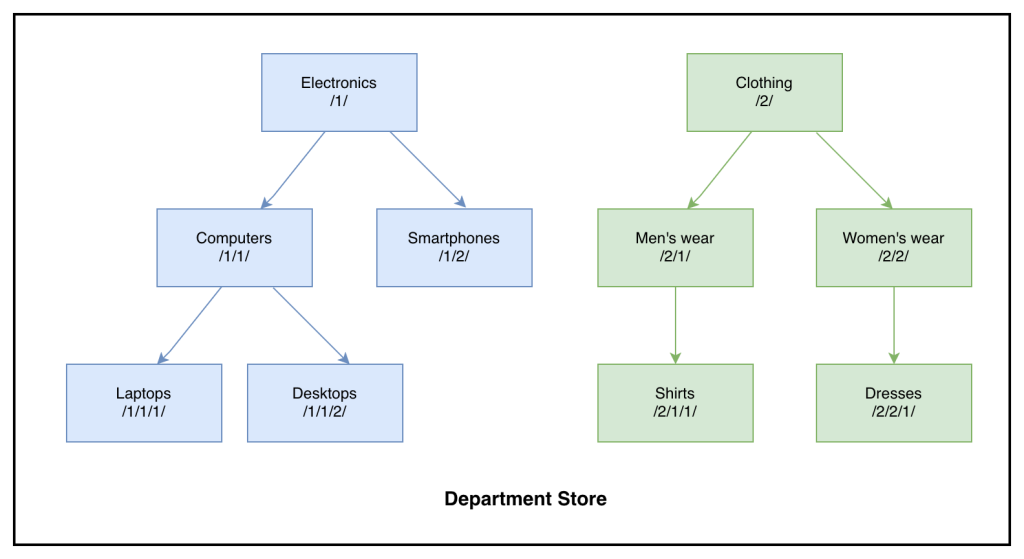
Build a custom solution to migrate SQL Server HierarchyID to PostgreSQL LTREE with AWS DMS
In this post, we discuss configuring AWS DMS tasks to migrate HierarchyID columns from SQL Server to Aurora PostgreSQL-Compatible efficiently.
Strategies for upgrading Amazon Aurora PostgreSQL and Amazon RDS for PostgreSQL from version 13
In this post, we help you plan your upgrade from PostgreSQL version 13 before standard support ends on February 28, 2026. We discuss the key benefits of upgrading, breaking changes to consider, and multiple upgrade strategies to choose from.

Using the shared plan cache for Amazon Aurora PostgreSQL
In this post, we discuss how the Shared Plan Cache feature of the Amazon Aurora PostgreSQL-Compatible Edition can significantly reduce memory consumption of generic SQL plans in high-concurrency environments.
Optimizing correlated subqueries in Amazon Aurora PostgreSQL
Correlated subqueries can cause performance challenges in Amazon Aurora PostgreSQL which can cause applications to experience reduced performance as data volumes grow. In this post, we explore the advanced optimization configurations available in Aurora PostgreSQL that can transform these performance challenges into efficient operations without requiring you to modify a single line of SQL code.

Improve Aurora PostgreSQL throughput by up to 165% and price-performance ratio by up to 120% using Optimized Reads on AWS Graviton4-based R8gd instances
In this post, we demonstrate how your workloads can benefit from upgrading Graviton2-based R6g and R6gd instances to Graviton4-based R8gd instances with Aurora PostgreSQL 17.5 on Aurora I/O-Optimized using an Optimized Reads-enabled tiered cache.
How Letta builds production-ready AI agents with Amazon Aurora PostgreSQL
With the Letta Developer Platform, you can create stateful agents with built-in context management (compaction, context rewriting, and context offloading) and persistence. Using the Letta API, you can create agents that are long-lived or achieve complex tasks without worrying about context overflow or model lock-in. In this post, we guide you through setting up Amazon Aurora Serverless as a database repository for storing Letta long-term memory. We show how to create an Aurora cluster in the cloud, configure Letta to connect to it, and deploy agents that persist their memory to Aurora. We also explore how to query the database directly to view agent state.
Protect sensitive data with dynamic data masking for Amazon Aurora PostgreSQL
Today, we are launching dynamic data masking feature for Amazon Aurora PostgreSQL-Compatible Edition. In this post we show how dynamic data masking can help you meet data privacy requirements. We discuss how this feature is implemented and demonstrate how it works with PostgreSQL role hierarchy.
PostgreSQL as a JSON database: Advanced patterns and best practices
This post shows you how to use PostgreSQL to store and search JSON data effectively. You’ll learn when to use JSON versus JSONB, how to create the right indexes, and how to write queries that perform well at scale.