AWS Architecture Blog
Category: Management & Governance
Recommended resilience testing in the next generation of AWS Resilience Hub
The next generation of AWS Resilience Hub introduces recommended resilience testing: four pre-configured, AWS FIS-powered tests that validate how your service detects and recovers from failures across Availability Zones, dependencies, and Regions, turning your resilience policy into evidence-backed pass or fail results.
Scope workloads and share resilience policies with AWS Resilience Hub
The next generation of AWS Resilience Hub adds three capabilities to keep workload scope and resilience requirements aligned with your running environment: Amazon EKS label support for service input sources, generative AI-powered Dependency Insights, and resilience policy sharing through AWS Organizations.
Prioritize your AWS Health alerts using AWS User Notifications
If you run critical workloads on AWS, such as a contact center on Amazon Connect Customer, database workloads on Amazon Relational Database Service (Amazon RDS), or hybrid connectivity through AWS Direct Connect, service health events demand your attention. But not all events are equal. An operational issue, a scheduled maintenance window, and a deprecation notice […]
Architecting AI-powered resilience framework on AWS
In this post, you’ll learn how to architect and implement a five-layer AI-powered resilience framework that automatically discovers dependencies, generates targeted experiments, and integrates with your existing Continuous Integration/Continuous Deployment (CI/CD) pipelines. First, we’ll explore the key challenges in resilience testing. Then, we’ll walk through the five-layer architecture that solves these challenges. Finally, we’ll show you how to implement this, with phased rollout guidance for pilot, expansion, and organization-wide deployment.
How Zapier runs isolated tasks on AWS Lambda and upgrades functions at scale
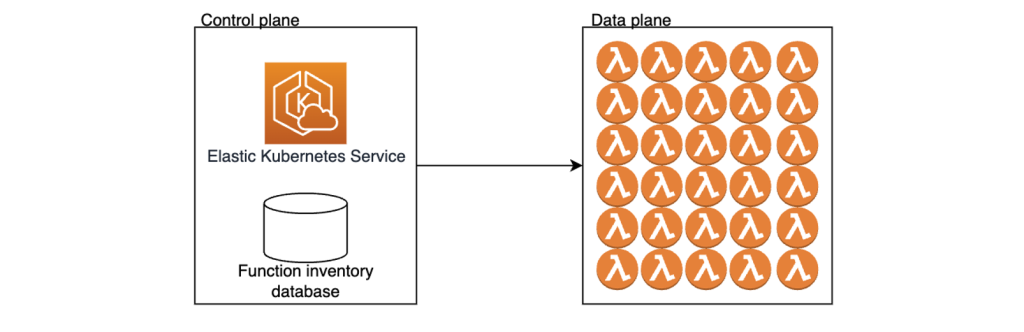
In this post, you’ll learn how Zapier has built their serverless architecture focusing on three key aspects: using Lambda functions to build isolated Zaps, operating over a hundred thousand Lambda functions through Zapier’s control plane infrastructure, and enhancing security posture while reducing maintenance efforts by introducing automated function upgrades and cleanup workflows into their platform architecture.

Build and operate an effective architecture review board
In this post, we identify the components of an efficient architecture review process, define what an ARB is, and describe how to build and operate an effective enterprise ARB.

Master architecture decision records (ADRs): Best practices for effective decision-making
In this post, you’ll learn how to implement Architecture Decision Records (ADRs) in your organization, based on best practices developed from experience with over 200 ADRs across multiple projects. You’ll also discover practical tips for streamlining architectural decision-making, see real-world examples from projects with teams ranging from 10 to over 100 members, and understand the common challenges in architecture decision-making and how ADRs can help address them.

Let’s Architect! Governance best practices
Governance plays a crucial role in AWS environments, as it ensures compliance, security, and operational efficiency. In this Let’s Architect!, we aim to provide valuable insights and best practices on how to configure governance appropriately within a company’s AWS infrastructure. By implementing these best practices, you can establish robust controls, enhance security, and maintain compliance, […]
Let’s Architect! Monitoring production systems at scale
“Everything fails, all the time” is a famous quote from Amazon’s Chief Technology Officer Werner Vogels. This means that software and distributed systems may eventually fail because something can always go wrong. We have to accept this and design our systems accordingly, test our software and services, and think about all the possible edge cases. […]

Continually assessing application resilience with AWS Resilience Hub and AWS CodePipeline
As customers commit to a DevOps mindset and embrace a nearly continuous integration/continuous delivery model to implement change with a higher velocity, assessing every change impact on an application resilience is key. This blog shows an architecture pattern for automating resiliency assessments as part of your CI/CD pipeline. Automatically running a resiliency assessment within CI/CD […]