AWS Architecture Blog

Creating a Multi-Region Application with AWS Services – Part 1, Compute, Networking, and Security
Many AWS services have features to help you build and manage a multi-Region architecture, but identifying those capabilities across 200+ services can be overwhelming. In this 3-part blog series, we filter through those 200+ services and focus on those that have specific features to assist you in building multi-Region applications. In Part 1, we’ll build […]

Optimize your IoT Services for Scale with IoT Device Simulator
The IoT (Internet of Things) has accelerated digital transformation for many industries. Companies can now offer smarter home devices, remote patient monitoring, connected and autonomous vehicles, smart consumer devices, and many more products. The enormous volume of data emitted from IoT devices can be used to improve performance, efficiency, and develop new service and business […]

Use a City Planning Analogy to Visualize and Create your Cloud Architecture
If you are new to creating cloud architectures, you might find it a daunting undertaking. However, there is an approach that can help you define a cloud architecture pattern by using a similar construct. In this blog post, I will show you how to envision your cloud architecture using this structured and simplified approach. Such […]
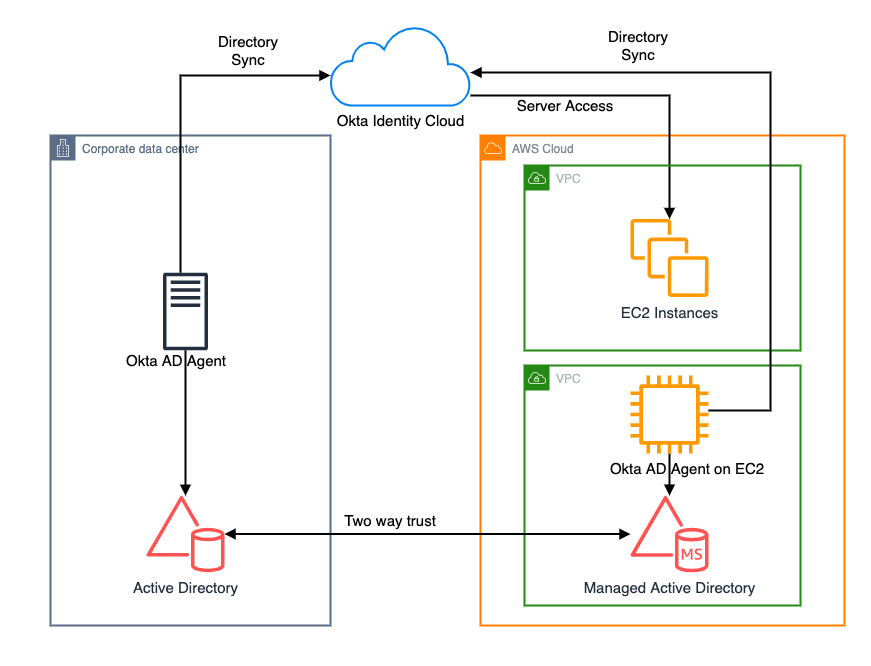
Integrate Okta to Extend Active Directory Infrastructure into AWS
Are you ready to extend your on-premises Active Directory to Amazon Web Services (AWS) to remove undifferentiated heavy lifting? Would you like to maintain a highly available Directory Service for your applications? Companies who have already set up integration with Okta Identity Cloud for external or internal applications require Active Directory objects to be synced […]

Field Notes: Building an Industrial Data Platform to Gather Insights from Operational Data
Co-authored with Russell de Pina, former Sr. Partner Solutions Architect at AWS Manufacturers looking to achieve greater operational efficiency need actionable insights from their operational data. Traditionally, operational technology (OT) and enterprise information technology (IT) existed in silos with various manual processes to clean and process data. Leveraging insights at a process level requires converging […]

Top 5: Featured Architecture Content for November
The AWS Architecture Center provides new and notable reference architecture diagrams, vetted architecture solutions, AWS Well-Architected best practices, whitepapers, and more. This blog post features some of our best picks from November’s new and updated content. 1. Game Industry Lens for the AWS Well-Architected Framework This new Lens specifies best practices for the unique characteristics […]
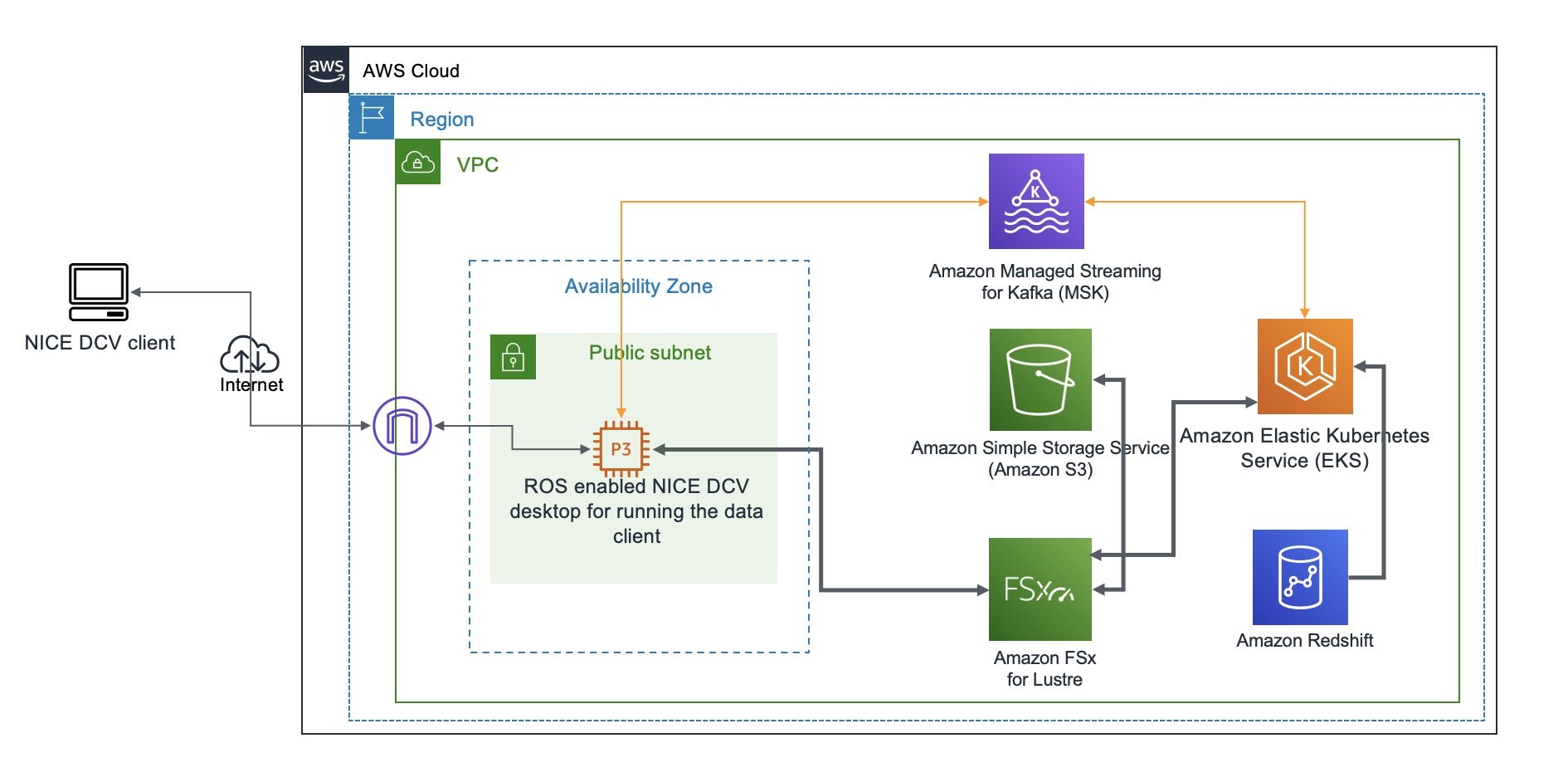
Field Notes: Building a Data Service for Autonomous Driving Systems Development using Amazon EKS
Many aspects of autonomous driving (AD) system development are based on data that capture real-life driving scenarios. Therefore, research and development professionals working on AD systems need to handle an ever-changing array of interesting datasets composed from the real-life driving data. In this blog post, we address a key problem in AD system development, which […]

Volotea MRO Modernization in AWS
Volotea is one of the fastest growing independent airlines in Europe, and has increased its fleet, routes, and number of available seats year over year. Volotea has already transported more than 30 million passengers across Europe since 2012, and has bases in 16 European capitals. The maintenance, repair, and overhaul (MRO) application is a critical […]

Field Notes: Monitor IBM Db2 for Errors Using Amazon CloudWatch and Send Notifications Using Amazon SNS
Monitoring a is crucial function to be able to detect any unanticipated or unknown access to your data in an IBM Db2 database running on AWS. You also need to monitor any specific errors which might have an impact on the system stability and get notified immediately in case such an event occurs. Depending on […]

Field Notes: Building On-Demand Disaster Recovery for IBM DB2 on AWS
With the increased adoption of critical applications running in the cloud, customers often find themselves revisiting traditional strategies that were adopted for on-premises workloads. When it comes to IBM DB2, one of the first decisions to make is to decide what backup and restore method will be used. In this blog post, we will show […]