AWS Database Blog
Category: Learning Levels

Best practices for using a MySQL read replica to upgrade an Amazon RDS for MySQL database
December, 2022: Amazon Relational Database Service (Amazon RDS) now supports Amazon RDS Blue/Green Deployments to help you with safer, simpler, and faster updates to your Amazon Aurora and Amazon RDS databases. Blue/Green Deployments create a fully managed staging environment that allows you to deploy and test production changes, keeping your current production database safe. Learn […]

Federated query support for Amazon Aurora PostgreSQL and Amazon RDS for PostgreSQL – Part 1
PostgreSQL is one of the most widely used database engines and is supported by a very large and active community. It’s a viable open-source option to use compared to many commercial databases, which require heavy license costs. Amazon Relational Database Service (Amazon RDS) for PostgreSQL and Amazon Aurora PostgreSQL-Compatible Edition are AWS managed offerings that […]
Resetting your graph data in Amazon Neptune in seconds
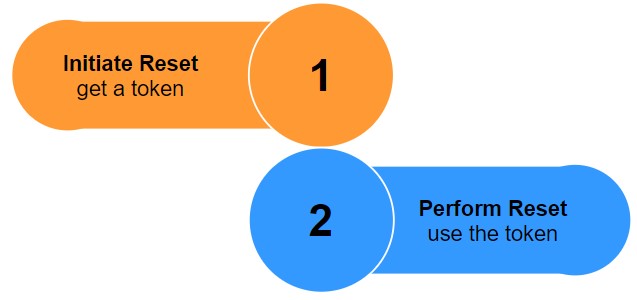
As an enterprise application developer building graph applications with Amazon Neptune, you may want to delete and reload your graph data on a regular basis to make sure you’re working with the latest changes in your data, such as new relationships between nodes, or to replace test data with production data. In the past, you […]

Using Database Mail on Amazon RDS for SQL Server
We’re happy to announce that Amazon RDS for SQL Server now fully supports SQL Server Database Mail. Before this release, you needed to use a variety of work-arounds to enable Database Mail, such as using linked servers. With the release of Database Mail for SQL Server, you can enable Database Mail seamlessly by using database parameter groups. Database Mail is one of the heavily used features in Microsoft SQL Server. Database Mail enables you to send messages from the SQL Server to users by using a Simple Mail Transfer Protocol (SMTP) server. In this post, you learn how to configure Database Mail and send emails from an RDS for SQL Server DB instance via Amazon Simple Email Service (Amazon SES).

Performing major version upgrades for Amazon Aurora MySQL with minimum downtime
This post shows how you can perform a major upgrade for Aurora MySQL with minimal downtime using a blue-green deployment. This is useful for database administrators or DevOps team members responsible for the Aurora MySQL upgrades.
Performing analytics on Amazon Managed Blockchain
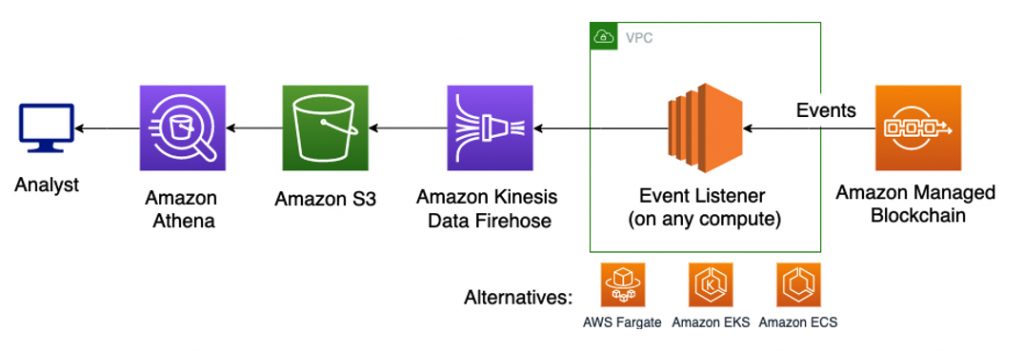
Managed Blockchain follows an event-driven architecture. We can open up a wide range of analytic approaches by streaming events to Amazon Kinesis. For instance, we could analyze events in near-real time with Kinesis Data Analytics, perform petabyte scale data warehousing with Amazon RedShift, or use the Hadoop ecosystem with Amazon EMR. This allows us to use the right approach for every blockchain analytics use case.
In this post, we show you one approach that uses Amazon Kinesis Data Firehose to capture, monitor, and aggregate events into a dataset, and analyze it with Amazon Athena using standard SQL.

Monitoring best practices with Amazon ElastiCache for Redis using Amazon CloudWatch
Monitoring is an important part of maintaining the reliability, availability, and performance of your Amazon ElastiCache resources. This post shows you how to maintain a healthy Redis cluster and prevent disruption using Amazon CloudWatch and other external tools. We also discuss methods to anticipate and forecast scaling needs.

Cross-Region disaster recovery of Amazon RDS for SQL Server
December 2022: Amazon RDS for SQL Server now supports cross-Region read replicas. Amazon RDS for SQL Server makes it easy to set up, operate, and scale SQL Server deployments in the Amazon Web Services (AWS) cloud environment. For your enterprise workloads, which depend on Amazon RDS for SQL Server, you need an effective disaster recovery […]

Best practices for upgrading Amazon RDS for Oracle DB instances from 11.2.0.4 to 19c
Amazon Relational Database Service (Amazon RDS) for Oracle provides newer versions of databases so you can keep your DB instances up-to-date. These versions can include bug fixes, security enhancements, and other improvements. When Amazon RDS for Oracle supports a new version, you can choose how and when to upgrade your DB instances. As you may […]

Improving application availability with Amazon RDS Proxy
One of the benefits of Amazon RDS Proxy is that it can improve application recovery time after database failovers. While RDS Proxy supports both MySQL as well as PostgreSQL engines, in this post, we will use a MySQL test workload to demonstrate how RDS Proxy reduces client recovery time after failover by up to 79% […]