AWS Database Blog
Category: Learning Levels

Announcing the support of Parquet data format in AWS DMS 3.1.3
Today AWS DMS announces support for migrating data to Amazon S3 from any AWS-supported source in Apache Parquet data format. This is one of the many new features in DMS 3.1.3. Many of you use the “S3 as a target” support in DMS to build data lakes. Then, you use this data with other AWS […]

Deliver Amazon RDS Performance Insights counter metrics to a third-party Application Performance Monitoring service provider using Amazon CloudWatch Metrics Stream
This blog post was last reviewed or updated May, 2023. The updated version shown below is based on working backwards from a customer need to use RDS Performance Insights metrics in their APM tool for database observability. Amazon RDS Performance Insights is a feature that monitors Amazon Relational Database Service (Amazon RDS) database instances so […]

Right-size Amazon RDS instances at scale based on Oracle performance metrics
Enterprise customers who are currently running on-premises, mission-critical applications on commercial databases are looking for cost-efficient, managed database service offerings. Amazon Relational Database Service (Amazon RDS) is one of the target platforms for the relational database workload migration. RDS provides resizable capacity and manages time-consuming and undifferentiated heavy lifting administration tasks. For large-scale database migrations, […]
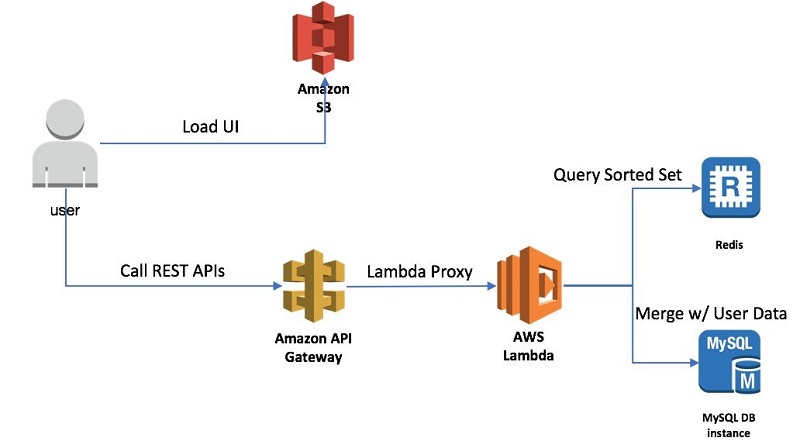
Build a real-time gaming leaderboard with Amazon ElastiCache for Redis
April 2024: This post was reviewed and updated for accuracy. Gaming leaderboards enable players to gauge their performance against each other. This important social feature increases players’ engagement and encourages competition. Leaderboard data can also inform in-game algorithms that match players against competitors of similar skill levels. In this post, I explore the challenges around […]

Upgrade your end-of-support SQL Server instances in VMware Cloud on AWS with ease
If you still have Microsoft SQL Server 2008 and 2008 R2 instances deployed, now is the time to upgrade them. Microsoft end of support (EoS) date for each is almost upon us—July 9, 2019. This means that after that there are no further security updates, which has security and also compliance implications, so don’t wait! Today, I’m excited […]

Tuning AWS Java SDK HTTP request settings for latency-aware Amazon DynamoDB applications
October 2024: This post was reviewed for accuracy. Additional guidance was added about the trade-offs between high and low timeout settings. Amazon DynamoDB is a NoSQL cloud database service that is designed to provide low-latency and high-throughput performance for applications and services running at scale. Example use cases include: Massively multiplayer online games (MMOGs) Virtual […]
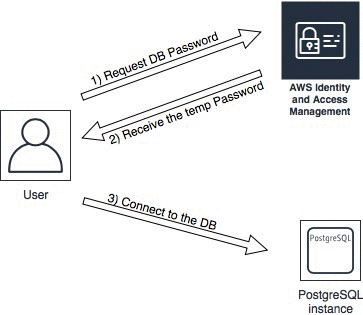
Managing PostgreSQL users and roles
July 2023: This post was reviewed for accuracy. PostgreSQL is one of the most popular open-source relational database systems. With more than 30 years of development work, PostgreSQL has proven to be a highly reliable and robust database that can handle a large number of complicated data workloads. PostgreSQL is considered to be the primary […]
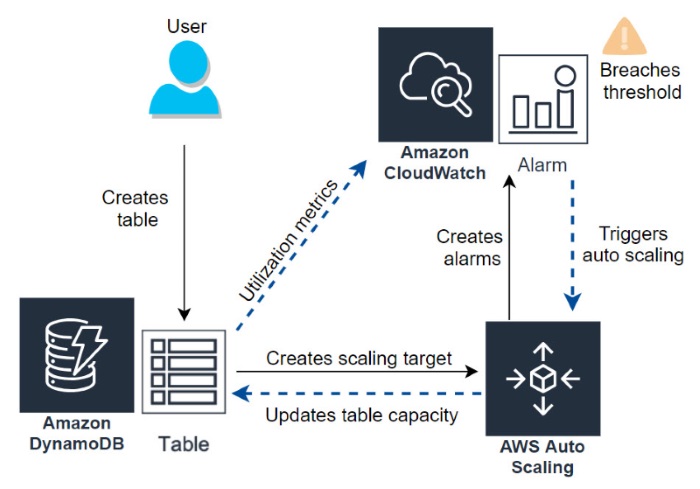
Amazon DynamoDB auto scaling: Performance and cost optimization at any scale
September 2022: This post was reviewed for accuracy. Scaling up database capacity can be a tedious and risky business. Even veteran developers and database administrators who understand the nuanced behavior of their database and application perform this work cautiously. Despite the current era of sharded NoSQL clusters, increasing capacity can take hours, days, or weeks. […]

Best practices for configuring parameters for Amazon RDS for MySQL, part 3: Parameters related to security, operational manageability, and connectivity timeout
This blog post was last reviewed or updated January, 2023. In the previous blog post of this series, I discuss MySQL parameters used to optimize replication in Amazon Relational Database Service (Amazon RDS) for MySQL and best practices related to them. In today’s post, I discuss the most important and commonly used MySQL parameters for […]

Using the MariaDB JDBC driver with Amazon Aurora with MySQL compatibility
September 2023 update: Version 3.0.3 of the MariaDB JDBC Driver (Connector/J) no longer supports Amazon Aurora. We recommend using the AWS Advanced JDBC Wrapper Driver . The Amazon Web Services JDBC Driver has been redesigned as an advanced JDBC wrapper. This wrapper is complementary to and extends the functionality of an existing JDBC driver to help an […]