AWS Database Blog
Category: Learning Levels

Monitor your Microsoft SQL Server using custom metrics with Amazon CloudWatch and AWS Systems Manager
In this blog post, we show you how to configure the CloudWatch agent on Amazon EC2 Windows instances to capture custom metrics for SQL Server from Windows performance monitor. We also show you how to publish those custom metrics and monitor them on Amazon CloudWatch console. We also walk you through on how to store custom configuration in AWS Systems Manager Parameter Store used by CloudWatch agent to capture those metrics and reuse the same configuration across multiple fleets of SQL Server instances where similar kind of metrics are needed.

Use the AWS Database Migration Service to Stream Change Data to Amazon Kinesis Data Streams
August 30, 2023: Amazon Kinesis Data Analytics has been renamed to Amazon Managed Service for Apache Flink. Read the announcement in the AWS News Blog and learn more. In this post, we discuss how you can use AWS Database Migration Service (AWS DMS) to stream change data into Amazon Kinesis Data Streams. An earlier post, […]
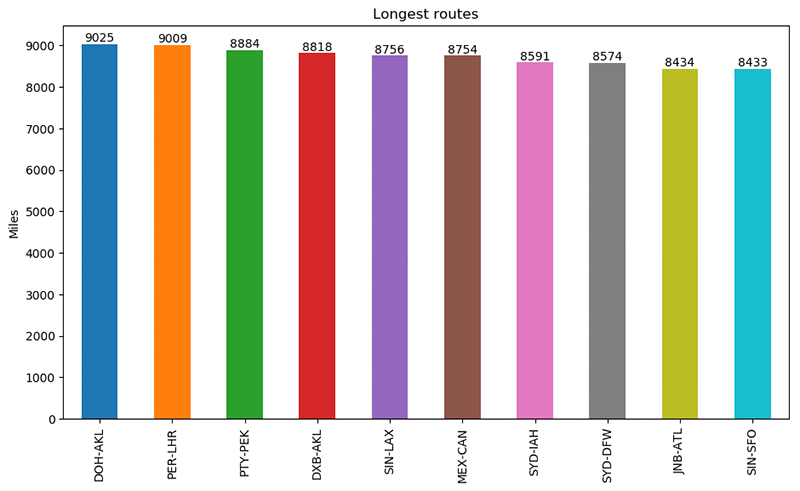
Let Me Graph That For You – Part 1 – Air Routes
December 2022: Neptune Notebooks now include an air-routes tutorial. We’re pleased to announce the start of a multi-part series of posts for Amazon Neptune in which we explore graph application datasets and queries drawn from many different domains and problem spaces. Amazon Neptune is a fast and reliable, fully-managed graph database, optimized for storing and […]

How to archive data from relational databases to Amazon Glacier using AWS DMS
March 2023: This post was reviewed and updated with architecture diagrams and console screenshots. You can use AWS Database Migration Service (AWS DMS) to migrate data from various sources to most widely used commercial and open-source databases. AWS DMS also supports Amazon S3 as a source and as a target for migrations. When you use Amazon S3 […]

How to migrate to Amazon RDS for SQL Server using transactional replication: Part 1
You can migrate your databases into Amazon RDS for Microsoft SQL Server in multiple ways. Typically, you perform a simple backup and restore of the databases (along with scripting system objects such as logins). If you want a higher availability or lower downtime option, you might use the AWS Database Migration Service (AWS DMS). In […]
Learn to master MySQL database migrations with Aurora
By Nathaniel Kangpan, SVP Technology & Data Services, Kepler Group I have yet to meet a client in the past 12 months that doesn’t already (a) have a team or two dipping their toes into cloud-based infrastructure, or (b) have the cloud on their roadmap for 2018. Total cost of ownership (TCO) savings for migrating […]

Use IAM authentication to connect with SQL Workbench/J to Amazon Aurora MySQL or Amazon RDS for MySQL
July 2023: This post was reviewed for accuracy. Amazon Relational Database Service (Amazon RDS) enables you to use AWS Identity and Access Management (IAM) to manage database access for Amazon RDS for MySQL DB instances and Amazon Aurora MySQL DB clusters. Database administrators can associate database users with IAM users and roles. By using IAM, you can manage user access to all […]

Amazon RDS Under the Hood: Multi-AZ
Amazon Web Services (AWS) customers bet their businesses on their data store and highly available access to it. For these customers, Multi-AZ configurations provide an easy-to-use solution for high availability (HA). When you enable Multi-AZ, Amazon Relational Database Service (Amazon RDS) maintains a redundant and consistent standby copy of your data. If you encounter problems […]

Debugging Your AWS DMS Migrations: What to Do When Things Go Wrong (Part 1)
This post walks you through a troubleshooting flow chart to help you understand what could go wrong with migrations using AWS DMS, and it discusses best practices for debugging your AWS DMS migrations. This process involves creating the required AWS DMS components—like the replication instance, source and target endpoints, and the replication task to migrate data from the source endpoint to the target endpoint.
Choosing the Right DynamoDB Partition Key
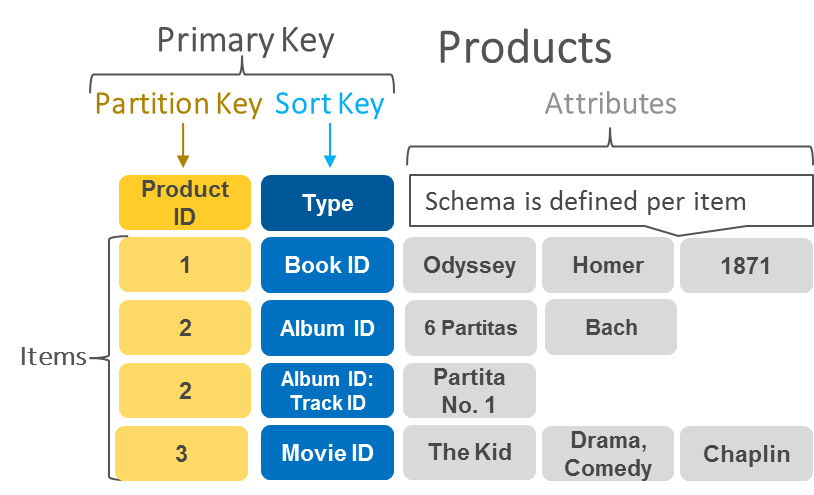
September 2022: This post was reviewed and updated for accuracy. This blog post covers important considerations and strategies for choosing the right partition key for designing a schema that uses Amazon DynamoDB. Choosing the right partition key is an important step in the design and building of scalable and reliable applications on top of DynamoDB. […]