AWS DevOps & Developer Productivity Blog

Blue/Green deployment with AWS Developer tools on Amazon EC2 using Amazon EFS to host application source code
Many organizations building modern applications require a shared and persistent storage layer for hosting and deploying data-intensive enterprise applications, such as content management systems, media and entertainment, distributed applications like machine learning training, etc. These applications demand a centralized file share that scales to petabytes without disrupting running applications and remains concurrently accessible from potentially […]

Choosing a Well-Architected CI/CD approach: Open Source on AWS
Introduction When building a CI/CD platform, it is important to make an informed decision regarding every underlying tool. This post explores evaluating the criteria for selecting each tool focusing on a balance between meeting functional and non-functional requirements, and maximizing value. Your first decision: source code management. Source code is potentially your most valuable asset, […]

Use the Snyk CLI to scan Python packages using AWS CodeCommit, AWS CodePipeline, and AWS CodeBuild
Learn how to scan Python packages for security vulnerabilities using AWS Developer tools and Snyk

Building a centralized Amazon CodeGuru Profiler dashboard for multi-account scenarios
This post shows you how to configure CodeGuru Profiler to collect multiple applications’ profiling data into a central account and review the applications’ performance data on one dashboard.
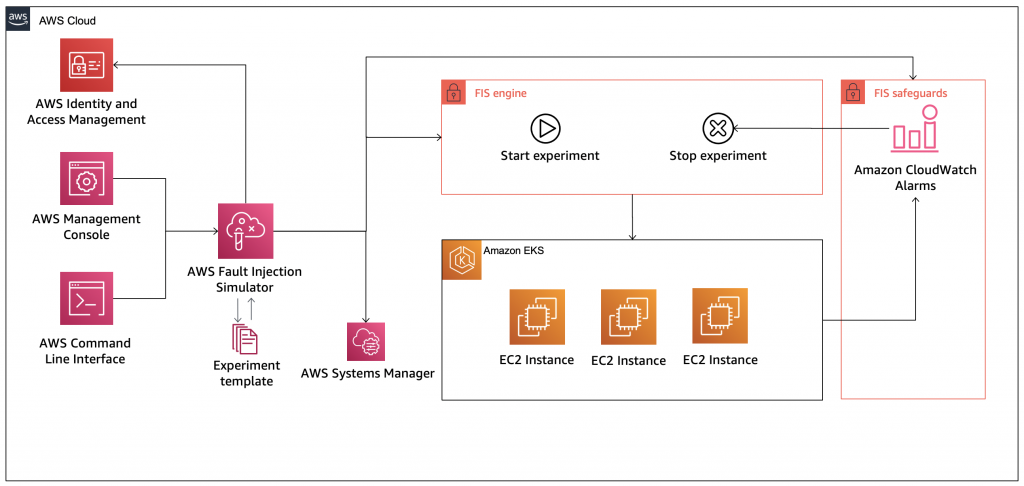
Chaos engineering on Amazon EKS using AWS Fault Injection Simulator
In this post, we discuss how you can use AWS Fault Injection Simulator (AWS FIS), a fully managed fault injection service used for practicing chaos engineering. AWS FIS supports a range of AWS services, including Amazon Elastic Kubernetes Service (Amazon EKS), a managed service that helps you run Kubernetes on AWS without needing to install […]

Extending an AWS CodeBuild environment for CPP applications
AWS CodeBuild is a fully managed build service that offers curated Docker images. These managed images provide build environments for programming languages and runtimes such as Android, Go, Java, Node.js, PHP, Python, Ruby, Docker, and .Net Core. However, there are a lot of existing CPP-based applications, and developers may have difficulties integrating these applications with […]

Enforcing AWS CloudFormation scanning in CI/CD Pipelines at scale using Trend Micro Cloud One Conformity
Integrating AWS CloudFormation template scanning into CI/CD pipelines is a great way to catch security infringements before application deployment. However, implementing and enforcing this in a multi team, multi account environment can present some challenges, especially when the scanning tools used require external API access. This blog will discuss those challenges and offer a solution […]

Introducing new self-paced courses to improve Java and Python code quality with Amazon CodeGuru
This post announces the availability of new self-paced where you learn how to use CodeGuru Reviewer to automatically scan your code base, identify hard-to-find bugs and vulnerabilities, and get recommendations for fixing the bugs and security issues.

Continuous Compliance Workflow for Infrastructure as Code: Part 2
In the first post of this series, we introduced a continuous compliance workflow in which an enterprise security and compliance team can release guardrails in a continuous integration, continuous deployment (CI/CD) fashion in your organization. In this post, we focus on the technical implementation of the continuous compliance workflow. We demonstrate how to use AWS […]

Keeping up with your dependencies: building a feedback loop for shared libraries
In a microservices world, it’s common to share as little as possible between services. This enables teams to work independently of each other, helps to reduce wait times and decreases coupling between services. However, it’s also a common scenario that libraries for cross-cutting-concerns (such as security or logging) are developed one time and offered to […]