Artificial Intelligence
Category: Amazon Aurora
AWS vector solutions: Build agentic AI where your data lives
AWS offers a broad portfolio of vector search built directly into the databases and storage services you already use, with no standalone vector database or data migration required. This post covers six purpose-built services, a decision framework for choosing the right engine, and customer proof points for each.
From data overload to actionable insights: How Verizon Connect scaled agentic AI to 100,000 users
In this post, we show you how Verizon Connect built and scaled an agentic AI solution to transform overwhelming fleet data into clear, actionable insights for 100,000 users daily. We walk you through the architectural decisions, implementation challenges, and measurable results that can guide your own data-to-insights transformation.
How Palo Alto Networks enhanced device security infra log analysis with Amazon Bedrock
Palo Alto Networks’ Device Security team wanted to detect early warning signs of potential production issues to provide more time to SMEs to react to these emerging problems. They partnered with the AWS Generative AI Innovation Center (GenAIIC) to develop an automated log classification pipeline powered by Amazon Bedrock. In this post, we discuss how Amazon Bedrock, through Anthropic’ s Claude Haiku model, and Amazon Titan Text Embeddings work together to automatically classify and analyze log data. We explore how this automated pipeline detects critical issues, examine the solution architecture, and share implementation insights that have delivered measurable operational improvements.

Query Amazon Aurora PostgreSQL using Amazon Bedrock Knowledge Bases structured data
In this post, we discuss how to make your Amazon Aurora PostgreSQL-Compatible Edition data available for natural language querying through Amazon Bedrock Knowledge Bases while maintaining data freshness.

Develop a RAG-based application using Amazon Aurora with Amazon Kendra
RAG retrieves data from a preexisting knowledge base (your data), combines it with the LLM’s knowledge, and generates responses with more human-like language. However, in order for generative AI to understand your data, some amount of data preparation is required, which involves a big learning curve. In this post, we walk you through how to convert your existing Aurora data into an index without needing data preparation for Amazon Kendra to perform data search and implement RAG that combines your data along with LLM knowledge to produce accurate responses.

Discover insights from your Amazon Aurora PostgreSQL database using the Amazon Q Business connector
In this post, we walk you through configuring and integrating Amazon Q for Business with Aurora PostgreSQL-Compatible to enable your database administrators, data analysts, application developers, leadership, and other teams to quickly get accurate answers to their questions related to the content stored in Aurora PostgreSQL databases.

Dive deep into vector data stores using Amazon Bedrock Knowledge Bases
In this post, we dive deep into the vector database options available as part of Amazon Bedrock Knowledge Bases and the applicable use cases, and look at working code examples.

Generative AI-powered technology operations
In this post we describe how AWS generative AI solutions (including Amazon Bedrock, Amazon Q Developer, and Amazon Q Business) can further enhance TechOps productivity, reduce time to resolve issues, enhance customer experience, standardize operating procedures, and augment knowledge bases.

Evolution of Cresta’s machine learning architecture: Migration to AWS and PyTorch
Cresta Intelligence, a California-based AI startup, makes businesses radically more productive by using Expertise AI to help sales and service teams unlock their full potential. Cresta is bringing together world-renowned AI thought-leaders, engineers, and investors to create a real-time coaching and management solution that transforms sales and increases service productivity, weeks after application deployment. Cresta […]
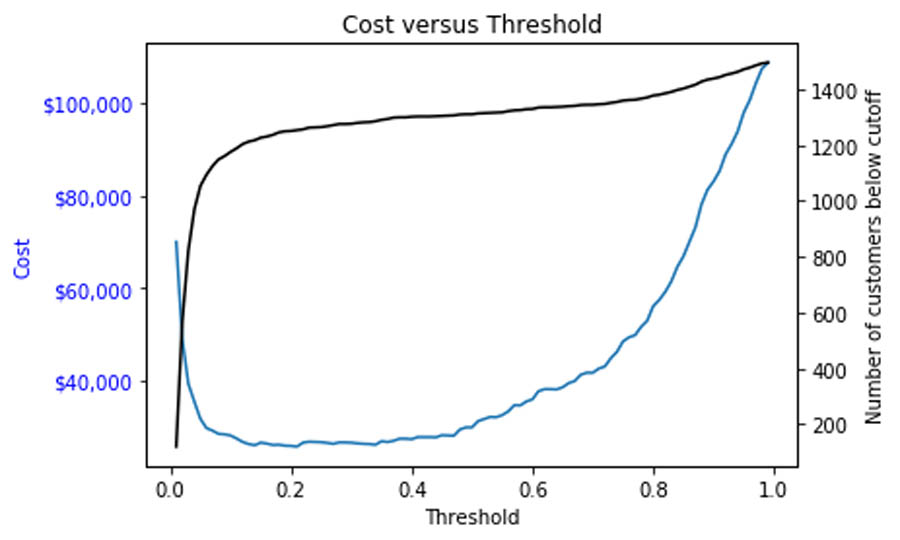
Preventing customer churn by optimizing incentive programs using stochastic programming
In recent years, businesses are increasingly looking for ways to integrate the power of machine learning (ML) into business decision-making. This post demonstrates the use case of creating an optimal incentive program to offer customers identified as being at risk of leaving for a competitor, or churning. It extends a popular ML use case, predicting […]