AWS Compute Blog
Tag: AWS Lambda

Introducing IAM and Lambda authorizers for Amazon API Gateway HTTP APIs
Amazon API Gateway HTTP APIs enable you to create RESTful APIs with lower latency and lower cost than API Gateway REST APIs. The API Gateway team is continuing work to improve and migrate popular REST API features to HTTP APIs. We are adding two of the most requested features, AWS Identity and Access Management (IAM) […]

Introducing queued purchases for Savings Plans
This blog post is contributed by Idan Maizlits, Sr. Product Manager, Savings Plans AWS now provides the ability for you to queue purchases of Savings Plans by specifying a time, up to 3 years in the future, to carry out those purchases. This blog reviews how you can queue purchases of Savings Plans. In November […]

Introducing AWS X-Ray new integration with AWS Step Functions
AWS Step Functions now integrates with AWS X-Ray to provide a comprehensive tracing experience for serverless orchestration workflows. Step Functions allows you to build resilient serverless orchestration workflows with AWS services such as AWS Lambda, Amazon SNS, Amazon DynamoDB, and more. Step Functions provides a history of executions for a given state machine in the AWS […]

Jump-starting your serverless development environment
Developers building serverless applications often wonder how they can jump-start their local development environment. This blog post provides a broad guide for those developers wanting to set up a development environment for building serverless applications. AWS and open source tools for a serverless development environment . To use AWS Lambda and other AWS services, create […]

Scheduling AWS Lambda Provisioned Concurrency for recurring peak usage
This post is contributed by Jerome Van Der Linden, AWS Solutions Architect Concurrency of an AWS Lambda function is the number of requests it can handle at any given time. This metric is the average number of requests per second multiplied by the average duration in seconds. For example, if a Lambda function takes an […]

Introducing the CDK construct library for the serverless LAMP stack
Update: The complete blog series and supporting GitHub repository is now available: Part 1: Introducing the new Serverless LAMP stack Part 2: Scaling relational databases Part 3: Replacing the web server Part 4: Building a serverless Laravel application Part 5: The CDK construct library for the serverless LAMP stack Part 6: From MVC to serverless […]

Migrating AWS Lambda functions to Amazon Linux 2
July 26, 2023 update: Information in this post has been superseded by Migrating AWS Lambda functions from the Go1.x runtime to the custom runtime on Amazon Linux 2. You can now use the latest version of any of the AWS Lambda runtimes on Amazon Linux 2 (AL2). End-of-life of standard support for Amazon Linux (AL1 […]

ICYMI: Season one of Sessions with SAM
February 12, 2024: Amazon Kinesis Data Firehose has been renamed to Amazon Data Firehose. Read the AWS What’s New post to learn more. Developers tell us they want to know how to easily build and manage their serverless applications. In 2017 AWS announced AWS Serverless Application Model (SAM) to help with just that. To help […]
Using AWS Lambda IAM condition keys for VPC settings
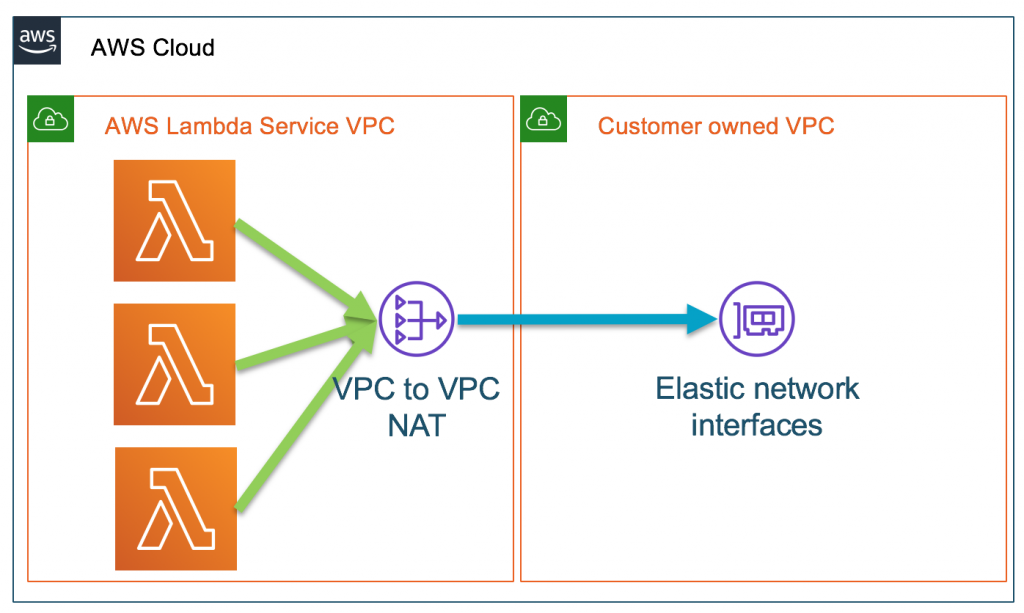
You can now control the Amazon Virtual Private Cloud (VPC) settings for your AWS Lambda functions using AWS Identity and Access Management (IAM) condition keys. IAM condition keys enable you to further refine the conditions under which an IAM policy statement applies. You can use the new condition keys in IAM policies when granting permissions […]

Building a Pulse Oximetry tracker using AWS Amplify and AWS serverless
This guide demonstrates an example solution for collecting, tracking, and sharing pulse oximetry data for multiple users. It’s built using AWS serverless technologies, enabling reliable scalability and security. The frontend application is written in VueJS and uses the Amplify Framework. It takes oxygen saturation measurements as manual input or a BerryMed pulse oximeter connected to […]