AWS Architecture Blog
Category: Technical How-to

Field Notes: Serverless Container-based APIs with Amazon ECS and Amazon API Gateway
A growing number of organizations choose to build their APIs with Docker containers. For hosting and exposing these container-based APIs, they need a solution which supports HTTP requests routing, autoscaling, and high availability. In some cases, user authorization is also needed. For this purpose, many organizations are orchestrating their containerized services with Amazon Elastic Container […]

Field Notes: Requirements for Successfully Installing CloudEndure Migration and CloudEndure Disaster Recovery
Customers have been using CloudEndure Migration and CloudEndure Disaster Recovery to meet business needs for many years. In 2019, CloudEndure was acquired by AWS, and provided the licensing for CloudEndure to all of their users free of charge for migration. During this time, AWS has identified the requirements for replication to complete successfully after initial […]

Field Notes: Deploying UiPath RPA Software on AWS
September 8, 2021: Amazon Elasticsearch Service has been renamed to Amazon OpenSearch Service. See details. Running UiPath RPA software on AWS leverages the elasticity of the AWS Cloud, to set up, operate, and scale robotic process automation. It provides cost-efficient and resizable capacity, and scales the robots to meet your business workload. This reduces the […]

Field Notes: Building a Shared Account Structure Using AWS Organizations
For customers considering the AWS Solution Provider Program, there are challenges to mitigate when building a shared account model with SI partners. AWS Organizations make it possible to build the right account structure to support a resale arrangement. In this engagement model, the end customer gets an AWS invoice from an AWS authorized partner instead […]

Field Notes: Integrating a Multi-Forest Source Environment with AWS SSO
During re:Invent 2019, AWS announced a new way to integrate external identity sources such as Azure Active Directory with auto provisioning of identities and groups in AWS Single Sign-On (AWS SSO). In March 2020, AWS SSO afforded customers the possibility to connect their Okta Identity Cloud to AWS Single Sign-On (SSO) in order to manage […]

Field Notes: Redacting Personal Data from Connected Cars Using Amazon Rekognition
Cameras mounted in connected cars may collect a variety of video data. Organizations may need to redact the personal information (e.g. human faces and automobile license plates) contained in the collected video data in order to protect individuals’ privacy rights and, where required, meet compliance obligations under privacy regulations such as General Data Protection Regulation […]

Field Notes: Using Infrastructure as Code to Manage Your AWS Networking Environment
Infrastructure as Code (IaC) brings automation to the provisioning process, which was traditionally done manually. Rather than relying on manually performed steps, both administrators and developers can instantiate infrastructure using configuration files. IaC helps avoid configuration drift through automation, and increases the speed and agility of infrastructure deployments. It also helps reduce errors and enhances […]

Field Notes: Working with Route Tables in AWS Transit Gateway
An AWS Transit Gateway enables you to attach Amazon VPCs, AWS S2S VPN and AWS Direct Connect connections in the same Region, and route traffic between them. Transit Gateways are designed to be highly scalable and resilient. You can attach up to 5000 VPCs to each gateway and each attachment can handle up to 50 […]
Field Notes: Inference C++ Models Using SageMaker Processing
Machine learning has existed for decades. Before the prevalence of doing machine learning with Python, many other languages such as Java, and C++ were used to build models. Refactoring legacy models in C++ or Java could be forbiddingly expensive and time consuming. Customers need to know how they can bring their legacy models in C++ […]
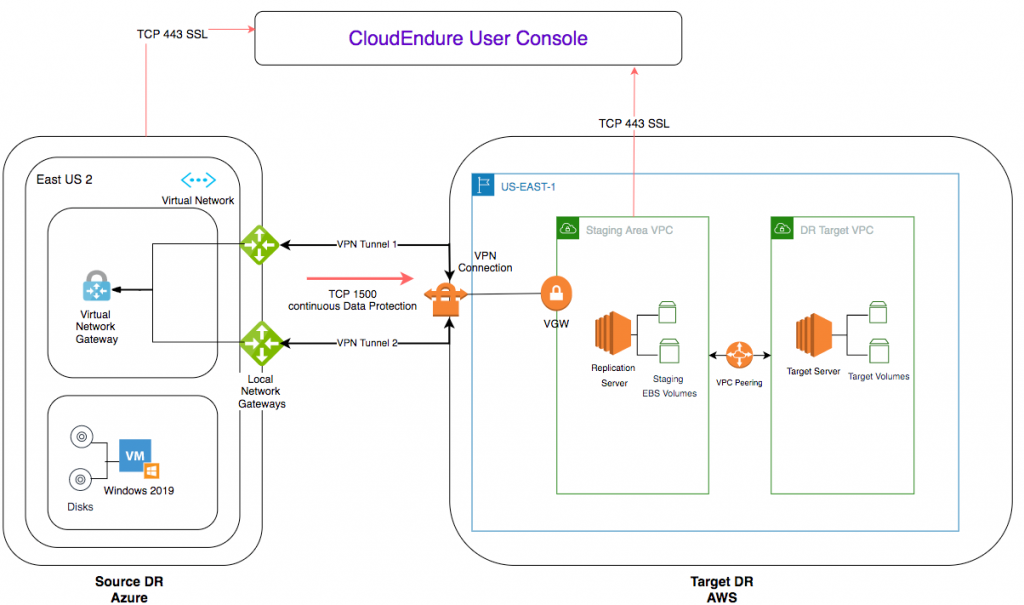
Field Notes: Building a Disaster Recovery site on AWS for your Azure Workload
Customers running workloads on other clouds, like Azure or GCP, can increase resilience and meet compliance requirements by using AWS as their disaster recovery site. CloudEndure Disaster Recovery provides an easy cross-cloud solution for replicating and recovering workloads from other cloud providers to AWS. It automatically converts your source machines so that they boot and […]