AWS Compute Blog
Category: Amazon Simple Queue Service (SQS)

Understanding how AWS Lambda scales with Amazon SQS standard queues
This post explores Lambda’s scaling behavior when subscribed to SQS standard queues. It walks through several ways to scale faster and maximize Lambda throughput when needed. This includes increasing the memory allocation for the Lambda function, increasing batch size, catching errors, and making configuration changes.

Creating a serverless face blurring service for photos in Amazon S3
A serverless face blurring service can provide a simpler way to process photos in workloads with large amounts of traffic. This post introduces an example application that blurs faces when images are saved in an S3 bucket. The S3 PutObject event invokes a Lambda function that uses Amazon Rekognition to detect faces and GraphicsMagick to process the images.

Building well-architected serverless applications: Optimizing application costs
This series of blog posts uses the AWS Well-Architected Tool with the Serverless Lens to help customers build and operate applications using best practices. In each post, I address the serverless-specific questions identified by the Serverless Lens along with the recommended best practices. See the introduction post for a table of contents and explanation of the example application. COST 1. How […]

Building well-architected serverless applications: Optimizing application performance – part 2
This series of blog posts uses the AWS Well-Architected Tool with the Serverless Lens to help customers build and operate applications using best practices. In each post, I address the serverless-specific questions identified by the Serverless Lens along with the recommended best practices. See the introduction post for a table of contents and explanation of the example application. PERF 1. Optimizing […]

Adding resiliency to AWS CloudFormation custom resource deployments
This blog post demonstrates how to use SQS and Lambda to add resiliency to CloudFormation custom resources deployments. This solution can be customized for use cases where CloudFormation stacks have a dependency on a custom resource.

Building well-architected serverless applications: Building in resiliency – part 2
This series of blog posts uses the AWS Well-Architected Tool with the Serverless Lens to help customers build and operate applications using best practices. In each post, I address the serverless-specific questions identified by the Serverless Lens along with the recommended best practices. See the introduction post for a table of contents and explanation of the example application. Reliability question REL2: […]

Building well-architected serverless applications: Building in resiliency – part 1
This series of blog posts uses the AWS Well-Architected Tool with the Serverless Lens to help customers build and operate applications using best practices. In each post, I address the serverless-specific questions identified by the Serverless Lens along with the recommended best practices. See the introduction post for a table of contents and explanation of the example application. Reliability question REL2: […]

Building well-architected serverless applications: Regulating inbound request rates – part 2
This series of blog posts uses the AWS Well-Architected Tool with the Serverless Lens to help customers build and operate applications using best practices. In each post, I address the serverless-specific questions identified by the Serverless Lens along with the recommended best practices. See the introduction post for a table of contents and explanation of the example application. Reliability question REL1: […]
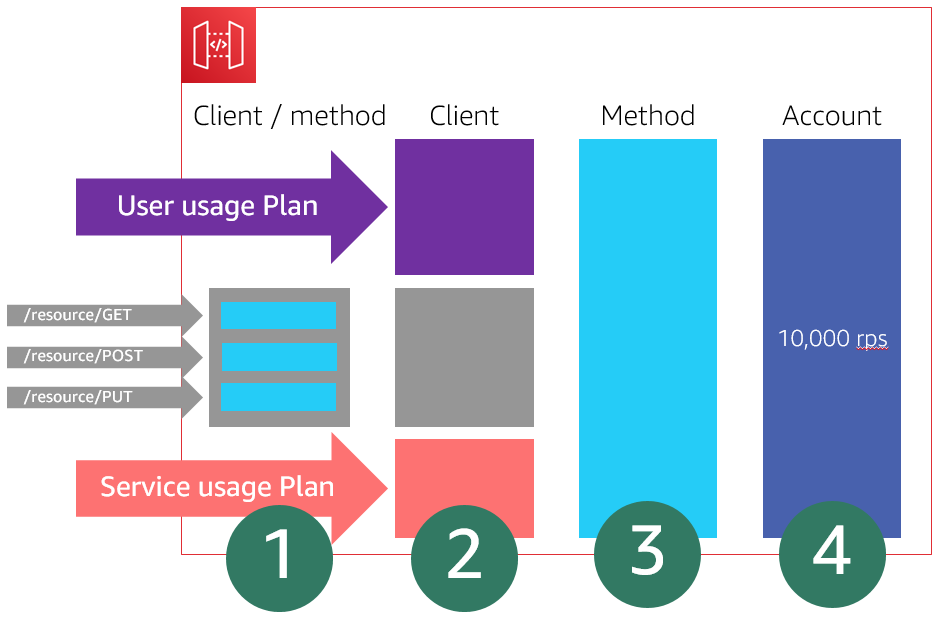
Building well-architected serverless applications: Regulating inbound request rates – part 1
This series of blog posts uses the AWS Well-Architected Tool with the Serverless Lens to help customers build and operate applications using best practices. In each post, I address the serverless-specific questions identified by the Serverless Lens along with the recommended best practices. See the introduction post for a table of contents and explanation of the example application. Reliability question REL1: […]
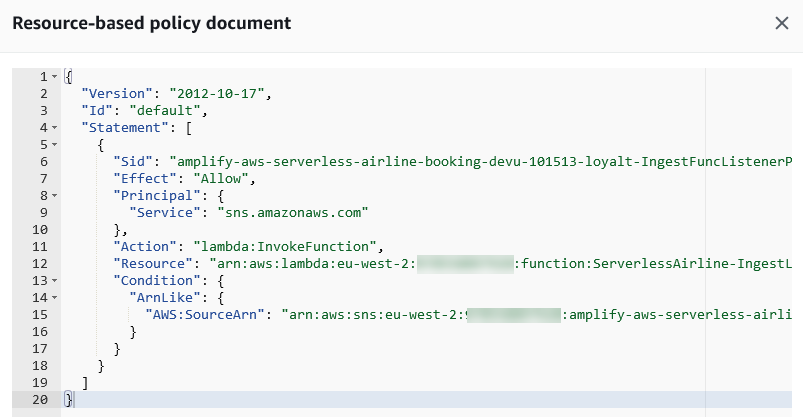
Building well-architected serverless applications: Managing application security boundaries – part 1
This series of blog posts uses the AWS Well-Architected Tool with the Serverless Lens to help customers build and operate applications using best practices. In each post, I address the serverless-specific questions identified by the Serverless Lens along with the recommended best practices. See the introduction post for a table of contents and explanation of the example application. Security question SEC2: […]